












![The market-builder who restrained the market [Part 2]](https://muslimviews.co.za/wp-content/uploads/2026/08/PHOTO-2026-08-25-17-16-32-360x180.jpg)
![The merchant preceding the Prophetic mission [Part 1]](https://muslimviews.co.za/wp-content/uploads/2026/08/01-360x180.jpg)








Cape Town religious leaders, scholars and community activists have called for a united interfaith response to organised crime, corruption and social instability.
By SAYED RIDHWAAN MOHAMED
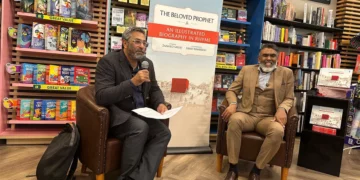
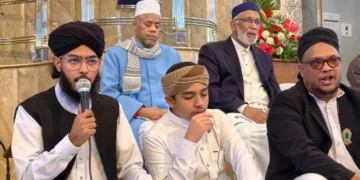
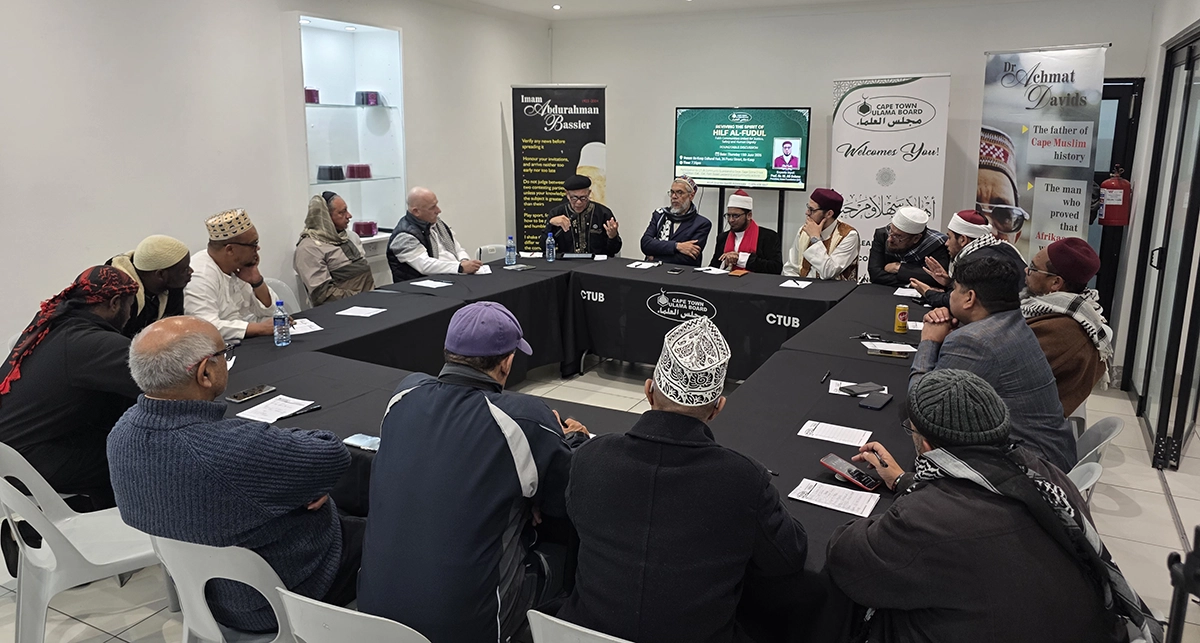
CAPE TOWN, South Africa — Against a backdrop of escalating gang warfare, systemic corruption, and the haunting aftermath of local criminal extortions, an extraordinary discussion took place in South Africa’s historic quarter on Thursday, June 11, 2026. Hosted at the Bo-Kaap Cultural Hub, the Cape Town Ulama Board (CTUB) convened an interfaith roundtable titled, ‘Reviving the Spirit of Hilf al-Fudul: Faith Communities United for Justice, Safety and Human Dignity.’
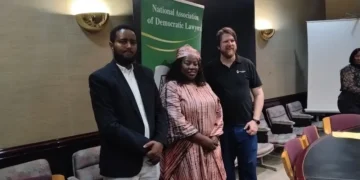
The meeting brought together Islamic scholars, Christian clergy, international delegates, and retired military and police personnel. Their objective was singular: to discuss an unshakeable interfaith and cross-civic front capable of confronting organised crime and systemic state failure.
A Prophetic blueprint for modern crisis
The gathering’s foundational framework was rooted in the ancient Islamic concept of Hilf al-Fudul (The League of the Virtuous). Historically, this pre-Islamic covenant was established in Makkah by diverse tribes to protect the vulnerable, uphold justice, and resist oppression regardless of tribal affiliation. Reflecting on its legacy, the Prophet Muhammad (SAW) affirmed that if he were invited to such an alliance even after the advent of Islam, he would answer the call.

Keynote speaker Prof Dr M Ali Belaoo, President of the Imam Foundation (UK), utilised this prophetic history to challenge contemporary religious leadership. Drawing from the Sahifat al-Medina (The Constitution of Medina), a civic agreement that granted equal status to all citizens regardless of faith, skin colour, or language, Dr Belaoo demonstrated that cross-communal alliance is a religious imperative.
‘When a crisis happens in a community; whether it involves infrastructure, poverty, or modern plagues like gang violence and drugs, the consequences affect every single resident indiscriminately, not just Muslims,’ Dr Belaoo argued, drawing a direct parallel to the Prophet’s historical mobilisation of a shared water supply for the collective public good. ‘Therefore, the solution must be equally collective.’
Numbness, personal isolation, and the demand for sacrifice
The roundtable did not shy away from sharp internal critiques of religious institutions. Shaykh Ihsaan Taliep, an honorary member of the Cape Town Ulama Board and representative of the C4, delivered a blistering critique of modern faith leaders, warning against a ‘lethargy’ and ‘numbness’ creeping into contemporary religious spaces.
‘Sacrifice, by its very nature, stands in direct opposition to personal comfort,’ Shaykh Ihsaan declared, noting that true faith demands sacrificing security and resources for the sake of the oppressed.
This call for structural reform was echoed by Imam Dr Raashied Omar, who noted that a large portion of the ulama remain confined within their masjids, viewing societal issues as outside their realm of responsibility. Dr Omar called for a complete shift in institutional mindset, demanding that mosques become active operational hubs for civic justice.
The shadow of cartels and state failure
The true urgency of the engagement was anchored by harrowing field reports from retired Colonel Dawood Laign, Head of the newly established CTUB Community Guardianship Desk. Col Laign painted a sobering picture of a region engulfed by an untouchable illicit economy.
‘Drugs are fuelling the Western Cape economy; if you take drugs away from the Western Cape economy, the whole economy will collapse,’ Col Laign reported. ‘That is why the government is not serious about tackling drugs.’
You may also want to read


Col Laign revealed a deeply unsettling case of structural vulnerability occurring around us. Criminal syndicates targeted a local madrasa, demanding protection fees. Though the madrasa initially resisted, immense pressure ultimately forced them to pay an initial R3 000 ‘initiation fee’. Shockingly, when religious leaders attempted to register a formal criminal case, they were turned away by officers at two separate police stations. Only after a forced evaluation spearheaded by the ulama did a formal investigation successfully open.

Building a Coalition of Conscience
In response to state gridlock, Rev Dr Llewellyn MacMaster, Chairperson of the Cape Crime Crisis Coalition (C4), called for the immediate creation of a ‘broad-based moral covenant’. Reflecting on his time imprisoned in Victor Verster Prison during the anti-apartheid struggle alongside Muslim icons like the late Dullah Omar, Rev MacMaster invoked the spirit of the historic United Democratic Front (UDF), the multi-faith alliance that brought the apartheid regime to its knees.
‘When children are routinely killed in the crossfire of gang wars, when illegal firearms move freely through our neighbourhoods… silence is complicity,’ Rev MacMaster asserted. He called on faith leaders to cast aside institutional insularity.
‘We are facing a deep moral crisis where human life has become tragically cheapened. It is time to stand together and proclaim that human life is holy and comes from God.’
Radical action: The way forward
Moving swiftly past the boundaries of traditional theological dialogue, the roundtable concluded with an actionable strategy to attempt to protect Cape Town’s fractured communities:
- Interfaith Community Safety Working Group: The meeting discussed the idea of a joint operational working group bridging the Cape Crime Crisis Coalition (C4) and the CTUB Community Guardianship Desk.
- The CTUB Guardian Desk Platform: Actively endorsing the CTUB Desk as a localised coordinating platform for direct civic and security engagement.
- SAPS and Neighbourhood Watch Integration: The development of immediate pilot partnerships directly integrating local mosques and faith institutions with Community Policing Forums (CPFs), neighbourhood watches, and specific SAPS precinct structures.
- Shared Universal Declaration: The formal drafting of a universal statement affirming absolute commitments to community safety, public accountability, and human dignity, slated for formal adoption at upcoming follow-up meetings with wider consultations.
The President of the Cape Town Ulama Board, Mufti Sayed Haroon Al Azhari, reminded attendees of their universal mandate. Invoking the Quranic command to ‘cooperate in righteousness and God-consciousness’, Mufti Sayed Haroon urged faith leaders to look beyond religious or geographic borders.
‘Our countries are facing massive challenges… what unites us in our shared humanity is vastly greater than the specific theological issues that divide us, and we must stand firmly together to protect our people.’