






























An analysis of a 1985 khutbah by Shaikh Muhammad Salie Dien where he argued that boycotts have deep Islamic precedent and were a personal duty against Apartheid. The writer considers how that reasoning may resonate with today’s Gaza-era BDS debate.
By ANWAR OMAR
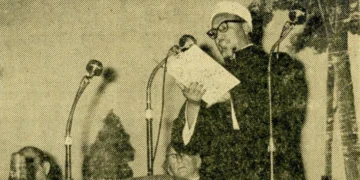
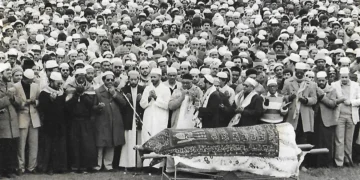
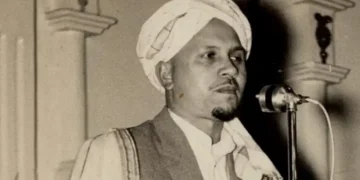
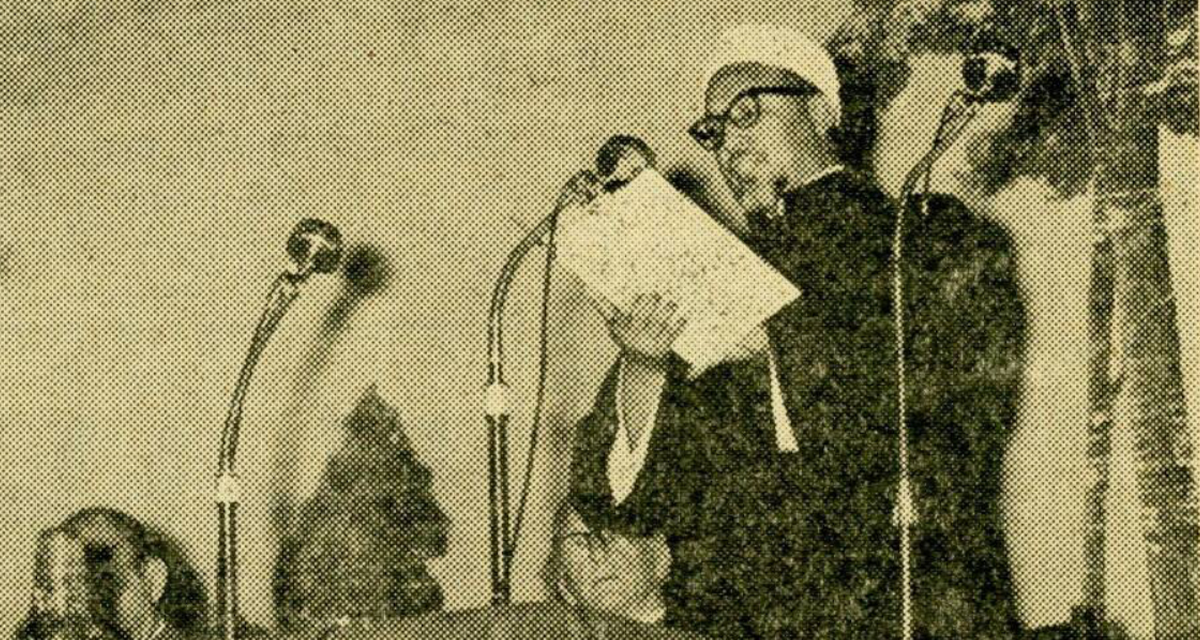
Shaikh Muhammad Salie Dien served as imam of Masjidus Salaam in St Athans Road, Belgravia Estate, Athlone, for more than five decades – from 1959 until his death on June 19, 2010.
Through the 1980s his Friday sermons were a direct, sustained challenge to the Apartheid state.
Shaikh Dien’s khutbah on boycott is arguably one of his most significant contributions as a Muslim theologian to the South African anti-Apartheid struggle.
At a moment when the United Democratic Front’s (UDF) consumer boycott campaign was under internal attack as an un-Islamic, Western import, Shaikh Dien supplied Cape Muslims with an explicitly Islamic warrant for the tactic, rooting it not in Western precedent but in classical Islamic practice, at a time when religious legitimacy could determine whether a community participated in the struggle at all.
The khutbah
The khutbah at the centre of this article, on the legitimacy of boycotts in Islam, was recovered from a cassette recording in the personal archive of Nadir Dien, the Shaikh’s second eldest son.
Its contents indicate it was delivered on Friday, September 20, 1985, days after the start of the new Hijri year and less than a month before the Trojan Horse incident on October 15, 1985 and the killing of Abdul Karriem Fridie on October 17, 1985.
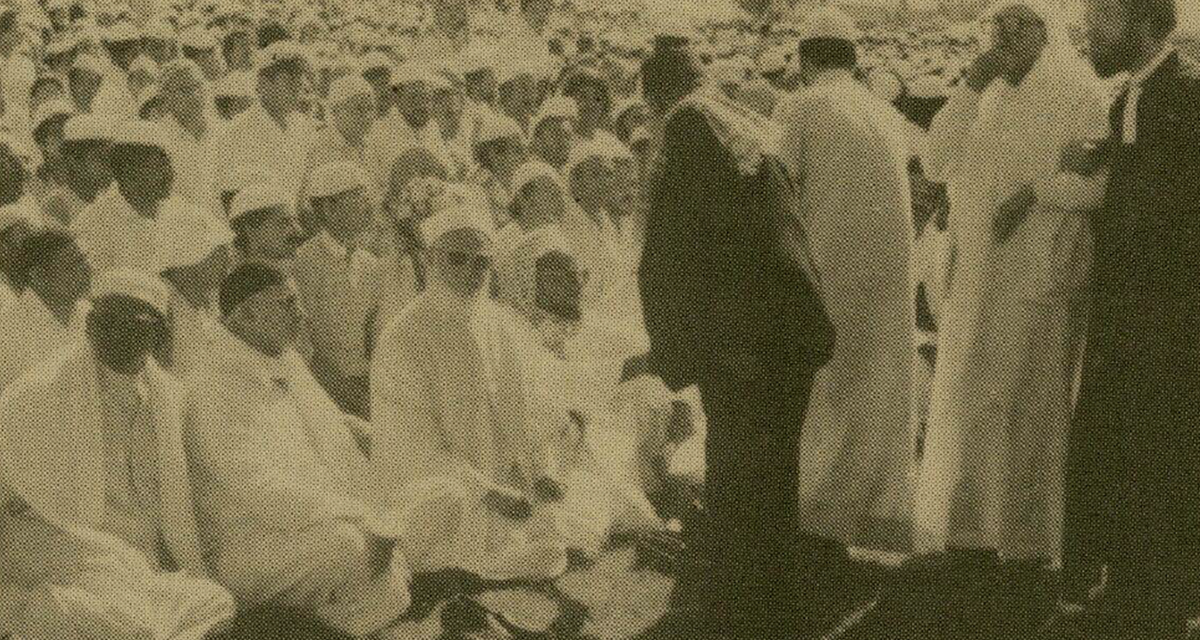
The khutbah answered a specific internal question: whether consumer boycotts of white-owned businesses, then a central tactic of anti-Apartheid resistance in Cape Town, were an un-Islamic, Western import alien to Islam.
Shaikh Dien inverted the argument. Rather than defend the boycott as a legitimate Western import, he shows the accusation itself is flawed, tracing the word to Captain Charles Cunningham Boycott, an Irish land agent ostracised by tenants in an 1880 rent dispute, a word barely a century old.
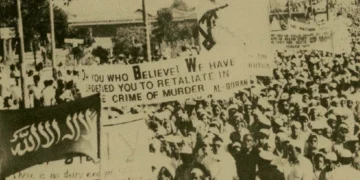
In Cape Town that September, the inversion carried tangible meaning. Spearheaded by the United Democratic Front, the 1985 boycott of white businesses demanded an end to the State of Emergency imposed on July 20, withdrawal of police and army from the townships, and release of detainees. Beginning modestly, it spread through the Eastern and Western Cape, the Transvaal, and Natal, becoming the dominant form of anti-Apartheid protest that year, the very campaign Shaikh Dien’s khutbah was defending.
Ironically, in those same months, Boycott’s namesake country was living its own version. In Dublin, 21-year-old cashier Mary Manning’s refusal to handle South African grapefruit sparked the Dunnes Stores strike, running from July 1984 until April 1987, when Ireland imposed the first outright Western ban on South African imports.
Shaikh Dien’s boycott call was thus not an isolated tactic borrowed from the West, but ran alongside an Irish labour boycott of the same regime.
Shaikh Dien then cites the Hadith of Ka’b ibn Malik (Ṣaḥīḥ al-Bukhārī): after failing to join the Prophet (ﷺ)’s Tabuk expedition without excuse, the Prophet (ﷺ) ordered the community to sever all contact with the three offenders for 50 days – no greeting, no conversation – until Allah revealed their forgiveness in Sūrat at-Tawbah. Shaikh Dien notes that this precedent, from the ninth year of the Hijrah, predates any Western boycott, and even extended into the men’s marriages, with their wives instructed to withhold intimacy.
Boycotting Apartheid is fard ‘ayn
You may also want to read





Shaikh Dien framed the boycott in the strongest legal terms, as a personal obligation (fard ʿayn) on every Muslim, not fard kifāyah – discharged by some on behalf of all.
Citing Ka’b ibn Malik’s 50-day severance, ordered directly by the Prophet (ﷺ), he made clear this was a command, not a preference and that Islam had sanctioned total, organised embargo over a thousand years before the West named the practice. On that basis, he ruled Muslims are obligated to boycott both Muslim collaborators with Apartheid structures (the Tricameral Parliament, management committees, community councils) and white-owned businesses generally.
His case against those businesses was one of complicity, as they had profited from Apartheid, never used those profits to resist it, and gained further when non-white competitors were removed from areas like District Six under the Group Areas Act.
Boycott and “international awareness”, he said – quoting Egyptian scholar Muhammad Abu Zahra’s advice to Moroccans resisting French rule – were the Muslim community’s only available weapons in the absence of arms.
He defended activists like Farid Esack and Ebrahim Moosa against being labelled “agitators”, while warning explicitly against property damage and against targeting businesses shown to support the struggle: a disciplined, targeted boycott, not an indiscriminate one.
Interpreting Shaikh Dien’s argument in light of Gaza and BDS
What follows is my own interpretation, not a reconstruction of Shaikh Dien’s views, as he died before the Gaza war and left no recorded statement on it or on the contemporary BDS initiative.
Israel’s actions in Gaza remain a live legal dispute: the ICJ found South Africa’s genocide claim “plausible” enough to order provisional measures in January 2024, and numerous human rights organisations, UN special rapporteurs, and genocide scholars have labelled it genocide.
Considered as principle rather than history, Dien’s khutbah transfers onto the present debate with unusual precision. His argument that boycott is not a foreign import, but one Islam “applied first, and more comprehensively,” answers the same charge levelled at BDS today. The Ka’b ibn Malik precedent needs no borrowed justification as it stands as textual warrant for organised and total embargo from those who stand with the oppressor.
Shaikh Dien’s criteria of whether a business profited and whether it stayed silent maps onto how BDS targets firms operating in West Bank settlements, arms manufacturers supplying the Israeli military, and companies servicing the war.
His willingness to direct boycott inward, at Muslim collaborators as well as white businesses, echoes current calls to apply the same logic to Muslim-majority governments and individuals normalising relations with, or staying silent on, Israel.
His linking of boycott to international awareness anticipates how BDS pairs economic pressure with visibility in media testimony and in cases like South Africa’s at the ICJ.
The pronouncement by Israeli rights groups such as B’Tselem and by many international bodies and legal scholars that Israel is an Apartheid state justifies boycott as legitimate in line with Shaikh Dien’s 1985 declaration.
Conclusion
Shaikh Dien’s 40-year-old argument that boycott needs no Western permission to be Islamically legitimate applies with unusual precision to the current BDS debate against Apartheid Israel. It is my contention that had he been alive today, he would have advanced the same argument in support of BDS and held it to be fard ‘ayn on every Muslim, not fard kifayah. Considered in that light, this khutbah stands as arguably his most significant theological contribution to the South African anti-Apartheid struggle, a sanction that allowed a community boycott without conflict between politics and faith.