











![The market-builder who restrained the market [Part 2]](https://muslimviews.co.za/wp-content/uploads/2026/08/PHOTO-2026-08-25-17-16-32-360x180.jpg)
![The merchant preceding the Prophetic mission [Part 1]](https://muslimviews.co.za/wp-content/uploads/2026/08/01-360x180.jpg)








By MAHMOOD SANGLAY
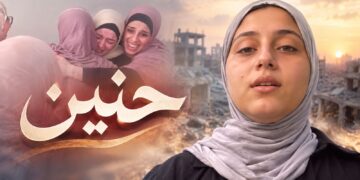
In a borrowed room crowded with relatives and everything they still possessed, Haneen Mahmoud received a text message carrying an extraordinary average result: 98.3%. The embrace that followed held joy, grief and a family’s hope for Gaza.
Haneen turned 18 recently. The video, recorded on the same day the day on the results transcript, July 24, 2026, lasts only 37 seconds. Women ululate, relatives reach for one another and Haneen Mahmoud disappears into their embraces. Her mother weeps. Her 72-year-old father, Mahmoud, stands amid the celebration, visibly overcome.
There are a few sweets, but the gathering itself is the celebration. The room belongs to a friend of Haneen’s father, who has allowed the displaced family to occupy two rooms in his home. Twelve people and their remaining possessions are crowded into that space. They have now been asked to leave because the owner wants to rent it out. They cannot afford the rent and do not know where they will go.
Into that uncertainty came a text message from the Palestinian Ministry of Education and Higher Education. Haneen had completed the scientific stream of the 2026 General Secondary Education examination, or Tawjihi, with 688 marks out of 700: an average of 98.3%.
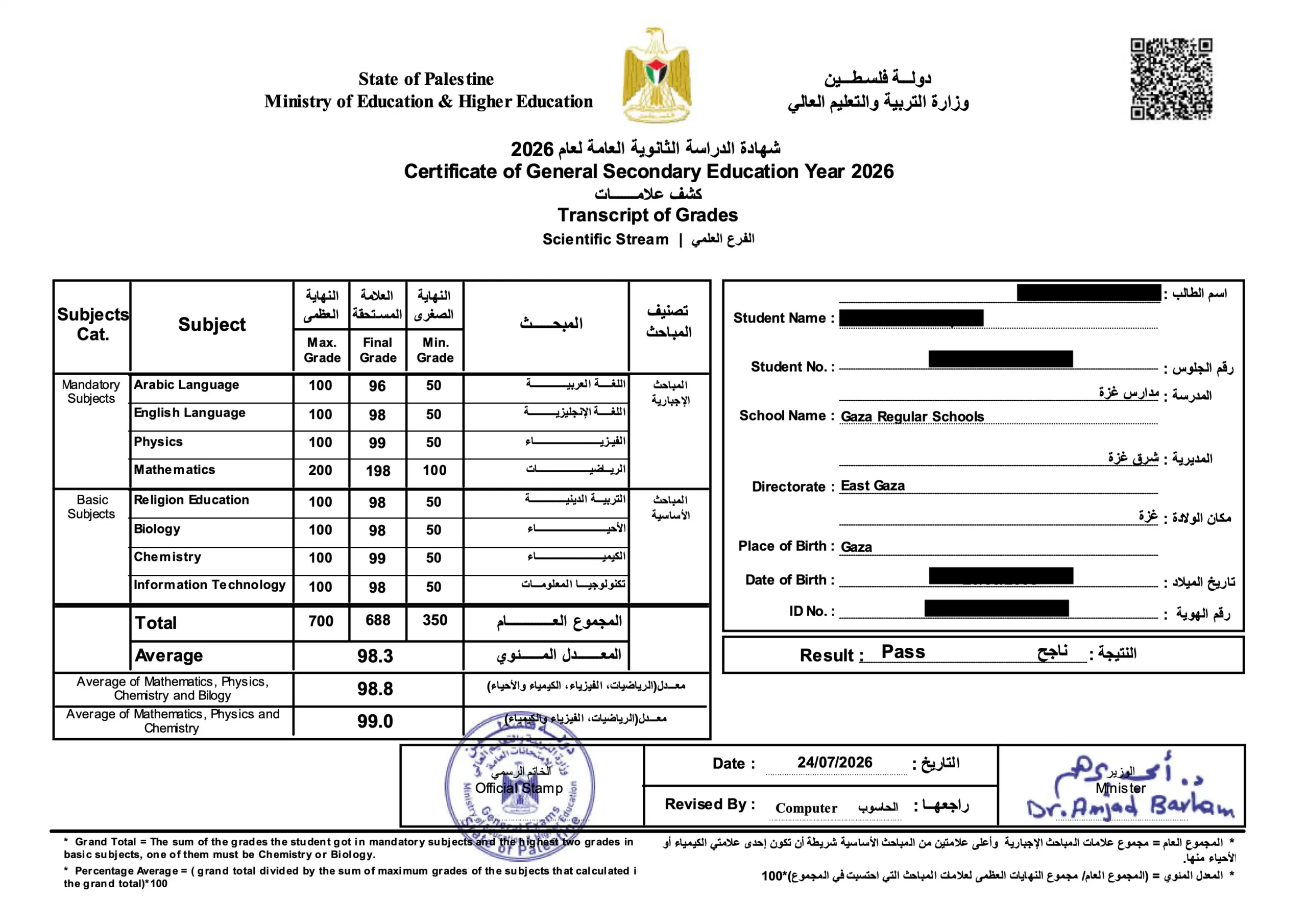
Her official transcript records 96% for Arabic, 98% for English, 99% for Physics, 198 out of 200 for Mathematics, 98% for Religious Education and Biology, and 99% for Chemistry. Her combined Mathematics, Physics and Chemistry average was 99%.
The report transcript (partially redacted for security reasons) bears Haneen’s full name, and identifies Gaza Regular Schools in the East Gaza Directorate.
The result is remarkable on its own. Its meaning becomes clearer only when measured against what surrounded her studies: hunger, bereavement, bombardment, repeated displacement and the destruction of the home, school routines and infrastructure that once supported an ambitious learner.
Haneen grew up in Al-Shuja’iyya, Gaza City, in a private street shared by her family and her uncles. Their five-storey building accommodated her parents and brothers. Each home was spacious, with four bedrooms, two living rooms, two bathrooms and a kitchen. Olive trees, flowers and vegetables grew on the land below.
She had her own bedroom and a large wardrobe. She walked to school with her cousins or was driven by her father to Al-Nasira Girls’ School. English and Mathematics were her favourite subjects, and she says she consistently ranked first in her class. With what she describes as her strong voice, she presented school broadcasts, events and ceremonies.
Her memories of ordinary life are filled with family: breakfast before school; afternoons talking and playing with cousins and uncles; winter fires lit for warmth; visits to the beach, parks and her grandfather’s home.
When asked to describe the house, Haneen supplied its details and then stopped at what their loss meant. “Our street was filled with love and warmth,” she said. “I had my own room, a large wardrobe, and everything I could dream of. I am crying right now as I remember it.”
That home no longer exists. Haneen says the Israeli military bulldozed what remained of it around June 2025. The family was displaced at the time and learnt of its destruction through photographs. Nothing was recovered. The area remains restricted and they have not been able to return.
Seven displacements
The family has been displaced seven times. Haneen dates their first flight to October 7, 2023, when they left Al-Shuja’iyya for her grandfather’s home in central Gaza. Two days later, they moved to a cousin’s home in Tal al-Hawa. After evacuation leaflets ordered residents south, the extended family travelled to Deir al-Balah and erected tents.
They remained there until January 2025, enduring summer heat and winter cold. When they returned to Al-Shuja’iyya, half their home had been damaged but it was still habitable. The return lasted three months. Renewed fighting in April 2025 forced them out again.
They sought refuge at her grandfather’s home, fled after shelling intensified and spent a day searching for shelter. Further movement took them to Al-Zawaida and eventually back to the two borrowed rooms where the results celebration was filmed.
Life there begins each morning amid clothes, books and bedding compressed into the rooms. Haneen and her nieces tidy the space, make sandwiches and light a fire for tea. Her nephews go to school while a brother searches for food and water. Her mother cooks over an open fire in a makeshift outdoor kitchen built from timber and tarpaulins.
The family washes its clothing by hand. Water must be collected in 20-litre containers after long queues or bought. Haneen says a kilogram of cooking gas costs $30, placing it beyond the family’s reach. Public electricity and sanitation infrastructure have been destroyed, she says, and paid alternatives expose desperate families to high prices.
Some nights, she says, the family goes to sleep without food. Other nights bring fear as bombardment intensifies. Her father’s diminished income lasts about ten days, leaving them reliant on assistance from friends.
Studying through hunger and grief
Haneen had just entered Grade 10 when the genocide began. Her education stopped during the displacement to Deir al-Balah and she missed the year, with learners promoted through online records amid the collapse of formal schooling. In Grade 11, she began attending a nearby school. Her classroom was inside a tent partitioned into several teaching spaces, while donations paid for stationery and supplies.
She studied from early morning despite the absence of reliable electricity, privacy or quiet. Hunger intruded physically. “I swear I used to get dizzy during my lessons due to the lack of food, which slowed down my concentration,” she recalled. “But I fought to endure for the sake of my dream.”
The death of her grandmother stopped her studies for a month. “Why should I continue if I might die at any moment?” she remembers asking herself. Another displacement delayed her Tawjihi preparation by two months.
You may also want to read





Her family has lost 15 extended relatives. When invited to name them and describe how they died, Haneen apologised and declined. The memories were too painful and the information too sensitive. She said every person had been close to the family and had left “a profound impact” on their lives. Another relative remains missing.
Her grandmother had prayed to see Haneen realise her dream. That absence was part of the joy and sorrow in the borrowed room when the result arrived.
Haneen wrote her examinations from June 20, 2026. Travelling to school or an examination venue meant leaving without knowing whether she would return safely. Some pupils lost hope, she said, and others were killed. She persisted through faith, personal effort, loyal friends and the appeal of parents she describes as broken by what they had endured: “You are our only hope. Please pursue your dream.”
A doctor for Gaza
Haneen has taken an admission examination at Al-Azhar University and wants to study medicine. Gaza’s wounded, sick and displaced people have strengthened that commitment. She dreams of studying abroad and returning to serve her country, but cannot imagine leaving her family behind.
Those responsibilities are considerable. Her eldest brother, Waleed, 38, lives with a psychiatric illness requiring regular medication. His three children, aged 12, 14 and 16, have been raised in their grandparents’ care for six years. Haneen helps care for them while trying to protect her own educational future. Two other brothers, one sister-in-law and two young nieces also share the rooms.
The family says its most urgent need is shelter. Haneen estimates that seven years of medical education will cost about $20,000. A public GoFundMe campaign seeks $60,000: $20,000 for her education, $25,000 for shelter and $15,000 for one year of food, water, clothing, medicine, children’s schooling and care for her brother.
Readers who wish to support Haneen’s education and her family’s immediate needs can contribute to her GoFundMe campaign here.
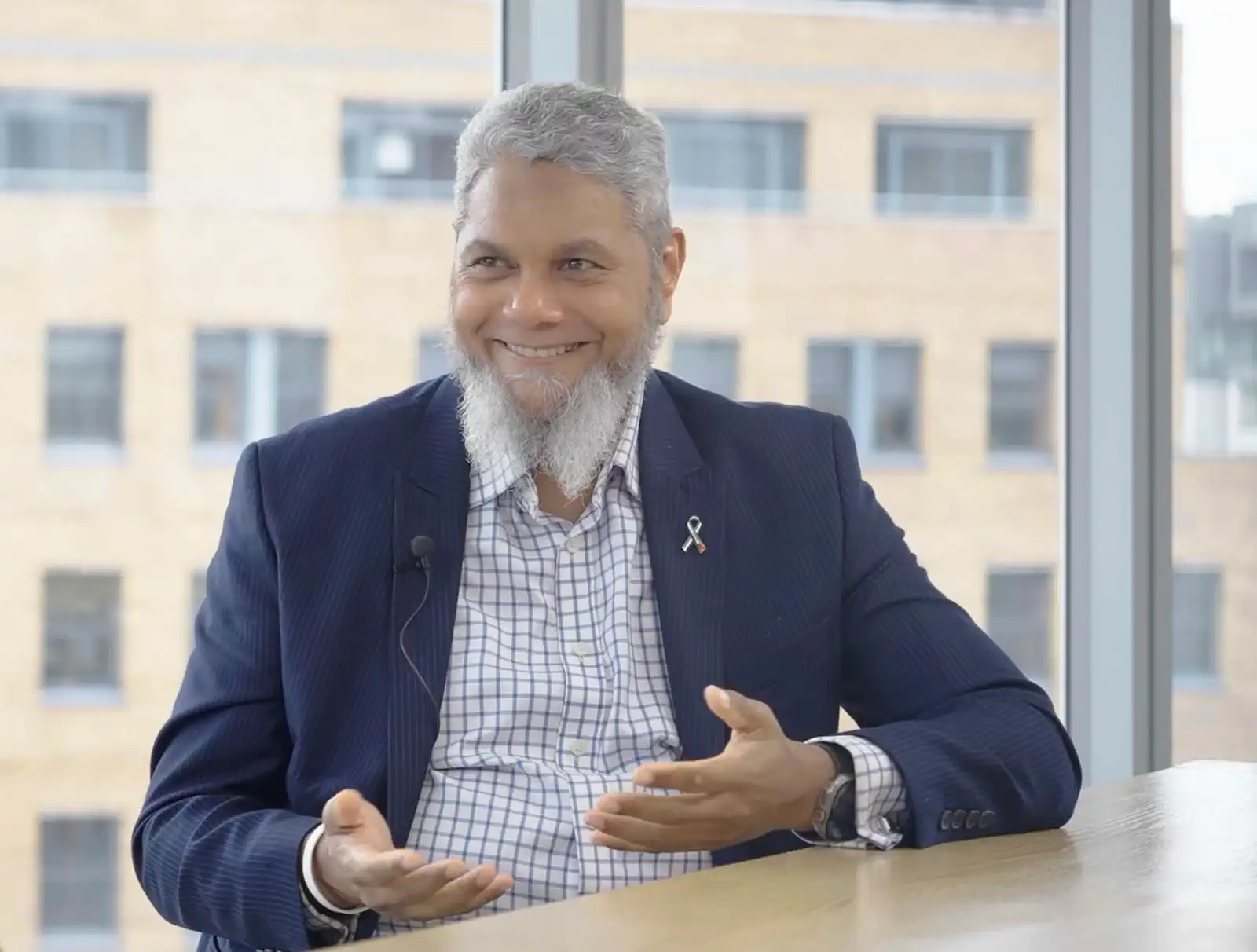
“As a South African who has supported Haneen and her family, I have witnessed the courage and determination behind her remarkable story. I appeal to readers who are able to help to stand with Haneen as she pursues her dream of studying medicine and as her family seeks the security of a home. Your contribution to her GoFundMe campaign, however modest, can help turn solidarity with Gaza into meaningful support for one young woman and her family.”
Haneen says a French friend she has known for three years created and manages the campaign, transferring available funds to a family member through PayPal.
Haneen also hopes to become a blogger who records life in Gaza as Palestinians experience it. She worries that reduced bombing may be mistaken for an end to suffering. War, she says, continues through homelessness, hunger, bereavement and the destruction of the conditions needed to rebuild a life.
“We were never just numbers in the news, nor did we ever imagine asking for help,” she said. “We had a life we cherished, a warm home that held us, and dreams we were pursuing.”
The results video makes that lost life momentarily visible in another form. A family with no home of its own gathers around an 18-year-old who refused to surrender her future. Their celebration does not erase their grief. It asks whether the world can see both—and whether seeing will move it to help secure a home, an education and a measure of dignity for Haneen and the children beside her.

![Ebrahim Moosa’s political theology of Gaza [+ videos]](https://muslimviews.co.za/wp-content/uploads/2026/09/moosa-360x180.jpg)