

![Does ta’wīl mean interpretation or fulfilment? A Quranic reassessment [+video]](https://muslimviews.co.za/wp-content/uploads/2026/10/Tawil-Kaskas-360x180.webp)










![Why becoming a wealthy Muslim is commendable in Islam [+videos]](https://muslimviews.co.za/wp-content/uploads/2026/09/Muslim-Trade-Business-1-360x180.webp)

![The market-builder who restrained the market [Part 2]](https://muslimviews.co.za/wp-content/uploads/2026/08/PHOTO-2026-08-25-17-16-32-360x180.jpg)




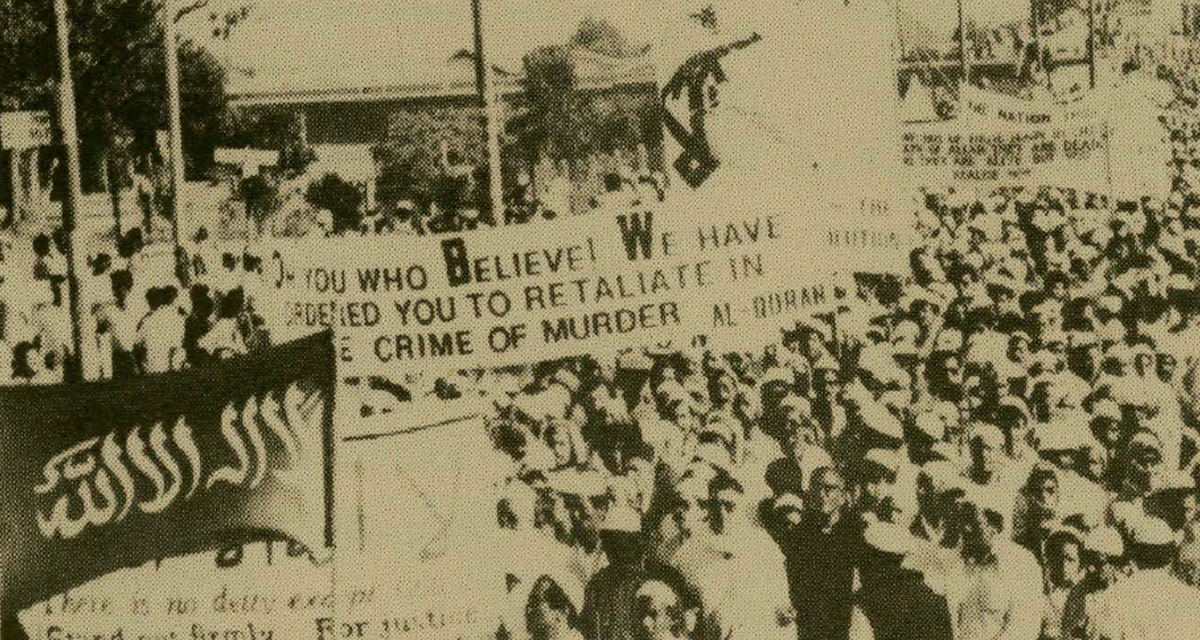

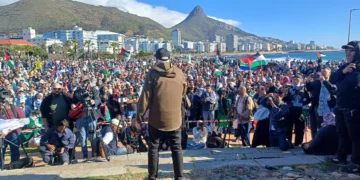
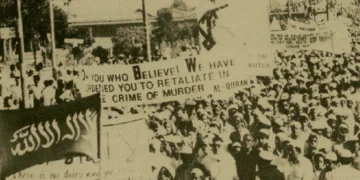
October 17 marks the 41st anniversary of the Siege of St Athans Mosque, when Apartheid security forces surrounded Masjid-us-Salaam in Athlone. Eyewitnesses recall the gunfire, death, resistance and defiance that followed that night.
By ANWAR OMAR
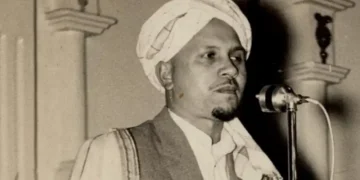
FOR more than five decades, from 1959 until his death in 2010, Shaykh Muhammad Salie Dien led Friday prayers at Masjid-us-Salaam on St Athans Road, Athlone. He was not prone to demonstrating or carrying placards, and the security police had warned him more than once that continued defiance would see his wife deported.
But the mimbar was another matter. Unusually for an alim at the Cape, Shaykh Dien preached directly to his congregation in English. Through the 1980s his khutbahs (sermons) became a sustained, textually grounded indictment of Apartheid, built on Qur’an and hadith rather than empty slogans.
On Thursday, October 17, 1985, Shaykh Dien’s mimbar itself came under siege by the Apartheid security forces.
The Trojan Horse massacre
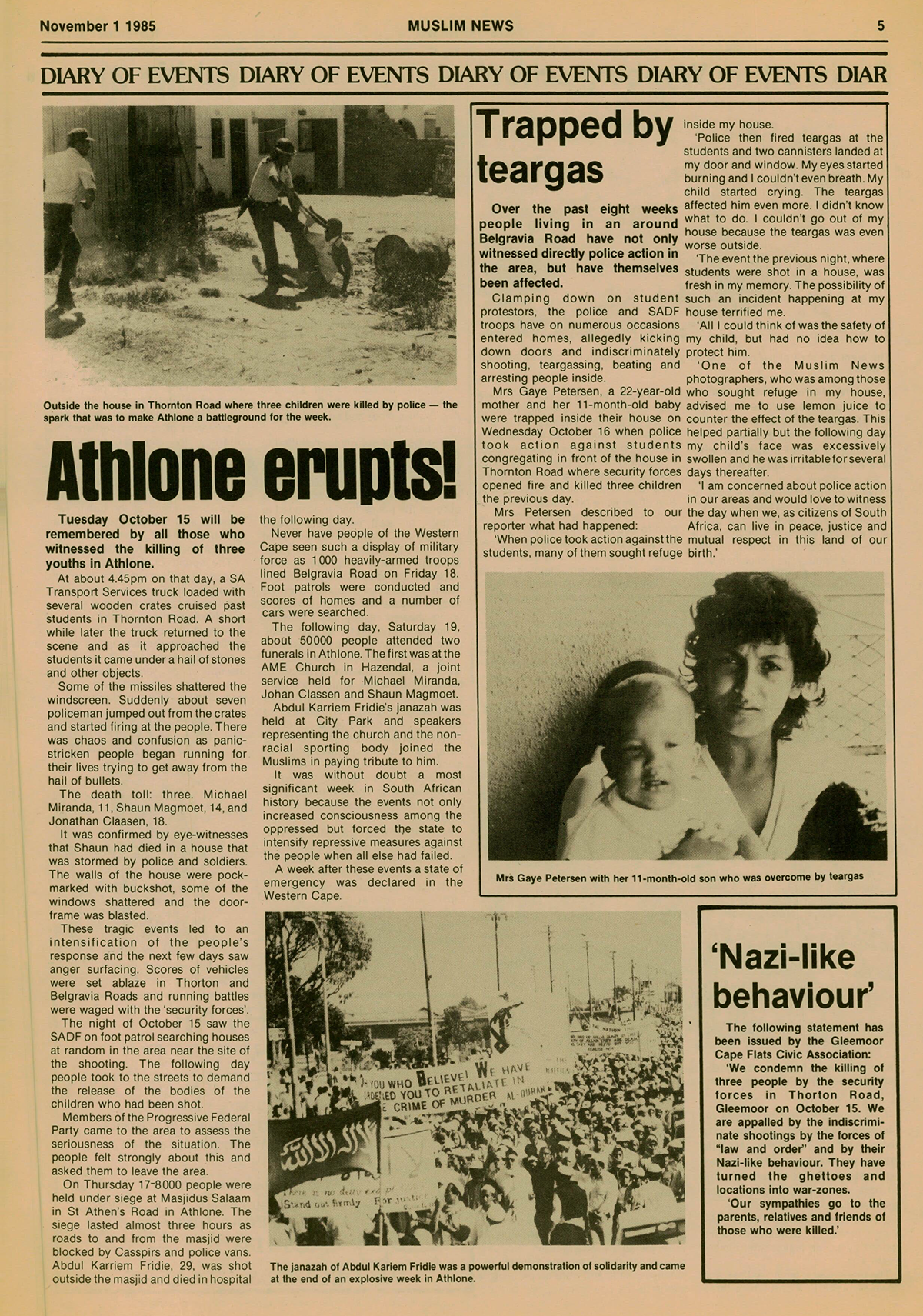
On Tuesday, October 15, 1985, a South African Transport Services truck loaded with wooden crates drove past students gathered on Thornton Road in Athlone. When they threw stones on its second pass, shattering the windscreen, police jumped from the crates and opened fire indiscriminately into the crowd. Three teenagers were killed: 18-year-old Jonathan Claasen, 14-year-old Shaun Magmoet, and 11-year-old Michael Miranda.
The siege of St Athans Road Mosque
By Thursday, October 17, Call of Islam (COI) and the Muslim Judicial Council (MJC) decided the moment required a public response, and turned to Masjid-us-Salaam, assuming it was safer and large enough to hold the crowd. Shaykh Dien, as imam, was asked to address the community on the killings.
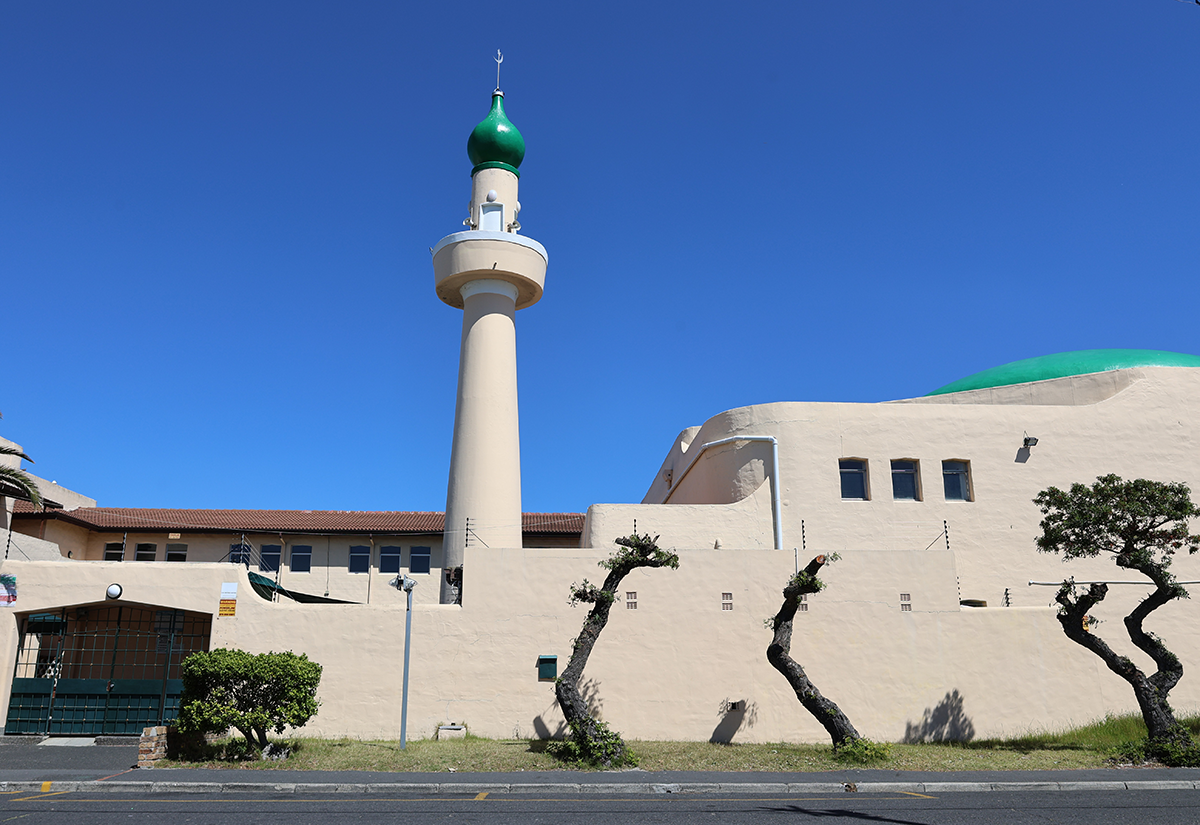
Adil Bradlow, a journalist present, says COI organised the event both to secure the release of the victims’ bodies and to mobilise Muslims behind the UDF-Congress Alliance.
Shamiel Manie, a senior COI figure, confirms COI organised it within hours, drawing on the MJC’s standing rather than sharing control. COI, he recalled, “weren’t always in control of the content.”
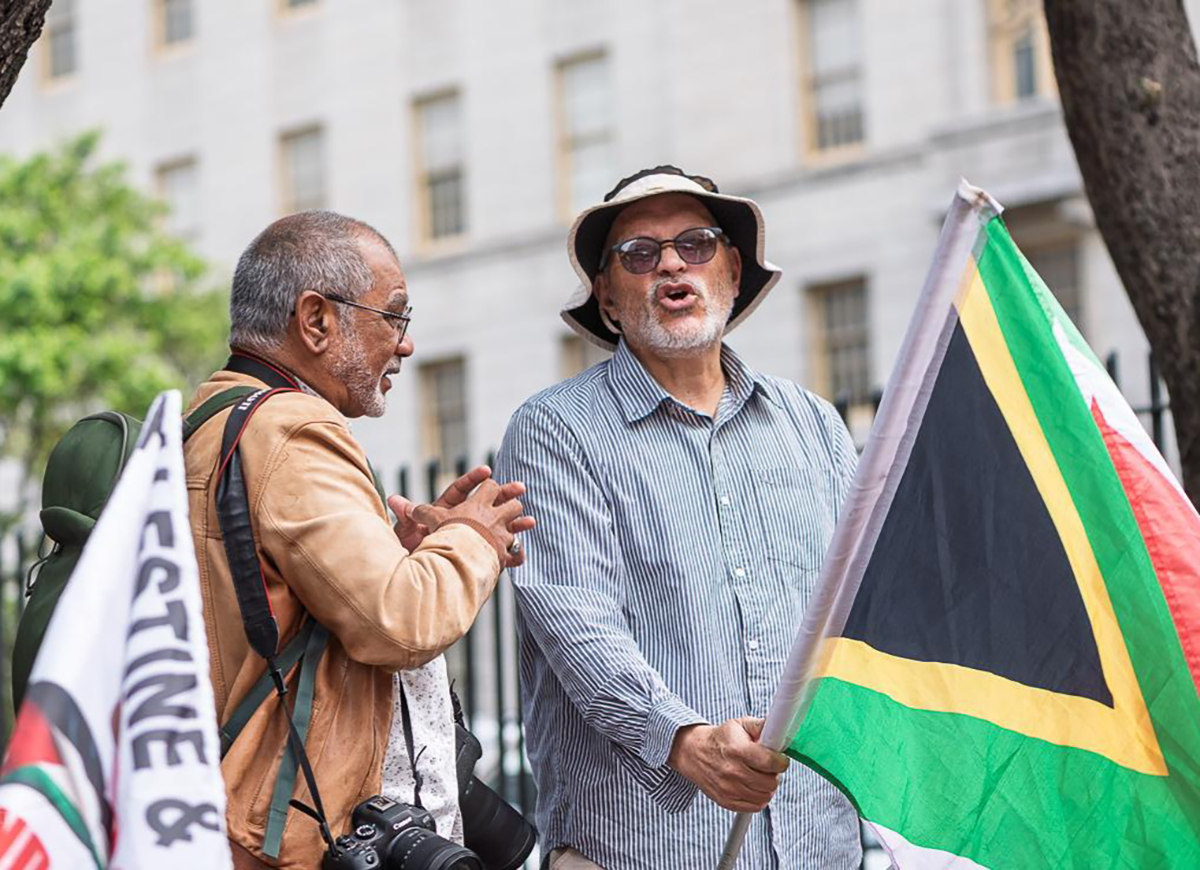
Farid Esack, who chaired the meeting on behalf of COI, says police still held the bodies, one of them Shaun Magmoet’s, understood to be Muslim, and Islamic practice requires swift burial. Securing their release was as much a driver of the meeting as the protest itself.
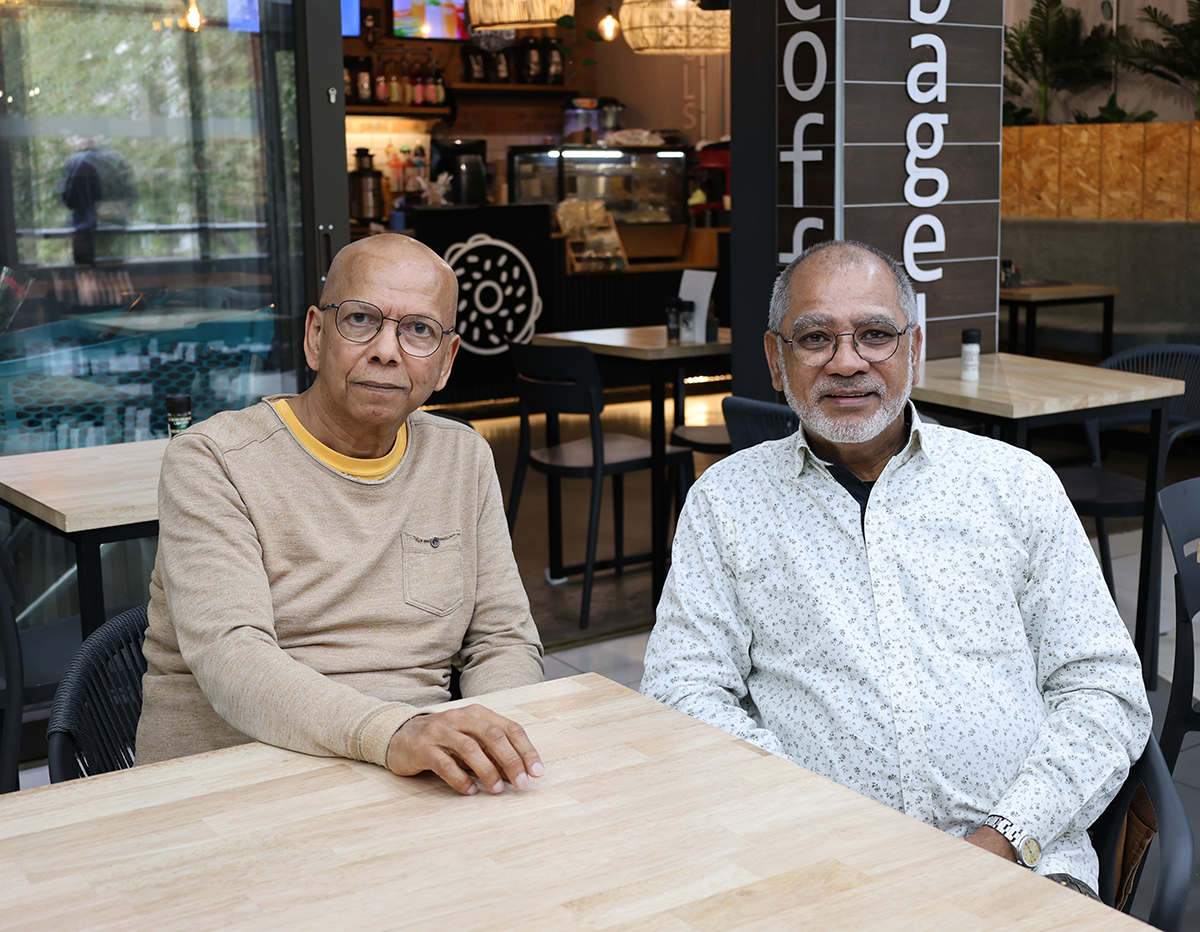
Qibla’s Aziz Kader and his commander Yusuf Patel both cite tension between COI’s UDF-aligned Charterism and Qibla’s populist, Black Consciousness-inflected politics. Kader traces it to a Qibla view that Muslims were being “herded” toward the Congress movement, leaving some youth wanting more than peaceful protest.
Patel, who was in Athlone all week and saw the massacre, recalls some men at the meeting carrying zipguns and looking for ammunition. Mustapha Jacobs, another Qibla member, concedes the call was UDF-driven but says Qibla’s street presence shaped what happened on the ground.
You may also want to read


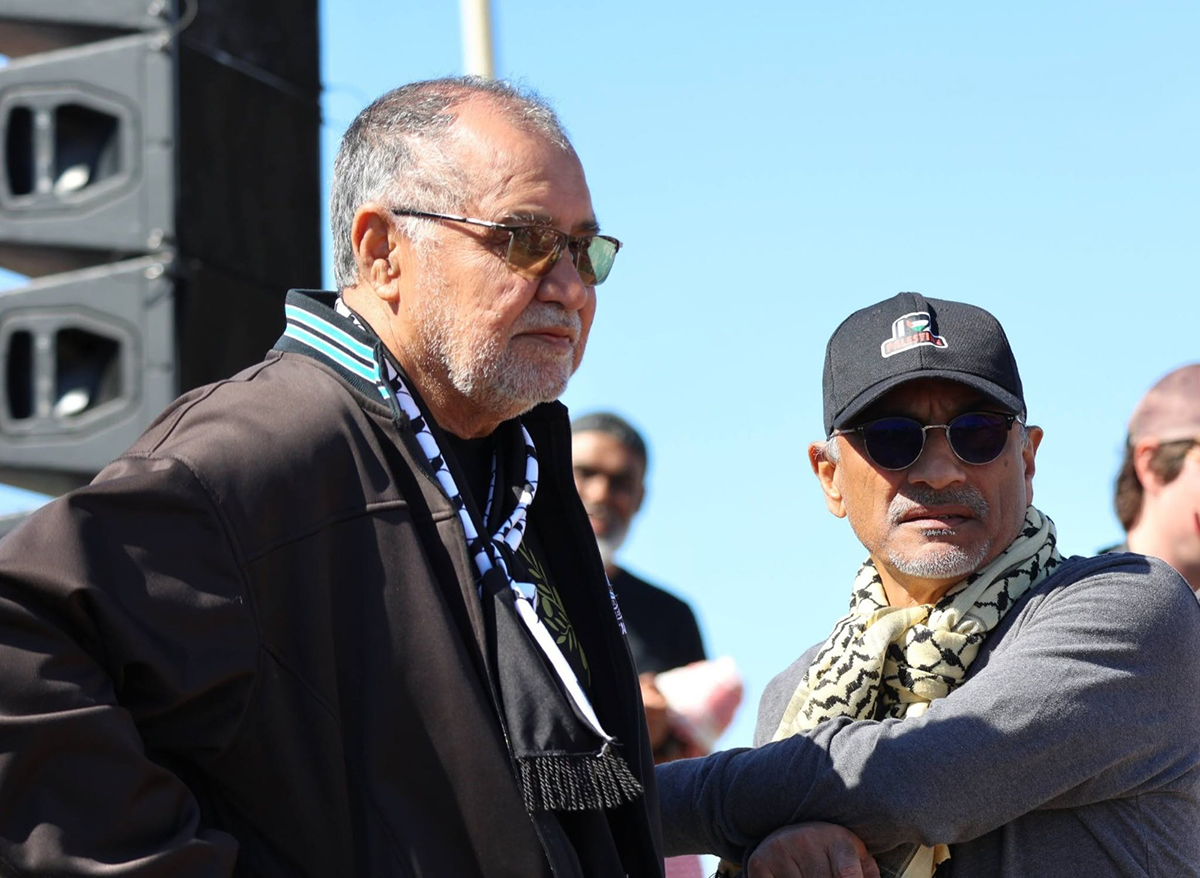
The security police seemed to know exactly what was planned. By the time the meeting began, Casspirs and police vans had sealed off the mosque, holding roughly 8 000 people under siege for several hours. According to Shaykh Dien, Dullah Omar and Shaykh Nazim Mohamed were present alongside himself and Ebrahim Rasool, then COI’s general secretary.
Shaykh Dien said his address accused the state of dividing the community through Apartheid policies, spoke of the students killed on Thornton Road, and backed a planned school boycott, quoting Qur’an and hadith throughout.
Esack confirms this, recalling several speakers on the PA system, including Imam Hassan Solomon and Shaykh Gamiet Gabier, both in hiding since the Carelse janazah.
A further account comes from Faizel Moosa, then 22, later South Africa’s ambassador to Qatar (2017-2022), present in the Athlone Unit of Umkhonto we Sizwe, a predominantly Muslim MK cell. Moosa’s unit was tasked with protecting the mosque from police intrusion and told to engage only if its sanctity was breached, keeping them outside rather than among the crowd. His father, lawyer Essa Moosa, was also present, independently of him.
A sacred space, violated: the killing of Abdul Karriem Fridie
As tensions outside grew, an anonymous source recalled a speaker telling the crowd the meeting should “dissociate itself from the confrontations with the police outside.” Esack confirms it was him, but says he told the crowd to disregard events outside as a calming measure, not a renunciation of those confronting police.
It was mid-speech that the situation turned lethal. According to Shaykh Dien’s biography, someone, reportedly a member of Qibla, fired from the mosque’s roof at the security forces, who retaliated.
Manie, present that night, recalled armed individuals on the roof and initially called it “a level of hijacking” of an event COI had organised, before clarifying he hadn’t directly witnessed who fired.
Armien Levy, a mosque committee member, says the roof was inaccessible without an extension ladder, that no one was stationed there and that no shots came from the mosque. The gunfire, he says, came from police, whose teargas through the windows burned the carpet and forced him into the courtyard.
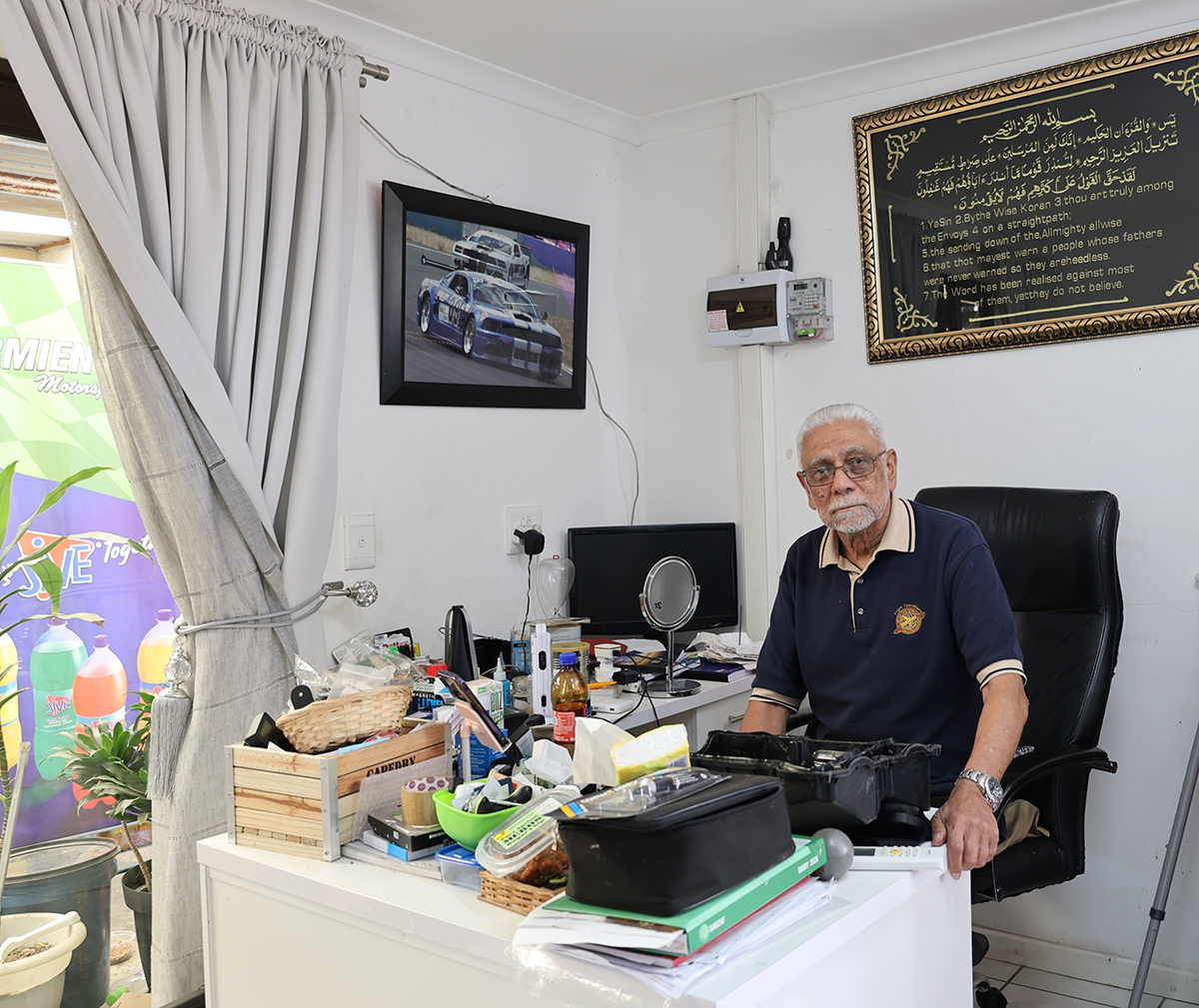
The anonymous source insisted the shooting couldn’t be attributed to any organised group. It was dark, “no one can say from where the shots came,” and resistance came from “people from various formations” acting spontaneously, including some involved in gang activity.
Moosa offers more specific testimony. Positioned with his MK unit outside, he says the shots came first from the mosque, not the police, though he couldn’t identify who fired. He saw Fridie dragged in, shot from behind, with an exit wound so large a doctor used a toilet roll to stem the bleeding.
Patel explains why armed men were on the roof. Qibla leader Achmad Cassiem, he says, had tasked him and Dawood Parker, another Qibla operative, with security. Young men who were being recruited for military training in Libya were stationed on the roof to monitor the Casspirs, while others moved cars to block police access, keeping police in their vehicles throughout.
He cannot say who fired first. Kader learned only afterwards that Qibla members had been on the roof, and believes the shooting from the mosque came in retaliation for the teargas and siege rather than as the first shots.
Jacobs says he worked directly as a draughtsman in Imam Achmad’s architectural office and during the anti-Apartheid street activism he reported directly to Imam Achmad, rather than through a unit commander. He says he formed part of a group of armed men on the balcony, overlooking the courtyard for the purpose of defending the masjid against the riot police who had by then already surrounded the masjid.
The police hurled warnings and threats over the loud hailer before they attacked the masjid with teargas and live ammunition. He said, as a result they returned fire on the police with live ammunition.
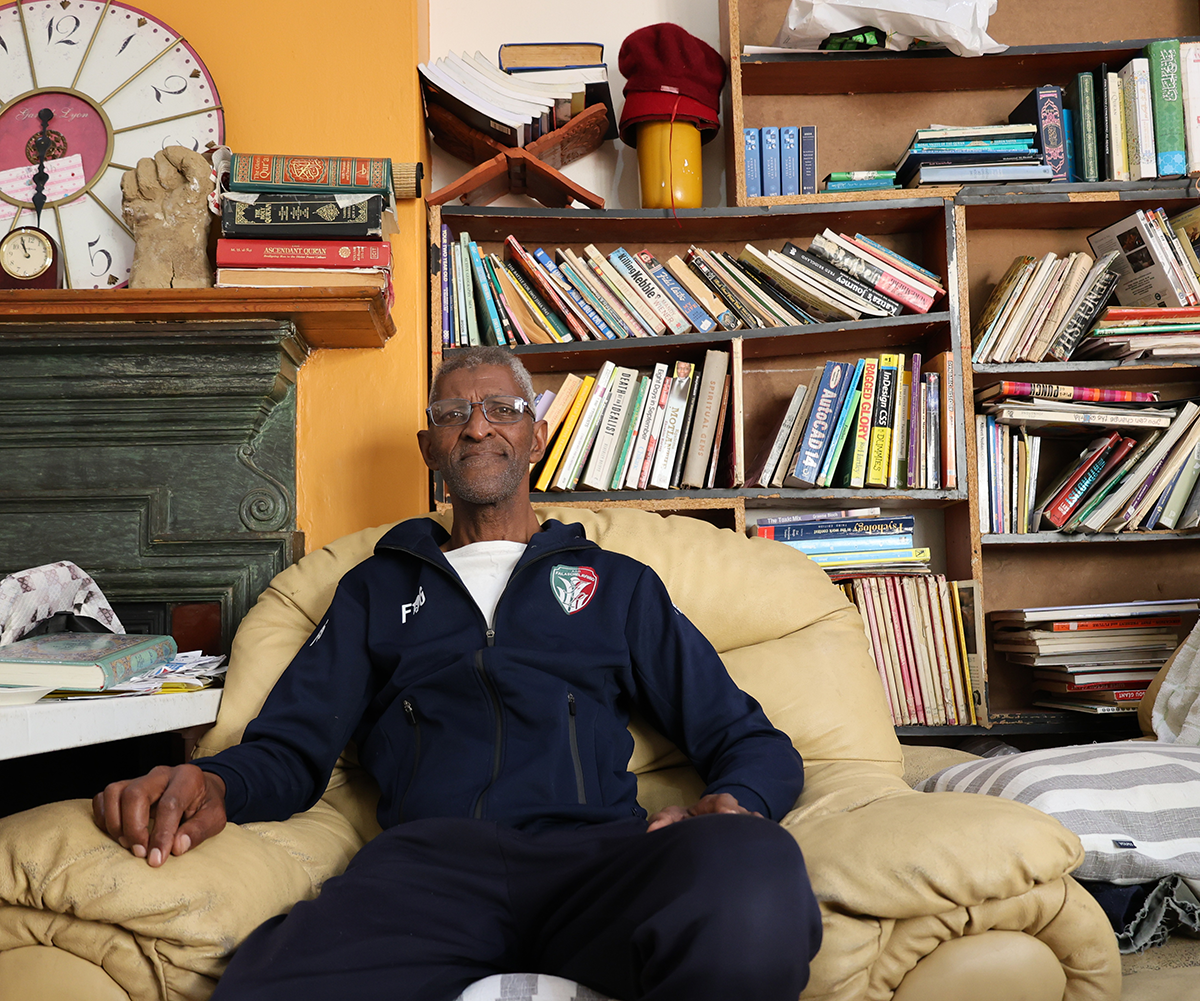
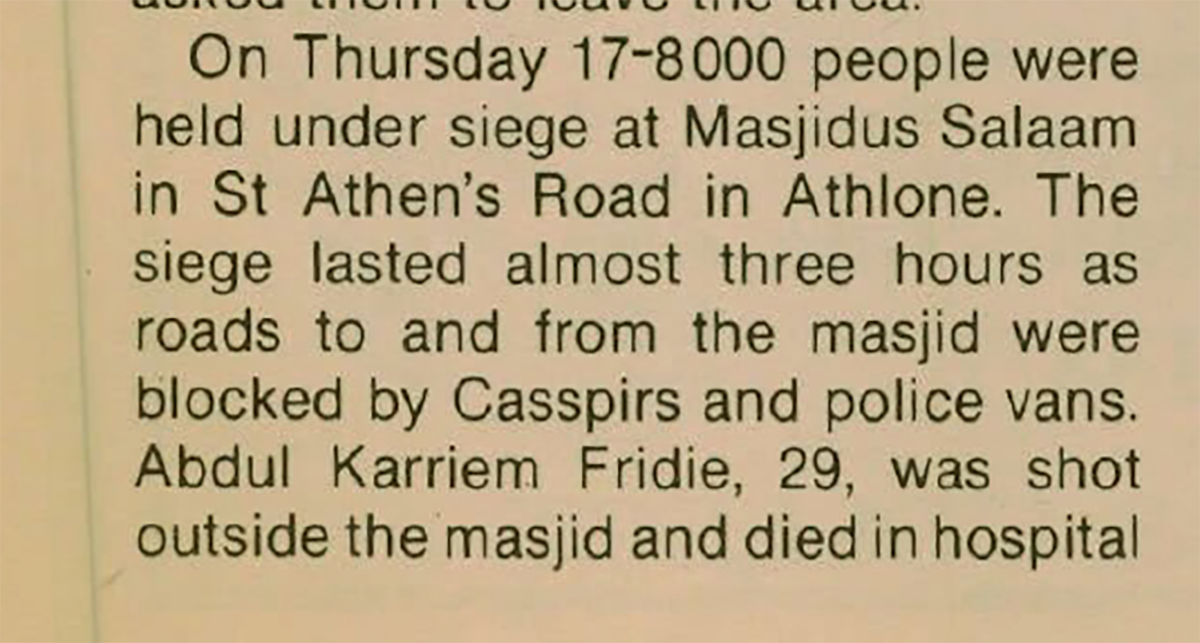
From the balcony ledge Jacobs said he could see martyr Abdul Karriem Fridie’s body in the courtyard after he was shot by police. In the courtyard, 28-year-old Abdul Karriem Fridie, who had come with his brother Gasant and arrived just in time to pray isha, was shot. Doctors concluded he was hit in the back at close range with a dum-dum bullet that tore open his bowel.
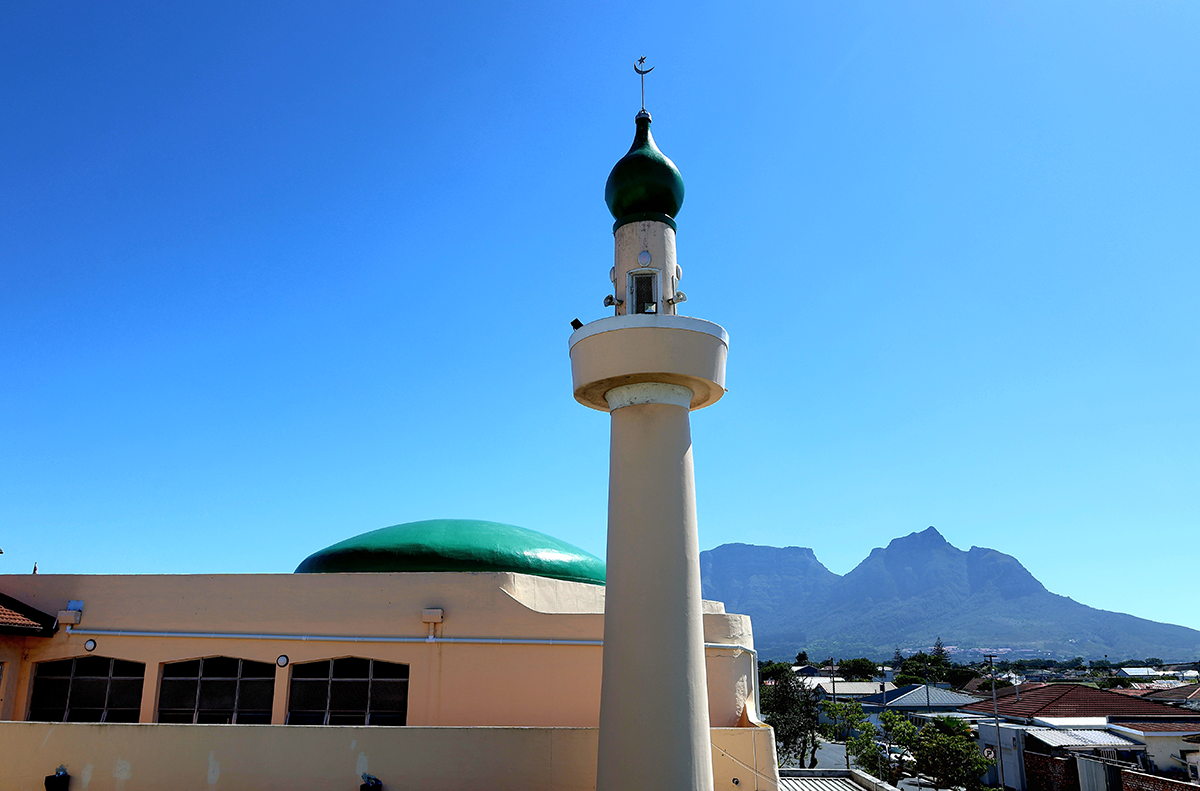
Esack did not witness Fridie’s shooting or the roof gunfire. He was trying to reach Quaker Professor Harvey van der Merwe, who had contacts in negotiating structures, to seek outside mediation.
A further witness, Abdul Karriem Adams, then a 14-year-old schoolboy, independently recalled the same pattern: shot in the back, with a large exit wound at the front. He watched Fridie fall from just outside, near the foyer adjoining the courtyard. He learned only the next day that the man shot shared his first name.
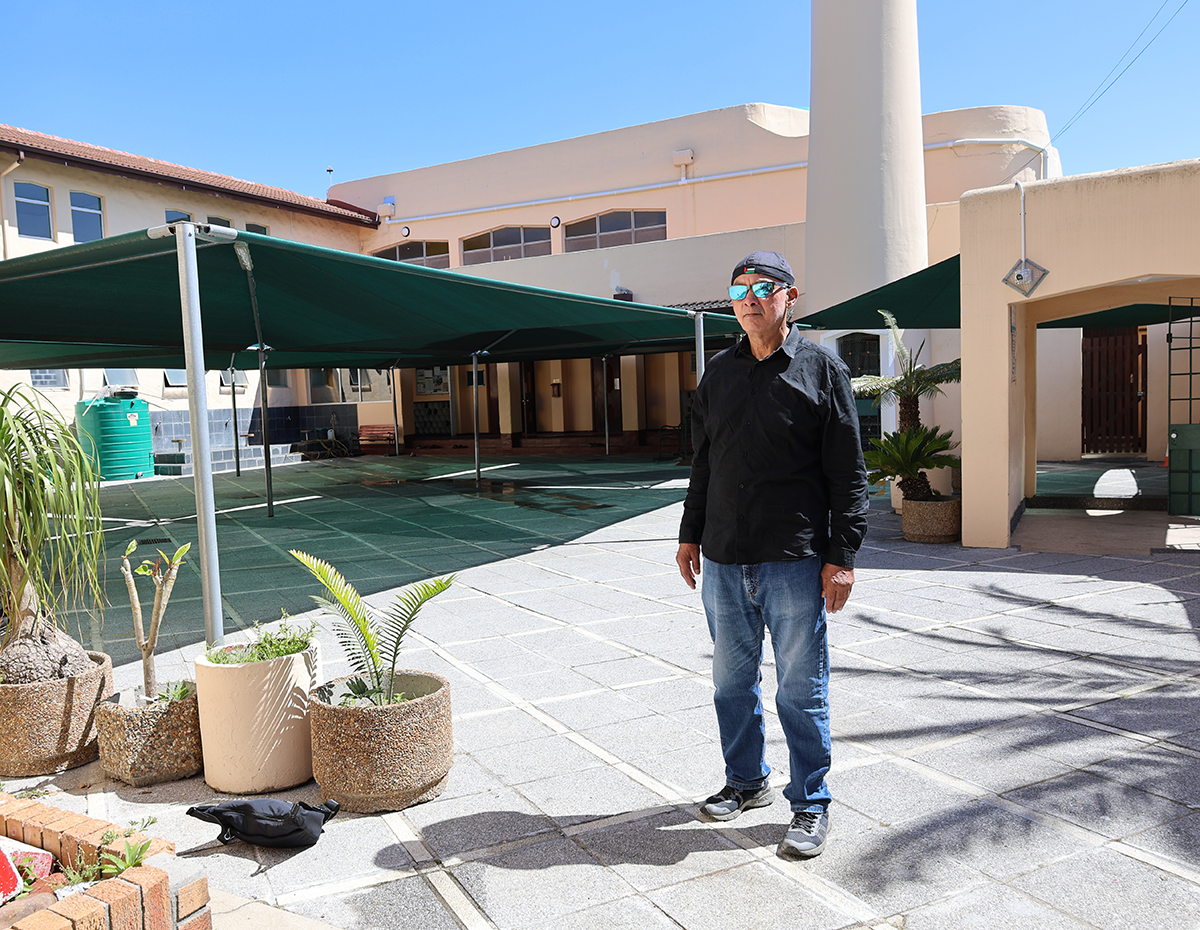
Kader and Patel independently corroborate finding Fridie. A young man called, “Boeta, please help, a man has been shot,” and the two carried him into the courtyard, Patel at the head, Kader at the legs. Patel felt the blood pouring from a back wound, his chest “completely open,” barely alive as they called for a doctor.
Fridie was carried into the mosque’s Educare block, where Drs Hashiem Samie, Aziz Adams and Ebrahim Akoojee tried to stabilise him. Knowing police were routinely stationed at Groote Schuur Hospital during unrest, the doctors sent him to Somerset Hospital, where brothers Riedewaan and Shadley Young drove him with Dr Akoojee. He died after an hour of attempted resuscitation.
A flag of truce answered with gunfire
Inside the besieged mosque, the danger was far from over. Security forces fired teargas through the windows; women and children tried to climb out to escape. Esack recalls teargas forcing women down into the men’s section. Bradlow recalled the crowd’s mood tipping into “almost panic mode.”
A delegation led by Shaykh Dien and Shaykh Nazim Mohamed, including Rasool, went out to negotiate. Bradlow witnessed Shaykh Dien and Rasool carry a white flag. Jacobs says he attempted to prevent a “panic-stricken” Shaykh Nazim Mohamed from joining this delegation with his white handkerchief as makeshift “flag.” Rasool testified to the TRC that shooting broke out from Buckley Road, forcing them back, and Manie said they took cover behind parked cars.
Dr Akoojee’s TRC testimony also describes an “imam of the mosque” urging the crowd to disperse.
The voice that carried the cause
When Shaykh Dien appealed over the mosque’s PA system, soldiers shot out the speakers. Young men blocked the surrounding roads with burning barricades to hold back the armoured vehicles, while a TV crew was smuggled into the compound to film for a foreign network.
In Shaykh Dien’s biographical account, the siege finally broke when he appeared live from the mosque office on CNN, and calls of support reached the masjid that night from as far away as Mumbai.
Community member Achmat Fardiel Abrahams described Shaykh Dien’s role: “His voice became ours when we were silenced… it gave us strength and made us almost untouchable.”
Khutbah and funerals
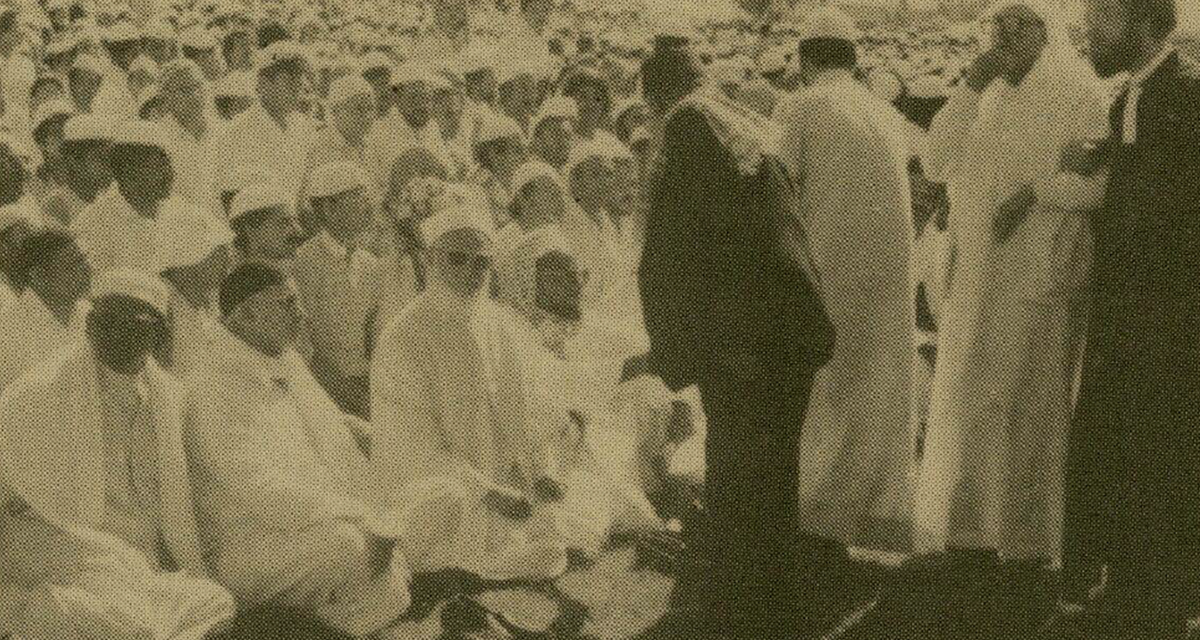
The state escalated. A few thousand heavily armed troops marched into Belgravia Road days later in a show of force the Western Cape had rarely seen. Yet the next morning, busloads of non-Muslims arrived to hear Shaykh Dien’s Friday khutbah, which attendee Mustaq Brey called “moving,” concerned with the oppressed, “irrespective of race and religion.”
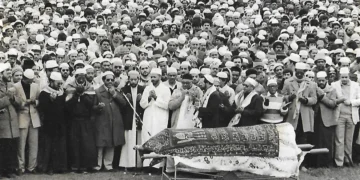
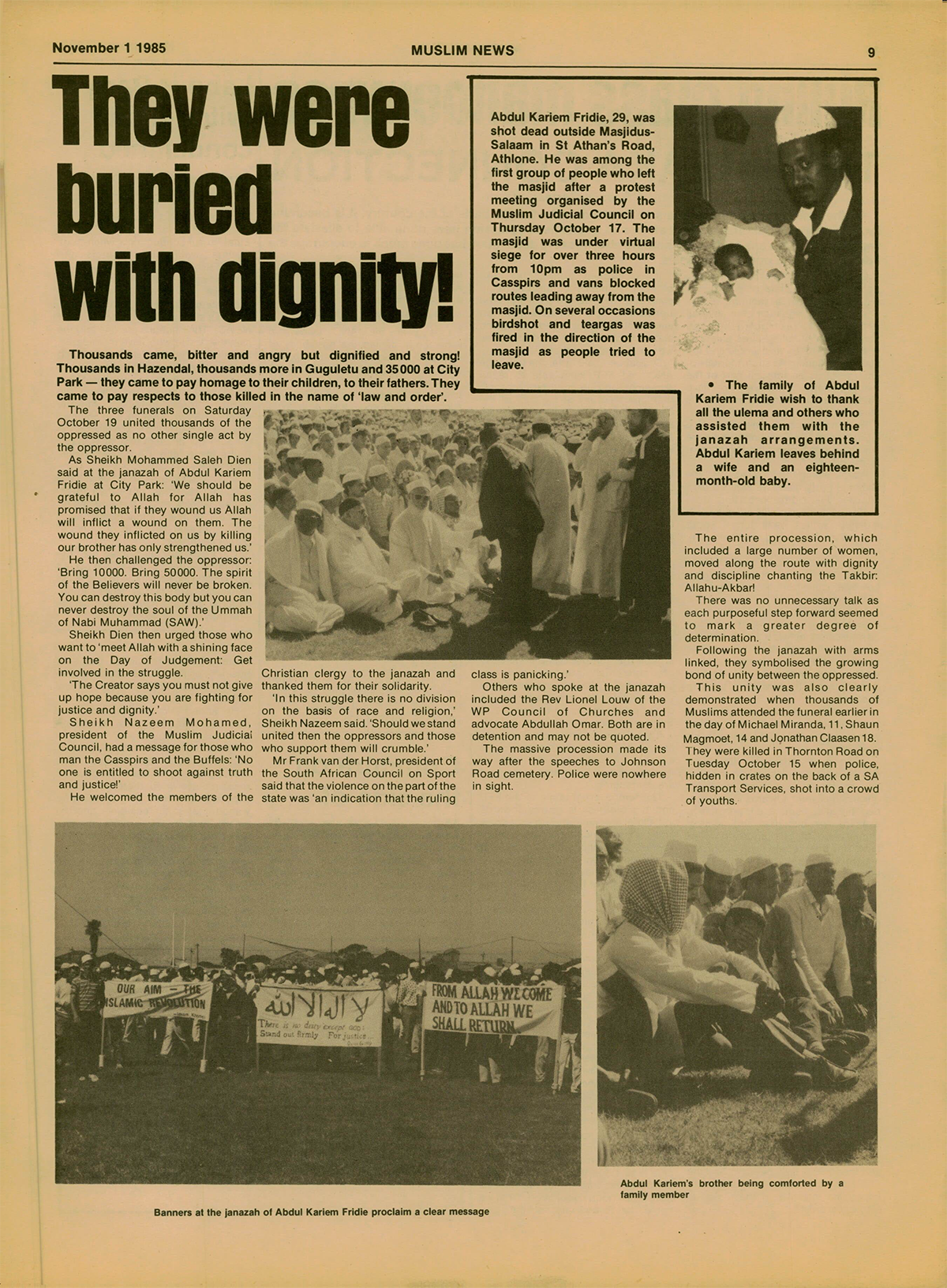
On Saturday, October 19, some 5 000 attended the joint funeral of Miranda, Claasen and Magmoet. Fridie’s janazah, held separately at City Park, drew 35 000 mourners, including speakers from the AME Church and a non-racial sporting body. Advocate Abdullah Omar and Reverend Lionel Louw, both meant to speak, were by then detained.
At the graveside, Shaykh Dien turned grief into defiance: “The wound they inflicted on us by killing our brother has only strengthened us… Bring 10 000, bring 50 000. The spirit of the believers will never be broken.”
The aftermath
A week later, the state of emergency was extended across the Western Cape. Shaykh Dien and his wife were summoned by the security branch and interrogated over a lecture condemning Apartheid he had once given in what was then Rhodesia. This information was provided to the police by an informant within his own congregation. He was warned that more trouble would see his Egypt-born wife deported.
In the weeks that followed, members of Moosa’s MK unit and Imam Hassan Solomon went into exile, their passage across the border arranged by Qibla figures Patel, Dawood Parker and Kader – cooperation that persisted despite the organisational tensions.
This account draws on Mogamat Hoosain Ebrahim’s biography of Shaykh Muhammad Salie Dien, Truth and Reconciliation Commission testimonies, and ten eyewitness interviews.