

























An independent Ward 60 candidate sets out a case for civic leadership rooted in shura, service and social justice, drawing on two decades of community activism, legal challenges, public participation and accountability in Rondebosch East, Cape Town.
By RASHARD DAVIDS
My decision to stand as an independent candidate in the forthcoming local government elections on November 4, 2026, was neither a sudden ambition to enter politics nor an attempt to advance a personal agenda. It was a response to a call from residents, founded on a principle deeply rooted in Islamic tradition and democratic governance: Shura — consultation.
For more than 20 years, I have lived in Rondebosch East and dedicated much of my time and energy to serving our community through the Neighbourhood Watch and Civic Association of Rondebosch East (CARE). Our work has never been confined to the boundaries of our neighbourhood. We have consistently stood alongside residents and communities confronting injustice, poor service delivery, questionable municipal decisions and policies that threaten the dignity, livelihoods and future of ordinary people.
Throughout these years, our guiding principle has remained simple: public office and civic leadership must be about serving people, not political parties or personal ambition.
The principle of shura is fundamental to Islamic teachings. It emphasises consultation, collective deliberation and the importance of seeking the views of others before making decisions that affect the community.
Consultation is not an abstract religious concept. It has deep roots in Islamic history and offers enduring lessons for responsible government. Our beloved Prophet Muhammad (ﷺ) consulted his companions on matters affecting the community, while the second Caliph, Umar ibn al-Khattab, is remembered in Islamic tradition for his concern for the welfare of ordinary people and his insistence that justice should not depend on a person’s status or influence.
The Quran commands us in Sura An-Nisa, 4:135, to stand firmly for justice, even when doing so is against our own interests or those of our relatives.
No political party, municipal official or public institution should be beyond scrutiny when the rights and interests of ordinary citizens are at stake.
That is the moral foundation of our commitment to challenge injustice through lawful means.
“And what is [the matter] with you that you fight not in the cause of Allah and [for] the oppressed among men, women, and children.” (Sura An-Nisa, 4:75)
This verse calls attention to the plight of people who are vulnerable and oppressed and challenges believers not to remain indifferent to their suffering.
In contemporary civic life, standing up for the oppressed need not mean physical confrontation. It can mean using lawful and peaceful means to protect people’s rights, challenge unfair decisions and hold public institutions accountable.
For a civic leader, this may involve challenging municipal charges that unlawfully burden poor households; defending communities against unjust or discriminatory planning decisions; demanding genuine public participation before major developments are approved; protecting vulnerable communities from the consequences of neglected infrastructure; insisting on transparency when public funds or municipal assets are involved; and supporting residents who lack the resources or influence to challenge government decisions themselves.
“O you who believe, be persistently standing firm in justice, witnesses for Allah, even if it be against yourselves or parents and relatives.” (Sura An-Nisa, 4:135)
This is a profound instruction. Justice must not depend on who benefits from it, who suffers because of it, or whether the person responsible is politically powerful. These teachings offer an important lesson for leadership at every level of society. Consultation is not merely a courtesy extended to the people; it is an essential part of responsible decision-making.
My candidacy, therefore, is not about seeking power. It is about responding to the collective voice of the residents.
It was in this spirit that CARE invited residents to nominate an individual from our own community who understands our neighbourhood, has demonstrated a commitment to its people and possesses the knowledge, experience and integrity to represent their interests.
You may also want to read




I accepted their call because I believe that when a community exercises its right to consultation and identifies someone it trusts to represent its interests, that decision deserves serious consideration.
My candidacy, therefore, is not about seeking power. It is about responding to the collective voice of the residents.
My record of involvement in Rondebosch East did not begin when election fever arrived. It spans more than two decades of civic engagement, advocacy and standing up to decisions that I believe are detrimental to our community.
I have witnessed how municipal policies and decisions can affect the poorest and most vulnerable members of society. I have also seen the consequences when residents feel that their concerns are ignored and that public participation has become little more than a procedural formality.
One of our most significant battles involved the municipal rates and cleaning tariffs charged to residents by the DA-led City of Cape Town administration. We participated in the High Court proceedings concerning the legality of these charges, and the court ruled in our favour.
For us, this was never simply a legal dispute about municipal accounting. It was a matter of fairness, legality and the protection of residents who should not be expected to shoulder unlawful financial burdens.
Our struggle is not over. The next legal battle will seek to secure appropriate reimbursement for affected residents. We intend to pursue this matter through the available legal processes with determination and resolve.
Our position is clear: a court victory must mean more than a declaration of principle. Where residents are legally entitled to reimbursement, we will continue to fight for that outcome.
The interests of ordinary residents must never be sacrificed to administrative convenience or political expediency.
Another issue that has consistently occupied my attention is the persistence of spatial injustice in Cape Town.
More than three decades into our democracy, we continue to confront patterns of development that risk reinforcing the inequalities inherited from apartheid. In particular, I have raised concerns about the concentration of densification and major development pressures in historically disadvantaged communities, often without adequate consideration of the infrastructure, environmental consequences and social needs of the people who already live there.
The Municipal Systems Act (MSA) establishes an important framework for community participation in municipal governance. The Municipal Asset Transfer Regulations (MATR) also provide a regulatory framework relevant to municipal asset transfers and disposals.
These legal frameworks must be applied appropriately, and public participation must be genuine, informed and meaningful. Residents should not be left with the impression that decisions have already been made before they are invited to express their views.
I have repeatedly challenged processes that, in my view, fall short of the meaningful engagement our communities deserve.
The future of our neighbourhoods cannot be determined exclusively in municipal boardrooms while the people who will bear the consequences are left on the margins.
I have also raised concerns about decisions to pursue large-scale developments in environmentally sensitive and biodiverse areas.
Our natural environment is not an obstacle to progress. It is part of our common inheritance, and its protection is a responsibility we owe to future generations.
Where development threatens biodiversity, the public must be given transparent information, and the environmental and social consequences must be properly assessed.
Equally troubling are questions surrounding the disposal of municipal land and the City’s responsibility to address the housing needs of its residents.
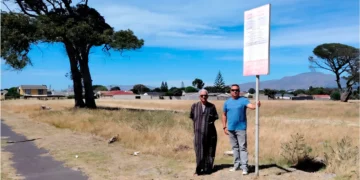
The proposed auction of 44 municipal sites in Constantia raises legitimate questions about the City’s priorities and its approach to public land.
At a time when affordable housing remains a pressing challenge, residents are entitled to ask whether the disposal of valuable public land adequately considers the need for social housing and other public-interest uses.
Municipal land is a public asset. Decisions concerning its future should be informed by transparency, fairness and the long-term interests of the broader community.
These are not partisan questions. They concern the kind of city we want to build and whether municipal resources are being managed in the interests of all residents.
Public trust in municipal government depends on transparency, accountability and the responsible use of public funds.
Ratepayers and taxpayers have a right to know how their money is spent, whether procurement rules are being followed and what measures are being taken to prevent the misuse of public resources.
Municipal government exists to serve the public. It is not a private enterprise belonging to those who happen to occupy positions of political authority.
Where there are legitimate concerns, residents must be able to demand answers without fear of being dismissed, marginalised or treated as political opponents.
This is why independent civic leadership matters. It provides an additional avenue through which residents can question decisions, scrutinise expenditure and insist on accountability without being constrained by party-political considerations.
Ward 60 currently has 41 candidates contesting the election, yet, according to the information available to me, only two reside within the ward.
This raises an important question for voters as to how well a candidate understands the community they seek to represent.
A resident who has lived in the community for many years and has actively participated in its struggles may possess a valuable understanding of its challenges, its history and its aspirations.
I encourage voters to look beyond campaign posters, slogans, party colours and promises made in the weeks before an election.
A candidate’s record should speak louder than their campaign promises.
Independence does not mean refusing to cooperate. It means retaining the freedom to make decisions on their merits rather than simply following a party line.
Our decision to invite resident nominations was an expression of consultation. It provided residents with an opportunity to identify an individual whom they believed could represent their interests in the forthcoming election.
The principle of Shura reminds us that leadership should emerge from consultation, that collective wisdom matters and that those entrusted with responsibility must remain conscious of the people they serve.
Ultimately, however, the decision belongs to the electorate.
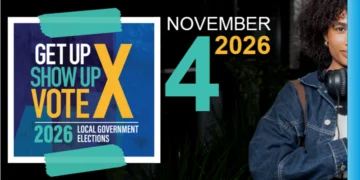
On November 4, 2026, voters will have the opportunity to decide who they believe can best represent Ward 60. I trust that they will exercise their democratic rights thoughtfully, critically and independently.
I ask only that they examine the record, question the promises and consider the principles upon which each candidate stands.
Do not vote merely because a candidate wears a familiar party colour. Do not allow election slogans to overshadow years of lived experience. And do not underestimate the value of a representative who is prepared to stand firm when the interests of residents are at stake.
Our communities need leadership that listens before it decides, consults before it acts and remains accountable long after the election is over.
That is the spirit of Shura. That is the foundation of meaningful democracy. And that is the commitment I bring to my candidacy.
I stand as an independent because I believe that the voice of the community must come before the dictates of party politics.
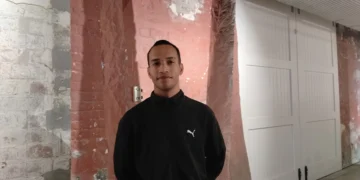
Rashard Davids BA, MBA is standing as an independent candidate in Cape Town’s Ward 60 in the upcoming local government elections.