





















































By MOGAMAT ALI SALIE
A family business can hold far more than money: it represents decades of sacrifice, parental hopes, employment for relatives, and a legacy intended for children, yet relationships often strain without clear decision-making processes.
The relationships that helped build a family business can become strained when nobody is clear about who may make decisions, how those decisions must be recorded or what happens when the next generation takes over.
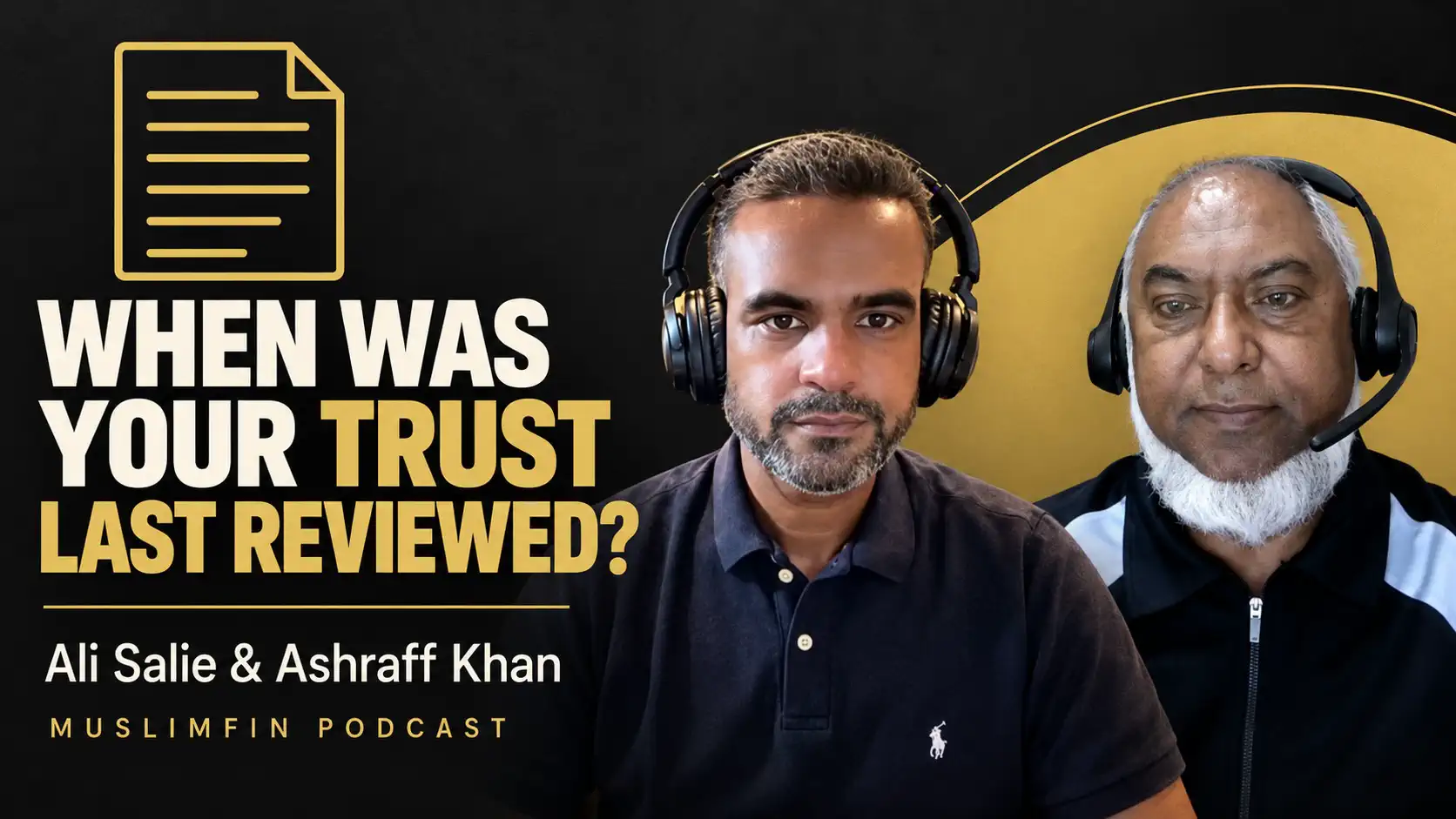
In my recent MuslimFin Podcast conversation with Ashraff Khan, Wealth Manager – Fiduciary Specialist, we explored a question that matters to many households: how do we preserve trust while putting proper structures around our wealth?
The answer begins with recognising that affection, faith and familiarity do not remove the need for clear responsibilities. A handshake may express good intentions. The documents and processes around a business or trust must explain how those intentions will work in practice.
Trust must be accompanied by understanding
My message to clients is simple: trust, but verify. Before accepting advice or committing money, understand who is providing the advice, what the proposed solution does and which responsibilities each party carries.
Checking relevant registration and authorisation is one step. Asking about reputation, the underlying arrangement and oversight is another. Neither a familiar face nor membership of the same community should make us reluctant to read a proposal or ask for a clear explanation.
You may also want to read






A useful question is: could I explain this arrangement to my family? If the answer is no, ask again. Who holds the assets? Who can make decisions? What records will I receive? Who can help if the person I usually deal with is no longer available?
This is not an invitation to distrust everybody. It is a way to make relationships more durable. When expectations are written down and understood, fewer decisions depend on memory, assumption or the influence of one person.
Make the rules work before a disagreement arises
Ashraff emphasised the importance of the documents that govern a company or trust. A company’s memorandum of incorporation and a trust deed have practical meaning. They help determine powers, responsibilities and the process for taking decisions.
Families should know who occupies each role and what authority comes with it. Ownership, management, trusteeship and being a beneficiary are different positions. Being involved in one capacity does not answer every question about another.
Meetings, minutes and records of decisions may seem administrative while relationships are good. They become valuable when somebody needs to understand why a decision was made. Families can also consider how they will resolve disagreements, including when independent advice or mediation should be sought.
The detail matters. A general statement that a majority can decide is no substitute for reading the actual document, including its notice, quorum and voting provisions. Each structure needs to be assessed on its own wording and circumstances.
Read the clause that could change the whole plan
During our discussion I recalled reviewing an older trust deed. One provision said that the trust would dissolve when a daughter reached 34. My question was why a family would allow years of planning to end at that point without considering whether the provision still served its purpose.
The lesson is to investigate the wording and its consequences. A clause that once seemed suitable may no longer match the family’s circumstances. Children grow up, businesses change and the people who originally established an arrangement may no longer be there to explain it.
An age-based termination provision is not automatically wrong. It does, however, deserve a considered review. What was it intended to achieve? What would happen to the assets? Who would receive them? What legal, tax and administration issues would arise? Would an amendment be appropriate and legally permissible?
Those questions should be answered before a trigger date arrives. A trust should not be treated as a document that can simply be filed away forever. Where a family wants its planning to reflect Islamic principles, that also needs deliberate review with the relevant qualified specialists.
Give the plan a review date
Towards the end of the conversation, I returned to the need to review the business and its structures. A valuation and a review of the trust documents can reveal whether the plan still fits the family’s needs. The interval should suit the circumstances; waiting for an arbitrary anniversary can be too late after a significant change.
Ashraff recommended regular reviews rather than leaving documents untouched for years. Changes in the family, the business, the law or the interpretation of a clause may require attention sooner. Families should agree with their advisers what will be reviewed, who will be responsible and which events will trigger an earlier check.
Start with the basics: locate the current will and trust deed, identify the businesses and assets involved, and establish who has authority to act. Then bring the relevant people together to check that the documents, decisions and intended outcomes still align.
Protecting wealth is also about protecting relationships. Clear documents and accountable processes give a family a better chance of continuing the work that earlier generations began. Trust remains at the heart of that work. Verification helps give it a foundation that the next generation can understand.
Watch the full MuslimFin Podcast conversation with Ashraff Khan: https://youtu.be/w9eGto-VdBM
This article is for general education. Decisions about a particular business, trust or estate require advice based on its documents and circumstances. Mogamat Ali Salie is the founder of MuslimFin Family Office and host of the MuslimFin Podcast.