



![Does ta’wīl mean interpretation or fulfilment? A Quranic reassessment [+video]](https://muslimviews.co.za/wp-content/uploads/2026/10/Tawil-Kaskas-360x180.webp)










![Why becoming a wealthy Muslim is commendable in Islam [+videos]](https://muslimviews.co.za/wp-content/uploads/2026/09/Muslim-Trade-Business-1-360x180.webp)



Amid war, racism, poverty, ecological crisis and rapid technological change, this article reflects on how the Prophetic legacy, iḥsān and adab can shape Muslim ethical agency grounded in justice, mercy, dignity and care today.
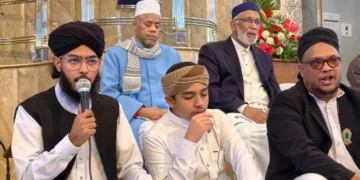
This article draws on a webinar lecture delivered to BEd Honours students at IPSA College on August 27, 2026, 5pm to 9pm, and a khutbah delivered at Masjied Khaleel in Hazendal / Bokmakierie, Cape Town on August 28, 2026.
By PROFESSOR ASLAM FATAAR
We are living through a period of profound moral turbulence. War and genocide unfold before us in real time. Racism, poverty, displacement and violence continue to fracture societies. Ecological degradation threatens human and non-human life, while digital technologies and artificial intelligence rapidly change how we communicate, learn, and understand the world.
For Muslims, these conditions raise a demanding question: what does it mean to live Islamically in a world on fire?
This question concerns more than Muslim identity. It asks what kind of human beings our religious lives are forming and whether our Islam makes us more attentive to suffering, more committed to justice, more compassionate, more discerning and more capable of protecting human dignity. These are questions about Islamic ethical agency.
Ethical agency has to be formed
Ethical agency does not suddenly appear when a crisis arrives. It forms slowly through family, biography, worship, reading, memory, struggle, and participation in social life. Our experiences also shape us. Injustice can awaken a consciousness of dignity, vulnerability can deepen compassion, and struggle can teach courage and solidarity.
Religious knowledge gives us a language through which to interpret these experiences, but knowledge must enter character and judgement. The important question is what our knowledge enables us to see and what kind of action it makes possible. This means learning to read in several directions at once: we read the Qurʾān and Sunnah, the Prophetic life, history and the circumstances in which people actually live.
Such reading should lead us to ask who is suffering, whose dignity is being denied, what forms of power are operating, and what responsibilities arise for us. Islamic ethical formation requires bringing these readings together so that knowledge becomes a source of moral orientation and responsible action.
The Prophetic legacy as living inheritance
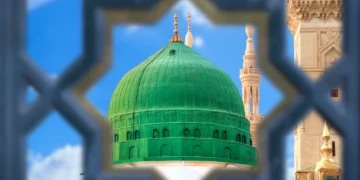
At the centre of this formation stands the legacy of Prophet Muḥammad ﷺ. The Prophet ﷺ transmitted revelation through words, but revelation also became visible through the way he lived. It appeared in his mercy, justice, restraint, courage, care and treatment of other people. His words, actions, gestures and presence made Qurʾānic meaning visible in human life.
This is why the Prophetic legacy is more than sacred historical memory. It is a living amānah, a trust carried from one generation to another. Each generation must learn how to carry that inheritance into its own circumstances. Today it must enter our homes, schools, universities, workplaces and digital spaces, and it must speak to poverty, racism, violence, ecological destruction, inequality and technological change.
Following the Prophet ﷺ therefore requires ethical judgement. We carry his enduring moral example into circumstances that he did not encounter in precisely the forms that we encounter them. A living tradition remains faithful by translating its ethical grammar intelligently into the conditions of the present.
Iḥsān in fractured times
Iḥsān provides a powerful ethical grammar for this work. It joins inward God-consciousness to outward moral action and calls us towards what is beautiful and excellent before Allāh, in our relationships with other people and in our relationship with the created world. Iḥsān holds together raḥmah, mercy; ʿadl, justice; karāmah, dignity; and jamāl, beauty.
Its real test comes under pressure. Can we remain committed to justice when we have been injured? Can we protect another person’s dignity when we disagree deeply? Can we resist oppression while protecting the moral substance of our resistance? A world saturated with violence can make people hard, while digital environments can encourage instantaneous judgement and humiliation. Political conflict can reduce human beings to categories. Iḥsān asks us to remain human amid these pressures.
What my khutbah brought home
I reflected on this very concretely while delivering the Jumuʿah khutbah last Friday (August 28) in Hazendal on the Cape Flats. I spoke about dār al-ibtilāʾ, this world as an abode of testing, and that language becomes very real on the Cape Flats. Unemployment, debt, addiction, gang violence, bereavement, family strain, parents worrying about their children and young people searching for belonging all form part of the realities through which people are called to live with faith and dignity.
I reflected on how the Prophet ﷺ himself knew profound grief. He was orphaned as a child, buried children whom he loved, and watched his daughters endure separation, migration, illness and death. When his young son Ibrāhīm died, the Prophet’s ﷺ eyes filled with tears. The lesson that stayed with me is that his suffering did not make him harsh; his grief enlarged his mercy. This, for me, is a profound expression of iḥsān.
Ṣabr does not mean that nothing hurts, and strength does not require turning the heart into stone. Prophetic strength allows grief to deepen our capacity to care. This matters greatly in communities carrying generations of hardship, because hurting people can sometimes hurt others. The exhausted parent becomes harsh, the neglected young person seeks belonging in dangerous places, and the struggling family becomes isolated.
Here the Sunnah must enter everyday life. We speak gently, listen carefully, let children experience tenderness, honour elders, notice the young person drifting towards danger, help the learner who can enter university, make the telephone call that may help someone find work, and support the family whose cupboard is empty without taking away their dignity. Ons kyk na mekaar. Ons dra mekaar. We look after one another. We carry one another. That too is Prophetic ethics.
Adab in an age of speed
This brings us to adab. Adab is more than good manners; it is a disciplined way of being present to others. It involves attentiveness, restraint, care and responsible speech. These qualities matter enormously in the digital age, where we increasingly respond before understanding, judge before listening and circulate claims before verifying them.
Adab asks us to slow down, listen carefully, verify, attend to context and protect dignity. It teaches us when to speak and how to speak, and that moral seriousness sometimes requires silence before responding. These habits must be cultivated in our homes, mosques, classrooms and online lives.
Towards a ḥayātan ṭayyibah (the wholesome dignified life)
The Cape Muslim tradition gives us a powerful historical resource for this task. Islam at the Cape survived slavery, exile, colonialism and apartheid through recitation, teaching, memory, household practices and collective care. Women and men carried Islam through ordinary acts of ethical endurance, and that inheritance places a responsibility upon us today.
You may also want to read




Our task is to build a ḥayātan ṭayyibah, a good, wholesome and dignified life, amid the pressures of our own time. This means refusing to allow people to walk through dār al-ibtilāʾ entirely alone. The child is protected, the elder is honoured, the neighbour is noticed, the struggling family is carried, and the young person is shown a path towards possibility.
The Prophetic legacy becomes alive through such practices. Iḥsān calls us towards beauty and excellence under pressure, adab teaches disciplined and caring presence, and amānah reminds us that the tradition we inherit carries responsibilities towards Allāh, other human beings and the world we inhabit.
Perhaps this is one of the most important measures of contemporary Muslim life: whether we can convert faith into responsibility, memory into solidarity, knowledge into judgement, and moral conviction into consequential action. That is the demanding work of living Islamically in a world on fire.
Aslam Fataar is a Research Professor in Higher Education Transformation in the Department of Education Policy Studies at Stellenbosch University. He is the editor of Prophet Muḥammad at 1500: His Prophetic Legacy, Ethical Vision and Contemporary Resonance (Cape Town: Awqaf-SA and the Prophetic Legacy Commission, 2026).