












![Does ta’wīl mean interpretation or fulfilment? A Quranic reassessment [+video]](https://muslimviews.co.za/wp-content/uploads/2026/10/Tawil-Kaskas-360x180.webp)




















![Why becoming a wealthy Muslim is commendable in Islam [+videos]](https://muslimviews.co.za/wp-content/uploads/2026/09/Muslim-Trade-Business-1-360x180.webp)



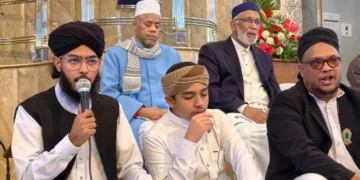

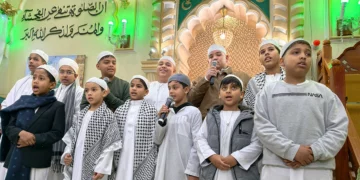


Cape Mawlid traditions turn listening into spiritual formation. Through stemme (voices), lāghoes, ṣalawāt and shared remembrance, communities cultivate Prophetic love, memory, resilience and a deeper capacity to respond to one another with care.
By PROFESSOR ASLAM FATAAR
The Cape Mawlid tradition is immediately recognisable through its sounds.
The stemme, the lāghoes, the karinkel, and the rhythmic recitation of ṣalawāt, qasāʾid and riwāyāt form part of a religious world that many Cape Muslims know intimately. Yet these sounds do more than create a familiar atmosphere. Mawlid is a tradition of voices raised, words heard, hearts stirred, and communities responding together.
Through hearing, movement, repetition and participation, religion settles into the body and touches the heart. This matters in a time when we are surrounded by sound but increasingly struggle to listen. Our phones speak constantly, and messages, images and opinions arrive without pause. Spiritual listening asks something different of us: it asks us to become present.
Listening with the heart
The Qurʾān gives us a beautiful language for understanding this. Allah describes the person who receives a reminder as one who has a heart and who “gives an ear while fully present”: alqā al-samʿa wa huwa shahīd. (Sūrat Qāf, 50:37) This is what I call conscious-heart listening. The ear hears, but hearing reaches its spiritual purpose when the qalb, the heart, is awake and the person is fully and inwardly present. Alqā al-samʿa wa huwa shahīd therefore means more than receiving sound. It is to listen with a conscious heart.
Samʿ refers to hearing, istimāʿ to attentive listening, and samāʿ, in the Sufi tradition, to spiritual audition, deep listening with the heart. Sūrat al-Aʿrāf reinforces this disposition by calling believers to listen attentively and become silent when the Qurʾān is recited. (Sūrat al-Aʿrāf, 7:204)
Jibrīl commanded the unlettered Prophet ﷺ, Iqraʾ, “Recite”. Muḥammad ﷺ recited, while others listened, memorised and changed. Revelation moved from sound into the inner person and from there into ways of living. Listening, in this understanding, is already connected to spiritual formation (Fataar and Norodien-Fataar, 2026).
Love that forms us
At the centre of this Prophetic world is maḥabbah, love. Allah tells believers in Sūrat al-Aḥzāb that Allah and His angels send blessings upon the Prophet ﷺ and commands believers to send blessings and peace upon him. When die stemme rise with ṣalawāt, love for Rasūlullāh ﷺ is voiced, heard, repeated and carried into the heart.
Prophetic love must also take direction. Maḥabbah must form us, so that praise deepens mercy, justice, restraint, courage and service. This is where samāʿ becomes important. Across Muslim societies, communities cultivated spiritual audition through Qurʾānic recitation, dhikr, ṣalawāt, poetry and ḥaḍrah. Imam Abū Ḥāmid al-Ghazālī, in his Iḥyāʾ ʿUlūm al-Dīn, explains that what we hear can stir what already lies within the heart.
The ear receives the sound and the qalb is stirred. The rūḥ, the spirit, is drawn towards Allah; the ʿaql, the intellect, discerns what this inward stirring asks of us; and the jism, the body, gives that response outward form. What begins as inward stirring must move into life, becoming aʿmāl, the deeds through which what has taken root within us becomes visible.
Mawlid as a Cape spiritual culture
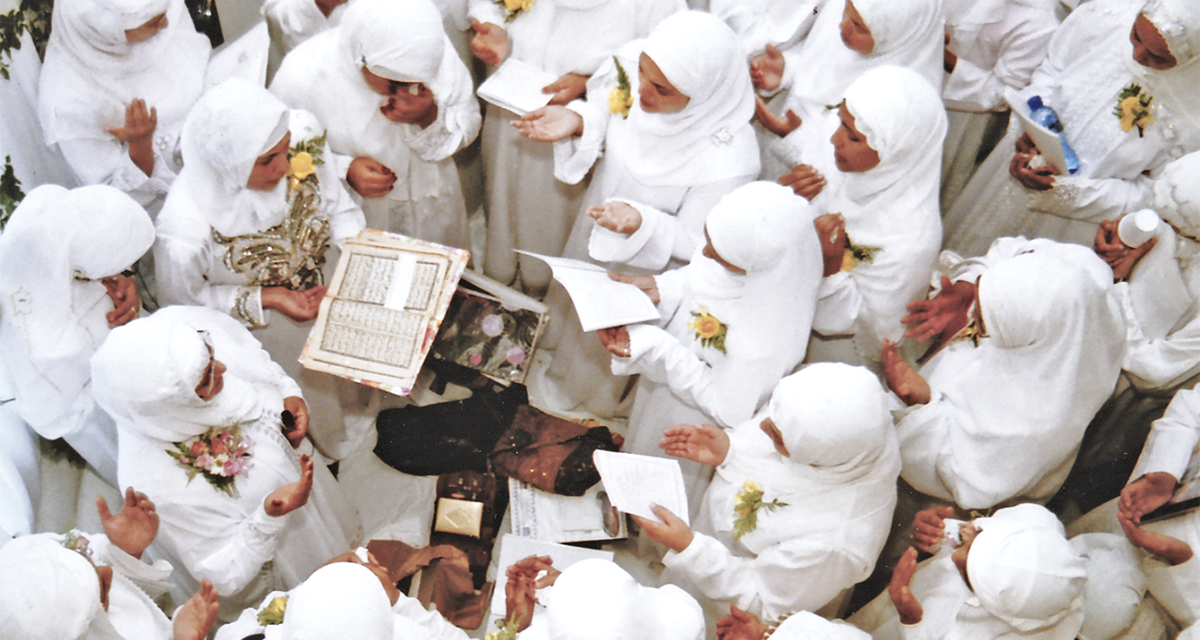
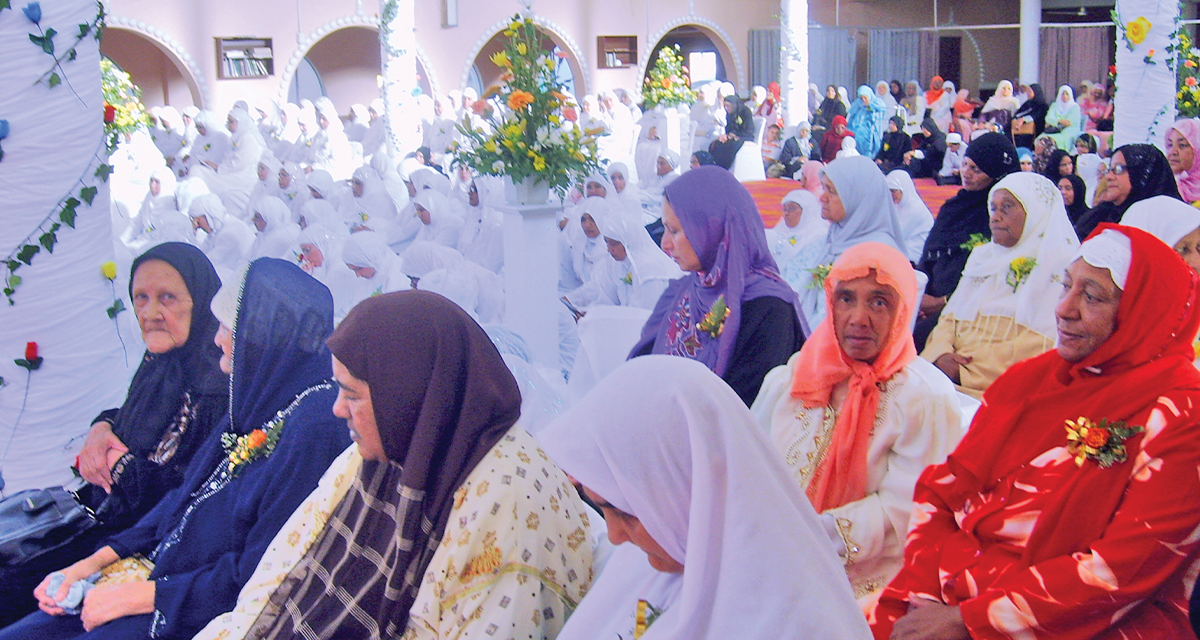
Thoerria Najjar-Philander’s 2023 Master’s thesis shows how this spiritual culture has been sustained in Cape Town. Her study of the Cape Muslim Ladies Mawlūd Jamāt Fraternity shows how these gatherings sustain spiritual formation and intergenerational community life.
Especially important are the lāghoes, the distinctive melodies through which Mawlid recitations are rendered. One participant in Najjar-Philander’s study recalled learning the lāghoe of the ṣalawāt and ashraqal before she understood the Arabic words. She hummed along until the words became familiar. We listened, hummed, repeated and imitated our elders.
In a very real sense, we hummed ourselves into the tradition. Through stemme, clothing, food, fragrances, lāghoes and collective recitation, Mawlid became a sensory form of intergenerational religious formation through which devotion, memory and belonging were cultivated.
A spirituality that travelled
This culture of spiritual audition has a transoceanic history. It travelled across the Indian Ocean through scholars, Sufi teachers, traders, pilgrims and exiles who carried practices of Qurʾānic recitation, dhikr, ṣalawāt, poetry and ḥaḍrah. One of the great figures through whom this tradition travelled was Shaykh Yūsuf al-Maqassarī, born four hundred years ago, in 1626 CE.
His life traced the routes of the Indian Ocean world from Sulawesi to the Ḥaramayn, before colonial exile carried him through Ceylon to the Cape. The VOC brought him as a prisoner, yet he remained a carrier of knowledge, spirituality and resistance. Arriving in 1694, he provided spiritual guidance among enslaved people, exiles and marginalised communities and is associated with the reintroduction of the ḥaḍrah (spiritual gathering of remembrance) at the Cape.
This wider Sufi culture of deep listening found expression in our Mawlid traditions, including the beloved local ashraqal, the standing salām and ṣalawāt when voices rise together: Yā Nabī salāmun ʿalayka, yā Rasūl salāmun ʿalayka, “O Prophet, peace be upon you. O Messenger, peace be upon you.” Here the voice expresses love, the ear receives, the qalb is stirred, and the community responds together.
This culture of deep listening offers more than private consolation. It becomes inward fuel for resilience, cohesion and community responsiveness. Sūrat Āl ʿImrān calls believers to hold firmly to the rope of Allah and not become divided, and later reminds them that Allah “joined your hearts”. (Sūrat Āl ʿImrān, 3:103) We hold firmly to Allah, refuse division and remain bound to one another, and through that togetherness Allah joins our hearts. When hearts are joined, people notice suffering, offer care, create opportunity and build pathways for others.

Ons hoor dit, ons voel dit
At the Cape, we inherited this culture of spiritual voicing and listening and made it our own through die stemme, die lāghoes and die karinkel. Fatima Sadan’s 2025 Master’s dissertation at the University of Cape Town shows that Arabic among Cape Muslims cannot be understood only through conversational proficiency. Arabic also lives through recitation, prayer and the sensory experience of sound. Many Cape Muslims may not speak Arabic, but ons hoor dit, ons voel dit: we hear it and we feel it, as it settles into memory and touches the qalb.
You may also want to read





One of Sadan’s interviewees evocatively compares Qurʾānic recitation to flowing water, rustling leaves and rain falling softly on a roof, producing a feeling of coming home. My emphasis on hearing has an exclusionary limit for Deaf and hard-of-hearing people, and this must be acknowledged. The wider point is that spiritual formation is sensory and embodied, occurring through sound, sight, touch, movement, memory and presence.
The Qurʾānic assurance that “surely, in the remembrance of Allah hearts find tranquillity” is especially evocative here. (Sūrat al-Raʿd, 13:28) Such tranquillity is not withdrawal from life. A settled heart can become a source of steadiness when the world around us is unstable.
Spiritual refuelling
Najjar-Philander tells us that in 1928 the teenage Hadjie Mariam Bassier established the al-Faḍeelah Ladies Mawlid Jamāʿah in the Bo-Kaap. Through such networks, women carried Mawlid traditions across the Cape Peninsula and into the Boland.
I think here of a film clip from around 1985 that recently appeared on my Facebook feed. It shows a Mawlid gathering at my uncle Imam Aboubaker Simon’s Galliloer Rahman Masjid in Ellesmere Street, District Six. District Six had been destroyed, yet the jamāʿah returned. Women sat in the masjid cutting orange and lemon leaves for rampies while their stemme rose, the lāghoe settled and the karinkel lifted the praise.
Outside was forced removal; inside was ṣalawāt. Apartheid had broken neighbourhoods apart, while inside people were being spiritually gathered again around love for Rasūlullāh ﷺ. This was spiritual refuelling. Those families returned to communities across the Cape Flats and built masājid, Slamse skole, burial societies, feeding networks, youth formations and educational pathways. The Mawlid did not build these institutions by itself, but the belonging, dignity, love and cohesion cultivated through such gatherings helped sustain the people who did.
Listening in a world on fire
Allah promises a ḥayātan ṭayyibah, a good and wholesome life, to those who believe and act righteously. (Sūrat al-Naḥl, 16:97) Such a life has often been built through spiritual resilience, cohesive families, responsive communities and institutions of care.
Our own nīrān, the fires of this time, are severe: Gaza and genocide, war and hunger, unemployment, gender violence, families under pressure and ecological destruction. We also inhabit a digital world that surrounds us with endless sound while weakening our capacity to listen. The Cape Mawlid tradition therefore poses a deeply contemporary question about what kind of hearing we are cultivating.
Alqā al-samʿa wa huwa shahīd calls us to conscious-heart listening, to become inwardly present enough to hear both the waḥy, the revelation of Allah, and the human realities around us. When love for the Prophet ﷺ deepens this attentiveness, it should shape how families speak, communities notice distress, young people are accompanied towards viable futures, and neighbours carry one another through vulnerability.
The stemme, Mawlid jamāʿahs, lāghoes, karinkel, rampies and ashraqal therefore belong to something larger than a cherished cultural inheritance. They renew an interior spiritual world from which mercy, responsibility and community life can grow. In this sense, samāʿ, deep listening with the heart, becomes spiritual fuel, regenerating the love, cohesion and moral energy through which communities continue building a ḥayātan ṭayyibah amid the tests and fires of our time.
References
Fataar, A. & Norodien-Fataar, N. 2026. “Introduction: Carrying the Prophetic Legacy in a World Fifteen Centuries On.” In A. Fataar (Ed.), Prophet Muḥammad at 1500: His Prophetic Legacy, Ethical Vision and Contemporary Resonance. Cape Town: Prophetic Legacy Commission and Awqaf SA.
Najjar-Philander, T. 2023. “The Role of Ladies Mawlūd Jamāts in Preserving an Islamic Tradition in Cape Town: A Maqāsidi-Based Thematic Analysis”. Master’s thesis in Applied Islamic Thought, International Peace College South Africa (IPSA), Cape Town.
Sadan, F. 2025. “Arabic: The Language of Muslimness in Cape Town”. MA minor dissertation in Linguistics, University of Cape Town, Cape Town.
Professor Aslam Fataar is a Research Professor in Higher Education Transformation in the Department of Education Policy Studies at Stellenbosch University. He is the editor of Prophet Muḥammad at 1500: His Prophetic Legacy, Ethical Vision and Contemporary Resonance, published in 2026 by the Prophetic Legacy Commission and Awqaf SA.
- This article draws on a khutbah delivered by the author at Claremont Main Road Mosque, Cape Town, on September 11, 2026.