





![Does ta’wīl mean interpretation or fulfilment? A Quranic reassessment [+video]](https://muslimviews.co.za/wp-content/uploads/2026/10/Tawil-Kaskas-360x180.webp)












![Why becoming a wealthy Muslim is commendable in Islam [+videos]](https://muslimviews.co.za/wp-content/uploads/2026/09/Muslim-Trade-Business-1-360x180.webp)





Who Was Counted, Who Was Carried at Cape Town’s Desmond and Leah Tutu House brings contemporary art and archival research together to explore the overlooked histories of sailors, enslaved people and migrants, and asks whose stories endure.
By YASEEN BARDIEN AND ANWAR OMAR
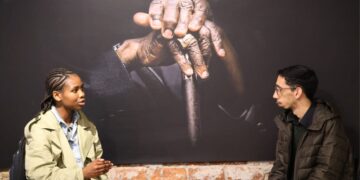
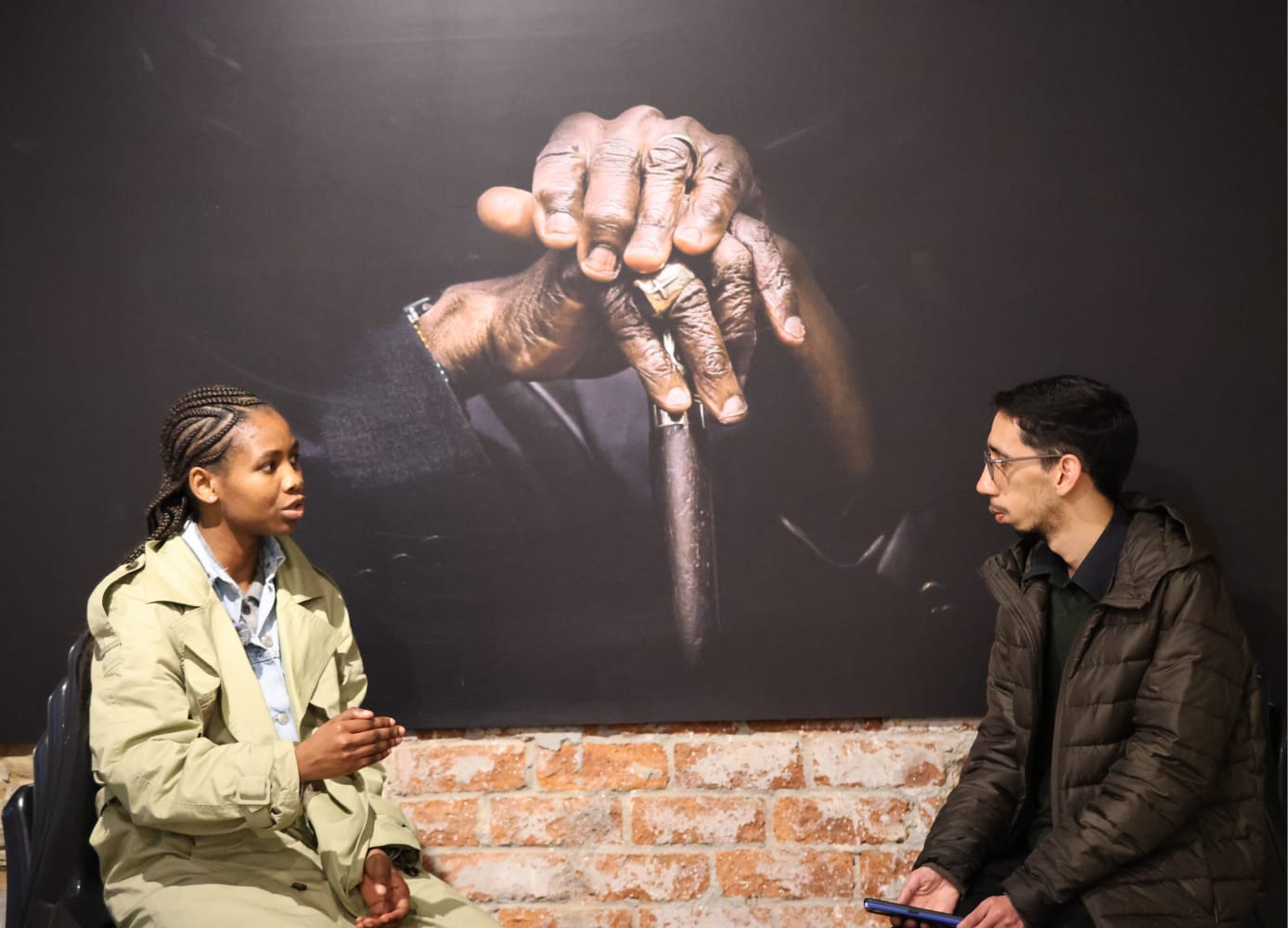
Dozens of visitors explored paintings and installations at the opening of Who Was Counted, Who Was Carried at the Desmond and Leah Tutu House in Cape Town on Thursday, August 6. The historic building was originally a granary, presumably built with enslaved labour.
Organised by Our Cape Town Heritage (OCTH), the exhibition explores the histories of people who came to Cape Town, including documented and undocumented people, with a particular focus on sailors, enslaved people and migrants.
It asks who is remembered in the historical record and whose stories have been left out. Through contemporary art and archival research, the exhibition brings these untold stories into the public eye.
“The exhibition is about the indentured people who came to Cape Town, where you have people who have been documented and people who have been undocumented,” said Muneera Davids, OCTH’s Director of Operations.
“The types of stories we want to tell are the untold stories, stories that aren’t written down anywhere,” said Davids.
She explained that this is why the organisation researches these stories and presents them to the public through art exhibitions.
Davids said OCTH uses art as a vehicle for education and heritage preservation, while making its research available through its Digital Archive Research Library (DARL), an online archive focused on preserving historical and cultural heritage.
“We want people to leave with a sense of knowledge,” said Davids. “We also want them to question their own heritage, think about their own stories, how they can preserve their stories within their own families across generations.”
The artists and attendees
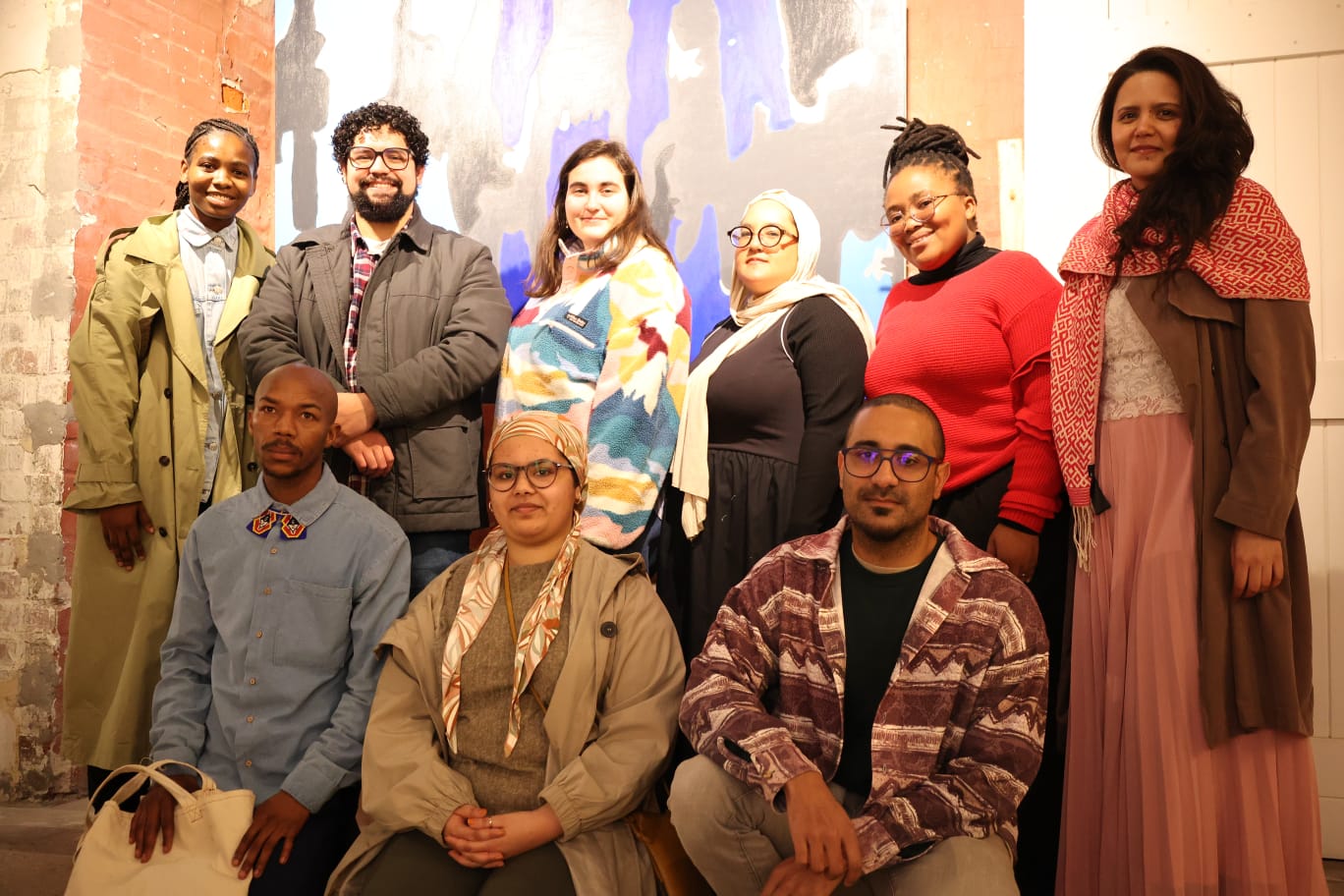
Five contemporary artists bring different perspectives to the exhibition.
Liam van der Heever uses the familiar household drawer to explore the things people keep and the ways people are placed into categories.
He calls the drawers “Trojan horses”, connecting them to the 1985 Trojan Horse Massacre in Thornton Road, Athlone. He sees the installation as a symbol of resistance and empowerment, drawing attention to histories and knowledge systems that have been overlooked.
Thurston Jacobs, who works under the name Ra l, uses his art to preserve stories, heritage and language. His work draws on histories of resistance to colonialism while highlighting perspectives that he says have been overlooked.
“What I do through my art is to preserve these stories, the people, the heritage and the language,” said Jacobs.
Nosihle Bhengu’s work draws on the colonial history and heritage of Clifton and Maidens Cove. She combines art and architecture to bring attention to hidden histories and give a voice to people whose stories have not been heard.
“I want to push my architecture into art because people don’t really know what architecture is about,” said Bhengu.
She said she wanted visitors to see more than the artwork itself.
“Visually, I want people to see, when they see my work, I want them to see not only art, but also the architecture in it and the people behind the architecture,” said Bhengu.
You may also want to read



Lindisipho Gulwa takes a more personal approach, exploring identity beyond labels of race and gender. He says his creative process challenges him to look beyond societal expectations and consider how people are treated based on how they are perceived.
“I’m trying to execute the idea to its core without being influenced by earthly or society labels,” said Gulwa.
Vas Putter’s work explores humanitarian and environmental issues, as well as the diaspora and displacement of people and artefacts. It considers how everyday objects and actions can carry histories of colonialism and apartheid.
Among those attending was Dayaan Petersen, who previously worked as an archival researcher for OCTH. He said the exhibition prompted him to reflect on ancestors who are absent from the archives. Some of the artworks also reminded him of the artisanal skills and objects he encountered growing up, leaving him with a sense of nostalgia and a deeper understanding of what is absent from the historical record.
The exhibition asks visitors to consider which histories were documented and which stories remain absent from the record.
The exhibition runs until August 22, 2026.