

![Why becoming a wealthy Muslim is commendable in Islam [+videos]](https://muslimviews.co.za/wp-content/uploads/2026/09/Muslim-Trade-Business-1-360x180.webp)













![The market-builder who restrained the market [Part 2]](https://muslimviews.co.za/wp-content/uploads/2026/08/PHOTO-2026-08-25-17-16-32-360x180.jpg)
![The merchant preceding the Prophetic mission [Part 1]](https://muslimviews.co.za/wp-content/uploads/2026/08/01-360x180.jpg)











By IMAM DR ABDUL RASHIED OMAR
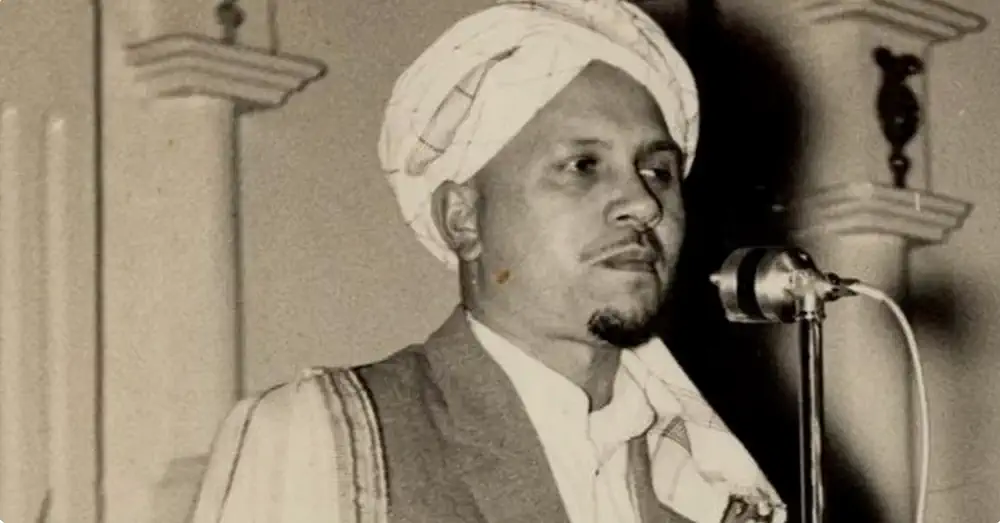
Fifty-seven years after Imam Abdullah Haron was tortured to death in apartheid detention, the truth about his martyrdom is finally on record. Yet the absence of prosecutions leaves South Africa facing a deeper question of justice.
This September marked 57 years since the martyrdom of Imam Abdullah Haron. On September 27, 1969, after 123 days in police captivity, he died on the cold floor of an apartheid prison cell.
For 14 years, from 1955 until the day he was killed, Imam Haron preached justice from the minbar of the Stegman Road Mosque in Claremont, and he lived it beyond its walls. He was a towering figure in the struggle against apartheid, a racist system that denied everyone who was not white their dignity and rights.
We do not remember him each year out of habit. We remember him because his life and his death carry a lesson our hearts need in every age. And in 2026, that lesson could not be more urgent, because 57 years later, justice remains unfinished.
A lie finally overturned
For decades, the official record carried the apartheid state’s version of events: that Imam Haron had died after an accidental fall down a flight of stairs at the Caledon Square police station. His family never accepted it. With the steadfast support of human rights organisations, lawyers who gave their services freely, and activists who would not let his name be forgotten, they pressed the state again and again to reopen the case.
In 2022, 53 years after his death and 28 years into our democracy, the inquest was finally reopened. The evidence had been there all along. The post-mortem had recorded 27 bruises and a broken rib on his body, and experts testified that the bruises were of different colours, inflicted at different times, on different days.
In October 2023, Judge Daniel Thulare of the Western Cape High Court set aside the old lie. Imam Haron had not fallen down any stairs. He had been tortured to death by the apartheid Security Branch. The historical record has been corrected, and future generations will learn the truth: that Imam Abdullah Haron died in apartheid detention, tortured, a martyr.
We should not miss the lesson here. That truth did not emerge because the state went looking for it. It emerged because ordinary people refused to stop asking.
You may also want to read






Truth without justice
And yet not a single person has ever been prosecuted for the killing of Imam Haron. The men responsible grew old and died, unpunished by any court of this land.
His case is not unique. For years, the cases referred for prosecution by the Truth and Reconciliation Commission lay untouched. Families who were promised accountability have grown old and passed away, still waiting.
That is why the Judicial Commission of Inquiry chaired by Justice Sisi Khampepe matters so much. Established on May 29, 2025, it is investigating whether deliberate efforts were made to prevent the investigation and prosecution of apartheid-era crimes. It is hearing evidence that this long silence may not have been an accident: that hands were placed on the scales of justice, not only by those who committed these crimes, but by those entrusted, in our democracy, to pursue them. Its final report is due by December 18, 2026, and what happens to that report will be a test for all of us.
Alongside it, the Madlanga Commission is investigating allegations of criminality, political interference and corruption in our criminal justice system today. The Khampepe Commission looks at justice denied in the past; the MadlangaCommission looks at justice under threat in the present. Together, they remind us that the integrity of our justice system is not a settled achievement but an ongoing struggle.
Where were our voices?
As believers and as citizens, we must ask ourselves difficult questions. How did this happen while we looked away? When the files gathered dust, where were our voices? When justice was quietly bargained away, did we ask any questions at all?
The Quran is unambiguous: “Believers, stand firmly for justice, as witnesses for God, even if it be against yourselves, your parents, or your relatives.” (Sura An-Nisa, 4:135) The failure of justice in the South Africa that Imam Haron and so many others gave their lives for is not only the failure of politicians and officials. It is also a test of whether we, the people, will keep demanding the truth, or allow it to be buried a second time.
We have seen how commissions in South Africa, including the TRC itself, can be established with great promise, only for their recommendations to gather dust on a shelf. We must not allow that to happen again.
What we can do
These commissions are not matters for lawyers and politicians alone. They concern every family that has buried a loved one without justice, and every citizen who believes that no one in this country should stand above the law.
There is much each of us can do. We can follow the proceedings of the Khampepe and Madlanga Commissions and share what we learn with our families and neighbours. We can stand beside the families of victims and support the organisations that have carried their cause for so many years. We can write to our public representatives and ask them plainly where they stand. And in the run-up to the local government elections, we can ask every party that seeks our vote whether it will ensure that the findings of both commissions are made public and implemented in full. Where the truth demands prosecutions, let there be prosecutions. Where families are owed answers, let them receive answers. And where those entrusted with justice are found to have betrayed that trust, let them be held to account, whoever they may be.
This is not only about the past. Our Constitution calls on us to heal the divisions of the past and to build a society founded on democratic values, social justice and fundamental human rights. A nation cannot heal while its wounds are hidden.
The road is long, and it is easy to grow tired. But Imam Haron did not tire. For 123 days in a cell, he did not tire. Neither did Steve Biko, Ahmed Timol, or the many others, known and unknown, who gave their lives so that we might live in a free and democratic South Africa. Imam Haron’s family waited 54 years for the truth, and their patience was not in vain. We owe it to them all to carry that legacy forward, not only with our words on anniversaries, but with our vote, our voice and our vigilance, every day.
This is an edited text of a khutbah delivered by Imam Dr A Rashied Omar at the Claremont Main Road Masjid on September 25, 2026. He is a Teaching Professor of Islamic Studies and Peacebuilding at the Kroc Institute for International Peace Studies, in the Keough School for Global Affairs, University of Notre Dame.