















South African Muslims played a meaningful role in the liberation struggle, yet their political influence has waned. The writer examines leadership, education, professional expertise and policy engagement to rebuild a credible public voice.
By SHABODIEN ROOMANAY
November 4, 2026 beckons. And so do the 2029 general elections. The nation is at a critical junction in its quest to remain a functioning, “democratic” state capable of delivering goods and services to its people.
While candidature, politicking and capability will be measured in due time, there remains an unresolved issue. 30-odd years into democracy, South Africa’s Muslim community must confront an uncomfortable question: how did a community that helped shape the struggle against apartheid, at great cost to many, become so marginal in the political spaces where the country’s future is decided?
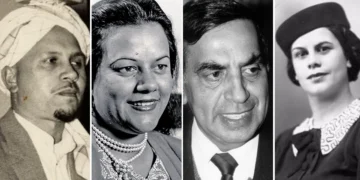
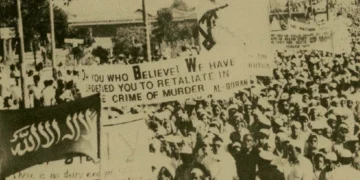
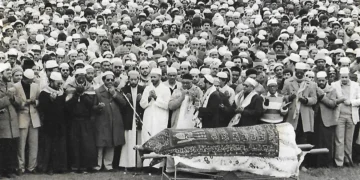
South African Muslims played a meaningful role in the struggle against colonialism and apartheid. Through political activism, civic organisations, trade unions and liberation movements, they contributed to the fight for a democratic society. During the transition of the early 1990s, Muslim activists, professionals and intellectuals entered Parliament, provincial legislatures, local government and the public service.
Their participation reflected an understanding that liberation was not the end of the struggle, but the beginning of a new responsibility: building a just and inclusive society.
Thirty years later, Muslim political influence appears to have diminished considerably. This is not to suggest that Muslim politicians, activists and public servants have disappeared, or that representation should be measured simply by the number of Muslim faces in Parliament. The deeper concern is whether the community retains the institutional capacity and intellectual leadership needed to shape public policy.
Several factors warrant serious examination: complacency following liberation, weaknesses within representative bodies, gaps in the preparation of religious leaders, and a tendency to react to political developments rather than help shape them.
Reversing this decline requires more than a change of personnel. It demands a fundamental rethink of how Muslim leadership is identified, educated and developed.
The illusion that the job is done
One possible explanation is that many took comfort in the success of the liberation movements we supported. With apartheid defeated and democracy established, the political struggle was perhaps regarded as substantially complete. But liberation does not guarantee justice. Democracy requires continuing participation, scrutiny and accountability. Governments change, priorities shift, and communities that withdraw from political engagement risk losing influence over decisions that affect them.
Historical loyalty cannot substitute for present-day political participation.
Muslims must therefore engage political parties on the basis of policies, principles and performance rather than historical allegiance alone and be willing to work across party lines where common objectives exist, while retaining the independence to challenge any party whose conduct undermines justice and equality.
Representative bodies: guardians or gatekeepers?
Effective political engagement requires more than public statements when a controversy arises. It demands an understanding of government, legislation, competing interests and the practical mechanisms through which policy can be influenced. It also requires the judgement to distinguish principled compromise from capitulation, and symbolic gestures from measurable results.
Some religious leaders may avoid politics because it is seen as divisive or threatens relationships within the community. Others, importantly, may lack the expertise to navigate political institutions or regard such engagement as outside their mandate. None of these concerns requires permanent disengagement.
Religious authority should not confer a monopoly over communal leadership. Those who occupy established positions must recognise that political competence, professional expertise and public service are not exclusive to the clergy. Leadership is a responsibility, not a proprietary right.
The missing dimension in religious education
A more fundamental challenge lies in how future Muslim leaders are educated.
South Africa has a proud tradition of Islamic scholarship. Aalims emerging from excellent Darul Ulooms provide religious instruction, spiritual guidance and a vital connection to Islamic intellectual heritage. The issue is not the value of traditional Islamic education, but whether the preparation of future leaders adequately equips them to navigate contemporary society.
Today’s political and social challenges require an understanding of constitutional law, economics, international relations, social inequality and the institutions of the state. Yet some traditional seminary curricula may give insufficient attention to the disciplines that develop this understanding.
Comparative religion can prepare scholars for informed engagement with other faith communities. Philosophy deepens reflection on ethics, justice and power. Logic strengthens critical reasoning and the evaluation of arguments. Political science explains government, public institutions and political systems, while economics and sociology illuminate the forces shaping poverty, unemployment and inequality.
These subjects need not compete with Islamic learning. They can enrich its application to contemporary problems. The Islamic intellectual tradition itself offers a precedent for this approach. Muslim scholars historically engaged philosophy, logic, medicine, mathematics and the ideas of other civilisations. Intellectual development was advanced through inquiry and debate, not isolation.
South African seminaries should build on this heritage by broadening their curricula and partnering with universities and independent scholars. Structured courses in political science, constitutional studies, philosophy, economics and comparative religion could equip future leaders to engage intelligently with public debate while maintaining rigorous Islamic scholarship. The aim is not to turn every Aalim into a politician. It is to ensure that religious leadership is intellectually prepared to engage with the world its communities inhabit. Spiritual authority and contemporary knowledge should reinforce one another.
Always reacting, rarely shaping
Another weakness is the reactive nature of much communal political engagement.
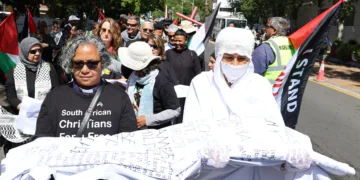
When Palestine is attacked, Muslims march. When religious rights are threatened, statements are issued. When controversy erupts, meetings are convened and delegations approach government.
These responses can be necessary, but crisis management alone cannot build lasting political influence. By the time a community reacts, decisions may already have been made, legislation drafted and public resources allocated.
Proactive leadership works differently. It monitors parliamentary proceedings, anticipates policy developments, cultivates relationships with decision-makers and develops credible proposals before problems become crises.
It also recognises that political responsibility extends beyond issues of immediate religious concern. Housing, education, healthcare, youth unemployment, corruption, economic development and public safety affect the dignity and wellbeing of the entire population. They are therefore legitimate concerns for Muslim leadership.
The professionals we are failing to engage
South Africa’s Muslim community possesses a substantial reservoir of professional expertise: lawyers, academics, economists, doctors, engineers, entrepreneurs, journalists, teachers, public servants and specialists in numerous other fields.
Many have the knowledge and experience to contribute to public policy, yet their expertise remains underutilised within communal leadership structures.
Some feel their contributions are neither sought nor respected. Others perceive established leadership as reluctant to share authority, entertain criticism or accommodate perspectives that challenge conventional thinking. For some, this has produced disillusionment and a reluctance to participate. Excellent developmental plans prepared by capable young professionals are treated with some degree of scepticism. A ploy to unseat the current hierarchy.
You may also want to read





The answer is not to replace the Ulama with professionals. It is to build a partnership in which religious scholarship, technical expertise and grassroots experience complement one another.
Muslim organisations should establish independent advisory councils comprising specialists in law, economics, education, governance, international relations and public policy. These councils must have clear mandates to conduct research, formulate recommendations and engage government; not merely provide the appearance of consultation.
Professionals, too, must accept responsibility. They cannot simply criticise from the sidelines; they must be willing to organise, contribute their time and participate in difficult communal conversations. But existing leadership must create structures in which that participation is welcomed and meaningful.
The objective is shared responsibility, not a transfer of power from one group to another.
From diagnosis to action
A credible programme of renewal should begin with at least five priorities.
First, assess political engagement honestly. Muslim representative organisations should evaluate their relationships with government, their participation in policy processes and their effectiveness in advancing the interests of the wider community.
Second, reform leadership development. Seminaries should partner with universities and independent scholars to introduce relevant contemporary disciplines alongside Islamic studies. Continuing education should also be available to established religious leaders.
Third, establish a national Muslim civic and political leadership forum. Bringing together Ulama, professionals, academics, young people, activists and Muslim politicians from across the political spectrum would create a platform for identifying shared priorities and developing policy positions.
Fourth, invest in the next generation. Young Muslims should be encouraged to enter student politics, local government, political parties, civil society and public administration. Mentorship programmes can connect them with experienced political practitioners and professionals.
Fifth, build permanent policy capacity. Muslim organisations should develop the ability to monitor legislation, analyse government programmes, prepare submissions and identify opportunities for constructive engagement. Even a small, competent research team could make a meaningful difference if its work were sustained.
These reforms require a willingness to embrace independent thought. No political party should be beyond scrutiny, no leader above accountability, and no institution entitled to suppress legitimate disagreement in the name of unity. Unity without intellectual diversity can become stagnation.
The choice before us
The decline of Muslim political influence should not be accepted as inevitable. Nor can the community assume that its historical contribution to liberation will permanently secure a place at the table. Influence must be maintained through participation, competence and service.
The Qur’an reminds us: “Indeed, Allah will not change the condition of a people until they change what is in themselves.” (Sura Ar-Ra’d, 13:11) This offers a fitting starting point for communal introspection. We cannot lament our marginalisation without examining the institutional habits, assumptions and leadership models that may have contributed to it.
South Africa needs ethical, thoughtful and competent political leadership. Muslims have much to offer, but a proud history and good intentions are not enough. We need religious scholars equipped to engage contemporary questions, representative organisations capable of influencing policy and professionals prepared to contribute alongside them.
Above all, we need a model of leadership that values knowledge over status and sustained engagement over episodic outrage.
The journey from the liberation struggle to the margins of political influence did not happen overnight. Reversing it will take more than a conference, a statement or a change of personnel. It will require a fundamental rethink of how leadership is educated, selected, supported and held accountable.
The question is not whether South African Muslims have something to contribute to the country’s future. It is whether their institutions are prepared to mobilise that contribution.
History opened the door. Democracy kept it open. It is time for South African Muslims to walk through it again.