




![Does ta’wīl mean interpretation or fulfilment? A Quranic reassessment [+video]](https://muslimviews.co.za/wp-content/uploads/2026/10/Tawil-Kaskas-360x180.webp)












![Why becoming a wealthy Muslim is commendable in Islam [+videos]](https://muslimviews.co.za/wp-content/uploads/2026/09/Muslim-Trade-Business-1-360x180.webp)





By MAHMOOD SANGLAY
HOW should the Muslim world harness artificial intelligence without surrendering human dignity, ethical responsibility and its Quranic worldview? A global online conference this month gathers leading policymakers, scholars and specialists to seek practical answers.
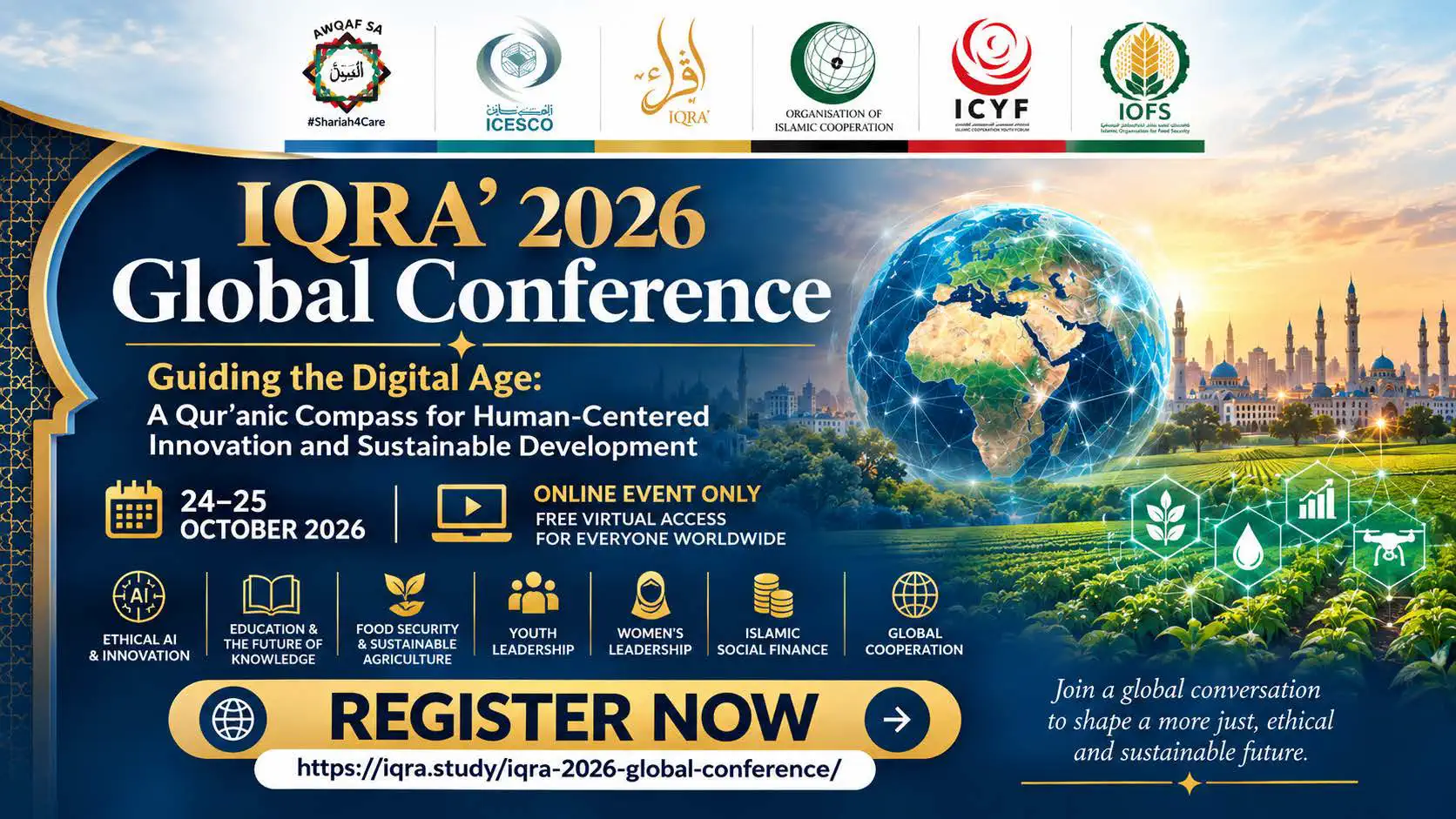
The IQRA’ 2026 Global Conference, taking place entirely online on October 24 and 25, will examine artificial intelligence (AI) not simply as a technological revolution but as an ethical, educational and developmental challenge.
The virtual conference, themed “Guiding the Digital Age: A Qur’anic Compass for Human-Centered Innovation and Sustainable Development”, will open its discussions to an international audience, with English, Arabic and French among the conference languages. The delegates presenting at the conference include some of the world’s leading experts and pioneers on the conference theme and topics.
It is organised by the International Quran Research Association (IQRA’) with support from major institutions of the Muslim world, including Awqaf South Africa, the Organisation of Islamic Cooperation (OIC), Islamic World Educational, Scientific and Cultural Organization (ICESCO), Islamic Cooperation Youth Forum (ICYF) and Islamic Organisation for Food Security (IOFS).
The conference builds on IQRA’s 2025 Global Conference and its Global Declaration for Civilizational Renewal. Its central proposition is that Muslim societies should move beyond being passive consumers of rapidly developing technologies and participate in determining their ethical and developmental direction.
AI, dignity and the future of knowledge
The programme gives the conference a much wider scope than a conventional technology gathering.
Day One will examine Quranic ethics, AI and human-centred innovation. Sessions will consider AI and human dignity, responsible innovation, human rights, digital ethics and technology governance.
Education is another major concern. An ICESCO-led panel will examine AI and learning, the future of universities, knowledge societies, skills development and how education can remain ethical and inclusive as emerging technologies transform the production and transmission of knowledge.
Youth will also have a dedicated platform. The ICYF dialogue will focus on digital transformation, entrepreneurship, innovation, ethical leadership and preparing a new generation of Muslim leaders for technological change.
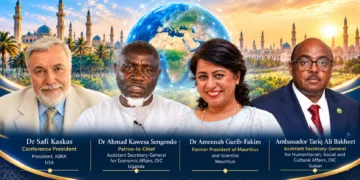
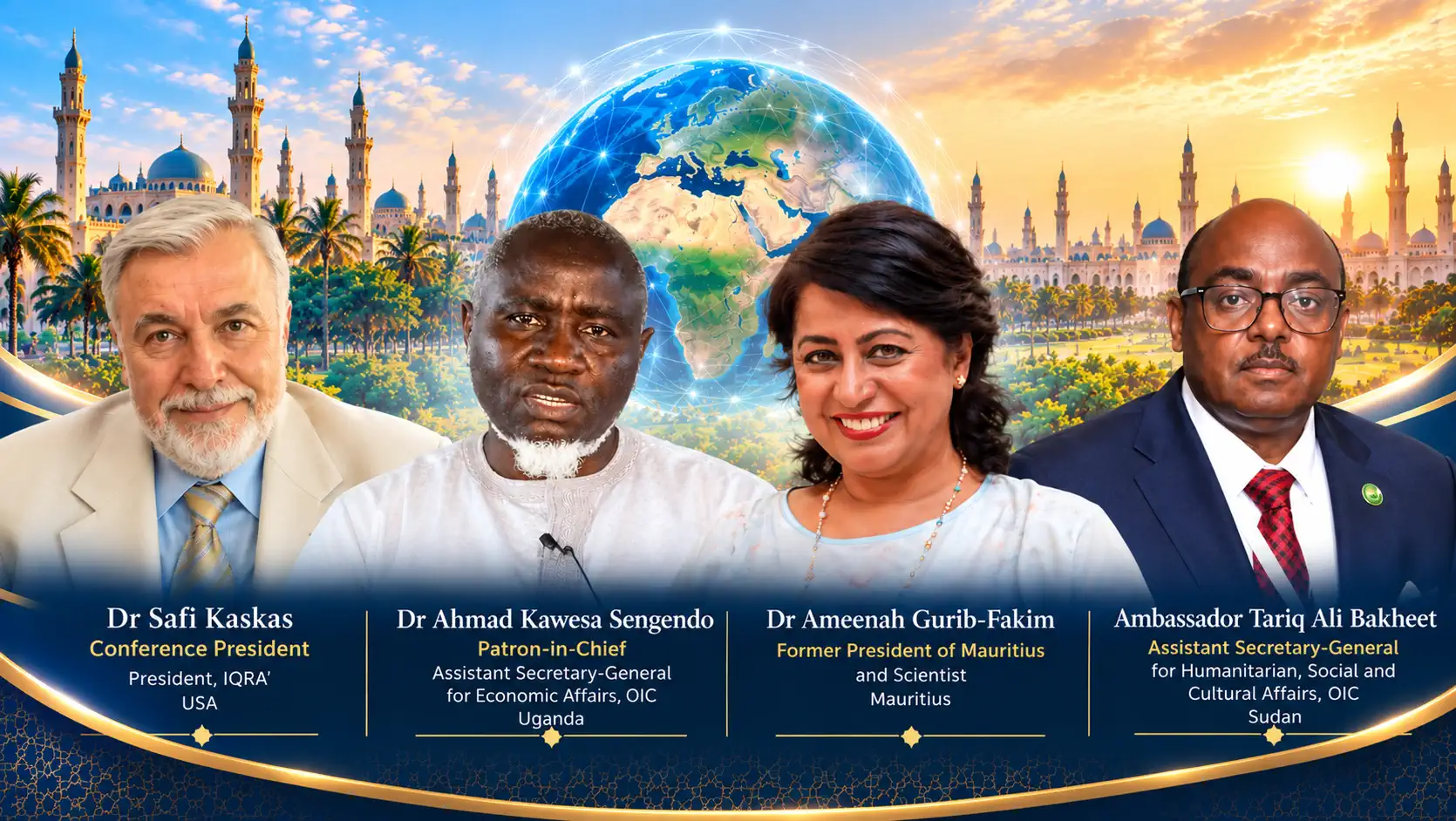
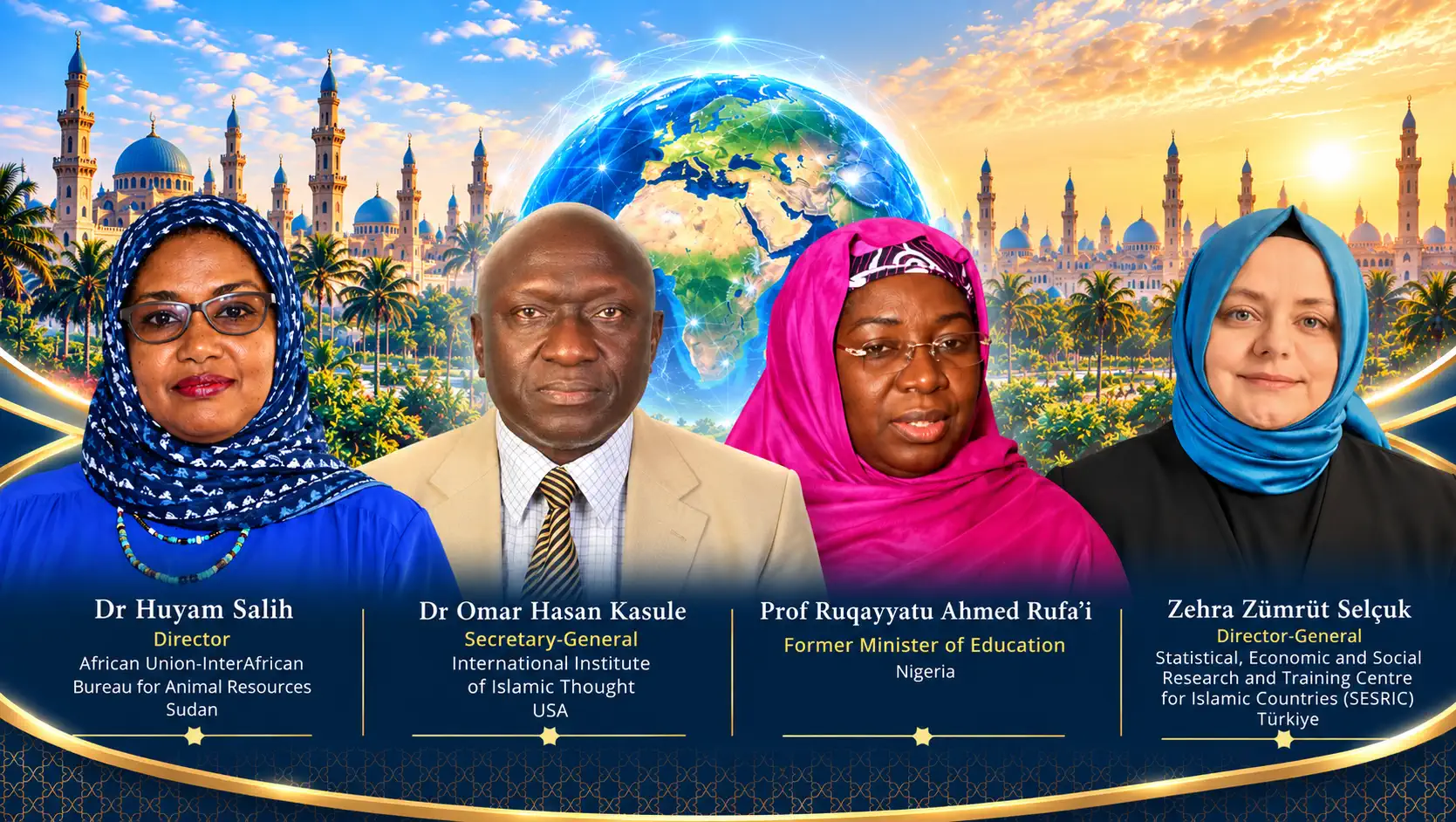
Among the prominent confirmed participants opening the conference are Dr Ahmad Kawesa Sengendo, OIC Assistant Secretary-General for Economic Affairs and conference patron-in-chief; Dr Safi Kaskas, president of IQRA’; and Ambassador Khalid Fathalrahman, director of ICESCO’s Center for Civilizational Dialogue.
Dr Omar Hassan Kasule, secretary-general of the International Institute of Islamic Thought, is confirmed as keynote speaker for the panel on AI, human dignity and ethical governance.
AI meets the global food crisis
A particularly significant dimension of the conference is the connection between AI and food security.
The IOFS high-level panel, “AI and Food Security: A Qur’anic Compass for Sustainable Innovation”, will explore digital innovation for food security, smart and climate-resilient food systems, agricultural innovation and the need to build AI capacity across Muslim societies.
These questions carry particular urgency for countries confronting climate change, fragile food systems and persistent economic inequality.
The confirmed keynote speaker is Zehra Zümrüt Selçuk, a former Turkish minister and director-general of the Statistical, Economic and Social Research and Training Centre for Islamic Countries (SESRIC).
She will be joined by specialists including Dr Huyam Salih, director of the African Union-InterAfrican Bureau for Animal Resources; Prof Nurfadhlina, chief digital officer at Universiti Putra Malaysia; and Prof Memduh Unal of IOFS, whose portfolio encompasses food-security policy, economic security and OIC food-system cooperation.
The emphasis reflects IQRA’s broader contention that emerging technologies should address concrete human needs. Food security, sustainable agriculture, economic development and equitable growth are among the areas in which the organisation believes Quranic ethical principles should inform technological development.
Development must remain human
Day Two broadens the discussion from technology itself to its consequences for society.
OIC Assistant Secretary-General for Humanitarian, Social and Cultural Affairs Ambassador Dr Tariq Ali Bakheet will deliver the keynote address in a session examining human development and social progress in the digital age.
The panel will consider cultural identity, social cohesion, sustainable communities, governance, education, skills and economic sovereignty. Confirmed participants include Ghaleb Bencheikh, president of the Foundation of Islam in France, and representatives of African and Islamic institutions.
Women’s leadership is also firmly on the agenda. Former Nigerian education minister Prof Ruqayyatu Ahmed Rufa’i will deliver the keynote address at a dialogue examining women in science, technology and AI, as well as research, entrepreneurship and economic empowerment.
Another high-level panel will consider how awqaf and Islamic social finance can contribute to human flourishing in the digital age, linking technological transformation to education, research, community wellbeing and sustainable development.
Global public invited to register
The move to a fully online format also opens the conference directly to a worldwide audience. IQRA’ is inviting members of the public, academics, researchers, professionals, students and representatives of institutions to register for free virtual access to the two-day event.
Participants will be able to follow discussions on ethical AI, education and innovation, food security, human development, youth and women’s leadership, Islamic social finance and global cooperation. IQRA’ is also encouraging participants to share the opportunity with colleagues and their professional, academic and community networks.
You may also want to read


Click here or the graphic below for free registration for the conference:
From discussion to action
The conference is ultimately intended to produce more than speeches.
A high-level strategic roundtable, “The Future of the Muslim World in the Digital Age”, will bring together institutions across the OIC ecosystem to consider ethical AI, education and knowledge economies, human development, food security, sustainable development and Islamic social finance.
The gathering is also expected to adopt the IQRA’ 2026 Global Declaration on Ethical AI and Human-Centered Development, aimed at turning conference discussions into practical cooperation, knowledge exchange and longer-term partnerships.
Former Mauritian president Dr Ameenah Gurib-Fakim, an internationally recognised scientist, is among the confirmed figures scheduled for the closing ceremony.
For Muslim societies, the question at the heart of the global gathering will therefore reach beyond whether AI should be embraced or resisted.
It is whether the enormous power of emerging technology can be directed towards feeding people, educating future generations, strengthening communities and advancing knowledge while remaining answerable to an ethical conception of what it means to be human.
By taking that conversation entirely online, IQRA’ is also opening it to Muslims and other interested participants across geographical and institutional boundaries.
That is where IQRA’ believes the Quran must provide the compass.

![Ebrahim Moosa’s political theology of Gaza [+ videos]](https://muslimviews.co.za/wp-content/uploads/2026/09/moosa-360x180.jpg)