




















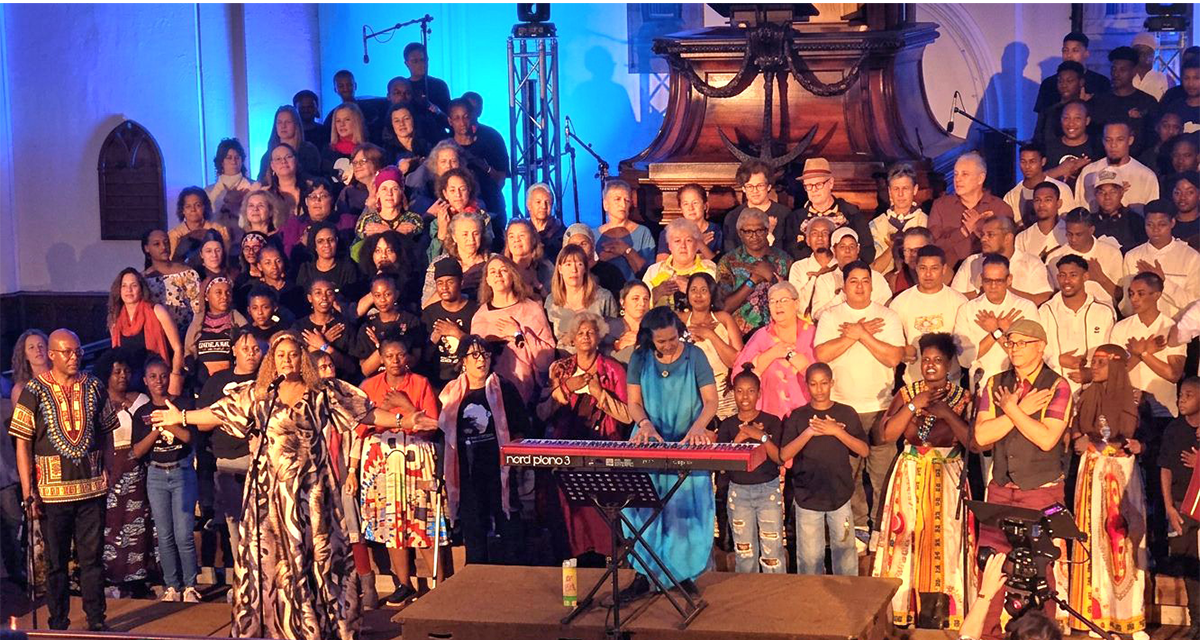

A World Singing Day concert at Cape Town’s Groote Kerk becomes a lesson for the Palestine solidarity movement after attendees learn that “One Day” is linked to Matisyahu, an outspoken supporter of Israel and its military, raising questions about cultural boycott, consent and accountability.
By ANWAR OMAR
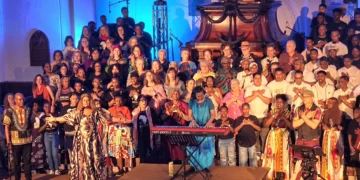
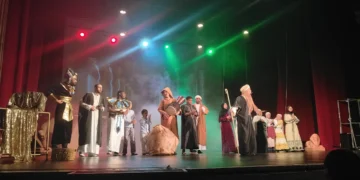
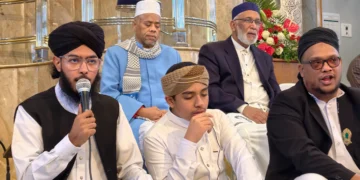
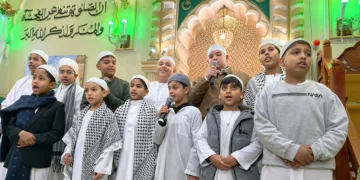
On Saturday night, October 17, 2026, I joined hundreds of Capetonians at the Groote Kerk for World Singing Day.
The theme was “One Country, One Voice, One Day,” and the evening was billed as a celebration of ubuntu, an event where the audience becomes the choir. It was warm and beautifully run, and for most of the night it felt exactly like that.
What I wasn’t aware of at the time was that the centrepiece was “One Day” by Matisyahu.
The audience was taught to sing it, and it was recorded for a video composition. Many of those in attendance, including myself, were blissfully unaware of the controversy around the song and the man who co-wrote it.
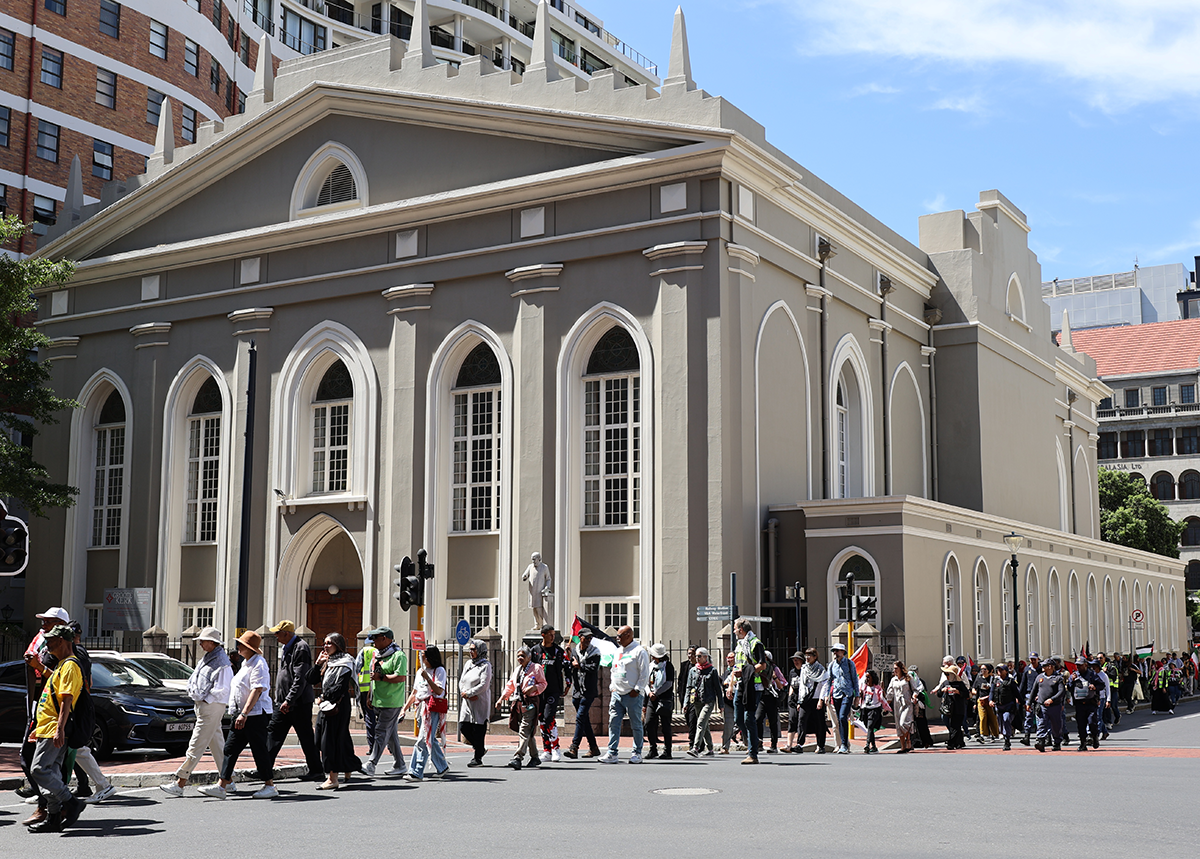
The Groote Kerk
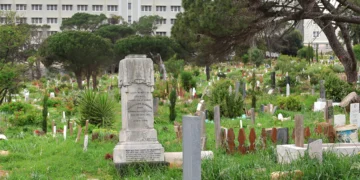
The Groote Kerk is South Africa’s oldest place of Christian worship, with the first church on the site built in 1678.
The Dutch Reformed Church provided theological justification for Apartheid, was expelled by the World Alliance of Reformed Churches in 1982 and acknowledged in 1986 that Apartheid theology had no biblical basis.
Respected institutions, full of decent people, can lend their voice to injustice, until others hold them to account. Singing about peace under that roof, without knowing what the song had come to stand for, felt like it echoed that lesson.
Ignorance is not an excuse
Matisyahu is an outspoken supporter of Israel and its military. Since October 2023 he has performed “One Day” for Israeli soldiers while draped in an Israeli flag and appeared at pro-Israel rallies. Venues in the United States cancelled his shows in 2024 after pro-Palestinian protests, and a Spanish festival dropped him in 2015 under pressure from the BDS movement. Its lyrics speak of peace, but for many it has come to represent a “peace” that leaves out occupation, siege and the Genocide in Gaza.
I didn’t know this when I walked into the Groote Kerk. I only became aware of it when a fellow pro-Palestinian activist brought it to my attention. When I raised it with others from the Palestinian Solidarity Movement who had been there, very few were aware of the sensitivities around it.
The organisers were informed
Megan, a prominent anti-Zionist Jewish activist, came across an Instagram advert for the concert and immediately recognised the song. She commented that she was shocked the organisers had chosen a Matisyahu song. The reply, she says, explained that this was a global concert for peace. She responded that Matisyahu “is a Zionist” and that using his song was “really inappropriate,” and received no further answer.
“My hope was that they would change the song and continue with the concert without it,” she said. “But they chose not to say anything, not to do anything, and to continue.”
The result, she argues, is that “you involve unwilling people. Your audience, who have paid for tickets, don’t know about Matisyahu … and they buy into a production that is in support of him.”
The organiser’s response
In a written statement, Lynne Poulsen Blamire, founder of The Heartsong Collective, said she chose the song after hearing the Koolulam version, in which Jews and Muslims sang it together.
“I have to admit that I did not know who Matisyahu was or his affiliations,” she said.
Her aim was “for people to sing together in unity,” and she described the song as “a declaration against war of any kind.”
Her adaptation was sung in English, Afrikaans and isiXhosa.
“In retrospect I might have chosen a different song had I been aware of the sensitivities surrounding it,” she said. “By the time I did become aware, it was too late to change the programme in the light of everything that was at stake with such a large-scale production. However, I stand by the song’s message of hope for a day when there’ll be no more war.”
Co-host Uthando South Africa has since said it “wholeheartedly condemns the genocide in Gaza,” has “since become aware of Matisyahu’s public political positions,” and that choosing the song was not an endorsement of his views.
Those who found out later
The Cape Cultural Collective, with its roots in the anti-Apartheid struggle, had rehearsed the song for months.
“We were informed a day before the final rehearsal that One Day is composed by a Zionist supporter of the Apartheid and genocidal state of Israel,” said Kay Jaffer. “We had never heard of him before.”
The collective considered withdrawing but chose to stay and “appropriate the song while distancing ourselves from the composer/singer.”
Some senior members wore Palestinian scarves, and the collective was not on stage when the song was performed.
Reverend Riaan de Villiers, a minister at the Groote Kerk, was told six days before the event.
You may also want to read






“It was such a short time before the event after months of rehearsals,” he said.
His decision, he says, “was a last-minute judgement about the words being sung and the people singing them, not an endorsement of the views or the man who wrote them.”
He did not know that Matisyahu had sung the song for Israeli soldiers.
He says he stands “against Zionism” and “with the Palestinian people, in their struggle for freedom, justice and true peace.”
He accepts the wider point: “Institutions, churches included, can lend their name to injustice without seeing it, and we need people who hold up a mirror.”
And he apologised “to everyone who was placed in an uncomfortable position, and to anyone for whom singing this song has become a burden on their conscience.”
Other voices
Guest artist Vicky Sampson, best known for “Afrikan Dream,” the anthem of South Africa’s 1996 Africa Cup of Nations win, was approached for comment through her agent, but no response had been received at the time of going to press.
Anthea Houston of Mothers4Gaza said that profiling Matisyahu’s music in this way “disregards the value of the lives of over 22 000 children massacred by Israel in Gaza since 7 October 2023.
“There are many brave and creative artists who consistently take a stand for peace and justice in the world,” she said. “This is why who we watch and what we listen to, matters.”
Professor Usuf Chikte, coordinator of the Palestinian Solidarity Campaign in Cape Town, said: “Words of peace do not cleanse a record of war.”
Recalling Sun City, he said: “We asked artists to understand that a stage can launder an Apartheid regime.”
For those who sang unaware, “that is no disgrace; it is a reason to learn.”
He urged “organisers, venues and faith-based groups to adopt PACBI’s guidelines,” and South Africans to “remember that culture was a weapon against Apartheid once. It can be again.”
Building a solidarity movement
We need to accept Poulsen Blamiare’s word that she did not know who Matisyahu was when she chose the song. But once concerns had been raised, keeping it was no longer an innocent choice. Silence left others, a choir with young members and a church that stands with Palestine, to make hard calls days before the event, and left the audience with no choice at all. Good intentions don’t change what a symbol means to the people living under the bombs.
The real question is how we build a stronger movement without alienating allies who share our values. Not everyone who attended the event had the same information, and not everyone made the same choice. A solidarity movement that treats misinformed allies the same as those who knowingly back the war on Gaza will only diminish itself. When concerns arise, they should be raised immediately and directly to give people the chance to act.
Simple checks for choosing songs and artists should be shared, pointing organisers to PACBI’s cultural boycott guidelines, and offering a contact point that groups can approach before they commit. Venues could ask organisers, when they book, whether any featured artist is the subject of a boycott call. And organisers should be open with their audiences and give participants a real choice about being recorded.
Going forward
As the festive season approaches, St George’s Cathedral is set to host a Candlelight tribute concert to Ed Sheeran and Coldplay on December 4. Sheeran faced a PACBI boycott call over his Loop Tour in September, before publicly condemning the situation in Gaza. Whether that warrants concern is for the Palestinian Solidarity Movement to consider in a balanced and sensible manner. It does reflect why venues and audiences should ask these questions early and not days before the event unfolds.
Throughout, the focus must stay on conduct, not identity. The objection is to an artist’s record, never to his faith.
I can’t take back the fact that I attended the “One Day” event at the Groote Kerk, but the least I can do is create an awareness, so that next time we know before we participate. In a country with our history of cultural boycott, we should know better than most that culture is never neutral. Our conscience requires us to act in accordance with our principles, and to help others do the same.