
















Eight days before South Africa’s local elections, an MJC fatwa says knowingly supporting a party that endorses or enables unlawful killing is sinful, leaving Muslim voters to decide which parties cross that religious line when they vote.
ANWAR OMAR analyses the fatwa and provides a checklist of the major parties’ position on the genocide in Gaza.
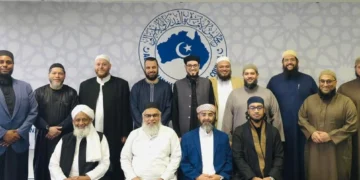
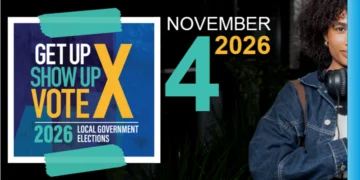
Eight days before South Africans vote in the November 4, 2026 local government elections, the Muslim Judicial Council (SA) Fatwa Committee has issued a ruling.
It says that knowingly supporting a party that endorses, justifies or materially assists the unlawful killing of human beings is sinful. The ruling is signed by Mufti Yaaseen Abbas and dated October 27, 2026. It covers voting, campaigning, donating and public endorsement.
The fatwa names no party and does not mention Gaza. Yet it lands in a campaign where parties’ stances on Israel and Gaza have been tested repeatedly, especially in Cape Town’s Muslim-majority wards.
South Africa and the Gaza genocide case
South Africa sits at the centre of the legal fight over Gaza. On December 29, 2023, it filed an 84-page application at the International Court of Justice (ICJ). It requested the court to find Israel in breach of the Genocide Convention and to halt its military campaign in Gaza.
The case is far from over. Pretoria has sought interim measures four times and won three binding orders. These have done little to stop the attacks or secure aid deliveries. Israel filed its Counter-Memorial in March 2026, including objections to the court’s jurisdiction. A court order of May 21, 2026, gives South Africa until November 22, 2027, to reply, and Israel until May 22, 2029, to respond.
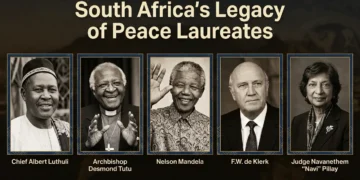
In September 2025 a UN commission of inquiry chaired by South African jurist Navi Pillay concluded that Israel had committed genocide in Gaza. It found four of the five acts listed in the Genocide Convention, plus evidence of intent. Pillay was awarded the Nobel Peace Prize on October 9, 2026.
Israel rejects the genocide charge outright. Its foreign ministry has called the case baseless. It has also described South Africa’s request for more time as evidence that the case is “collapsing.” There is no final ICJ ruling on whether genocide has occurred, so the word itself remains a legal and political dividing line in South African politics.
That dividing line now runs through the November 4 elections, which fill 10 526 council seats in all 257 municipalities.
Where the parties stand
The parties fall into three camps:
- those that call Israel’s conduct genocide and back the ICJ case
- those that defer to the court or stay neutral
- those that openly side with Israel
ANC
The ANC backs the case and calls it genocide. Its government filed the case in December 2023. In November 2023 it backed a parliamentary motion to close Israel’s embassy, saying it could not watch Israel’s “genocidal actions.” In January 2026 the government expelled Israel’s chargé d’affaires.
Al Jama-ah & CMC
Al Jama-ah and the Cape Muslim Congress (CMC) are explicitly pro-Palestine Muslim parties. Both are contesting Cape Town wards. Shameemah Dollie Salie, a prominent pro-Palestinian and social justice activist, is Al Jama-ah’s mayoral candidate.
EFF
The EFF is one of Israel’s strongest critics, and wants the embassy closed. In his February 2026 SONA reply, Julius Malema called Israel a genocidal state. He urged Ramaphosa to close the embassy and cut ties.
RISE Mzansi
Its leader has explicitly described Israel’s actions as genocide, and the party supports the ICJ case. The party’s Johannesburg mayoral candidate has spoken about this as the ‘morality of leadership’.
NCC
The National Coloured Congress (NCC), led by Fadiel Adams, also matters in Cape Town. It holds two National Assembly seats and sits in Parliament’s Progressive Caucus with MK. It competes for coloured voters on the Cape Flats, where many Muslim voters live. Adams has voiced support for the Palestinian cause, while comparing conditions in gang-hit Cape Flats communities to those in Palestine.
MK Party
The MK Party is in solidarity with Palestine. In 2024 it condemned what it called Israel’s “Zionist expansion program” in Gaza and Lebanon.
GOOD
GOOD backs the ICJ case and issued a statement supporting the ICJ application in January 2024.
DA
The DA defers to the ICJ and says it backs a two-state solution. Leader Geordin Hill-Lewis told Voice of the Cape on October 13, 2026, that genocide is a legal term for the ICJ to decide. While he condemned settlement expansion, he called parts of Pillay’s work divisive.
Helen Zille, DA federal council chair and its Johannesburg mayoral candidate, told Newzroom Afrika in September 2025 that genocide is “a very big word”, that she had not been to Gaza and did not know. In 2024 the party said any country may approach the ICJ, but it did not back the case.
ActionSA
ActionSA’s Herman Mashaba has said taking sides is a disservice and that South Africa’s own crises come first.
BOSA
BOSA opposed the case. It called the court the wrong route and says it favours negotiation.
PA
Patriotic Alliance is explicitly pro-Israel. Gayton McKenzie has cited his Christian faith as his reason to bless Israel. Kenny Kunene said a PA government would strengthen ties with Israel.
ACDF
The ACDP has been explicitly pro-Israel and opposes the ICJ case. It said the government could not prove genocidal intent.
FF Plus
The FF Plus is also explicitly pro-Israel. It has defended Israel’s right to self-defence in Parliament.
IFP
The IFP has kept a relatively low profile regarding the genocide in Gaza. In 2024, EWN described it as not sharing the ANC’s pro-Palestine posture.
The electoral stakes are sharpest in Cape Town. A pre-election poll put the DA at 52.6%, the ANC at 23.6% and Al Jama-ah at 1.7%.
The implications of the fatwa
The core of the ruling is a conditional prohibition. A Muslim who clearly recognises that a political entity justifies or facilitates the unlawful taking of life may not empower it. Knowingly supporting such an entity is sinful cooperation in wrongdoing.
Its reasoning rests on four principles:
You may also want to read


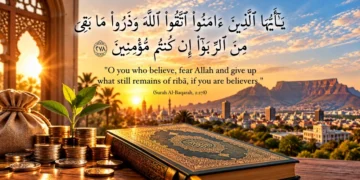
- Sanctity of life (Sura Al-Ma’idah, 5:32), read through Fakhr al-Dīn al-Rāzī: preventing one killing deserves the same effort as preventing the killing of all.
- Universality: the victim’s faith does not reduce the wrong of killing them.
- Oppression and expulsion: following al-Bayḍāwī’s reading of (Sura Al-Baqarah, 2:191), forced displacement is treated as among the gravest injustices (5.3).
- No cooperation in sin (Sura Al-Ma’idah, 5:2), and no inclining toward wrongdoers (Sura Hud, 11:113).
Questions the fatwa leaves open
The fatwa names no party. The test is “reliable evidence” that a party endorses, justifies or materially assists unlawful killing.
The fatwa does not say whether deferring to the ICJ, staying neutral, or voicing support for Israel’s right to self-defence counts as “justifying” killing.
Implications for Muslim voters
For many Muslim voters, the fatwa turns Gaza into a religious test. How it plays out depends on how each voter answers the questions the ruling addresses and what it leaves open.
Parties with an explicit pro-Israel record face the clearest exposure. The Patriotic Alliance, ACDP and FF Plus have publicly defended Israel’s war or rejected the genocide case. Some voters will read that record as “justifying” the killing in Gaza. Based on such a reading of the fatwa, voters would be barred from supporting these parties.
The DA’s stance on the genocide in Gaza is the main battleground. It runs Cape Town and has long drawn votes in Muslim areas. Its position is to defer to the ICJ while backing a two-state solution. Hill-Lewis was challenged on exactly this on Voice of the Cape this month. Zille made her “very big word” remark days after the UN inquiry’s genocide finding.
The ANC, EFF, Al Jama-ah, Rise Mzansi and ActionSA all condemned it, and the party’s critics still cite it. Critics argue that refusing to name genocide, and calling Pillay’s findings divisive, amounts to justifying it.
Parties backing the ICJ case benefit most but are not automatically cleared. The ANC, EFF, MK, GOOD, Rise Mzansi, Al Jama-ah and the Cape Muslim Congress all align with the fatwa’s concern. Voters still have to weigh their municipal records, which the fatwa does not address.
Other objections are likely
Some political commentators will say a local election is the wrong arena for such a fatwa, and others will question the timing, eight days before the vote. Past MJC rulings have been criticised for inconsistency, including the council’s closeness to the ANC.
Conclusion
Muslims are a small proportion of the national electorate but are concentrated in a few Cape Town wards. There, the fatwa could alter ward results, drive abstention, or benefit smaller Muslim parties. Whether it does, depends on how far mosques, community radio and civil society carry it into the last week of the campaign.
The MJC has set a principle, not a party list. It informs Muslims that empowering those who justify unlawful killing is sinful. But it leaves each voter to judge, on the evidence, which parties cross that line.
- This article was updated on October 27 at 20:25 to reflect the position of the National Coloured Congress and RISE Mzansi on the genocide in Gaza.