Muslim Views
No Result
View All Result
  • News
    • All
    • Local
    • National
    • World
    Why becoming a wealthy Muslim is commendable in Islam [+videos]

    Why becoming a wealthy Muslim is commendable in Islam [+videos]

    Before applying true Islam, Muslims must first learn to live together

    Before applying true Islam, Muslims must first learn to live together

    A Quranic ethic for South Africa’s femicide crisis

    A Quranic ethic for South Africa’s femicide crisis

    Further archival evidence clears Shaykh Yusuf’s lineage of alleged apostasy

    Further archival evidence clears Shaykh Yusuf’s lineage of alleged apostasy

    Ebrahim Moosa’s political theology of Gaza [+ videos]

    Ebrahim Moosa’s political theology of Gaza [+ videos]

    Aramco is not the Ka’bah: when state power exploits the language of sanctity

    Aramco is not the Ka’bah: when state power exploits the language of sanctity

    Saudi wealth, strategic dependence and the high price of borrowed power

    Saudi wealth, strategic dependence and the high price of borrowed power

    Why the attacks on Section27 and Dr Tlaleng Mofokeng ultimately ring hollow

    Why the attacks on Section27 and Dr Tlaleng Mofokeng ultimately ring hollow

    Media freedom and why the BCCSA’s landmark precedent must cut both ways

    Media freedom and why the BCCSA’s landmark precedent must cut both ways

    Muslim Views journalist among top graduates as IPSA marks 21st anniversary

    Muslim Views journalist among top graduates as IPSA marks 21st anniversary

    • National
    • World
    • Local
  • Opinion
    • All
    • Columnists
    • Discussions with Dangor
    • Editorial
    • Guest Writer
    Why becoming a wealthy Muslim is commendable in Islam [+videos]

    Why becoming a wealthy Muslim is commendable in Islam [+videos]

    Before applying true Islam, Muslims must first learn to live together

    Before applying true Islam, Muslims must first learn to live together

    A Quranic ethic for South Africa’s femicide crisis

    A Quranic ethic for South Africa’s femicide crisis

    Further archival evidence clears Shaykh Yusuf’s lineage of alleged apostasy

    Further archival evidence clears Shaykh Yusuf’s lineage of alleged apostasy

    Aramco is not the Ka’bah: when state power exploits the language of sanctity

    Aramco is not the Ka’bah: when state power exploits the language of sanctity

    Saudi wealth, strategic dependence and the high price of borrowed power

    Saudi wealth, strategic dependence and the high price of borrowed power

    Thirty-five years of Vision: Protecting children, building futures

    Thirty-five years of Vision: Protecting children, building futures

    The ‘stemme’ rise: how Cape Mawlid nurtures listening, love and community

    The ‘stemme’ rise: how Cape Mawlid nurtures listening, love and community

    G20 contradictions deepen as US debt rises and Global South agenda recedes

    G20 contradictions deepen as US debt rises and Global South agenda recedes

    Too many politicians, too little political work

    Too many politicians, too little political work

  • Features
    • All
    • 1500 Years of Prophetic Legacy
    • AWQAF SA
    • General Features
    • Imam Haron
    • Tributes
    UWC’s honorary doctorates are a triumph over petty tribalism

    UWC’s honorary doctorates are a triumph over petty tribalism

    UWC honour fully reclaims Charlotte Maxeke from apartheid-era erasure

    UWC honour fully reclaims Charlotte Maxeke from apartheid-era erasure

    Those who cheer from the sidelines and carry us through life’s journey

    Those who cheer from the sidelines and carry us through life’s journey

    Hijra Cycle Tour 2026: Why I chose to ride

    Hijra Cycle Tour 2026: Why I chose to ride

    Ebrahim Abed’s life of service to Hujaaj

    Ebrahim Abed’s life of service to Hujaaj

    Reading the Prophet: knowing the sīrah, reading ourselves

    Reading the Prophet: knowing the sīrah, reading ourselves

    The living heritage of Moulood traditions at Zandvliet

    The living heritage of Moulood traditions at Zandvliet

    Ummah bids farewell to global luminary Pir Sayed Hasin ud Deen Shah (RA)

    Ummah bids farewell to global luminary Pir Sayed Hasin ud Deen Shah (RA)

    Marking 140 years since the closure of the Tana Baru

    Marking 140 years since the closure of the Tana Baru

    Abbas Rumaney remembered for his faith, wisdom, humour and generosity

    Abbas Rumaney remembered for his faith, wisdom, humour and generosity

    Grappling with Apartheid labels

    Grappling with Apartheid labels

    The scholar who refused to turn Islam into an enemy: The legacy of John Esposito

    The scholar who refused to turn Islam into an enemy: The legacy of John Esposito

    The greatest monuments are not in stone, but in lives transformed

    The greatest monuments are not in stone, but in lives transformed

    Legacy of educator Haji Mogamat Rashad Jedaar lives on

    Legacy of educator Haji Mogamat Rashad Jedaar lives on

    Reclaiming agency: From ritual to action Part 3

    Reclaiming agency: From ritual to action Part 3

  • Lifestyle
    • All
    • Arts
    • Books
    • Education
    • Food
    • Health
    • Motoring
    • Sport
    • Technology
    Islamic thought meets modern cosmology in a compelling new book

    Islamic thought meets modern cosmology in a compelling new book

    Breaking the stigma surrounding mental health in the Muslim community

    Breaking the stigma surrounding mental health in the Muslim community

    Rooted in his faith, Ruiters says his book has a message for all South Africans

    Rooted in his faith, Ruiters says his book has a message for all South Africans

    Nabil Yasien Mohamed explores Ghazali’s enduring search for certainty

    Nabil Yasien Mohamed explores Ghazali’s enduring search for certainty

    Reading the Prophet: knowing the sīrah, reading ourselves

    Reading the Prophet: knowing the sīrah, reading ourselves

    Cape Town art exhibition explores untold histories through art and archives

    Cape Town art exhibition explores untold histories through art and archives

    Choritz captures a fierce new dystopia in The Sound of Ice

    Choritz captures a fierce new dystopia in The Sound of Ice

    Languages of Care: Extending worship through art

    Languages of Care: Extending worship through art

    Cape Town musicians rally behind displaced Palestinian composer

    Cape Town musicians rally behind displaced Palestinian composer

    More than a game, or the Clash of Titans

    More than a game, or the Clash of Titans

  • Finance
    • All
    • Islamic Finance
    Why becoming a wealthy Muslim is commendable in Islam

    Why becoming a wealthy Muslim is commendable in Islam

    Unlocking Africa’s development through Islamic finance and waqf

    Unlocking Africa’s development through Islamic finance and waqf

    Understanding Mufti Taqi Usmani’s fatwa on cryptocurrency

    Understanding Mufti Taqi Usmani’s fatwa on cryptocurrency

    The market-builder who restrained the market [Part 2]

    The market-builder who restrained the market [Part 2]

    The merchant preceding the Prophetic mission [Part 1]

    The merchant preceding the Prophetic mission [Part 1]

    Beyond charity: Rethinking the economic potential of waqf in South Africa

    Beyond charity: Rethinking the economic potential of waqf in South Africa

    Islamic banking in South Africa: why interest-free finance matters

    Islamic banking in South Africa: why interest-free finance matters

    When AI becomes your financial adviser, who protects the vulnerable?

    When AI becomes your financial adviser, who protects the vulnerable?

    Why a professionally drafted will can better protect your family and legacy

    Why a professionally drafted will can better protect your family and legacy

    When the halal investment label becomes a weapon for financial deception

    When the halal investment label becomes a weapon for financial deception

  • Islam
    • All
    • Eid
    • Faith and Practice
    • Family
    • Hajj and Umrah
    • Moulood
    • Quran
    • Ramadaan
    The ‘stemme’ rise: how Cape Mawlid nurtures listening, love and community

    The ‘stemme’ rise: how Cape Mawlid nurtures listening, love and community

    Scholars at Masjidul-Quds Moulood call for everyday integrity

    Scholars at Masjidul-Quds Moulood call for everyday integrity

    Prophetic legacy for a world on fire: Iḥsān, adab and agency

    Prophetic legacy for a world on fire: Iḥsān, adab and agency

    Voices of faith: youth, scholars and relics unite for Moulood-un-Nabi

    Voices of faith: youth, scholars and relics unite for Moulood-un-Nabi

    Reading the Prophet: knowing the sīrah, reading ourselves

    Reading the Prophet: knowing the sīrah, reading ourselves

    The living heritage of Moulood traditions at Zandvliet

    The living heritage of Moulood traditions at Zandvliet

    Moulood – When love stands

    Moulood – When love stands

    Moulood-un-Nabi: A beacon of mercy, love and unyielding courage

    Moulood-un-Nabi: A beacon of mercy, love and unyielding courage

    When Sipho asked me to make duʿa

    When Sipho asked me to make duʿa

    A sound heart in a world of strangers

    A sound heart in a world of strangers

  • Archives
  • Donate
Muslim Views
  • News
    • All
    • Local
    • National
    • World
    Why becoming a wealthy Muslim is commendable in Islam [+videos]

    Why becoming a wealthy Muslim is commendable in Islam [+videos]

    Before applying true Islam, Muslims must first learn to live together

    Before applying true Islam, Muslims must first learn to live together

    A Quranic ethic for South Africa’s femicide crisis

    A Quranic ethic for South Africa’s femicide crisis

    Further archival evidence clears Shaykh Yusuf’s lineage of alleged apostasy

    Further archival evidence clears Shaykh Yusuf’s lineage of alleged apostasy

    Ebrahim Moosa’s political theology of Gaza [+ videos]

    Ebrahim Moosa’s political theology of Gaza [+ videos]

    Aramco is not the Ka’bah: when state power exploits the language of sanctity

    Aramco is not the Ka’bah: when state power exploits the language of sanctity

    Saudi wealth, strategic dependence and the high price of borrowed power

    Saudi wealth, strategic dependence and the high price of borrowed power

    Why the attacks on Section27 and Dr Tlaleng Mofokeng ultimately ring hollow

    Why the attacks on Section27 and Dr Tlaleng Mofokeng ultimately ring hollow

    Media freedom and why the BCCSA’s landmark precedent must cut both ways

    Media freedom and why the BCCSA’s landmark precedent must cut both ways

    Muslim Views journalist among top graduates as IPSA marks 21st anniversary

    Muslim Views journalist among top graduates as IPSA marks 21st anniversary

    • National
    • World
    • Local
  • Opinion
    • All
    • Columnists
    • Discussions with Dangor
    • Editorial
    • Guest Writer
    Why becoming a wealthy Muslim is commendable in Islam [+videos]

    Why becoming a wealthy Muslim is commendable in Islam [+videos]

    Before applying true Islam, Muslims must first learn to live together

    Before applying true Islam, Muslims must first learn to live together

    A Quranic ethic for South Africa’s femicide crisis

    A Quranic ethic for South Africa’s femicide crisis

    Further archival evidence clears Shaykh Yusuf’s lineage of alleged apostasy

    Further archival evidence clears Shaykh Yusuf’s lineage of alleged apostasy

    Aramco is not the Ka’bah: when state power exploits the language of sanctity

    Aramco is not the Ka’bah: when state power exploits the language of sanctity

    Saudi wealth, strategic dependence and the high price of borrowed power

    Saudi wealth, strategic dependence and the high price of borrowed power

    Thirty-five years of Vision: Protecting children, building futures

    Thirty-five years of Vision: Protecting children, building futures

    The ‘stemme’ rise: how Cape Mawlid nurtures listening, love and community

    The ‘stemme’ rise: how Cape Mawlid nurtures listening, love and community

    G20 contradictions deepen as US debt rises and Global South agenda recedes

    G20 contradictions deepen as US debt rises and Global South agenda recedes

    Too many politicians, too little political work

    Too many politicians, too little political work

  • Features
    • All
    • 1500 Years of Prophetic Legacy
    • AWQAF SA
    • General Features
    • Imam Haron
    • Tributes
    UWC’s honorary doctorates are a triumph over petty tribalism

    UWC’s honorary doctorates are a triumph over petty tribalism

    UWC honour fully reclaims Charlotte Maxeke from apartheid-era erasure

    UWC honour fully reclaims Charlotte Maxeke from apartheid-era erasure

    Those who cheer from the sidelines and carry us through life’s journey

    Those who cheer from the sidelines and carry us through life’s journey

    Hijra Cycle Tour 2026: Why I chose to ride

    Hijra Cycle Tour 2026: Why I chose to ride

    Ebrahim Abed’s life of service to Hujaaj

    Ebrahim Abed’s life of service to Hujaaj

    Reading the Prophet: knowing the sīrah, reading ourselves

    Reading the Prophet: knowing the sīrah, reading ourselves

    The living heritage of Moulood traditions at Zandvliet

    The living heritage of Moulood traditions at Zandvliet

    Ummah bids farewell to global luminary Pir Sayed Hasin ud Deen Shah (RA)

    Ummah bids farewell to global luminary Pir Sayed Hasin ud Deen Shah (RA)

    Marking 140 years since the closure of the Tana Baru

    Marking 140 years since the closure of the Tana Baru

    Abbas Rumaney remembered for his faith, wisdom, humour and generosity

    Abbas Rumaney remembered for his faith, wisdom, humour and generosity

    Grappling with Apartheid labels

    Grappling with Apartheid labels

    The scholar who refused to turn Islam into an enemy: The legacy of John Esposito

    The scholar who refused to turn Islam into an enemy: The legacy of John Esposito

    The greatest monuments are not in stone, but in lives transformed

    The greatest monuments are not in stone, but in lives transformed

    Legacy of educator Haji Mogamat Rashad Jedaar lives on

    Legacy of educator Haji Mogamat Rashad Jedaar lives on

    Reclaiming agency: From ritual to action Part 3

    Reclaiming agency: From ritual to action Part 3

  • Lifestyle
    • All
    • Arts
    • Books
    • Education
    • Food
    • Health
    • Motoring
    • Sport
    • Technology
    Islamic thought meets modern cosmology in a compelling new book

    Islamic thought meets modern cosmology in a compelling new book

    Breaking the stigma surrounding mental health in the Muslim community

    Breaking the stigma surrounding mental health in the Muslim community

    Rooted in his faith, Ruiters says his book has a message for all South Africans

    Rooted in his faith, Ruiters says his book has a message for all South Africans

    Nabil Yasien Mohamed explores Ghazali’s enduring search for certainty

    Nabil Yasien Mohamed explores Ghazali’s enduring search for certainty

    Reading the Prophet: knowing the sīrah, reading ourselves

    Reading the Prophet: knowing the sīrah, reading ourselves

    Cape Town art exhibition explores untold histories through art and archives

    Cape Town art exhibition explores untold histories through art and archives

    Choritz captures a fierce new dystopia in The Sound of Ice

    Choritz captures a fierce new dystopia in The Sound of Ice

    Languages of Care: Extending worship through art

    Languages of Care: Extending worship through art

    Cape Town musicians rally behind displaced Palestinian composer

    Cape Town musicians rally behind displaced Palestinian composer

    More than a game, or the Clash of Titans

    More than a game, or the Clash of Titans

  • Finance
    • All
    • Islamic Finance
    Why becoming a wealthy Muslim is commendable in Islam

    Why becoming a wealthy Muslim is commendable in Islam

    Unlocking Africa’s development through Islamic finance and waqf

    Unlocking Africa’s development through Islamic finance and waqf

    Understanding Mufti Taqi Usmani’s fatwa on cryptocurrency

    Understanding Mufti Taqi Usmani’s fatwa on cryptocurrency

    The market-builder who restrained the market [Part 2]

    The market-builder who restrained the market [Part 2]

    The merchant preceding the Prophetic mission [Part 1]

    The merchant preceding the Prophetic mission [Part 1]

    Beyond charity: Rethinking the economic potential of waqf in South Africa

    Beyond charity: Rethinking the economic potential of waqf in South Africa

    Islamic banking in South Africa: why interest-free finance matters

    Islamic banking in South Africa: why interest-free finance matters

    When AI becomes your financial adviser, who protects the vulnerable?

    When AI becomes your financial adviser, who protects the vulnerable?

    Why a professionally drafted will can better protect your family and legacy

    Why a professionally drafted will can better protect your family and legacy

    When the halal investment label becomes a weapon for financial deception

    When the halal investment label becomes a weapon for financial deception

  • Islam
    • All
    • Eid
    • Faith and Practice
    • Family
    • Hajj and Umrah
    • Moulood
    • Quran
    • Ramadaan
    The ‘stemme’ rise: how Cape Mawlid nurtures listening, love and community

    The ‘stemme’ rise: how Cape Mawlid nurtures listening, love and community

    Scholars at Masjidul-Quds Moulood call for everyday integrity

    Scholars at Masjidul-Quds Moulood call for everyday integrity

    Prophetic legacy for a world on fire: Iḥsān, adab and agency

    Prophetic legacy for a world on fire: Iḥsān, adab and agency

    Voices of faith: youth, scholars and relics unite for Moulood-un-Nabi

    Voices of faith: youth, scholars and relics unite for Moulood-un-Nabi

    Reading the Prophet: knowing the sīrah, reading ourselves

    Reading the Prophet: knowing the sīrah, reading ourselves

    The living heritage of Moulood traditions at Zandvliet

    The living heritage of Moulood traditions at Zandvliet

    Moulood – When love stands

    Moulood – When love stands

    Moulood-un-Nabi: A beacon of mercy, love and unyielding courage

    Moulood-un-Nabi: A beacon of mercy, love and unyielding courage

    When Sipho asked me to make duʿa

    When Sipho asked me to make duʿa

    A sound heart in a world of strangers

    A sound heart in a world of strangers

  • Archives
  • Donate
Muslim Views
Advertisement

A Quranic ethic for South Africa’s femicide crisis

21 September 2026
in Guest Writer, Local
Reading Time: 5 mins read
A A
A Quranic ethic for South Africa’s femicide crisis

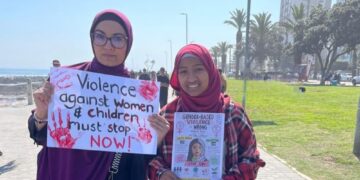
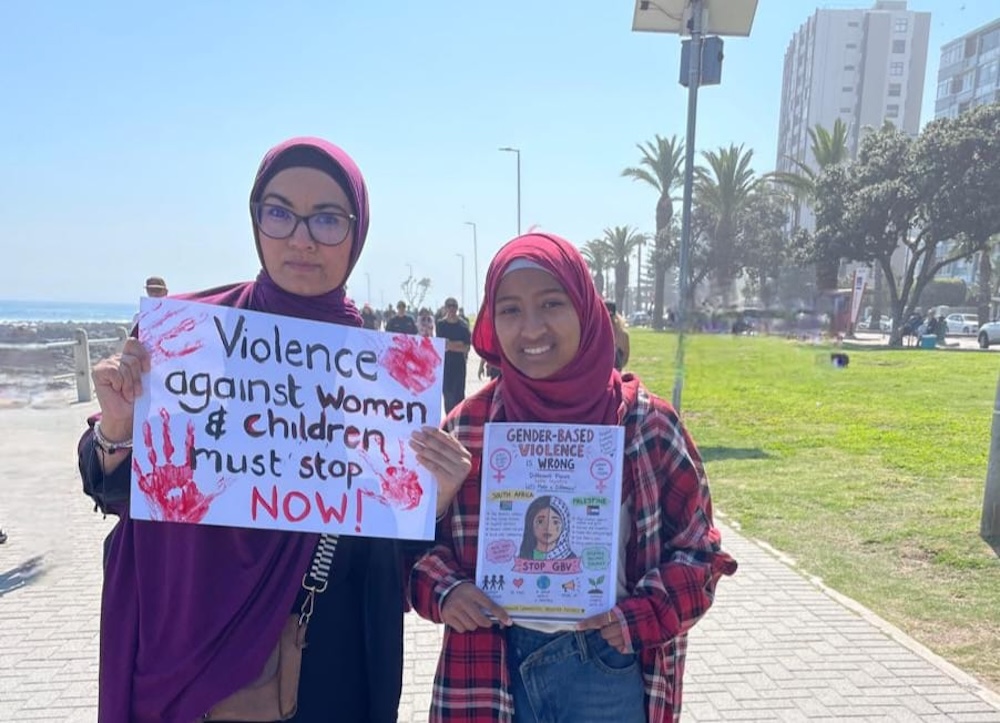
Fatima Khan-Wise and her thirteen-year-old daughter demonstrate against gender-based violence along the Sea Point Promenade in Cape Town on September 20. Photo: Supplied

Share on TwitterShare on FacebookShare on Whatsapp

By FATIMA KHAN-WISE

South Africa’s femicide crisis cannot be understood through statistics alone. The Quran offers an ethical framework for obtaining justice, dignity, responsibility and collective accountability and to move society from reaction to prevention.

Over the past two months, nine women were found dead in Ekurhuleni, near Johannesburg. Police have not confirmed a serial killer but issued public warnings due to the concerning pattern. South Africa suffers from one of the world’s highest femicide rates, with one in three women facing violence, a crisis declared a national disaster last November. Ekurhuleni reflects a broader systemic crisis.

This crisis is reflected in the latest national crime statistics: murders fell by 5.9% to 5 427 between April and June 2026. Yet 569 women were murdered, 1 052 survived attempted murder, and of 9 201 rape cases – over 100 a day – 8 814 involved women and children.

What does it mean when a national indicator improves while women keep suffering violence? Behind every statistic is a human being, someone’s daughter, mother, sister, wife, friend.

The Quran does not address human relationships only through prohibition and punishment. It establishes a moral framework grounded in justice, dignity, responsibility, mercy and the rejection of transgression. Violence can therefore be understood not only as a criminal or social problem but as a socio-moral disruption, a breakdown in the ethical order that should govern how human beings treat each other.

When responsibility becomes domination

One of the central Maqasidi concepts relating to gender-based violence (GBV) is qiwāmah, reflected in the Quran (Sura An-Nisa, 4:34–36).

Qiwāmah is often understood as male authority. Yet an ethical reading connects it to responsibility, protection, preservation and accountability, rather than domination.

If authority is understood as entitlement, power can become control. If authority is understood as responsibility, power becomes an obligation to protect. It cannot mean that masculinity grants permission to control, intimidate, silence or harm. Responsibility demands restraint, justice and accountability.

This is particularly relevant in South Africa, where gendered power hierarchies and harmful constructions of masculinity contribute to GBV. The Quranic framework asks: “Are we using power to protect, or to control?”

We are responsible for one another

Responsibility for preventing GBV cannot rest solely with individuals. The Quran expands it into the community through wilāyah. In Sura At Tawbah (9:71), believing men and women are described as awliyāʾ of one another. Wilāyah conveys closeness, support, care and responsibility, a relationship of mutual ethical guardianship.

If men and women are responsible for one another, then violence against women cannot remain simply a “private matter”. Wilāyah asks something from all of us.

It asks what we do when we hear the threatening argument next door. What we do when a woman tells us she is afraid. What we do when a friend jokes about controlling his partner.

The Quranic framework calls believing men and women to promote maʿrūf and prevent munkar. This transforms GBV from an individualised problem into a matter of collective responsibility.

A community practising wilāyah would therefore not ask only: “Why didn’t she leave?”

It would also ask: “Why did we allow her to face this alone?”

Recognising the abuse of power

In relation to GBV, two important Quranic concepts – baghy and ẓulm – can be applied.

Baghy refers to transgression and excess, while ẓulm refers to injustice, imbalance and wrongdoing. Together, they provide a language for understanding exploitation, domination and abuse of power.

GBV can therefore be understood as more than an isolated act of violence. It is an ethical violation in which power is exercised in a way that violates another person’s dignity. This is where karāmah (human dignity) becomes central.

The Quran describes humanity as honoured by God (Sura Al Isra, 17:70). From this ayah, dignity can be understood as universal, regardless of faith or identity. To demean, humiliate, exploit or harm another person is contrary to the Quranic moral vision.

It can begin with humiliation, control, entitlement, misogynistic language, silence, victim-blaming and a community deciding that what happens inside another person’s home is none of its concern.

The Quran’s social ethic in Sura Al Hujurat (49:10–13) addresses social harm while affirming human dignity and communal accountability, forming part of a broader framework to prevent harm from becoming normalised.

You may also want to read

CTIEC hosts grand celebration of Prophet Muhammad (PBUH) in Cape Town

CTIEC hosts grand celebration of Prophet Muhammad (PBUH) in Cape Town

27 January 2025
Reflections on a thought provoking khutbah

Reflections on a thought provoking khutbah

26 May 2025 - Updated on 28 May 2025
Teacher retrenchments: My psychological disposition and the South African politics of colour

Teacher retrenchments: My psychological disposition and the South African politics of colour

5 September 2024
One year on: Elite complicity, sex and the hidden crimes behind the Gaza genocide

One year on: Elite complicity, sex and the hidden crimes behind the Gaza genocide

3 October 2024
Journalism demands a place at the G20 table

Journalism demands a place at the G20 table

5 September 2025
Sexual coercion: Silence is complicity, silence is violence

Sexual coercion: Silence is complicity, silence is violence

10 January 2025

The application of Sura At-Takwir

Few Quranic questions are more haunting when placed alongside violence against women than that posed in Sura At Takwir:

“For what sin was she killed?” (Sura At-Takwir, 81:8–9)

The verses refer specifically to the female infant buried alive, a condemned practice of pre-Islamic Arabia. Yet the rhetorical force is profound: the victim asks why she was killed.

The moral burden is placed where it belongs, not upon the victim but upon the act of violence and those responsible for it.

The sanctity of human life

In Sura Al Ma’idah (5:32), in the context of a decree concerning the Children of Israel, killing a person unjustly is described as though one had killed all humanity, while saving a life is likened to saving all humanity.

The women behind South Africa’s statistics

When a woman is murdered, the question should not simply be: “How many?”

We must also ask: “Who was she?”

And perhaps, in the spirit of Sura At Takwir: “For what sin was she killed?”

From punishment to prevention

A Quranic response to GBV cannot stop at punishment after violence occurs.

Law, shelters and survivor support are essential but must be accompanied by deeper ethical transformation. Legal measures alone cannot transform the moral, cultural and relational conditions in which violence is reproduced.

A theory of socio-moral disruption and ethical restoration

The Theory of Socio-Moral Disruption and Ethical Restoration calls for moral consciousness, relational accountability, regulation of harm and collective responsibility. It complements existing interventions by moving from reaction towards prevention and long-term transformation.

This means educating boys and men about responsibility, challenging interpretations of religion that turn responsibility into entitlement, creating communities where survivors are believed and supported, and encouraging religious leaders to address harmful attitudes rather than remain silent.

And it means understanding that preventing harm is itself a moral obligation.

But numbers, while necessary to document the scale of suffering, can never communicate the full reality of a human life.

GBV in the context of Palestine

The perspective of what the numbers reflect is particularly important when placing it in the context of Palestine.

Just as we must see the woman behind the statistic in South Africa, we must also see the Palestinian behind the statistic.

The Quranic principle of karāmah does not allow human worth to depend on geography, nationality, religion or political circumstance. Human dignity is rooted in our shared humanity.

The question “For what sin was she killed?” must compel us to look beyond statistics, whether the statistic is a murdered woman in South Africa or a Palestinian life lost amid devastation.

The ethical principle is the same: see the human being. Recognise their dignity. Refuse to normalise their suffering.

Conclusion

We need to change what we count. Statistics reveal patterns, expose crises and help measure whether interventions are working. But statistics alone cannot transform the values that produce violence.

Qiwāmah asks us to understand responsibility as protection rather than domination.

Wilāyah asks us to understand that we are responsible for one another.

Baghy and ẓulm teach us to recognise transgression, injustice and the abuse of power.

Karāmah reminds us that every human being possesses dignity that must be protected.

And Sura At-Takwir leaves us with a question that should disturb our conscience: “For what sin was she killed?”

Not only by counting how many women have died, but by asking what kind of society allows their deaths to become statistics. Not only by seeing the women behind the statistics, but by seeing every human life behind every statistic. Because behind every number is a person. A name, a family, a story, a future, ultimately a life that mattered.

Fatima Khan-Wise recently completed a Master’s in Islamic Applied Thought cum laude. Her dissertation explored gender-based violence in South Africa through a Quranic Maqāṣidi ethical framework. Her thesis specifically examines domestic and intimate-partner violence, and its broader ethical framework provides an important lens through which to understand the moral and relational conditions that allow violence to persist. She is also the founder of Sharing Hope, a nonprofit working locally and globally to improve the lives of children.

Subscribe to our Newsletters

* indicates required
Choose the newsletters you'd like to receive
Advertisement

You may also want to read

Why becoming a wealthy Muslim is commendable in Islam [+videos]
Local

Why becoming a wealthy Muslim is commendable in Islam [+videos]

21 September 2026 - Updated on 22 September 2026
Before applying true Islam, Muslims must first learn to live together
Guest Writer

Before applying true Islam, Muslims must first learn to live together

21 September 2026
Further archival evidence clears Shaykh Yusuf’s lineage of alleged apostasy
Local

Further archival evidence clears Shaykh Yusuf’s lineage of alleged apostasy

20 September 2026 - Updated on 21 September 2026
Aramco is not the Ka’bah: when state power exploits the language of sanctity
World

Aramco is not the Ka’bah: when state power exploits the language of sanctity

19 September 2026
Saudi wealth, strategic dependence and the high price of borrowed power
Guest Writer

Saudi wealth, strategic dependence and the high price of borrowed power

19 September 2026
Why the attacks on Section27 and Dr Tlaleng Mofokeng ultimately ring hollow
News

Why the attacks on Section27 and Dr Tlaleng Mofokeng ultimately ring hollow

18 September 2026
September 2026

September 2026

FILE SIZE : 86MB
Download
Advertisement

Latest News

Why becoming a wealthy Muslim is commendable in Islam [+videos]

21 September 2026 - Updated on 22 September 2026

Before applying true Islam, Muslims must first learn to live together

21 September 2026

A Quranic ethic for South Africa’s femicide crisis

21 September 2026

Further archival evidence clears Shaykh Yusuf’s lineage of alleged apostasy

20 September 2026 - Updated on 21 September 2026

Ebrahim Moosa’s political theology of Gaza [+ videos]

19 September 2026 - Updated on 20 September 2026

Aramco is not the Ka’bah: when state power exploits the language of sanctity

19 September 2026
Advertisement
Advertisement
Next Post
Before applying true Islam, Muslims must first learn to live together

Before applying true Islam, Muslims must first learn to live together

Why becoming a wealthy Muslim is commendable in Islam [+videos]

Why becoming a wealthy Muslim is commendable in Islam [+videos]

ABOUT MUSLIM VIEWS
About Us
Archives
Terms & Conditions
Privacy Policy
Contact Us
Donate to Muslim Views
NEWS
Local
National
World
OPINION
Columnists
Discussion with Dangor
Editorial
Guest Writers
FEATURES
AWQAF SA
Imam Haroon
Tributes
FINANCE
Islamic Finance
ISLAM
Eid
Faith and Practice
Family
Hajj and Umrah
Moulood
Quraan
Ramadaan
FEATURES
Arts
Books
Education
Food
Health
Motoring
Sport
Technology

© Muslim Views 2026. All Rights Reserved

Design by: theimagehouse

Loading...

[mc4wp_form id=6780]

No Result
View All Result
  • NEWS
    • Local
    • National
    • World
  • OPINION
    • Columnists
    • Discussions with Dangor
    • Editorial
    • Guest Writer
  • FEATURES
    • AWQAF SA
    • Imam Haron
    • Tributes
    • 1500 Years of Prophetic Legacy
  • LIFESTYLE
    • Arts
    • Books
    • Education
    • Food
    • Health
    • Motoring
    • Sport
    • Technology
  • FINANCE
    • Islamic Finance
  • ISLAM
    • Eid
    • Faith and Practice
    • Family
    • Hajj and Umrah
    • Moulood
    • Quran
    • Ramadaan
  • ARCHIVES
  • DONATE