



















![The market-builder who restrained the market [Part 2]](https://muslimviews.co.za/wp-content/uploads/2026/08/PHOTO-2026-08-25-17-16-32-360x180.jpg)
![The merchant preceding the Prophetic mission [Part 1]](https://muslimviews.co.za/wp-content/uploads/2026/08/01-360x180.jpg)









Zandvliet’s story links Shaykh Yusuf’s exile, the growth of organised Islam at the Cape and the living traditions of Moulood. Through archival research and community memory, the writer follows a heritage sustained by generations.
By FAIZAL DARRIES
There is a tendency, when speaking of Shaykh Yusuf of Macassar, to render him in bronze, a statue on a plinth, a name in a textbook, a figure frozen at the moment of his arrival at the Cape in 1694. Shaykh Yusuf was not a monument but a movement: contentious, adaptive, and perpetually unfinished.
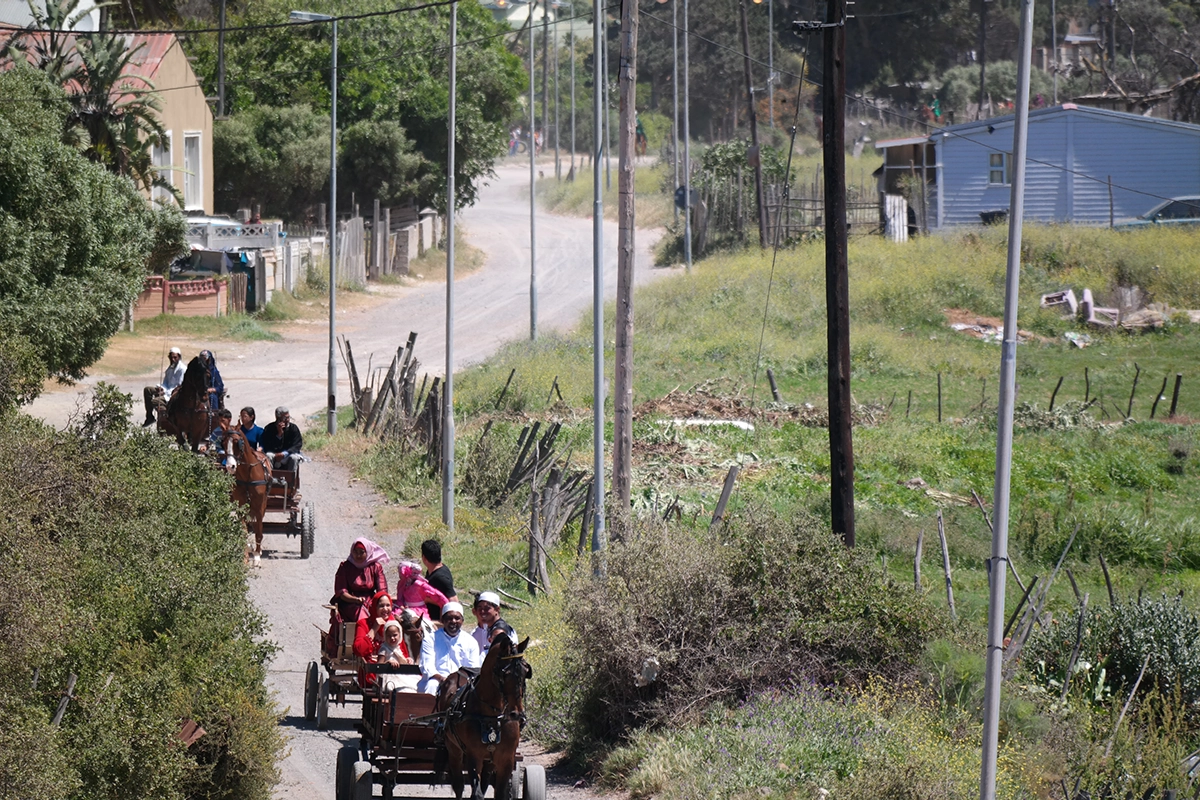
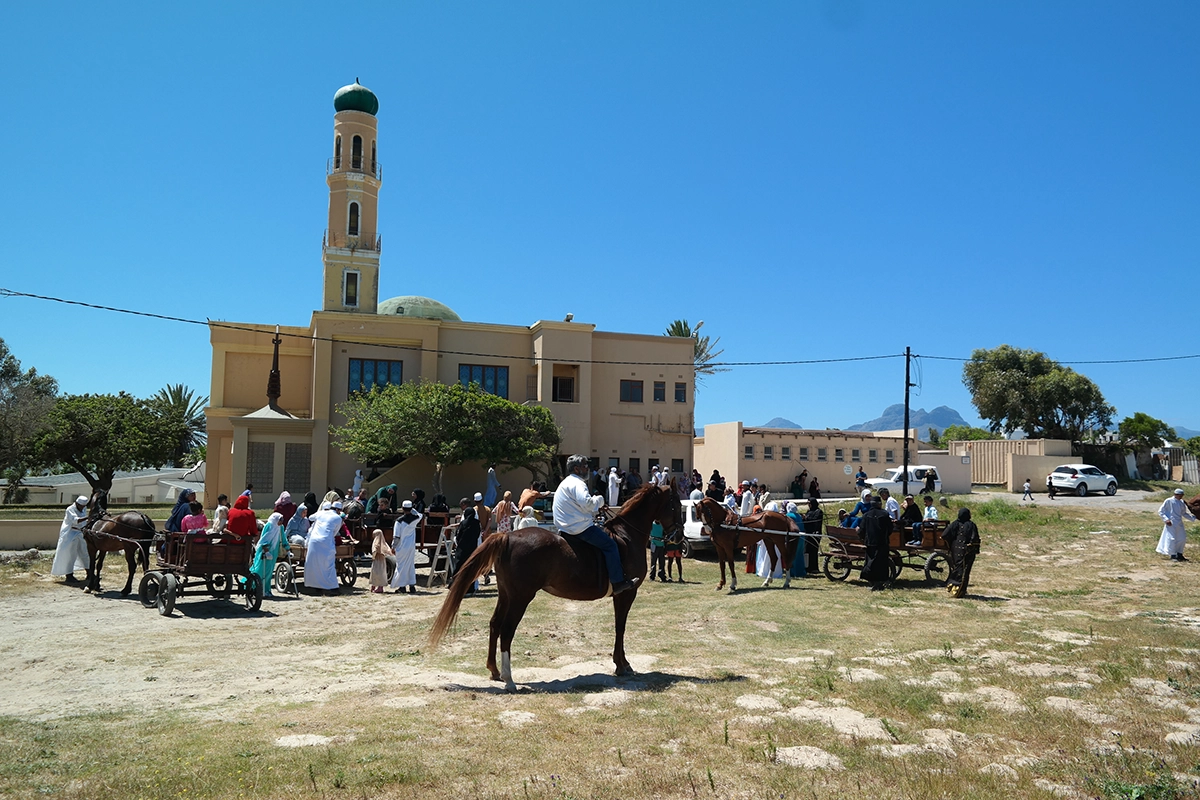
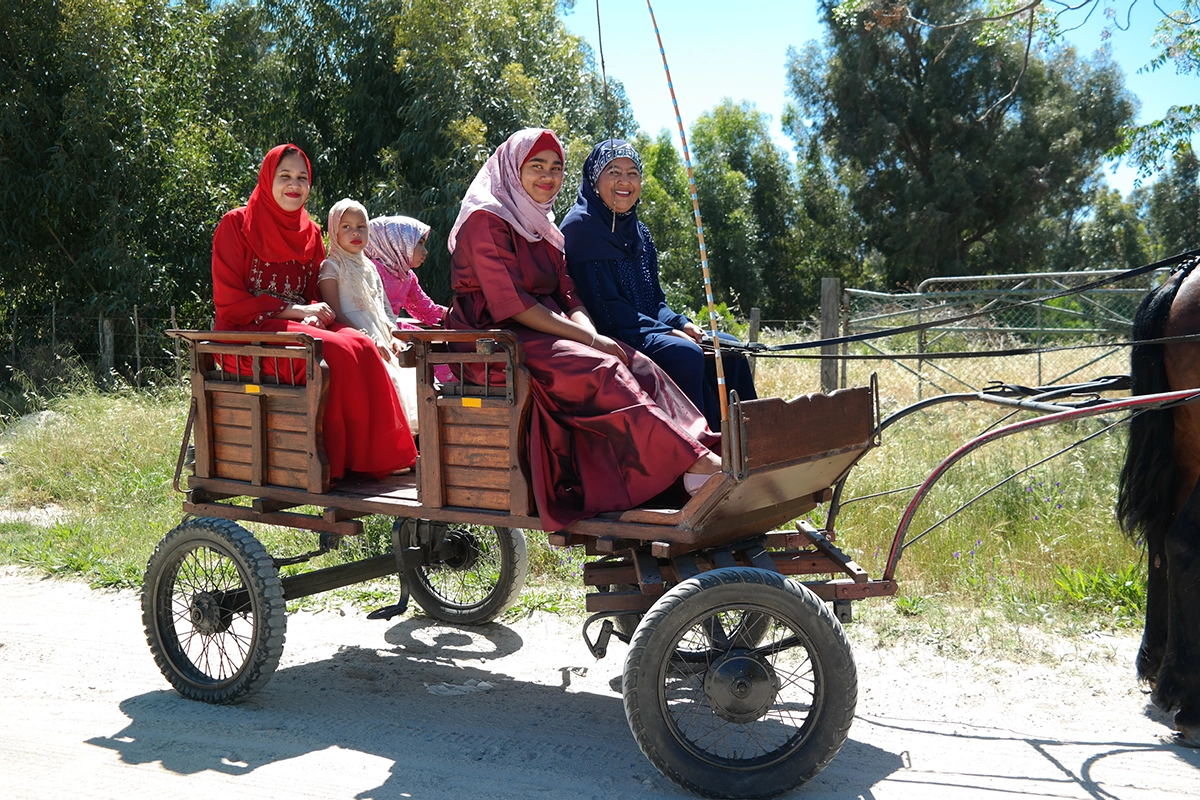
As Rabi-ul-Awwal arrives and Cape Town prepares to commemorate the birth of the Prophet Muhammad ﷺ, it is worth remembering that the Moulood celebrations we know today as the rampies sny, the ratib recitations, the gathering of women in their finest attire, were started at Zandvliet, where an exiled scholar from Sulawesi turned isolation into the first organised Muslim community in South Africa. They were kept alive by generations whose names appear in archival records uncovered by historian Ebrahim Rhoda (2019), whose work has shown that Cape Muslim heritage is verifiable in property deeds, court records, and the living memory of elders.
The exile that became a home
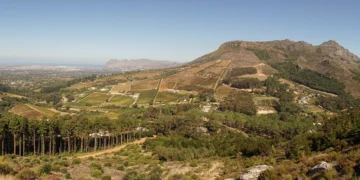
On April 2, 1694, the VOC ship Voetboog deposited Shaykh Yusuf and his entourage of 49 souls on the shores of the Cape of Good Hope (Cape Town Museum, 2019). He was 67 years old, a scholar of the Haramayn and a Khalwati and Qadiri shaykh, who had survived imprisonment in Batavia and exile in Ceylon. Governor Simon van der Stel, wary of his influence, stationed him at Zandvliet, 50 kilometres from Cape Town, believing distance would neutralise him (South African History Online, 2011).
The Dutch miscalculated. What they intended as isolation became the incubator of organised Islam in South Africa. Shaykh Yusuf was received by the original settlers of Zandvliet, and bonds of kinship formed quickly. He made his base around the sammak in Sandvlei, where the Kuils River runs, and established the first makeshift mosque, known as the langhaar. Beside it, he founded the first Islamic school at the Cape, a zawia attached to the place of prayer (Darries, 2014). The word sammak carries a double meaning: a school of fish, and a school of learning.
Here, Shaykh Yusuf taught using the traditional Indonesian pedagogical method of “alif di atas, alif di bawah”, with a curriculum embracing Shafiʿi fiqh, tasawwuf, Quranic recitation, and the liturgical sciences. Runaway slaves and Khoi-Khoi who had resisted the missionary efforts of Reverend Petrus Kalden found refuge beneath its roof, and in finding refuge, they found Islam. When colonial authorities later complained that “the Muslims are multiplying rapidly”, they were unwittingly recording an educational project that turned exclusion into solidarity (Cassiem, 2014; Rhoda, 2019).

From Zawia to Moulood
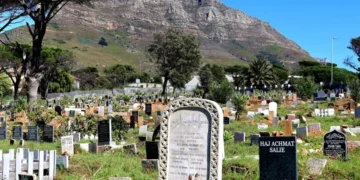
Shaykh Yusuf died on May 23, 1699, at the age of 73. His grave on the sandy hill at Kramat became a shrine that has drawn pilgrims ever since (South African History Online, 2011). Yet the community he founded endured. The monthly spiritual gatherings that began at the sammak, including weekends of prayer from Friday evening through Sunday, gradually shifted to the Kramat after his death, eventually crystallising into the annual Easter pilgrimage that Cape Muslims uphold today (Davids, 1980).
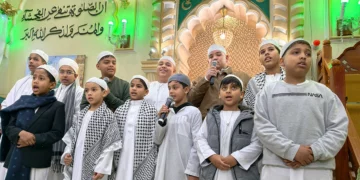
These gatherings were the seedbed of the Cape Moulood. In the lexicon preserved at Zandvliet – langhaar, ratib, thikr, mawlid, ruwayat, qissat – Indonesian and Arabic forms were kept alive in a dialect the elders called kombuis Afrikaans. The Moulood became the grandest expression of this heritage. Women gather to cut rampies—citrus leaves steeped in scented oil—while the jiekerjamaah renders salutations upon the Prophet ﷺ. The word derives from the Malay rampai, meaning mixture, and “sny” is Afrikaans for cut (Multicultural Kid Blogs, 2020). The “rampies sny” is ritual memory. As the women cut the leaves, they recite salawaat and poems on the life of the Prophet ﷺ. The shredded leaves undergo oeker, a smoking infusion with myrrh and frankincense, before being put into sachets for distribution at the mosque on the day of Moulood (Soembain, 2020).
The archival witness: Ebrahim Rhoda and the keepers of the covenant
This growth was never inevitable. It required generations who understood that heritage is responsibility, not possession. In 1858, Kamies Darries, a candle maker and visionary, together with his brother Salaamudeen and Imam Abdol Wahab, purchased three portions of the farm Zandvliet, totalling 300 hectares, for 500 pounds. This land included the shrine of Shaykh Yusuf. Kamies built his house, Die Ou Huis, on the Werf near the sammak, ensuring his descendants would remain rooted in the soil where the Shaykh was buried (Darries, 2014).

The Darries family held the land and the faith through apartheid’s darkest decades, even when the Faure family expropriated portions for a pittance and the Group Areas Act threatened to erase their presence. Piece by piece, they bought back what was taken. In 1958, the descendants of Kamies Darries began constructing the Sandvlei Mosque, completing it in 1960. The langhaar gave way to a permanent structure crowned with a green dome that remains the spiritual heart of the area (Darries, 2014).
The historian Ebrahim Rhoda (2019), in his study, Islamic Dawah at the Cape during the Dutch and British Colonial Period 1652-1842, traced property records of Muslim families at Zandvliet from 1858 onward, documenting how families such as the Darries, Peters, and Ajam increased their holdings while using the commonage for firewood, fishing, berry-collecting for candle wax, and limestone quarrying. Rhoda’s research highlights how the Faure family’s descendants of French Huguenot immigrants formed Macassar Estates Limited, which acquired 13 morgen of the commonage in 1954 at £50 per morgen and later sold plots to the state for between £570 and £1,340 each, profiting from the forced removals of the Group Areas Act (Rhoda, 2019; Braaf, 2016).
Rhoda co-founded the Cape Family Research Forum in 2002, encouraging families to trace their genealogy through oral narrative and documentary evidence. In his own family, he consulted his 90-year-old aunt, Ragiema Crombie, whose encyclopaedic memory of their forebears he later corroborated in the archives (IOL, 2021). This methodology, honouring the elder’s voice while verifying it in the record, mirrors the spirit of the Moulood, where the qissat of the Prophet ﷺ are transmitted through oral recitation anchored in text but animated by living memory.
A reformation rooted in love
Shaykh Yusuf was a reformer whose approximately 50 treatises composed in Makassar, Banten, Ceylon, and at the Cape reveal a sustained concern with the purification of belief (Cassiem, 2014). Yet this was not abstract reformism. It was rooted in the scholarly networks of the Haramayn, inflected by anti-colonial resistance, and adapted to exile. At Zandvliet, he did not seek to overthrow the Dutch but to create a Muslim community so robust, so spiritually grounded, and so intellectually self-sufficient that it could survive despite colonial domination.
In an era when young Muslims are often alienated from their heritage, the residents of Sandvlei insist on the continuing vitality of their traditions. They train young people in oral histories and explore digital storytelling as a means of preservation. They build partnerships across oceans with Sulawesi, Shaykh Yusuf’s homeland, reactivating transnational connections that colonialism severed.
PHOTO GALLERY



The invitation
In 1994, under the leadership of historian Achmat Davids, Muslims across South Africa commemorated 300 years of Islam since the arrival of Shaykh Yusuf. The tricentenary was marked not with triumphalism but with reflection, an acknowledgement that three centuries of Muslim presence in this land had produced something unique: a community forged in struggle, sustained by knowledge, and bound by a faith that refused to be extinguished.
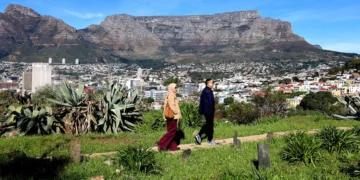
Visit Zandvliet this Rabi-ul-Awwal not as sightseers seeking diversion, but as members of a community seeking connection. Stand at the sammak and imagine the first madrassa in South Africa, where an aged scholar from Sulawesi taught runaway slaves that they were equal before God. Walk the path to the Kramat and feel the weight of three centuries of prayer. The people of Zandvliet do not offer themselves as exhibits but as hosts in the tradition of Ibrahim (AS), who welcomed strangers not knowing whether they were angels or men.
You may also want to read


Shaykh Yusuf’s reformation is unfinished. It awaits our participation. The school he established requires not our veneration but our engagement. The cultural norms he introduced require not our preservation but our creative renewal. The community he founded requires not our memory but our active commitment. That is what Shaykh Yusuf taught at the sammak. That is what Achmat Davids illuminated at the tricentenary. That is what Ebrahim Rhoda verified in the archives. That is what the Darries family preserved at Zandvliet. And that is what the Muslim community of Cape Town is called to continue, not as spectators, but as participants. For as long as duʿas rise from this soil, and footsteps find their way to the Kramat, the work is not done.
Faizal Darries is a writer, community storyteller, and heritage practitioner based in Sandvlei, Cape Town, where his family has stewarded the land at Zandvliet since 1858. As the author of Zandvliet: Cape Town’s Islamic Heritage (2014), he has spent years bridging oral memory and archival research to illuminate the living history of Cape Muslim communities. Beyond the page, he is actively developing community tourism initiatives that welcome visitors from across the world to Zandvliet, offering immersive encounters with a heritage sustained by the continued presence and hospitality of its people.
References
Braaf, N. (2016). “Restitution of Muslim heritage land in South Africa” [PowerPoint slides]. SlideShare. https://www.slideshare.net/slideshow/restitution-of-muslim-heritage-land-in-south-africa-abstract-nazeem-braaf/59515769
Cape Town Museum. (2019). Shaykh Yusuf of Macassar. https://www.capetownmuseum.org.za/they-built-this-city/Shaykh-yusuf-of-macassar
Cassiem, A. (2014). “Shaykh Yusuf of Macassar: Scholar, Sufi, national hero”. Kawalu: Journal of Local Culture, 1(2), 165–178.
Darries, F. (2014). Zandvliet: Cape Town’s Islamic Heritage. Sandvlei: Author.
Davids, A. (1980). The mosques of Bo-Kaap: A social history of Islam at the Cape. Athlone: The South African Institute of Arabic and Islamic Research.
IOL. (2021, June 9). “Heritage activist Ebrahim Rhoda honoured for work in revealing Cape’s hidden Muslim history”. Cape Argus. https://iol.co.za/capeargus/news/2021-06-09-heritage-activist-ebrahim-rhoda-honoured-for-work-in-revealing-capes-hidden-muslim-history/
Multicultural Kid Blogs. (2020, October 13). “Mawlid in Africa”. https://multiculturalkidblogs.com/2020/10/13/mawlid-in-africa/
Rhoda, E. (2019). Islamic Dawah at the Cape during the Dutch and British Colonial Period 1652–1842. DPB Printers and Booksellers.
Soembain. (2020, October 26). “Rampies Sny: A cultural touch”. https://soembain.wordpress.com/the-cape-muslims-customs-and-traditions/rampies-sny/
South African History Online. (2011, March 16). “Shaykh Yusuf, regarded as the founder of the Islamic faith in the Cape, dies at Zandvliet (Macassar)”. https://sahistory.org.za/dated-event/Shaykh-yusuf-regarded-founder-islamic-faith-cape-dies-zandvliet-macassar


