


























![A mother’s taweez and the Cape’s interfaith traditions [+ video]](https://muslimviews.co.za/wp-content/uploads/2026/05/Michael-Weeder-Book-Launch-9May26-360x180.webp)
















By ANWAR OMAR
A landmark judgment handed down by the Western Cape High Court is fundamentally reshaping the governance of the Mowbray Moslem Cemetery, one of Cape Town’s oldest and most significant Muslim burial sites.
In a wide-ranging ruling delivered on March 24, 2026, Judge Gayaat Da Silva Salie interdicted the cemetery’s current board from completing a controversial mortuary facility, declared its governance structures flawed and board unlawful, and mandated the formation of a new, representative governing body. Following this, a Case Management Order on June 4, 2026, instructed that the electoral process be overseen by an independent panel appointed by the Court.
A cemetery steeped in history
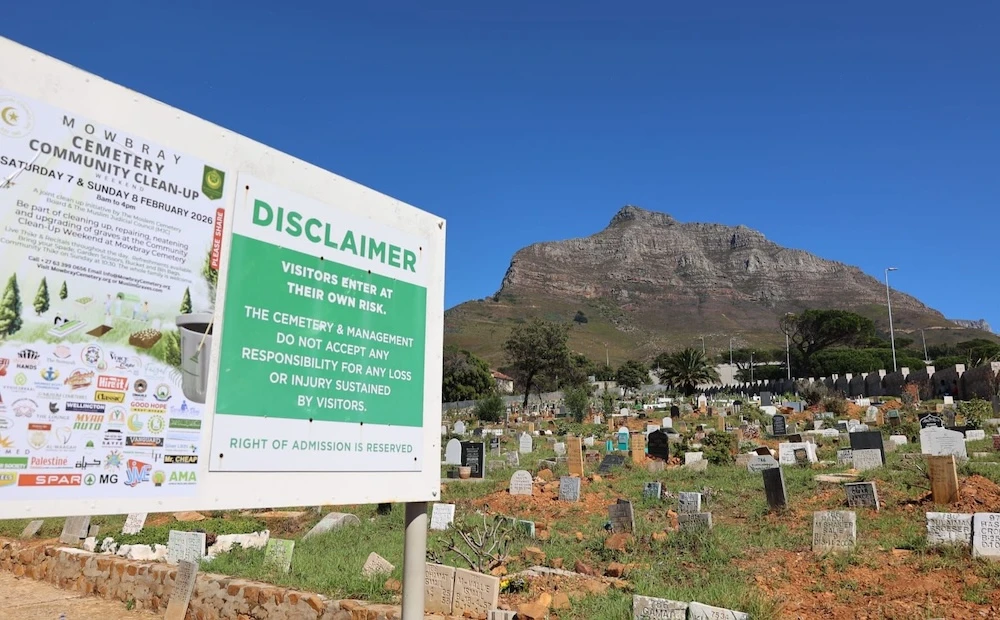
The Mowbray Moslem Cemetery has served Cape Town’s Muslim community since 1886, when it was acquired specifically as a dedicated burial ground for Muslims. Its title deed contains a clear and unambiguous restriction: the property ‘has been purchased and shall be used solely as a burial place for Moslems’.
Administered historically as a communal religious institution and bearing the characteristics of a waqf, or Islamic religious endowment, the cemetery has long been regarded as a site of profound spiritual, historical and communal significance. Under Islamic law, the administrators of a waqf act not as owners but as custodians (mutawallis), entrusted with preserving the property strictly in accordance with its dedicated purpose.
For years, however, the Moslem Cemetery Board, the respondent in these proceedings, had operated with diminishing accountability to the broader Muslim community. Most strikingly, no annual general meeting had been held for approximately 15 years, a chronic failure that the Court found had effectively excluded members from participating in the governance of an institution that belongs to the entire community.
The mortuary dispute
The initial legal battle revolved around the construction of a mortuary facility on the cemetery grounds and, on December 10, 2025, the Court provided an interim interdict ceasing all construction pending the resolution of the matter.
At the heart of the dispute was a fundamental question: did the construction of a mortuary facility fall within the permitted use of the property as a burial place?
The Board argued that a mortuary was ancillary and complementary to burial, constituting a logistical support measure for the burial of deceased persons rather than a change of purpose. It relied on a new constitution adopted in 2020, which it said granted the management committee authority to undertake such development.
The applicant challenged both arguments on multiple grounds. Firstly, because the Board had not held an AGM for over 15 years, it had been operating without a valid mandate from its membership, and a body acting without authority cannot lawfully take major decisions such as constructing a mortuary. The mortuary was therefore unlawful on this basis alone, as an act (ultra vires) beyond the Board’s powers.
You may also want to read


Secondly, the 2020 constitution had been unlawfully adopted, in breach of the procedural requirements of the 1948 Constitution governing special general meetings (SGMs), and therefore it could not confer authority on the Board in any event. Thirdly, and most critically, even if the 2020 constitution is taken at face value, its stated objective was merely to ‘keep and maintain the said cemetery in good order and condition’, a purpose that does not extend to constructing a mortuary. The Board had therefore acted outside the ambit of its own governing document.
Finally, the applicant argued a point largely overlooked in subsequent media coverage: that the cemetery had functioned without a mortuary for 140 years, that Islam emphasises swift burial, rendering prolonged cold storage theologically inconsistent, and that this private facility could not lawfully perform first-time autopsies or be involved in medico-legal processes. Thus, there was no demonstrable Islamic need, nor any practical necessity, for its construction.
The judgment: mortuary ruled unlawful
The Court ruled decisively in favour of the applicant on the question of the mortuary and found that while certain preparatory acts may be closely connected to burial, the concept of ‘ancillary use’ cannot be extended without limit. Accepting the Board’s broad construction, the Judge reasoned, would permit a progressive expansion of activities under the guise of burial, potentially encompassing pathology services, hospital-linked functions or the production of burial materials.

Photo Anwar Omar
The proposed facility, described as a refrigeration and body-storage installation with associated technical infrastructure, was found to extend beyond the act of burial itself and into preparatory and custodial processes that constitute a distinct use of the property, falling outside the restrictive condition in the title deed. A final interdict was accordingly granted, permanently restraining the Board from constructing, completing, operating or maintaining any mortuary facility on the cemetery property.
Governance in crisis: the Board’s legitimacy questioned
The Court was equally critical of the Board’s governance record. Fifteen years without an AGM had resulted in the effective exclusion of members of the community from participation in governance and had undermined the framework through which authority is ordinarily renewed.
The 2020 constitution upon which the Board relied for its authority was found to have been adopted without the participation of the broader Muslim community and, therefore, there was no basis to conclude that the current Board derived its authority from a representative process. It accordingly could not be regarded as a lawful or representative governing body.
On the question of membership, the Court declared invalid any interpretation or practice confining membership exclusively to lineal descendants of founding families. Accordingly, Judge Da Silva Salie viewed the 1948 Constitution, properly construed, as contemplating a living and evolving membership body, not a historically frozen hereditary class. Membership is regulated through inscription in a registration book and extended to persons interested or concerned in the cemetery, with lineage operating as merely one qualifying criterion within a broader framework. Limiting membership to lineal descent was also found to be inconsistent with the South African Constitution.
Why the Court issued a Case Management Order
The Case Management Order of June 4, 2026, was made necessary by the very nature of the problem the judgment sought to fix. Having found the existing Board to be an unlawful, unrepresentative body, the Court could not simply hand implementation of its order back to that same Board without independent oversight. The Board is conflicted and the risk of the membership registration process being manipulated to favour incumbents was too obvious to ignore.
The Court therefore appointed an independent panel to monitor compliance, police the registration process of members, and oversee the election itself. Additionally, Judge Da Silva Salie also requires an early report back by June 19, 2026, so that any irregularities could be identified and corrected before the 60-day deadline for the Special General Meeting expired.
The road to new elections
The Court’s Case Management Order, based on a hearing convened on June 4, 2026, set out a carefully structured process to restore lawful governance. Within 30 days of the judgment, the Board was required to initiate a process notifying the Muslim community of Cape Town and surrounding areas of the reopening of membership registration, open to all persons qualifying under the 1948 Constitution, including by lineage or demonstrated interest in the cemetery. An SGM for the election of a new governing body was ordered to be convened within 60 days, with participation confined to duly registered members.
To oversee this process, the June 4, 2026, Case Management Order appointed a Panel of Independent Convenors and Electoral Officers, comprising attorney Mr Igshaan Higgins as chairperson, who had also served as mediator in earlier settlement attempts, alongside attorneys Ms Rehana Khan-Parker and Ms Adela Petersen, former Chief Parliamentary Legal Adviser Dr Eshaam Palmer, and media practitioner Ms Najwa Mohamed-Luddy.
The Panel is required to act independently of both parties and to facilitate a fair, transparent and orderly implementation of the Court’s orders. It must file a report with the Court by June 19, 2026, addressing the status and integrity of the membership registration process, including the number of applications received, approved, rejected or under consideration, whether written reasons are being furnished for refusals, and whether the process has been conducted in a manner substantially compliant with the Court’s order. The report must be accompanied by a Certificate of Substantial Compliance and a copy of the provisional or final membership register.
Pending the election of a new board, the existing respondent may continue to perform only limited day-to-day administrative functions necessary for the ordinary functioning of the cemetery. It is expressly prohibited from exercising any powers beyond those strictly necessary for routine operations.
The Panel will also advise the Court on an appropriate venue and date for the SGM. The Court specified that the Mowbray Cemetery premises is not suitable for this purpose, and on a proposed election protocol covering the nomination of candidates, supervision of voting by secret ballot, and the declaration of results.
Once the newly elected governing body is in place, it will be required to file a report with the Court within 90 days, setting out the steps taken to comply with the order, the outcome of the Special General Meeting, and its determination regarding the partially constructed structure, the future of which will be for the new Board to decide, provided any use remains consistent with the cemetery’s purpose as a burial place. The Court retains supervisory jurisdiction over the matter. The Court may issue further directions upon receipt of the Panel’s report. Either party may approach the Court at any time on the same papers, duly amplified, for further directions or relief.
Conclusion
For a community that has waited 15 years for a meaningful voice in the governance of one of its most sacred communal institutions, the judgment marks a significant milestone, one that the Court has gone to great lengths to ensure is implemented with the transparency, fairness and dignity that the situation demands.


