








![Does ta’wīl mean interpretation or fulfilment? A Quranic reassessment [+video]](https://muslimviews.co.za/wp-content/uploads/2026/10/Tawil-Kaskas-360x180.webp)


























![Why becoming a wealthy Muslim is commendable in Islam [+videos]](https://muslimviews.co.za/wp-content/uploads/2026/09/Muslim-Trade-Business-1-360x180.webp)



![The market-builder who restrained the market [Part 2]](https://muslimviews.co.za/wp-content/uploads/2026/08/PHOTO-2026-08-25-17-16-32-360x180.jpg)








![Does ta’wīl mean interpretation or fulfilment? A Quranic reassessment [+video]](https://muslimviews.co.za/wp-content/uploads/2026/10/Tawil-Kaskas.webp)

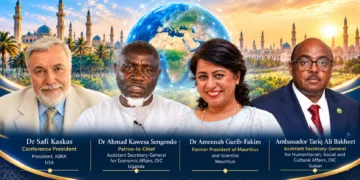
By DR SAFI KASKAS
What if a familiar Quranic term points not to interpretation, but to the moment a promise, vision or warning becomes reality? Dr Safi Kaskas invites translators and scholars to reconsider the meaning of ta’wīl across the Quran today.
One of the recurring Quranic terms that may deserve renewed examination is the word ta’wīl (تأويل). But allow me to start by explaining what prompted me to revisit my previous understanding of this term.
In most contemporary Quran translations, ta’wīl is commonly rendered as interpretation, explanation, or exegesis. However, after conducting a thematic study of every Quranic occurrence of the term, I have come to the conclusion that this translation may not adequately capture the Quranic meaning.
The evidence suggests that ta’wīl does not primarily refer to an intellectual interpretation of a text or statement. Rather, it refers to the actual realisation, fulfilment, unfolding, or manifestation of a matter in time according to God’s decree.
Proposed quranic definition
Ta’wīl: The eventual realisation, fulfilment, or unfolding of a matter according to God’s decree.
Ta’wīluhu: Its fulfilment; the point at which it becomes reality.
Ta’wīl al-aḥādīth: Knowledge of how events, visions, statements, or signs ultimately unfold and become reality.
In other words:
Ta’wīl is not primarily an interpretation. It is the reality to which a statement, vision, promise, warning, or event ultimately leads when it manifests in history.
The two key verses
Two verses appear to provide the clearest guidance for understanding the term.
1. Al-A’raf (7:53)
“Are they waiting for anything except its ta’wīl? On the Day its ta’wīl arrives…”
Here, the Quran explicitly connects ta’wīl with something that arrives, occurs, and becomes reality.
The verse does not ask whether people are waiting for an explanation of the message.
It asks whether they are waiting for the moment when what was foretold actually comes to pass.
A natural rendering would therefore be:
You may also want to read




“Are they waiting for anything except its fulfilment? On the Day its fulfilment arrives…”
2. Yusuf (12:100)
When Joseph is reunited with his family and his childhood vision is realised, he declares:
“My father, this is the ta’wīl of my vision from before.”
Joseph does not mean:
“This is the interpretation of my dream.”
The dream had already been understood.
What has happened is that the dream has now become reality.
A more faithful rendering would therefore be:
“My father, this is the fulfilment of my earlier vision.”
This verse may be the clearest Quranic definition of ta’wīl.
Re-reading the quranic occurrences
When this meaning is applied consistently throughout the Quran, several passages acquire remarkable coherence.
Sura Al Imran, 3:7
Those who pursue ambiguous verses are seeking to know their fulfilment and ultimate reality, something known only to Allah.
Sura Yunus, 10:39
The disbelievers rejected the message before its fulfilment had arrived.
Sura An Nisa, 4:59
Referring disagreements back to Allah and the Messenger leads to the best outcome or best eventual realisation.
Sura Al Isra, 17:35
Honest commerce leads to the best eventual outcome.
Sura Al Kahf, 18:78-82
Al-Khidr does not simply provide Moses with an interpretation of his actions.
He reveals the future realities toward which those actions were directed.
Sura Yusuf
The recurring expression ta’wīl al-aḥādīth appears to describe knowledge of how events, visions, and signs ultimately unfold in history and become reality.
Why this matters
The issue is not merely linguistic.
The translation of key Quranic terms shapes how readers understand revelation itself.
If ta’wīl means “interpretation,” the emphasis falls on human explanation.
If ta’wīl means “fulfilment” or “realisation,” the emphasis falls on the movement of divine guidance from word to reality, from sign to fulfilment, from promise to manifestation.
This understanding also creates a thematic connection between revelation, history, prophecy, dreams, divine promises, divine warnings, and ultimate accountability.
In each case, ta’wīl refers to the point at which truth becomes visible in reality.
An invitation to further study
I present this observation not as the final word on the subject but as an invitation to scholars, translators, linguists, and students of the Quran to re-examine every occurrence of ta’wīl thematically and contextually.
The question deserving renewed attention is:
Does the Quran use ta’wīl primarily to mean “interpretation,” or does it more fundamentally denote the fulfilment, realisation, and ultimate manifestation of a matter in time?
If the latter proves consistently true across all Quranic occurrences, then many translations of the term may need substantial revision.
Such a reassessment could deepen our understanding of the Quran’s view of history, prophecy, divine guidance, and human accountability.
Dr Safi Kaskas is president of the International Quran Research Association (IQRA’). The organisation is convening its annual conference this month, on the topic “Guiding the Digital Age: A Qur’anic Compass for Human-Centered Innovation and Sustainable Development.” Register here.