













![The market-builder who restrained the market [Part 2]](https://muslimviews.co.za/wp-content/uploads/2026/08/PHOTO-2026-08-25-17-16-32-360x180.jpg)
![The merchant preceding the Prophetic mission [Part 1]](https://muslimviews.co.za/wp-content/uploads/2026/08/01-360x180.jpg)



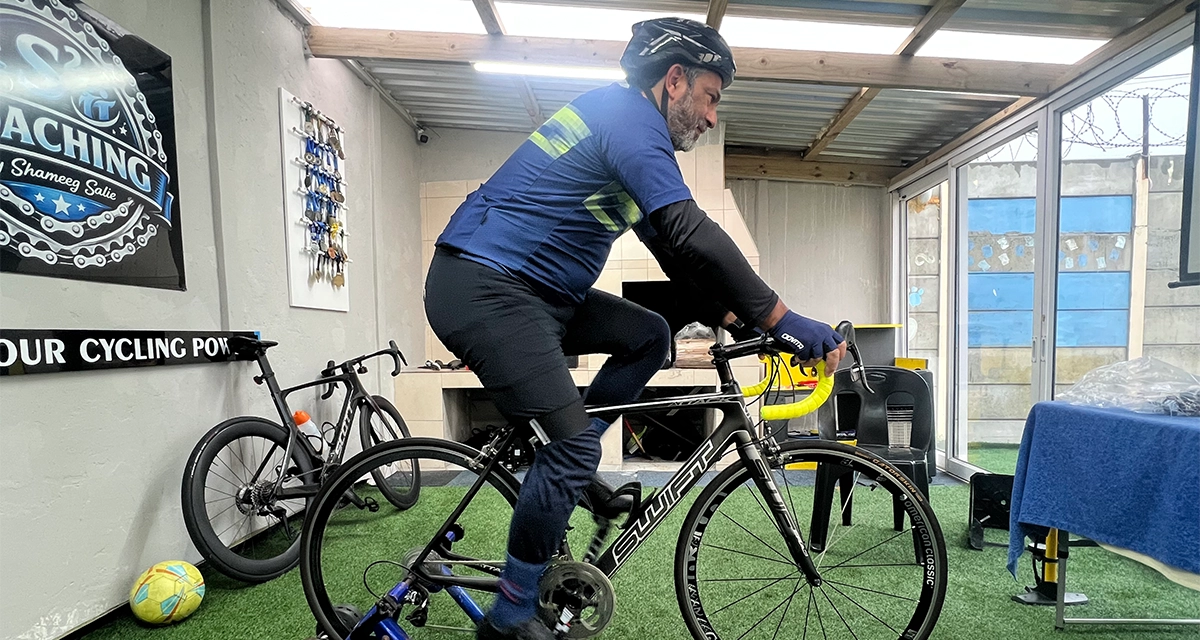


ADNAAN ADAMS asks the question: What are we prepared to build within ourselves and within our communities, and for those who come after us? In a series of articles, he seeks answers by reflecting on faith, discipline, community, knowledge and what it means to build.
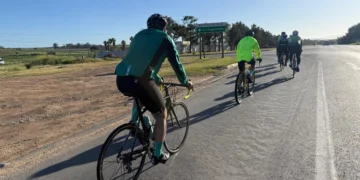
IN December, I intend to cycle 475 kilometres as part of the Hijra Cycle Tour, an initiative organised by Masjid Love and Wheel to Heal.
There is one rather important detail: I am not a cyclist.
Until recently, cycling was not part of my life. I have no history of endurance riding, no impressive collection of kilometres behind me, and certainly no childhood dream of long-distance cycling. So why, at this stage of my life, commit myself to 475 kilometres? Perhaps the answer lies in a question that has followed me for much longer: What are we prepared to build within ourselves and within our communities, and for those who come after us?
Building has always mattered
For more than two decades, I worked as an educator at Modderdam High School in Bonteheuwel, eventually serving as Head of Department for Mathematics and Science. Some of the work closest to me happened beyond the curriculum. In a community confronting poverty, unemployment and social challenges, we asked what could be done. Then we tried to build.
We transformed an underutilised library into a Smart Library and resource centre, developed STEM and technology initiatives with partners, and expanded access to computers and science facilities. We also confronted a basic reality: a hungry child cannot be expected to concentrate on mathematics. A feeding programme became part of our educational intervention.
These were responses to the same question: What conditions do young people need in order to flourish?
In 2021, I was humbled to receive the Western Cape Education Department Kader Asmal Excellence Award. The deeper lesson was witnessing what becomes possible when circumstances do not determine the limits of our imagination. Years later, I confront that principle again.
Only this time, the project is me.
475 kilometres
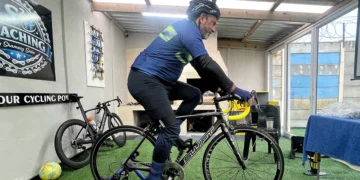
When the possibility of undertaking the Hijra Cycle Tour emerged, my first response was doubt. Can someone without a cycling background prepare to cycle 475 kilometres? I consulted experienced cyclists and sought professional advice. The answer was reassuring yet uncomfortable: it is possible, but preparation matters. There are no shortcuts.
As an educator, I knew commitment through long nights marking scripts, setting examinations, planning lessons and building projects with limited resources. But this is different. The body cannot be persuaded by a good proposal. A hill does not care about your qualifications. The road asks only: “Have you prepared?” Perhaps that is precisely why I have chosen to ride.
The meaning of Hijra
You may also want to read



There is something profoundly fitting about undertaking a journey carrying the name Hijra. Hijra is movement, but never movement without meaning. It takes me back to words from KG Saiyidain’s writing on Muhammad Iqbal’s educational philosophy that I encountered early in my educational journey:
Movement gives colour and meaning to life;
Movement is reality, rest an illusion.
Those words became part of how I understood education and life. Years later, they return with renewed meaning – to move is not simply to travel; it is to grow, to become, and to move with purpose.
At the heart of Hijra lies intention. Before the first kilometres are ridden, there must be a reason for riding it. Through the work of Masjid Love and Wheel to Heal, the Hijra Cycle Tour places physical effort in the service of something beyond oneself, bringing together faith, endeavour, community and service. Masjid Love’s work also asks us to think seriously about the mosque not simply as a building, but as a place of worship, belonging, learning, service and community formation.
Strengthening our mosques means strengthening the communities around them My journey begins there. But the road has also made me think about another kind of infrastructure.
What else must we build?
Healthy Muslim communities require strong mosques, schools, welfare organisations, businesses and charitable institutions. But they also need something less visible: intellectual infrastructure.
We need spaces where ideas are cultivated, difficult questions asked with adab, scholars engage society, and younger Muslims encounter serious thought. This is what we seek to cultivate through The Muslim Thinker.
The bicycle is helping me understand this differently. Institutions, like cyclists, are not built in a day. They require discipline, consistency and people willing to guide, challenge and ride alongside us. Above all, they require humility to recognise how much remains to be learnt.
Venturing into the unknown
There is something uncomfortable about committing publicly before knowing with certainty that you can succeed. Perhaps that vulnerability matters. I am not an exceptional cyclist; I am an ordinary person attempting something that feels extraordinary. Between where I am today and 475 kilometres lie training, discomfort, mistakes and discipline.
Meaningful journeys often begin before we feel ready: entering university, returning to study, building a library or institution, or deciding that something within ourselves must change.
Every meaningful journey begins somewhere between intention and uncertainty. The road need not be easy; the destination simply needs to matter enough to prepare for it.

Why I ride
When asked why I have chosen to ride 475 kilometres, my answer is still developing. I ride because I believe in what Masjid Love and Wheel to Heal are attempting. I ride because service should sometimes cost us something personally. I ride because discipline of the body may teach me about discipline of the mind and spirit. And I ride because Hijra reminds us that meaningful change requires movement.
For years, as an educator, I asked young people to reach beyond the limits they imagined for themselves and discover possibilities they could not yet see. Perhaps I must remain willing to ask the same of myself.
This series of articles will follow that journey, not as a cycling diary, but through reflections on faith, discipline, community, knowledge and what it means to build.
There will be a finish line. But the more important question lies beyond it: What are we prepared to build within ourselves and within our communities, and for those who come after us?
Adnaan Adams is the founder and director of The Muslim Thinker. He can be reached on 083 687 0559, or visit their website: www.themuslimthinker.org