















































At a Cape Town exhibition marking Mental Health Awareness Month, artists Alfred Kitsi and Jaden Wells use horror imagery, repetitive processes and personal experience to explore hardship, healing, hope and the meaning of sanctuary.
By YASEEN BARDIEN
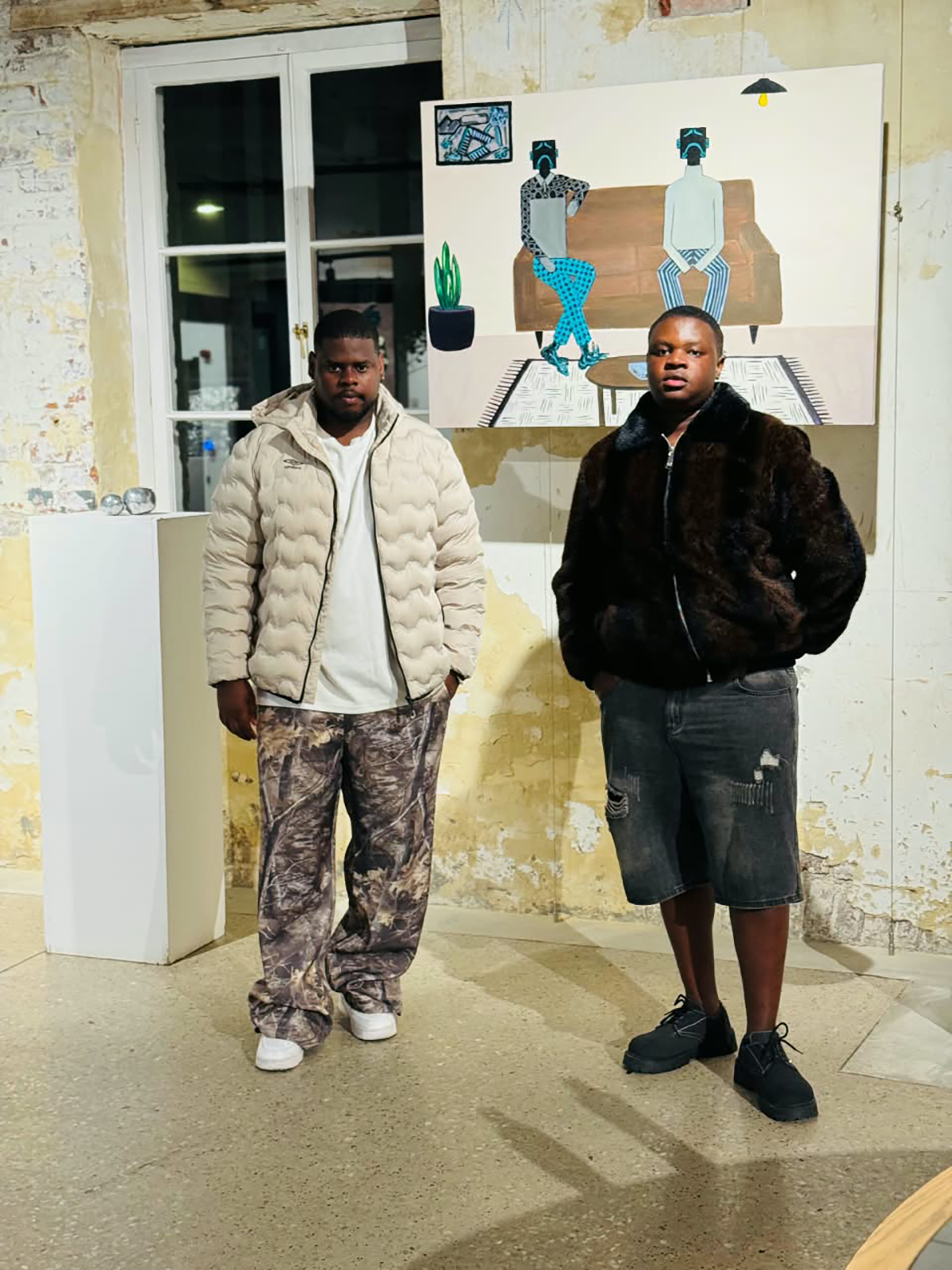
Alfred Kitsi uses horror art to explore fear, hardship and experiences people often leave unspoken.
“I feel like the world is sad,” he said. “We have so many people who wakes up miserable every day and feel like they don’t have a meaning to life.”
His paintings feature in The Siege and the Sanctuary, an exhibition by Our Cape Town Heritage (OCTH) that opened at Desmond and Leah Tutu House in the Old Granary Building on October 1 to mark Mental Health Awareness Month.
Kitsi said his paintings feature sad faces that represent things people leave unspoken or problems that might have been solved through conversation. He recalled losing a friend to suicide while he was in high school.
“Some people, they just need someone to talk to,” he said.
His work draws on his own experiences. “Everything is authentic, pure emotion, anger and experience from my own reality,” he said.
One of his paintings, I regret it, reflects a difficult period after he left home following high school, seeking opportunities in Johannesburg. He said he was homeless for six months, spent a week at a petrol station and stayed at an orphanage for two months. The orphanage was full and accepted only children aged seven to 14, so staff could not keep him there for long because of his age.
An upside-down figure represents his sense that life had gone wrong, while a small house symbolises his connection to home. He later added flowers to the painting to represent hope.
Kitsi said regret could teach people important lessons but should not stop them from moving forward.
In Make the world better again, children play alongside a crying child, while other figures express different emotions. Kitsi said the painting reflects how children can face different circumstances at home, including problems they may struggle to talk about. He said the playground offers a place where children can find happiness regardless of what they are experiencing.
“On a playground, all children are equal because all of them have smiles on their faces,” he said.
Kitsi said painting was also a form of therapy for him.
“When you look at my work, it should be a reminder that there is hope,” he said.
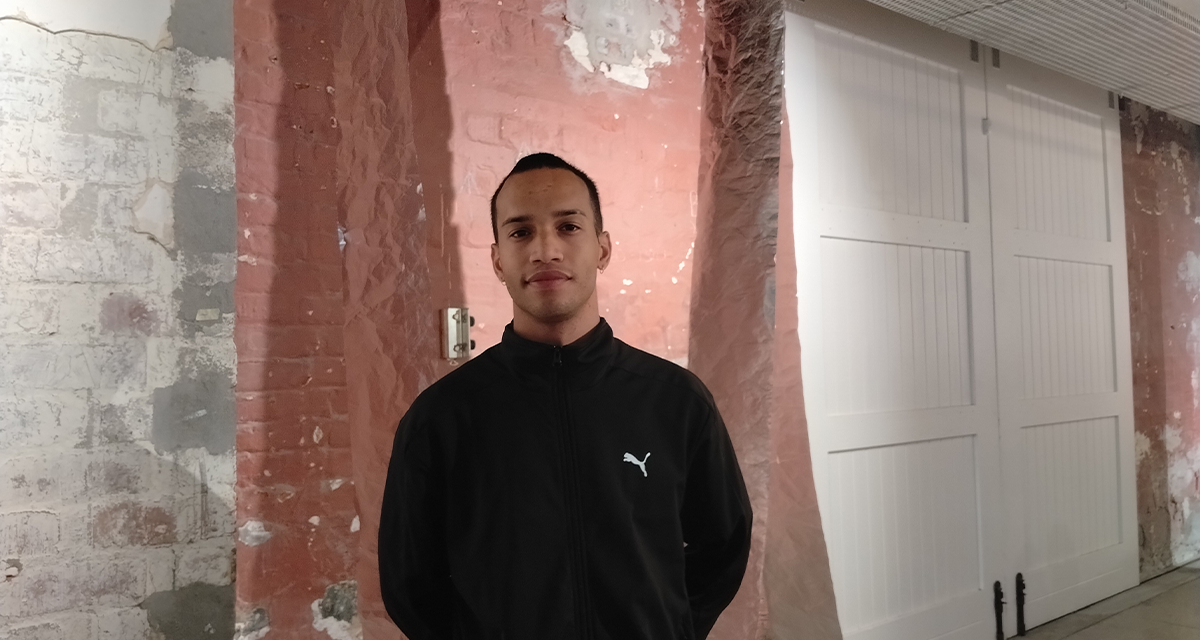
The exhibition also features work by Jaden Wells, whose repetitive, labour-intensive processes reflect his experiences with mental health and his family’s history of labour.
For Wells, sanctuary means learning to live with mental health difficulties, even without being fully healed.
“The sanctuary is sort of like a place of being content,” he said.
Wells dealt with depression, obsessive-compulsive disorder and anxiety. Making art helps him work through these experiences.
“I don’t only just make work to represent, I make work to sort of help myself when it comes to my mental health,” he said.
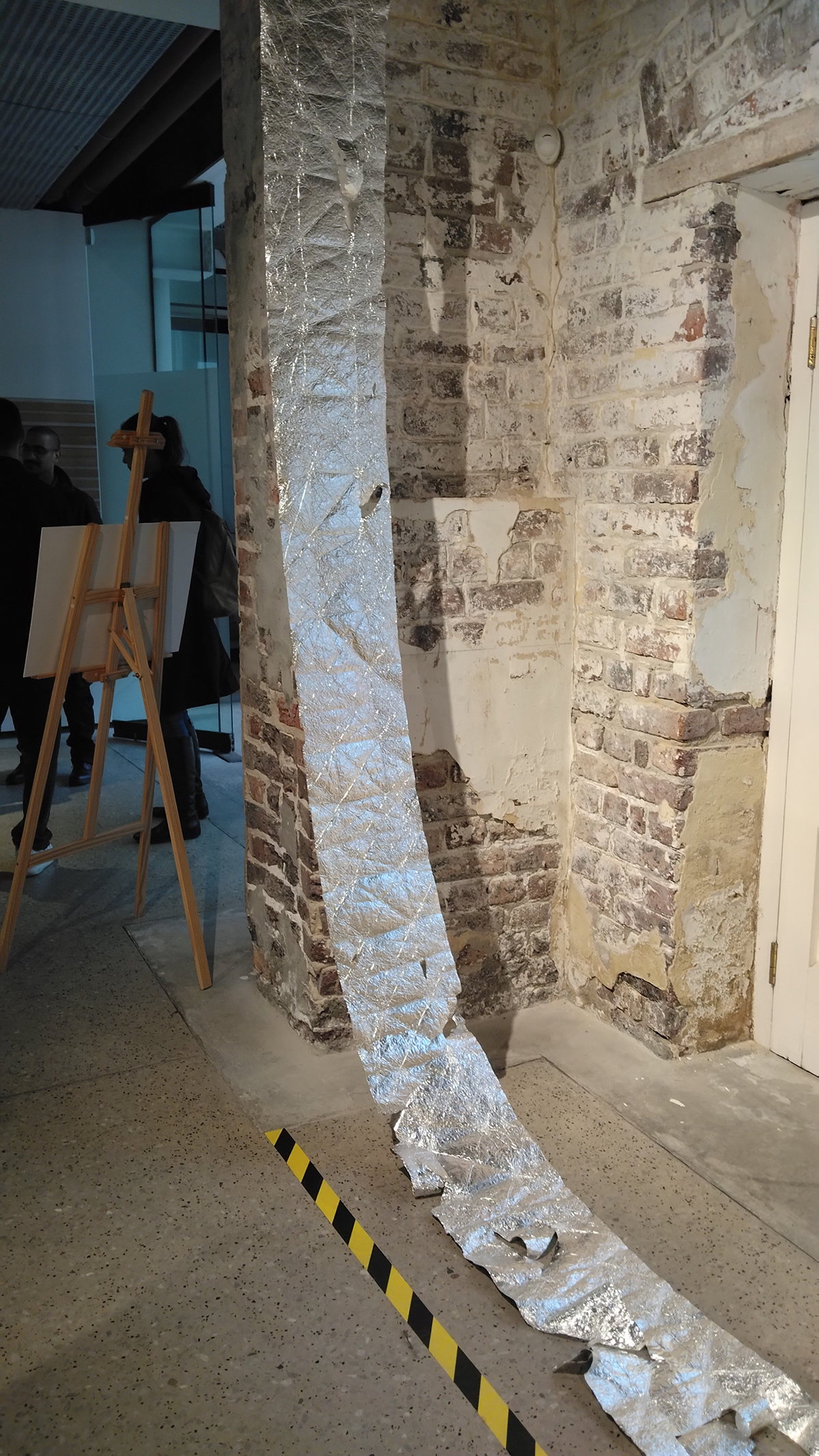
His work includes pieces of aluminium foil that he repeatedly folds and smooths out, leaving tears and holes in the material. Wells said the marks represent experiences that cannot be undone.
“It’s a constant struggle when one deals with mental health,” he said. “It’s not a one and done.”
You may also want to read


His work also draws on his family’s history. He said generations of his family had worked as labourers, including in factories and on construction sites.
Wells said he wanted viewers to consider the time and effort behind his work and recognise that mental health is not something that can always be resolved quickly.
“It’s a lifelong struggle,” he said.
The exhibition draws on OCTH’s Digital Archive Research Library, specifically its Mental Health: Performing Wellness section, which explores the history of mental health care in South Africa. This section draws on research conducted by OCTH researcher Zoku Mgoduka-Horn.
Mgoduka-Horn said Kitsi’s paintings initially appeared innocent, but their sad faces and unsettling figures revealed the weight of mental health struggles. Wells’s repetitive processes, by contrast, offered a meditative space, reflecting the exhibition’s themes of siege and sanctuary.
She said her research raised questions about the pressure on black and brown people to appear functional, even when they were struggling.
“We have been kind of forced into a role where we need to perform being okay,” she said.
She said she wanted visitors to question the artworks and engage with them, even when they felt uncomfortable.
“This is an okay space to have uncomfortable feelings,” she said.
A second walkabout took place on October 10 to mark World Mental Health Day.