

















![The market-builder who restrained the market [Part 2]](https://muslimviews.co.za/wp-content/uploads/2026/08/PHOTO-2026-08-25-17-16-32-360x180.jpg)
![The merchant preceding the Prophetic mission [Part 1]](https://muslimviews.co.za/wp-content/uploads/2026/08/01-360x180.jpg)







Islamic finance may ease the cost of pilgrimage, but the Saudi kingdom’s Nusuk system is likely to result in exclusion. MAHMOOD SANGLAY examines who benefits when Hajj and Umrah are reorganised around digital control and commercial gain, and who loses.
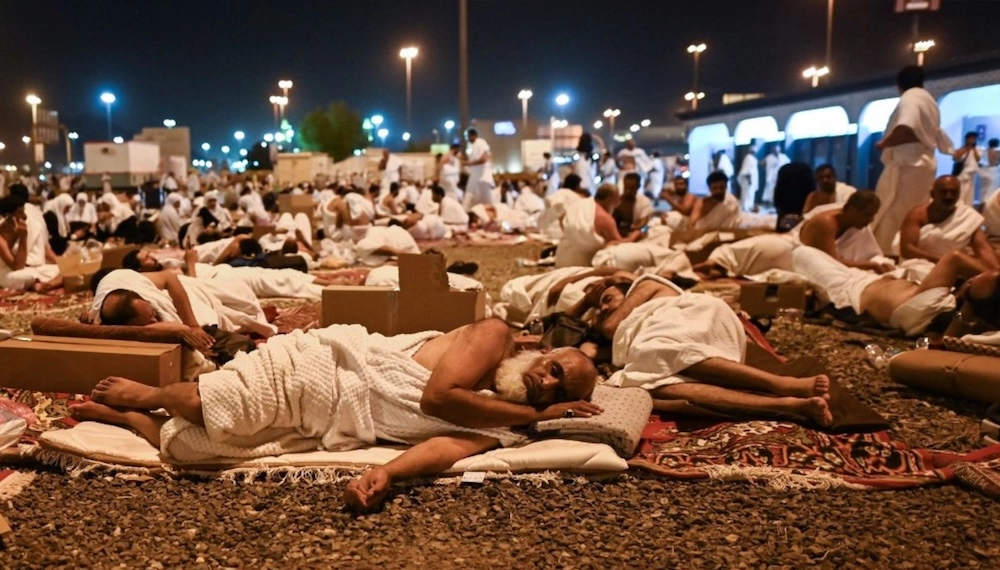
Hajj is not an ordinary journey and Umrah is not simply another tourism product. For Muslims, both are acts of worship centred on sacrifice, equality and submission to Allah. Hajj is obligatory only for those able to undertake it. Yet that qualification should not become an excuse for allowing the sacred journey to be reshaped around the spending power of the wealthy.
A recent paper, raises a pressing public-interest question: is the modern pilgrimage economy helping Muslims of modest means reach Makkah, or creating new layers of profit between them and the Kaaba?
Finance can spread the burden but not remove it
The 2025 academic paper, Shariah-Compliant Financial Services for Hajj and Umrah: Products, Challenges, and Policy Recommendations, by Zahiduzzaman Zahid and others, examines savings plans and three Islamic finance products. Murabaha allows a provider to purchase pilgrimage services and resell them at a disclosed mark-up, usually through instalments. Mudarabah shares profit and risk, while takaful provides mutual protection against emergencies and losses.
The paper’s survey of 500 pilgrims and interviews with 20 finance specialists suggest that Murabaha is the most widely used of the three products. Its appeal is clear: the total price and repayment schedule are known in advance. Takaful may protect a pilgrim against medical emergencies or lost baggage, while Mudarabah has attracted limited use because it is harder to understand.
You may also want to read




![The merchant preceding the Prophetic mission [Part 1]](https://muslimviews.co.za/wp-content/uploads/2026/08/01-120x86.jpg)

They show that Islamic finance can replace an impossible lump-sum payment with planned instalments and can protect families from unforeseen losses. The paper also reports that 40% of surveyed pilgrims lacked awareness of these products. That makes financial education, transparent contracts and effective regulation matters of public interest, not merely banking concerns.
However, spreading a payment is not the same as making Hajj cheaper. The paper’s own simulated figures contain an important contradiction. Its abstract describes Murabaha as producing savings of 3.8% and takaful savings of 0.6%. Yet its detailed cost table shows Murabaha costing 3.8% more than paying upfront and takaful costing 0.6% more. The paper later acknowledges that fees and mark-ups make both options more expensive than cash payment.
That inconsistency means the headline figures should be treated cautiously. The more defensible finding is that finance can improve cash flow and reduce certain risks, but cannot solve the underlying affordability crisis. Indeed, a Shariah-compliant product may still leave a poor household with a heavy financial burden. Compliance alone does not guarantee affordability, fairness or meaningful access.
Nusuk changes who controls the journey
The introduction Nusuk platform in 2022 has had a profound impact on the poor around the world, especially those who have committed a lifetime of savings to the sacred journey. The Saudi kingdom’s centralised digital platform does more than simplify visas, bookings and payments. Nusuk also changes who controls access, who receives the money and what kinds of packages reach the market.
Before centralisation, local Hajj and Umrah operators could assemble modest packages using distant accommodation, shared transport, familiar food and flexible payment arrangements. Community networks and savings groups could help pilgrims who lacked credit cards or immediate cash. Local guides also provided language, cultural and medical support.
An upfront digital payment model weakens these arrangements. A pilgrim may now require a suitable smartphone, reliable internet, digital literacy, an internationally enabled bank card and enough available funds to pay within a limited booking period. These conditions are routine for affluent travellers but formidable for poorer, older or less digitally confident Muslims.
It reduces inconvenience for those who already possess money, technology and banking access, while transferring new costs and risks to those who do not. The poor may save for decades, yet lose access because they cannot navigate a rapid digital process or clear a large payment at once.
There is also a wider impact on pilgrim-sending countries. When bookings and payments move directly into a Saudi-controlled system, local travel businesses may lose income and jobs. Countries can lose foreign currency more quickly, while pilgrims lose support in their own languages and communities. These claims require country-specific evidence but identify costs that official measures of efficiency may overlook.
Sacred duty or premium tourism
Nusuk must also be understood within Saudi Vision 2030, which seeks to expand Umrah capacity to 30 million visitors a year and increase tourism revenue. Digital coordination is necessary to manage millions of people safely. Faster visas, verified providers, clearer records and better crowd management can serve pilgrims and reduce fraud.
The danger arises when efficiency becomes inseparable from revenue maximisation. With limited Hajj places and finite accommodation near the holy sites, providers have strong incentives to favour premium packages that produce higher returns. The pilgrim then risks being valued less as a guest of Allah than as a customer whose worth is measured by spending.
Neither banks nor the Saudi state can be allowed to define accessibility merely as the availability of a financial product or digital booking portal. The real test is whether a low-income Muslim can participate without unaffordable debt, digital exclusion or the destruction of community support.
Reform should include genuinely low-cost packages, staged payments, offline assistance, multilingual support and protected allocations for pilgrims of modest means. Islamic institutions could expand interest-free loans, grants, waqf-funded assistance and carefully regulated savings schemes. Prices, mark-ups, fees and refund rules should be disclosed plainly, while independent oversight should test whether digital systems discriminate by income, age or location.
Hajj embodies equality before Allah. Its administration will always require rules, finance and technology, but these must remain servants of worship rather than gates controlled by wealth. A pilgrimage economy that welcomes the rich efficiently while leaving the poor behind may be commercially successful. It cannot credibly be called inclusive.