






















![The market-builder who restrained the market [Part 2]](https://muslimviews.co.za/wp-content/uploads/2026/08/PHOTO-2026-08-25-17-16-32-360x180.jpg)
![The merchant preceding the Prophetic mission [Part 1]](https://muslimviews.co.za/wp-content/uploads/2026/08/01-360x180.jpg)








![The merchant preceding the Prophetic mission [Part 1]](https://muslimviews.co.za/wp-content/uploads/2026/08/01.jpg)

By MAHMOOD SANGLAY
PART ONE
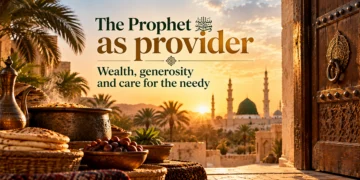
To remember the Prophet Muhammad ﷺ in Rabi’ al-Awwal only as a messenger is to miss an important part of the life Muslims seek to honour. In this two-part series we explore how, long before revelation, he knew the pressures of earning, negotiating, travelling, managing other people’s capital and protecting a reputation.
His experience in commerce did not sit outside his moral life. It helped form a public character trusted with both goods and judgement. That makes his business career more than devotional biography. It speaks directly to an economy troubled by deceptive selling, hidden product defects, predatory finance and the belief that commercial success excuses social harm.
The striking feature of the Prophetic model is not that profit was permissible. It is that enterprise, risk and private property were accepted while truth, consent and responsibility set the terms.
Dr Benedikt Koehler is an expert on Religion and Economics, but we focus specifically on two panels in which he posits the notion of the Prophet ﷺ as a business pioneer and as a capitalist. Koehler is a former banker and author of Early Islam and the Birth of Capitalism and his work marks an important independent inquiry into the history of Islamic economics by western experts.
Koehler presents the Prophet ﷺ not merely as a merchant but as a pivotal figure in the history of market society. It is a provocative read, and some of its biographical claims require caution. Yet it directs attention to a fact that merits deeper appreciation: the Prophet ﷺ emerged from a sophisticated trading culture and acquired substantial commercial experience before leading the Muslim community.
A city built on trade
Makkah had little agricultural hinterland. Its commercial strength rested on pilgrimage, alliances and long-distance exchange. Caravans moved high-value goods between Arabia and markets to the north and south. Their organisation demanded capital in advance, knowledge of routes and foreign markets, security arrangements, supplies and agreements among numerous investors and managers.
Koehler situates Muhammad ﷺ within a prominent mercantile lineage. His great-grandfather, Hashim ibn Abd Manaf, is remembered for agreements that supported Quraysh’s seasonal trading caravans. The Qur’an (Sura Quraysh, 106) directly links Divinely ordained security from “hunger” and “fear”—through seasonal trade via the Makkan trade route—to the worship of Allah.
Family prestige, however, was not the same as liquid wealth. The Prophet’s ﷺ father died before his birth; he lost his mother as a child and later came under the care of his grandfather and then his uncle Abu Talib.
Accounts of his youth commonly include shepherding and travel with his uncle. It is reasonable to conclude that not every detail of a four-decade “business career” of the Prophet ﷺ can be reconstructed. However, he grew up close to Makkah’s trading networks, earned independently and became known as al-Amin, the trustworthy. In commerce, reputation was capital. It could attract investors before modern banks, audited statements or consumer regulators existed.
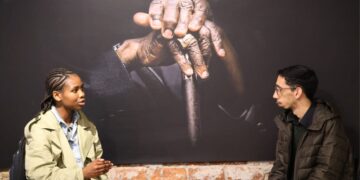
Clip focus: Gillian Tett and Robin Wigglesworth ask Koehler about the young Muhammad ﷺ; he explains the hardship of orphanhood, Abu Talib’s commercial tutelage and why caravan trading was Makkah’s international business model.
The academic paper Commerce Ethics of Muhammad PBUH and Universal Values in Era of Prophethood, by Suwandi, stresses honesty, fairness, courtesy, careful dealing and market awareness. Exploring the Entrepreneurship of Prophet Muhammad (PBUH), by Fathima Nasreen and co-authors, organises the model around ethics, values, leadership, stakeholder-centred practice and entrepreneurial principles. Both papers sometimes translate early biography too readily into modern management language, but they identify an enduring insight: trustworthiness was not decorative piety. It was an operating advantage.
Khadijah as investor and principal
The decisive commercial relationship was with Khadijah bint Khuwaylid, a wealthy merchant who deployed capital through agents. She entrusted Muhammad ﷺ with a trading venture to Syria. Reports emphasise the integrity and success with which he conducted her business; their commercial association preceded their marriage.
This is significant for two reasons. First, it disrupts the stereotype that entrepreneurship in early Islam was exclusively male. Khadijah owned wealth, selected an agent and bore investment risk. Second, it shows a separation between capital and management familiar to contemporary business. The investor supplied capital or merchandise; the working partner supplied expertise and labour; an agreed share of profit rewarded each.
The partnership is often described through qirad or mudarabah, although historians must be careful about imposing later legal terminology on every earlier arrangement. Its economic logic is nonetheless clear. Instead of a lender demanding a predetermined return regardless of outcome, investor and entrepreneur shared exposure to the venture. Profit came from real trade and risk, not from making money merely by renting out money.
Koehler compares this to venture capital. The analogy is illuminating but incomplete. Modern venture finance can concentrate power and pursue growth at any cost. The Prophetic legacy places the contract inside a moral order: lawful goods, honest information, voluntary agreement and accountability before God.
Clip focus: The presenters turn to Khadijah as a wealthy merchant and investor. Koehler explains how she selected caravan managers, shared profits and financed Muhammad ﷺ before their marriage.
Commercial intelligence with a moral centre
The sources portray Muhammad ﷺ as more than honest. He understood markets. Long-distance trade required knowing how to read demand, knowledge of geography and culture, choosing goods, managing costs and building networks. Suwandi attributes his success to negotiation, intelligence and an ability to identify opportunities in different markets. The entrepreneurship study similarly emphasises communication, resource use, risk management, quality and relationships.
These are recognisably modern capabilities, but the purpose matters. The record does not support the motivational-speaker caricature of a prophet offering a formula for personal enrichment. Nor does wealth itself prove virtue. His example locates commercial ability within amanah, a trust. Skill without integrity becomes manipulation; integrity without competence exposes customers, workers and investors to unnecessary risk.
The most consequential business decision of the life of the Prophet ﷺ was his disavowal of extravagance. When revelation began, Muhammad ﷺ and Khadijah had much to lose. His call to monotheism confronted a Makkah establishment whose status and commerce were intertwined with the sanctuary’s prevailing religious order. Opposition escalated into social and economic boycott. Khadijah spent from her resources in support of the mission, and the household endured severe loss.
You may also want to read


This reverses the prosperity-gospel reading of the story. Prophethood was not a brand extension. The businessman did not adjust his message to protect market share. Principle overrode income, status and commercial security.
Clip focus: Koehler describes Khadijah’s unwavering support, the commercial consequences of challenging Makkah’s religious economy, the boycott and the severe personal and business cost of the Prophetic mission.
What business leaders should notice
The public-interest lesson is not that Muslims should romanticise trade or baptise present-day capitalism as Islamic. It is that the Prophet’s ﷺ credibility in public life was built partly through years of reliable conduct in ordinary economic life. He handled other people’s property before he governed a community. He was tested in contracts before he was entrusted with authority.
For contemporary firms, the standard is exacting. Reputation cannot be manufactured by advertising while contracts conceal unfairness. “Values” cannot be confined to a corporate statement while suppliers are squeezed, defects hidden or workers paid late. The Prophetic model joins moral credibility to commercial competence and measures success by what a transaction does to every party.
In Part Two of this two-part series we examine how this experience shaped the market in Madinah, why Koehler calls the Prophet ﷺ a founder of capitalism, and where that claim needs qualification.