























Municipal competence cannot be separated from conscience, the writers argue. Voters should demand clean water, functioning services and honest government while refusing to support political actors who excuse Zionism and injustice in Palestine.
By SHAYKH IGHSAAN TALIEP AND SHAYKH SAYED RIDHWAAN
A pervasive and morally disabling premise has entrenched itself within South Africa’s political discourse: the insistence that municipal governance must remain sterile, technocratic, and insulated from universal human morality.
Political establishments and party apparatuses repeatedly lecture the electorate that municipal elections are strictly functional exercises confined to the mechanics of laying bitumen, collecting refuse, fixing streetlights, and balancing utility tariffs. Voters are told that when stepping into the polling booth, their conscience should be checked at the door, replaced solely by a ledger of administrative grievances.
Let us be unequivocal: municipal competence is an absolute public right. Communities cannot flourish, sustain commerce, or live with basic human dignity when clean water vanishes from residential taps, untreated sewage spills into neighbourhood streets, electricity grids collapse, and local road networks deteriorate into hazards. In our classical ethical tradition, tending to the public commons, maintaining civic infrastructure, and removing harm from the public pathway (imāṭat al-adhā ‘an al-ṭarīq) is expressly recognised as an integral branch of faith (īmān). Transparent procurement, budgetary accountability, and operational efficiency are not optional luxuries; they are fundamental duties of public stewardship.
However, civic maintenance can never be brandished as an ethical indulgence to sanitise moral cowardice. Roads can be resurfaced, water mains upgraded, and electrical substations rebuilt. But no municipality, regardless of its clean audit awards, can sweep deliberate complicity in human slaughter beneath fresh coats of asphalt.
True civic engagement begins with a clear spiritual foundation. Consciousness of the Divine (taqwā) is not a passive inward sentiment; it generates furqān; the discernment to distinguish right from wrong, justice from oppression, and ethical truth from political convenience. Yet discernment is sterile if unaccompanied by moral courage. The Qur’anic imperative is uncompromising: believers are commanded to stand firmly for justice as witnesses to God, even if that testimony runs counter to their personal comfort, their families, their parties, or their socio-economic standing.
This scriptural command directly confronts the selective hypocrisy of contemporary governance. The Prophet Muhammad (ﷺ) sternly warned against societal decadence wherein the weak and vulnerable are subjected to the strict rigours of the law, while the rich, powerful, and well-connected escape scrutiny entirely. The prophetic tradition mandates active resistance to injustice: to rectify harm with one’s hand, to speak out unequivocally against it, or at the bare minimum, to abhor it in one’s heart as the weakest manifestation of faith.
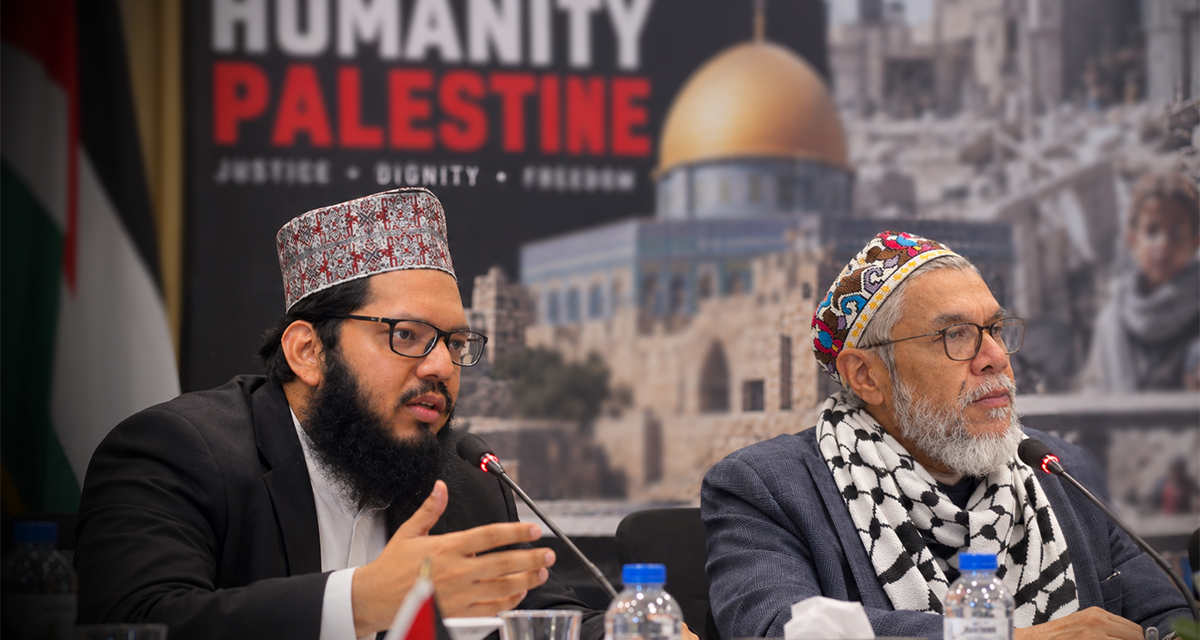
Today, the ultimate global litmus test of this moral clarity centres on Palestine. The continuous slaughter, systematic destruction of hospitals, calculated demolition of universities, weaponised starvation of an entire population, and ongoing dispossession in Gaza and the West Bank represent the defining humanitarian catastrophe of our time. The International Court of Justice (ICJ) has affirmed the plausible risk of genocide; United Nations investigative bodies have documented systemic violations of international humanitarian law; and the International Criminal Court (ICC) has issued arrest warrants for war crimes and the deliberate starvation of civilians.
Confronted with this legal and moral reality, the attempt by political figures to reduce genocide to a matter of geographic perspective or an irrelevant international matter is an act of profound dishonesty. Even more intolerable is the suggestion made by certain municipal party actors that they would gladly roll out the diplomatic carpet on South African soil for an indicted architect of mass slaughter and starvation if doing so brought transient administrative or economic benefits.
You may also want to read




Such posturing is a direct insult to South Africa’s liberation heritage. Our constitutional democracy was not won in geographic isolation; it was sustained through global boycotts, targeted sanctions, and worldwide legal and moral resistance against an apartheid state. The international community rejected the argument that South African racism was merely a domestic concern. For local political formations today to court ideological alignment with an occupying regime practicing documented apartheid, or to excuse war crimes under the cover of municipal trade, is an outright betrayal of our country’s founding ethos.
Islamic jurisprudence addresses this reality through the objective-oriented science of Maqāṣid al-Sharī‘ah; the higher aims of Divine Law. Classical legal theorists, including Imam al-Ghazali and Imam al-Shatibi, codified that all valid governance exists to preserve five indispensable necessities (al-ḍarūriyyāt al-khamsah): life (nafs), faith (dīn), family and lineage (nasl), intellect (‘aql), and wealth (māl).
Within this juristic hierarchy, the preservation of human life and bodily integrity (ḥifẓ al-nafs) takes primacy over the protection of material property (ḥifẓ al-māl). Administrative efficiency serves the preservation of resources, but it cannot be pursued by compromising the protection of human souls. In legal ethics, casting a vote is never a neutral, detached transaction. The ballot is a sacred trust (amānah) and a formal legal testimony (shahādah). Under the principles of public benefit (istiṣlāḥ) and averting greater harm (daf‘ al-mafāsid), endorsing a party or candidate that minimises, excuses, or aligns with an ongoing genocide corrupts that testimony before God and human history.
We reject the paternalistic assumption that voters must surrender their moral compass in exchange for municipal service delivery. We demand leadership governed by clear criteria:
- Rigorous operational competence: Electing capable, ethical representatives who treat public office as a sacred trust, tackling service failures, eliminating corruption, and maintaining infrastructure with absolute competence.
- Refusal of atrocity apologism: Withholding every single vote from political entities that sanitise war crimes, disparage international legal institutions, trivialize the term “genocide,” or extend legitimacy to perpetrators of collective punishment.
- Active support for principled formations: Lending civic and electoral weight exclusively to parties and independent candidates who combine concrete municipal delivery with an unwavering commitment to universal human dignity, international law, and the total liberation of Palestine.
Selective empathy abroad inevitably manifests as selective empathy at home. A political party incapable of condemning the obliteration of families under foreign skies will invariably fail to defend the vulnerable, the impoverished, and the marginalised in our own communities.
When stepping into the voting booth, demand repaired roads, clean water, and functional power, but never barter your soul to attain them. Cast your ballot as an uncompromised testimony for justice, human life, and universal dignity.
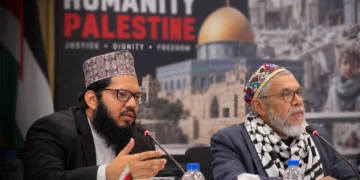
Shaykh Ighsaan Taliep is a prominent South African Islamic scholar, higher education leader, and community activist. Widely recognised for his contributions to Islamic tertiary education. An outspoken voice for social justice, ethical governance, and global human rights, he has dedicated decades to civic empowerment, interfaith initiatives, and Palestinian solidarity. He served in key national leadership capacities, including as President of the United Ulama Council of South Africa (UUCSA), and currently actively represents the Cape Town Ulama Board across diverse community forums and public dialogues.
Shaykh Sayed Ridhwaan Mohamed is a South African community journalist, researcher and Honours graduate in Islamic Studies. A steadfast advocate for humanitarian rights and global justice, he lends his expertise to numerous committees specialising in interfaith advocacy and human rights in Palestine and beyond. He currently serves on the executive committee of the Cape Town Ulama Board, is an Executive Member of the Sunni Ulama Council (Cape), and co-founder of the Ahlus Sunnah Media Network.