























![A mother’s taweez and the Cape’s interfaith traditions [+ video]](https://muslimviews.co.za/wp-content/uploads/2026/05/Michael-Weeder-Book-Launch-9May26-360x180.webp)













The Tana Baru Trust has issued a strong statement rejecting ‘land grabbing’ allegations, reaffirming its legal mandate to protect one of South Africa’s most significant Muslim heritage sites.
Press statement to the Muslim community
Following a decision taken at our monthly meeting on Tuesday evening, April 14, 2026, we, the Trustees of the Tana Baru Trust, hereby issue this statement:
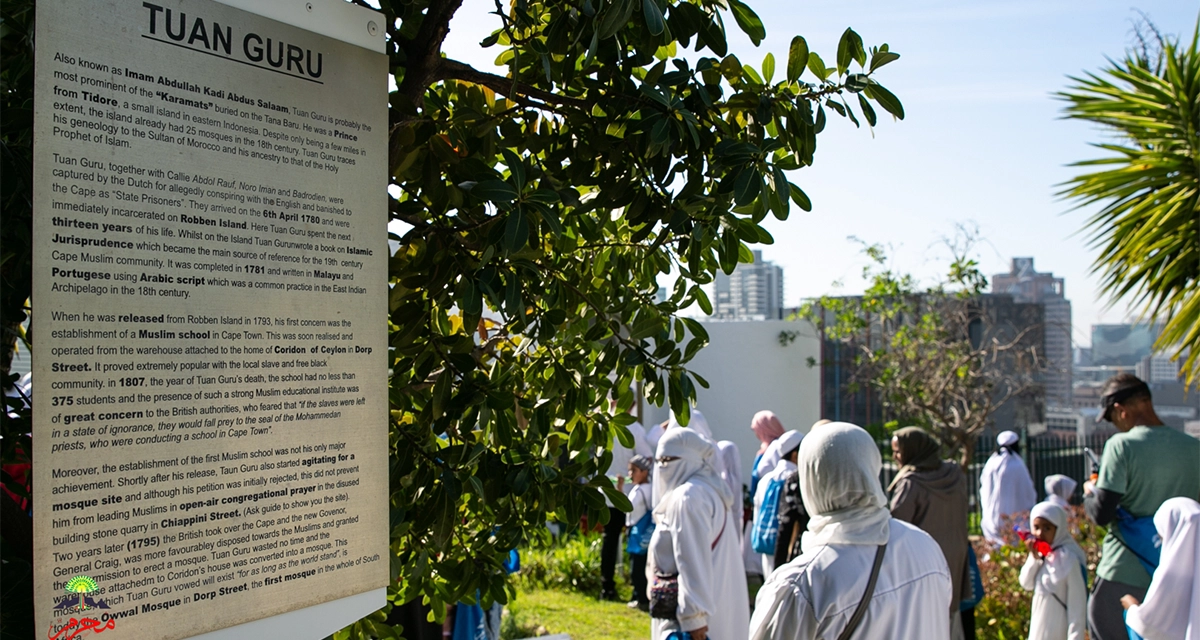
The Tana Baru Cemetery holds profound historical and spiritual significance as the first officially recognised Muslim cemetery in South Africa. It is the final resting place of some of the earliest pioneers of Islam in the Western Cape, including Tuan Guru, Abubakr Effendi, and other notable figures who played a foundational role in the development of Islam in the region.
The Tana Baru was officially closed as an active cemetery by the authorities on January 15, 1886. At the time, Muslims were offered burial facilities at Maitland Cemetery; however, this proved impractical due to the distance required to transport the deceased. As a result, members of the Muslim community from Bo-Kaap to Salt River mobilised resources to acquire private land in Mowbray for burial purposes.
As the Tana Baru site is no longer an active cemetery, it does not generate income through burials or entry fees to support its upkeep and maintenance.
The origins of the current custodianship of the site can be traced back to 1983, when the Muslim Judicial Council (MJC) endorsed the establishment of the Committee for the Preservation of the Tana Baru (‘the Committee’). This followed the discovery that parts of the precinct had been desecrated, with homeless individuals occupying sections of the cemetery.
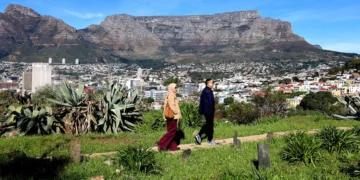
In 1998, after a lengthy public participation process, the Tana Baru Trust was formally established to replace the Committee. The Trust was mandated to protect, preserve, and maintain the Tana Baru Cemetery, a heritage site measuring approximately 18 000 square metres, located in the Bo-Kaap at the foot of Signal Hill in Cape Town. Over the years, a number of respected members of the Muslim community served as Trustees. The site comprises 13 erven and various portions of road reserves.
In 2019, the national government formally declared the lower half of this historic precinct—comprising erven 960–963 and erf 938—a National Heritage Site, further affirming its cultural and historical importance.
In terms of the Trust Deed, the principal objectives of the Trust include:
- Preserving and maintaining the site in a clean and tidy state.
- Restoring, upgrading and maintaining the historical graves at the site, including the shrines or mausoleums at the site.
- Restoring any heritage features at the site.
- Acquiring ownership of all 13 erven, and all road reserves or parts of road reserves, comprising the site.
- Acquiring the immovable properties on the periphery of the site in order to construct facilities on them, to generate sources of sustainable income for the Trust.
- Conducting education and training programmes in order to raise awareness among the general public about the Muslim heritage in South Africa and Cape Town, with specific reference to the Muslim pioneers buried on the site.
- Re-opening a portion of the site as an active burial ground.
The Trust Deed further provides that any portion of the site acquired by the Trust will be declared waqf (waqf status as was reaffirmed by the Fatwa Committee of the MJC in 2017), meaning it may not be sold, transferred, mortgaged, or otherwise encumbered.
Let us be clear: the real threat to the Tana Baru is the greed of property developers and those willing to facilitate the sale of our sacred history.
While others see real estate, the Trust sees an amanah (trust). We are the only barrier standing between the sanctity of these graves and the hammers of developers. To undermine the Trust is to invite the destruction of our heritage.
This framework clearly demonstrates that the acquisition of all 13 erven forming part of the Tana Baru precinct has been a core objective of the Trust since its inception.
For over three decades, the Trust has consistently maintained, protected, and overseen the site, exercising open possession and control of the precinct as its effective custodian. During this period, the current registered custodians of certain erven have not actively exercised rights of ownership over the precinct.
The Trust will not be silenced by the malicious campaign of misinformation currently being waged against it.
You may also want to read





To label the preservation of our ancestors’ graves as ‘land grabbing’ is more than a lie; it is a desecration of the truth. We do not merely reject these claims—we condemn the motives of those who seek to divide the community for their own ends.
Let us be unequivocal: the accusation that the Trust is engaged in ‘land grabbing’ is a shameful inversion of the truth.
The Trust’s efforts to acquire ownership of the erven are lawful, transparent, and fully aligned with its founding mandate to protect and preserve this sacred heritage site.
Our doors and our books have always been open.
We challenge those spreading slander to match our level of transparency. Truth does not fear the light of public scrutiny; it only fears the shadows where slander is born.
We invite the community to look at the facts, not the livestreams.
The Trust conducts monthly board meetings at which financial matters are openly discussed. In addition, public meetings are convened at least every three years to provide updates on developments, financials, and challenges, and to engage with all interested stakeholders. The most recent triennial public meeting was held on December 16, 2025, at Boorhaanol House in Bo-Kaap.
The Trust also holds biannual open days and is actively involved in the annual Muharram March programme. In furtherance of its awareness initiatives, the Trust hosted its inaugural annual lecture in the past year, which included an art showcase depicting the history of the Tana Baru.
The Trust welcomes community participation at all its events as part of its ongoing efforts to educate the public and provide updates on developments and challenges affecting the site.
The Tana Baru is not for sale, it is not for negotiation, and it is not a political pawn.
We will continue to defend this sacred ground with every legal and spiritual resource at our disposal.
History will be the judge of those who sought to protect this legacy—and those who sought to dismantle it.
Issued by the Trustees of the Tana Baru Trust, Cape Town.


