








![Does ta’wīl mean interpretation or fulfilment? A Quranic reassessment [+video]](https://muslimviews.co.za/wp-content/uploads/2026/10/Tawil-Kaskas-360x180.webp)








![Why becoming a wealthy Muslim is commendable in Islam [+videos]](https://muslimviews.co.za/wp-content/uploads/2026/09/Muslim-Trade-Business-1-360x180.webp)




The Muslim Cemetery Board (MCB) election produced a decisive result, but what does it reveal about Cape Muslim sentiment? This analysis assesses representation, institutional influence, conflicts of interest and the Board’s accountability test.
By ANWAR OMAR
The Muslim Cemetery Board (MCB) election is done and dusted; the results have been announced, and we now have a new Board of eleven individuals, elected under a court ruling that found the previous structure unlawful.
Before the election, I set out five principles that I proposed should guide how members cast their votes. This is not a verdict on those elected, all of whom bring real experience to the table. I have no reason to doubt their sincerity. This is an attempt to look beyond who won and consider what the patterns reveal about community sentiments and the implications for the Board.
The newly elected Board
Faizal Sayed, Shameemah Salie, Mogamat Ameen Schroeder, Riad Fataar, Yusuf Khan Dalwai, Muhammed West, Ayub Mohamed, Yaseen George, Mohamed Majedi Bassier, Faizel Bassier and Muhammad Aadil Bassier are duly elected members of the Muslim Cemetery Board. The results of the election – which started on Sunday, August 23, with voting extended to Tuesday, August 25 – were announced on Friday, August 28.

The five principles
Before assessing the result, let me restate the five principles, why each mattered and how the result measures up against them.
1. No single grouping should dominate the Board
To date, there has been a significant lapse in governance, with 15 years without an annual general meeting (AGM). While acknowledging and appreciating the significant improvements the previous Board made to the cemetery, it is also important to recognise that it operated without a mandate and accountability. Having diverse and, at times, competing voices in the same boardroom, able to question, challenge and hold one another accountable, is an important corrective action to unaccountable governance.
The election result leans heavily one way. Eight of the eleven seats went to candidates tied to the outgoing Board, including some senior Muslim Judicial Council (MJC) officials, all reflected on a truncated 22-person slate published shortly before the election. The “deeply concerned members” slate fielded eleven names, with only three being elected, all from one family. This is not the diversified Board that this principle envisaged.
This principle was also meant to guard against a subtler risk worth flagging as a concern. A dominant group does not have to act improperly at a Board meeting to undermine it. If real decisions are made elsewhere, in informal caucuses among the eight, the formal meeting could end up simply rubber-stamping what has already been decided: technically compliant but thin on substance. I have no basis to believe that this will happen, but it is a vulnerability the margin obviously creates. That is also why setting agendas collectively and having genuine debate matter more for a Board with this makeup, as opposed to one that is more evenly split.
2. Room for independents
Candidates without factional backing carry no debt to either side, mitigating the possibility of steering the Board towards any one vested interest. Based on the results, all eleven candidates aligned with one of two camps in an eight-to-three split. Both camps explicitly contested the election as organised rival slates. A Board with no unaligned voices does not bode well for the balanced oversight required. On the face of it, the result reflects zero independents.
3. Women should be represented
The cemetery serves the whole community, not one part of it. The result shows that only one of the eleven is a woman, despite strong, credentialled women having been nominated, including an attorney, a scholar and professionals with real governance experience. On this measure, the Board does not reflect the community it serves.
Rehana Khan Parker, a member of the Independent Panel that oversaw the election, suggested the result may reflect a gendered voting pattern, with “women not voting for women, men voting for men”. She stressed this was only an assumption until the final gender breakdown is released. Parker also witnessed the first woman cast a vote at Mowbray Muslim Cemetery, calling it a historic moment that gave her hope.
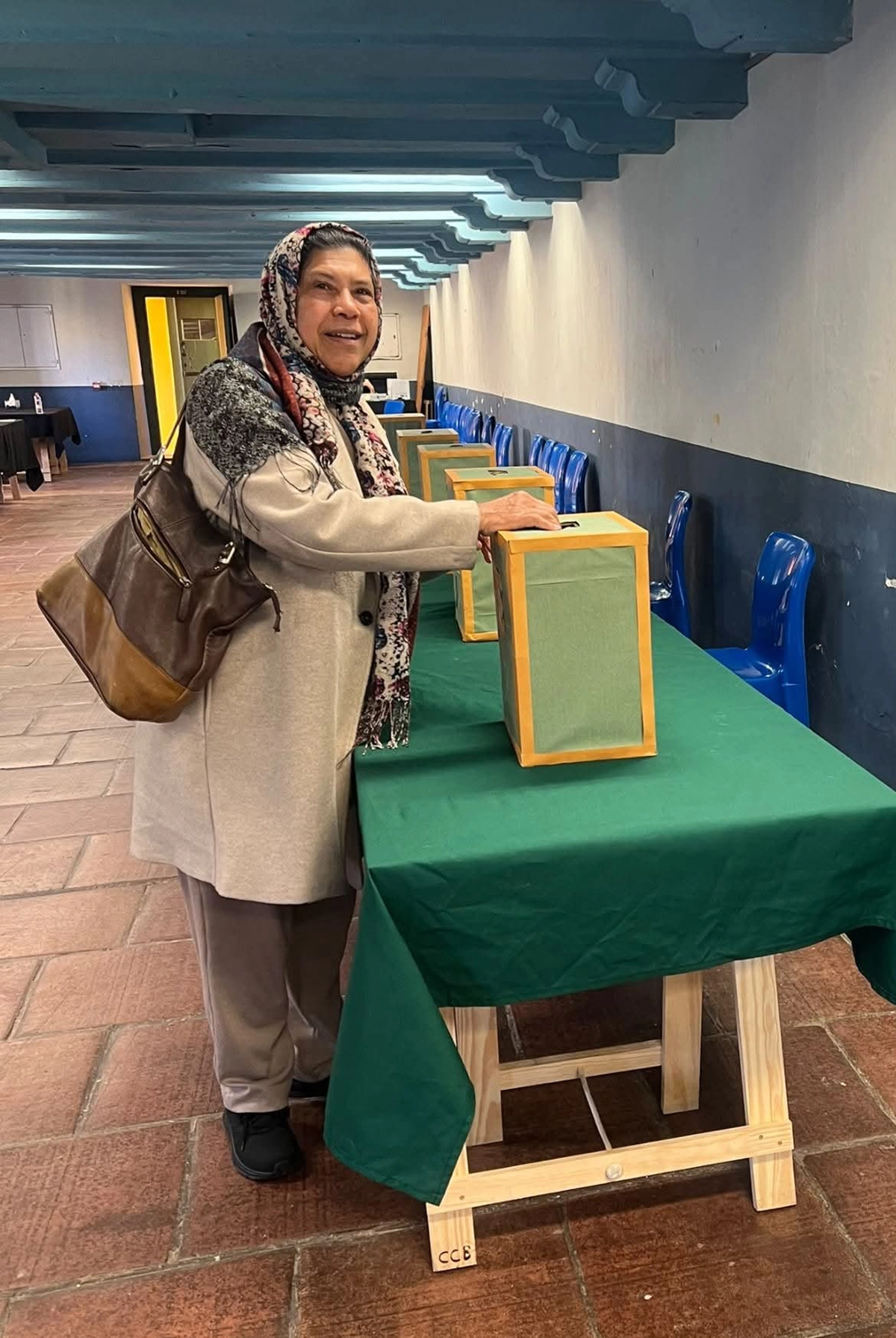
Faizal Sayed stated publicly that he personally put forward the names of all three women who were eventually nominated. This suggests the gender representation issue may lie with the nomination process rather than the vote. When asked why women should serve on cemetery Boards, he replied simply: “We bury them too.”
Shameemah Salie said she intends to work closely with women and with the youth who stepped forward, even where they do not hold a formal Board seat.
None of these comments changes the gender representation, but they point towards broadening participation ahead of the next election.
You may also want to read


4. The MJC’s administrative footprint should be limited
In my view, the MJC’s role is to provide moral and religious guidance, not to manage or govern communal assets. You cannot be both player and referee, or adjudicator and participant. That creates a clear conflict of interest.
This is my biggest concern. At least four of the eleven elected MCB members are MJC office-bearers: the president, treasurer and two MJC Burial Administration members – the latter portfolio at the centre of the dispute. There is no suggestion of improper conduct, but structurally, the separation I proposed did not materialise. If anything, the MJC’s presence has grown, not shrunk.
5. Undertakers should not serve on the Board
The dispute that brought us here was about a mortuary tied directly to the funeral industry. A waqf is held in trust for the community, not those who profit from burial services. Measured against the result, one of the eleven is a registered undertaker with nearly three decades’ experience and is also on the MJC’s Burial Administration. This is precisely the overlap this principle was designed to highlight.
A second elected member, Mr Yaseen George, is not listed as a registered undertaker in his nomination bio. However, he publicly supported the undertakers’ position on the mortuary ruling and appeared on the MJC-aligned 22-person slate. While he was the elected member closest on paper to an unaligned candidate, the public record shows he was among 15 signatories of a letter from Cape Town Muslim undertakers objecting to the High Court ruling that barred the mortuary, the central issue in this dispute.
The bios were not independently vetted, so I take them at face value. In an interview, George said he is not an undertaker but a medico-legal practitioner. Citing extensive experience with natural and unnatural deaths, he said he supports a Muslim refrigeration facility “150%”, though he conceded it need not be at Mowbray Cemetery.
None of the five principles outlined above was meant to judge any individual’s honesty. They are structural safeguards a community should expect after a 15-year lapse in governance.
What this might say about Cape Muslim community sentiments
I do not think the result reflects a community that rejected the principles I proposed. It reflects one where existing networks, family ties and institutional loyalties are currently simply stronger than any set of principles. That is not a criticism of voters, as trust is earned over years.
There is also the weight the Cape Muslim community gives to the ulama. Shaykh Riad Fataar is not just any MJC office-bearer; he is its president and a scholar with decades of standing. For many, a vote for him expressed the veneration they extend, as a matter of faith and custom, to religious authority, not an endorsement of institutional reach. That is precisely what my fourth principle highlighted. Veneration for religious standing and confidence in administrative oversight are two different things, even when embodied in the same person.
What does it mean for the Board?
If that analysis is correct, it may indicate what comes next.
Designations have not yet been decided, but given Shaykh Fataar’s stature and the margin by which MJC-aligned candidates won, it would not be a surprise if he is elected chairperson. This is not to prejudge him, but such an outcome would sharply illustrate the overlap I warned against. The MJC president would chair the cemetery Board, while his own Burial Administration was entangled in the same mortuary dispute.
Two other designations raise the same concern. Muhammed West as treasurer would centralise financial control of both entities at a time when transparency is under scrutiny; Faizal Sayed, who defended the outgoing Board in the litigation, as chair, would blur continuity with the fresh start promised. Neither implies wrongdoing.
The way forward
The safeguard I hoped the Board’s composition would provide did not fully materialise. That must now come from how this Board governs itself: disclosure, recusal where conflicts genuinely arise and a willingness by MJC-affiliated members to keep their two hats visibly separate.
One test, however, cannot wait. Earlier this year, the court denied members access to the outgoing Board’s financials and bank statements, ruling them confidential except for its own limited inspection confirming election funds. That logic arguably made sense for an unlawfully declared Board, but it does not hold for a lawfully elected Board tasked with restoring accountability. Full, voluntary disclosure of the financials and bank statements should be a first action, not something litigated for again. How speedily that happens will say more about the culture shift than the vote count itself.
Fifteen years without an AGM brought us here. The court had to force the correction. Now, whether the culture actually changes depends on the Board and on how closely we hold its members accountable.
I’ll be watching. I trust you will too.
Anwar Omar holds a Master’s in Applied Islamic Thought awarded cum laude, an MPhil in Conservation and the Built Environment, and an MBA. He is a founding member of the Islamic Governance Advisory Council (IGAC) and a Councillor of the South African Heritage Resources Agency (SAHRA). He has closely followed developments at the Mowbray Muslim Cemetery. This article reflects his personal views and does not necessarily represent the views of Muslim Views or his affiliated institutions.