












![Does ta’wīl mean interpretation or fulfilment? A Quranic reassessment [+video]](https://muslimviews.co.za/wp-content/uploads/2026/10/Tawil-Kaskas-360x180.webp)



















![Why becoming a wealthy Muslim is commendable in Islam [+videos]](https://muslimviews.co.za/wp-content/uploads/2026/09/Muslim-Trade-Business-1-360x180.webp)




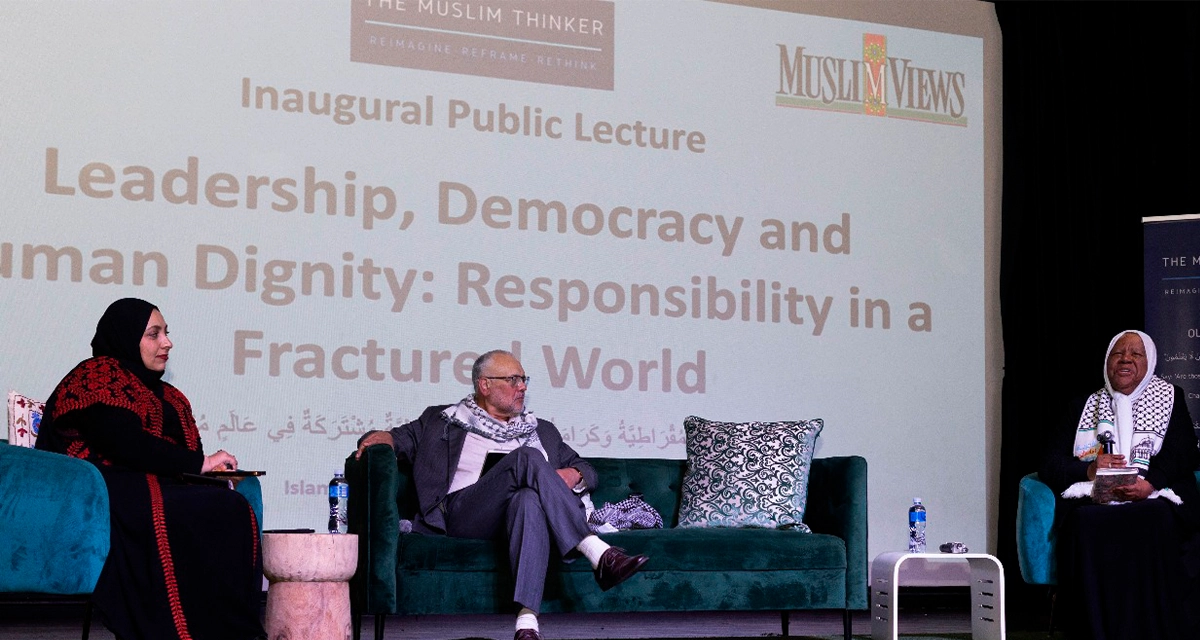

EMERITUS PROFESSOR YUSEF WAGHID responds to The Muslim Thinker inaugural lecture delivered by Ambassador Ebrahim Rasool.
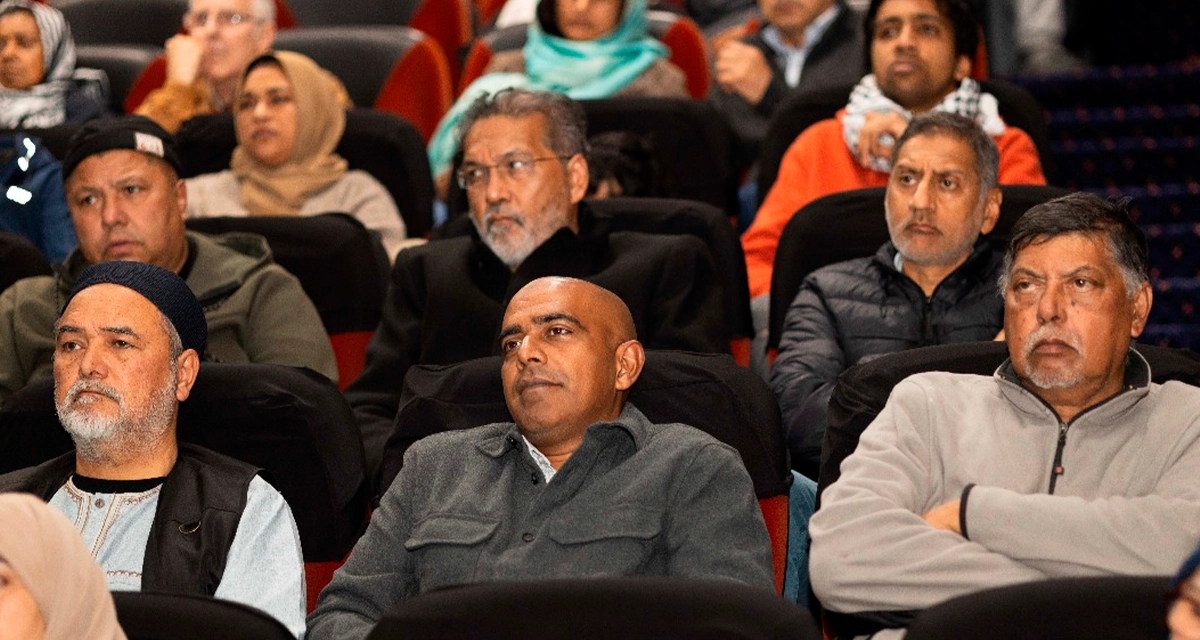
On September 29, 2025, I attended the inaugural public lecture of The Muslim Thinker at the Islamia College Auditorium. The Muslim Thinker seeks to nurture critical thinking among Muslims and humanity more broadly.
The speaker, Ambassador Ebrahim Rasool, argued compellingly that anti-intellectualism among Muslims remains pervasive. His presentation was an urgent call to re-engage with the spirit of intellectual exertion (ijtihād), which he argued has been largely stifled in the contemporary moment.
In what follows, I offer a critical response to Rasool’s intervention. I do so in the spirit of philosophical engagement: dialogical, reflexive, and attuned to the pedagogical imperatives of democracy, deliberation, and responsibility. My reflections will expand Rasool’s insights, drawing on my recent work to suggest pathways by which Muslims might reclaim an intellectual culture that is resistant to authoritarianism and open to democratic praxis.
Rasool’s threefold critique of Muslim anti-intellectualism
Rasool advanced three central claims in his lecture:
1. The stifling of ijtihād. Muslims, he suggested, have become adept at mastering a fiqh al-ʿibādāt (jurisprudence of worship), yet this mastery often reduces scholarship to consumerist repetition: listening, receiving, and transmitting without critical engagement. The ritual dimensions of Islam have overshadowed its intellectual and ethical dynamism.
2. The neglect of democracy and human rights. Muslims, according to Rasool, seldom cultivate scholarship that addresses urgent questions of political justice, human dignity, and democratic participation. The absence of such discourse contributes to Muslim silence and inaction in the face of political oppression.
3. The lack of moral courage. While Muslims participate in protests against perceived injustices, these engagements are often reactive rather than transformative. What is missing is the moral courage to stand up for justice in ways that produce substantive and lasting change.
Together, these points paint a sobering picture: a Muslim intellectual culture more concerned with obedience than with critical thought, more oriented towards ritual than justice, and more animated by fear of marginalisation than by the courage to dissent.
Ijtihād and the conditions for deliberation
Rasool’s claim that ijtihād has been stifled resonates with my own that meaningful education requires dialogical spaces where difference can be voiced, dissent can flourish, and reasoning is cultivated (Waghid, 2024). To engage in ijtihād is to enact a form of democratic pedagogy: it presupposes the willingness to deliberate with others, to risk disagreement, and to cultivate humility in the face of competing interpretations.
You may also want to read




Yet, as Rasool observed, the contemporary Muslim scene is characterised by antagonism among muftīs and religious authorities. Each claims interpretive authority, often dismissing dissent as deviation. This not only misrecognises difference but also produces a climate in which obedience is prized over reasoning. In my own work, I insist that education must cultivate wonder, wander, and whisper as modes of thinking otherwise – dispositions that open up phronēsis (practical wisdom) through dialogical encounters (Waghid, 2024). Without such wisdom, communities remain entrapped in repetition, unable to think anew.
Ijtihād, then, is not merely a juridical concept; it is a pedagogical imperative. To revive ijtihād is to embrace the idea that dissent is not a threat but a resource for renewal. It is to recognise that democratic education is sustained by a willingness to engage with the other in humility, even when such engagement unsettles one’s certainties (Waghid, 2025)
Beyond ritual obedience: the perils of anti-intellectual habits
Rasool’s critique of ritualised obedience echoes my own caution that education cannot be reduced to the mechanical transmission of rules or doctrines. When Muslims restrict themselves to a fiqh al-ʿibādāt, they risk cultivating what Paulo Freire would call a “banking model” of religious life: an uncritical absorption of prescriptions without imaginative application to the present.
Such habits are anti-intellectual because they render Muslims passive recipients rather than active participants in the ongoing project of moral reasoning. As I have argued, education worthy of the name requires the exercise of independence of thought (Waghid et al., 2023). It demands that learners (and believers) generate new possibilities rather than merely reproduce old ones. To follow without questioning, to listen without responding, is to abdicate the responsibility to think.
Here, one sees the dangerous consequences of anti-intellectualism: Muslims are disarmed of the very resources – reason, deliberation, imagination – that are necessary to resist authoritarianism, whether political or religious.
Democracy, human rights, and the politics of inaction
Rasool’s second claim – that Muslims often fail to engage democracy and human rights – finds resonance in my insistence that democratic education is not merely procedural but substantive. I contend that democracy is sustained through attentiveness to justice, care, and participation (Waghid, 2023a). When Muslims retreat into ritual piety at the expense of public responsibility, they weaken their capacity to act as agents of justice in society.
It is not enough to participate in marches or symbolic acts of protest. Democratic praxis requires ongoing involvement in the structures of society: engaging institutions, advocating for human rights, and holding power to account. To neglect this responsibility is to leave democracy vulnerable to authoritarian capture (Waghid, 2022).
In this respect, Rasool’s critique points to a deep malaise: Muslims often protest against injustices committed elsewhere but remain silent in the face of local corruption, authoritarianism, or the violation of human dignity. A pedagogy of responsibility insists that justice must begin where one stands, in one’s immediate community, and radiate outward through deliberative and collective action (Waghid, 2023b).
Moral courage and the pedagogy of risk
Rasool’s third claim – that Muslims lack the moral courage to stand against injustice – recalls my notion of risk in education. To be educated, I purport, is to accept the risk of dissent, the risk of exclusion, and the risk of being misunderstood. Without such courage, education collapses into conformity (Waghid, 2025).
For Muslims, moral courage entails the willingness to speak truth to power even when such speech invites marginalisation. It means resisting the temptation to retreat into ritual or silence for the sake of social acceptance. My writings consistently emphasise that responsibility entails acting otherwise, not merely lamenting injustice but intervening in ways that transform unjust practices (Waghid, 2024).
Anti-intellectualism, then, is not merely an intellectual deficit; it is a moral failure. It is the refusal to risk one’s standing for the sake of justice. In this sense, Rasool is right to insist that the struggle against anti-intellectualism is inseparable from the struggle for moral courage.
Toward a pedagogy of critical Muslim engagement
How, then, might Muslims respond to Rasool’s critique? Drawing on a pedagogical vision, I propose three pathways:
a) Cultivating deliberative communities
Muslims must cultivate spaces where disagreement is not feared but welcomed. Mosques, schools, and universities must become arenas for deliberation, where ijtihād is practiced as a communal act of reasoning. Such communities resist the authoritarian impulse by decentralising authority and valuing difference (Waghid et al., 2023).
b) Linking faith to democratic praxis
Muslim education must be reoriented towards the urgent questions of democracy, human rights, and justice. This does not mean abandoning ritual, but situating ritual within the broader struggle for human dignity. Faith must inspire not only piety but also political engagement (Waghid, 2023a).
c) Embracing risk and responsibility
Muslims must cultivate the courage to dissent, to critique unjust practices within their own communities, and to stand with the oppressed even when such solidarity is costly. Education must be a pedagogy of risk: it must prepare Muslims to live courageously in a world that often demands conformity (Waghid, 2025).
Conclusion: Reclaiming the intellectual spirit of Islam
Ambassador Rasool’s lecture was a timely reminder that anti-intellectualism remains a serious impediment to Muslim flourishing. His insistence that ijtihād is undervalued, that Muslims neglect democracy and human rights, and that moral courage is lacking, is not an indictment alone but an invitation: an invitation to reimagine Muslim intellectual life as a site of deliberation, justice, and risk.
Drawing on my recent works, I have sought to show that resisting anti-intellectualism requires more than lament. It requires the deliberate cultivation of a pedagogy of critical engagement: one that values dissent, links faith to justice, and prepares Muslims to act courageously in the world. If Muslims are to resist the authoritarian tendencies of their age – whether religious or political – they must reclaim the intellectual spirit of Islam. This spirit is not found in blind obedience but in the courage to deliberate, to dissent, and to act responsibly. In short, to be Muslim is to be committed to ijtihād, to democracy, and to the moral risk of justice.
The YouTube recording of Ebrahim Rasool’s address at The Muslim Thinker inaugural address can be viewed here.
Reference
• Waghid, Y. (2022). Education, crisis, and philosophy: Ubuntu within higher education. London: Routledge.
• Waghid, Y. (2023a). Education for Decoloniality and Democracy. New York: Routledge.
• Waghid, Y. (2023b). Chronicles on African philosophy of higher education: A colloquy among friends. Leiden: Brill.
• Waghid, Y., Hungwe, J., Shawa, L.B., Terblanche, J., Mathebula, T., Waghid, Z. & Waghid, F. (2023). Towards an Ubuntu University: African Higher Education Reimagined. Cham: Palgrave Macmillan.
• Waghid, Y. (2024). Philosophical, Educational and Moral Openings in Doctoral Pursuits and Supervision: Promoting the Values of Wonder, Wander, and Whisper in African Higher Education. London: Routledge.
• Waghid, Y. (2025). Living African Philosophy of Higher Education. Cham: SpringerBriefs in Education.
Yusef Waghid is Emeritus Professor of Philosophy of Education at Stellenbosch University and Extraordinary Professor at UNISA, South Africa.