




















![The market-builder who restrained the market [Part 2]](https://muslimviews.co.za/wp-content/uploads/2026/08/PHOTO-2026-08-25-17-16-32-360x180.jpg)
![The merchant preceding the Prophetic mission [Part 1]](https://muslimviews.co.za/wp-content/uploads/2026/08/01-360x180.jpg)







Institutionalise our remembrance of Prophet Muhammad ﷺ by addressing the causes of migration and by standing up for the dignity and rights of refugees, displaced persons, and migrants.
By MOGAMAT REDERWAAN CRAAYENSTEIN
This article examines the challenges faced by displaced persons, migrants, and refugees. Countries are increasingly becoming hostile to ‘foreigners’. Many measures taken by nations violate international law and conventions.
I will first consider the issue from the Quran and the Sirah of the Prophet (SAW). Then I will discuss four public policy areas that greatly contribute to the problems of displacement, migration, and refugees.
Like many of the pieces I write, they are often unfinished. I run out of time and hope to return to them later. I thank Muslim Views for accepting the pieces as sufficiently finished for publication. These are merely conceptual pebbles thrown into a pond. I also hope that readers will take the ideas further and work with them, critically engaging with these concepts. Your final conclusions might differ from mine, and that is perfectly fine; in fact, it is exactly as it should be.
Current Islam-inspired academic research on this subject includes numerous peer-reviewed articles and several PhD theses. Fiqh has yet to catch up, which is surprising because the core issues are present in the Quran, Sunnah, and Sirah. Virtually every Prophet mentioned in the Quran was either internally displaced, a migrant, someone seeking protection, or a refugee.
Migrants, displaced persons, and refugees are mentioned in the Quran at least 23 times. This raises profound faith, spiritual, moral, political, economic, and cultural issues.
During the 23 years of prophethood, people had already begun seeking refuge from the fifth year of the Prophet’s ﷺ mission. As we commemorate the birth of Prophet ﷺ this month, let us reflect on how his call (and that of every Quranic prophet) is connected with rejection and migration. Institutionalise our remembrance of Prophet Muhammad ﷺ by addressing the causes of migration and by standing up for the dignity and rights of refugees, displaced persons, and migrants.
Muslims must advocate for the right to migrate and seek asylum regardless of national borders. We must strive for a borderless world (Al-’Ankabut, 29:56). There can be no place on earth where any human being is considered an outsider. As a Pan-Africanist, I believe there should be no place in Africa where any African is regarded as a stranger. This is essential as we confront our xenophobic tendencies from Iblis. One cannot fully understand the mission of Prophethood without addressing rejection, displacement, migration, refuge, and asylum.
Living in the tradition of the Prophets of the Quran and the Bible means speaking truth to power. Truth not only liberates but also invites trouble—good trouble. We inhabit a world where security accumulates while precarity grows in parallel. The Prophetic tradition challenges this situation. If we believe we must follow the sunnah of the Prophet ﷺ [Al-Ahzab, 33:21; Al-Mumtahanah, 60:40], then we must confront issues of displacement, migration, and seeking asylum.
From the earliest days of the Prophet’s ﷺ mission, the safety of his followers was a concern. We know of Umm al-Mu’minin Khadijah al-Kubra, Abu Talib, and others who protected the Prophet himself. The Prophet ﷺ sought refuge in Taif during the eleventh year of his prophethood, when he felt particularly vulnerable after the deaths of Umm al-Mu’minin Khadijah and his loyal uncle, Abu Talib. Seeking and offering refuge and protection are customary pre-Islamic practices and traditions.
In the 5th and 7th years of the mission of prophethood, two groups of Muslims went into exile as refugees in Ethiopia. Their ruler was a just Christian named al-Najashi. The Quran provides examples of Muslims offering refuge to both Muslims and non-Muslims. The Treaty of Madinah formalises the protection of the ‘Other’.
In the context of Surah Tawbah, if a mushrik—someone who does not believe in Allah—seeks refuge or protection with you, then grant it. Let the person hear the Quran and then assist him to his place of safety [At-Tawbah, 9:6]. This ayah follows a very harsh statement on the mushrikun. Yet, if anyone seeks refuge with the mu’minin, even if it is duplicitous, you must grant it, with necessary precautions, of course. There is no lengthy discussion about whether it is feasible — ‘they are mushriks and not our responsibility’.
In many instances, displacement, migration, and seeking asylum are interconnected with struggles for justice. These are undertaken for the sake of Allah and the oppressed. Some individuals mentioned in this ayah, whether they are victims of injustice or fighting against oppression, will become displaced persons, migrants, and refugees [An-Nisa, 4:75; Al-Baqarah, 2:218]. In this ayah, Allah associates migration with a condition of oppression. Allah promises goodness for the oppressed both in this life and in the hereafter [An-Nahl, 16:41]. The mu’minun are expected to be a source of Allah’s goodness in this world. We are to serve as His instruments for goodness everywhere. The ayah not only affirms the link between oppression and migration but also underscores the duty of Muslims to oppose the rising wave of xenophobia, as well as policies that target displacement and refugees.
You may also want to read




Allah made human life sacred, and the mu’minun have a duty to protect the lives of everyone, including displaced migrants and asylum seekers [Al-Ma’idah, 5:32].
When we study the Treaties of Aqabah, we observe how Islam is communicated to new mum’minin even after the Mi’raj and the five daily prayers become obligatory. The first Treaty of Aqabah (12th year of Prophethood) is enlightening. To secure a place in Jannah, only a few acts must be performed sincerely. It contains none of the complex requirements often expected from new converts or reverts to Islam. The Bay’at al-Nisa is the name of this treaty. The second Treaty of Aqabah (13th year of Prophethood, on the 13th of Dhul Hijjah at Mina) was signed during the Hajj. The Prophet ﷺ expresses the need to migrate and seek asylum in Madinah.
Both treatises were written during the Hajj season. Authorities overseeing Hajj and Umrah insist that politics should not be discussed at Hajj. Imagine if they had been present when the Prophet ﷺ, along with his followers from Makkah and the new followers from Madinah, gathered at Mina to debate war, peace, politics, and the rights of women and children. The Prophet ﷺ and his social movement were planning a programme of action and social change—an ongoing revolution. Are there not current issues the Prophet ﷺ would have addressed at Hajj if he and his sahabah were there? Would we still trust the rulings of Hajj and Umrah authorities and their fatwas?
When the power structure in Makkah decided to kill the Prophet ﷺ he migrated to Madinah. Some tafsirs interpret this ayah as permission to migrate [Al-Anfal, 8:30].
Upon migrating to Madinah, the Prophet ﷺ established a strong bond called al-mu’akhaa, or brotherhood and sisterhood, between the migrants from Makkah, the refugees, and their Madinah hosts. This bond embodies a moral and spiritual outlook for Muslims during the global crisis of nearly 150 million displaced people, over half of whom are Muslims [Al-Hashr, 59:9]. There will always be individuals who try to destabilise community unity, often appealing to the basal instincts of the host community, as shown in the Quran [Al-Hashr, 59:11].
Please read this ayah and see how Muslims should relate to displaced people, migrants, and asylum seekers [Al-Mumtahanah, 60:10; Al-Hashr, 59:9]. Can we say that this forms part of the Muslim response to a global problem where more than 60% of displaced, migrants, and refugees are Muslims? [Al-Anfal, 8:74]
Public policies — including foreign policy, fossil fuel policies, trade policies, and neoliberalism — play a significant role in creating and sustaining the catastrophe of internal displacement, migration, and asylum seeking.
Public policy, displacement, migration, asylum and refugees
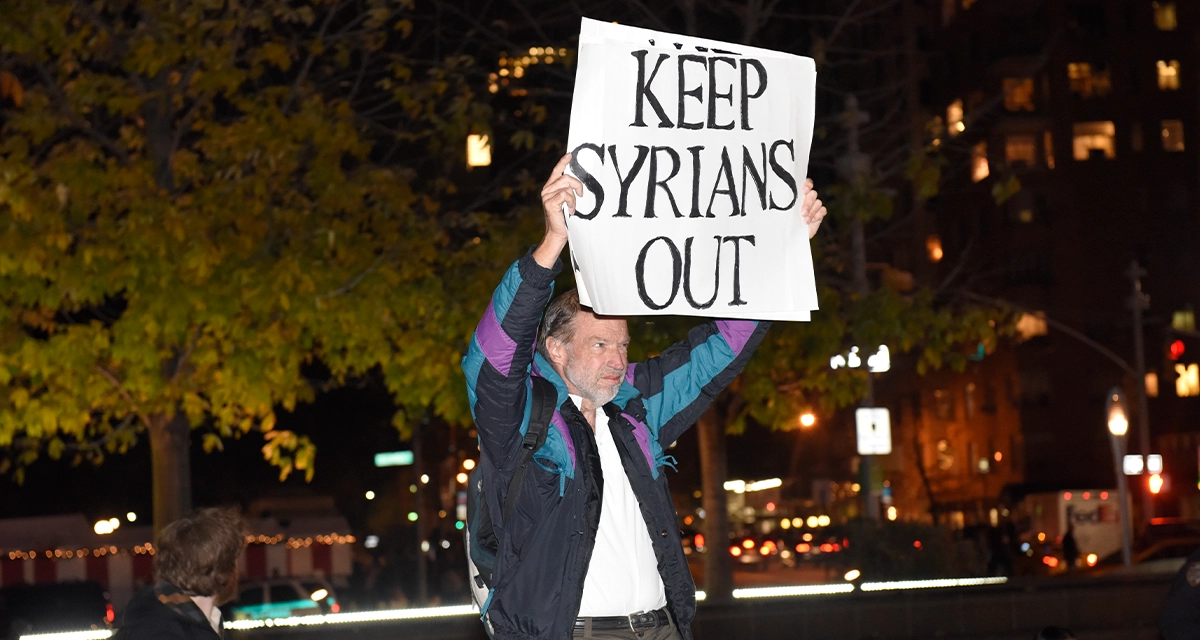
Four key factors are driving the global increase in the refugee crisis. In the global north, politicians and policy analysts blame people smugglers for using boats or crossing borders. I suggest that public policies —including foreign policy, fossil fuel policies, trade policies, and neoliberalism—play a significant role in creating and sustaining the catastrophe of internal displacement, migration, and asylum seeking. Xenophobic protests outside asylum hotels will not solve the refugee crisis. Shouts of ‘send them home’ from populist politicians and racists, who are often our own family members, will not end it.
If we want to end the refugee crisis, we must stop politics that prioritise profits over people. Consider these policy issues. Organise to vote for councillors who will implement these policies locally when we next have local government. Mobilise to vote for MPs who will eliminate these policies. People in pinstripe suits and smart dresses cause the refugee crisis. Conscientize, organise, mobilise and vote them out of office to end the refugee, displacement and migration catastrophe.
Refugees are here because we are there
The USA has over 750 military bases in 80 countries, the UK has 145 bases in 42 countries, and France maintains military bases in 11 countries, establishing the frameworks through which they influence social and political conflicts. These powerful nations hinder local populations in foreign countries from resolving their own political issues. They offer financial, political, and military support to specific groups. From the 1960s to the 1980s, the rallying cry of black anti-racism struggles was: ‘We are here (metropole) because you are/were there. (periphery)’.
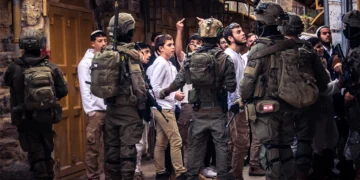
Consider the United States, European Union, UK, Canada, and Australia supporting Israel wholeheartedly as it carries out what many see as genocide against the Palestinians, supports settlers, and invites military, political, and diplomatic personnel responsible for these actions.
The actions of Israel in the Middle East produce refugees. The illegal invasion of Iraq created refugees. ISIS is now the government in Syria. They do not fight those countries that occupy Syria. No, they kill minorities like Yazidis, Druze, Shias, and Christians.
Instead of imposing sanctions and arresting Israeli officials and IDF personnel, these countries support a genocidal agenda. ‘Israel has the right to defend itself, even if it means wiping Palestine off the map.’ And we wonder why there are refugees. The same situation exists in Latin America. The USA does not allow South American countries to determine their own politics and economics. France does the same in French-speaking Africa, deciding who governs the countries in the region.
Fossil fuels, climate change and refugees
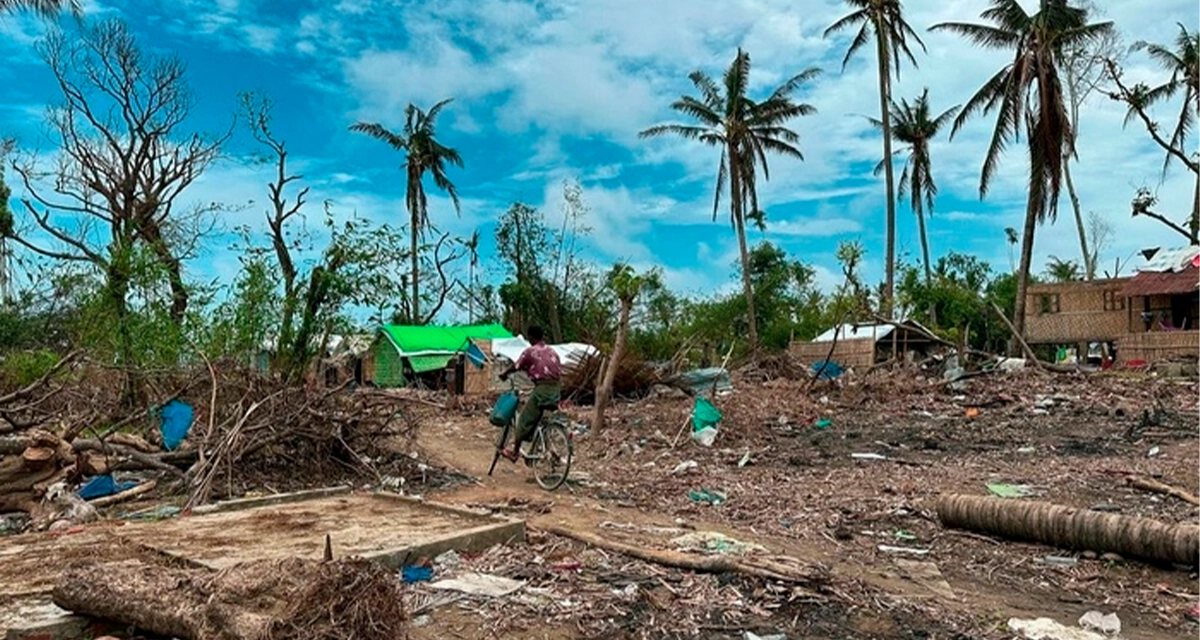
Using fossil fuels releases greenhouse gases that trap heat and warm the planet. This causes more severe weather events. Droughts, floods, and storms that occur naturally are amplified. This results in unreliable water supplies and deeper droughts. Agricultural areas are destroyed, and low-lying cities are devastated. People move from rural regions to cities and across borders, often destabilising neighbouring countries, and those who seek safety travel to other places.
Therefore, when activists say, ‘Keep that oil in the soil,’ they are defending not only the climate but also advocating for climate refugees. Our politicians serve the interests of Big Oil and fossil fuel corporations. They fill the boats with migrants. They understand what the science says, yet they favour dual incomes that come from lobbying for big oil. Politicians employed by Big Oil fill the migrant boats. Ending fossil fuels is essential to saving the climate, protecting the environment, and reducing the need for climate refugees. UNHCR states that 60% of refugees and internally displaced persons originate from countries most vulnerable to climate change.

Governments in the global north recognise the connection between fossil fuels, climate change, and refugees. Their problem is not factual but attitudinal. The politicians are beholden to Big Oil. There is a revolving door between being a politician and becoming a lobbyist for Big Oil.
In South Africa, the issue is more about coal. One can understand that it is a key resource for South Africa to earn foreign currency. Hence, one cannot take a simplistic slogan ‘Keep the coal in the hole’. There is, however, no evidence of a just transition to Green Energy, which will likely always be a mix of fossil fuels, wind, sea, and nuclear. It seems that our Black Economic Empowerment racket is standing in the way. We can make a good transition to a greener energy mix that builds community wealth rather than making a few well-connected and others less connected black people extremely wealthy. We are still addicted to coal because some of our historically disadvantaged people want to draw rents from killing all of us.
Trade policies and refugees
Trade policies (e.g., NAFTA, EU-Mercosur, TPP) enacted by large blocs in the global North that favour their companies often disrupt economies in the global South. Frequently, countries in the global North establish structural conditions that enable their companies to compete internationally. More fragile economies in the global South lack the same institutional capacity and human capital and therefore cannot provide the same level of support to local businesses. These companies often lack the power to resist due to significant pressure from major countries and their trading blocs. Consequently, local workers in the global South lose their jobs, life becomes unstable, poverty fuels social conflict, economic collapse occurs, and there is mass internal displacement and migration of refugees.
Almost every service once provided by governments is now handled by the private sector. It is not more efficient; it is more expensive because we have two or three middlemen taking their BEE percentage. These are the same individuals who sign trade policies for our countries. There are significant conflicts of interest. [References here and here]
Neoliberalism and refugee crisis
The Washington Consensus (and post-Washington Consensus) involves the implementation of market-oriented economic policies by Washington-based institutions such as the US Treasury, the International Monetary Fund (IMF), and the World Bank in the 1980s and 1990s.
This describes the privatisation, liberalisation, and financialisation of government services that would normally carry out the developmental functions of the state. It is also referred to as neoliberalism due to the state’s retreat from public services and its focus on the private sector. As a result, the state tends to prioritise private interests over those of the public, becoming more concerned with managing capital’s interests.
Housing, education, social welfare, public transport, healthcare, criminal justice (particularly prisons), roads, railways, harbours, ports, and infrastructure were all transferred to the private sector as the government was compelled to withdraw. Those governments that refused faced penalties or were subjected to colour revolutions and coups. I say ‘were,’ but this remains the case today.
We remember how promising the future appeared when the ambitions of the Freedom Charter were turned into the Reconstruction and Development Programme. It was later replaced by GEAR and ASGISA. The politicians from the liberation movements who agreed to this are responsible for the chaos we see in South Africa today. They hollowed out the state, leaving the South African public sector a shadow of what it was during Apartheid. These individuals do not care because they have BEE contracts that allow them to move from Bishop Lavis to Bishops Court without shame. Our tender warriors.
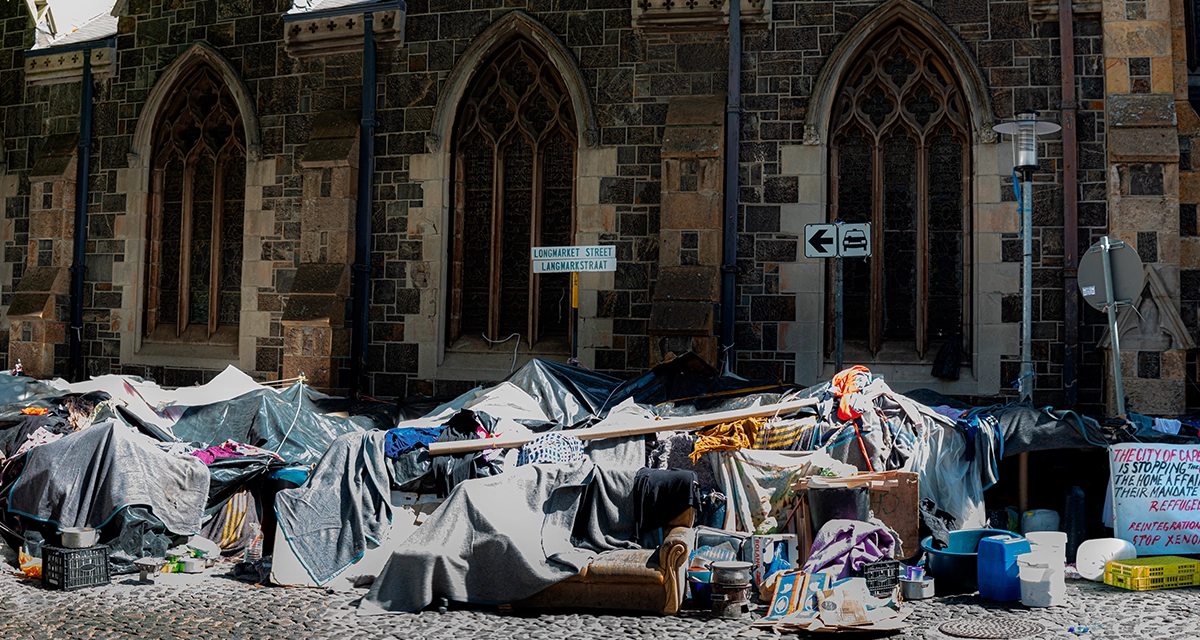
We live in a world where refugees are unjustly blamed for seeking asylum. We even have so-called black and coloured politicians swearing the mothers of displaced people, migrants and refugees. They march to refugee informal settlements, shouting ‘Go home,’ which is the polite version of their slogans. More confrontational and colourful renditions exist.
Who am I to say that a displaced person, a migrant, or refugee is an alien anywhere in the world? How can I say that an African is an unwanted alien anywhere on the African continent?
I was once an exile, displaced person, refugee, and asylum seeker. I travelled on a UNHCR travel document. I know what it is like to live precariously. My refugee status was based on a Quranic perspective, and my protections come under international law, international human rights, and humanitarian law. Who am I to say that a displaced person, a migrant, or refugee is an alien anywhere in the world? How can I say that an African is an unwanted alien anywhere on the African continent? These so-called black and coloured revolutionaries do not have a clue. They should be removed from office for misleading our people and calling on the basest instincts of our communities. Africa gave us refuge during the anti-Apartheid struggle when they were desperately poor. We have some debts that we can never repay. These super-black and super-coloured individuals are a damn nightmare.
It is crucial for those of us advocating for the dignity and respect of asylum seekers, in line with international law, to explain how politics and finance in the global north drive and sustain the movement of 123.2 million internally displaced people, 42 million refugees worldwide, 8.4 million asylum seekers, and 4,2 million stateless individuals. One in 67 people globally has been displaced.
Displaced persons and refugees caused by war are protected under the 1949 Geneva Convention and its 1967 Additional Protocols.
Parliaments, especially those in the global North, are responsible for many policies that produce and maintain the troubling figures mentioned above. Neoliberalism, neocolonialism, and racism are at the core of these policies.
Military bases and intelligence operatives intervene abroad, and people arrive here as migrants and refugees. Fossil fuel policies that benefit Big Oil and Coal cause destruction in the global South, prompting migration here. Trade policies that devastate economies in the global South lead to migration towards Britain. The neoliberal hollowing out of states in the global South creates the precarity that forces migrants and refugees to reach Britain. The refugees are here because we are there. That was true in the 1970s and 1980s. It remains true today.
Do not blame the migrants and refugees. Blame our politicians, business and tech elites, and blame the IMF, the World Bank, and the Bank for International Settlements. These are the institutions inhabited by people in sharp suits and stiletto heels who create and sustain the migrant and refugee crisis. We must conscientiously organise and mobilise. For as we believed with the World Social Forum, ‘Another World is Possible’.
However, with the potential annihilation of the human race through nuclear war, the climate and environmental crises, and fragile, failed states with hollowed-out democracies, as states mainly serve the interests of capital, it becomes clear that ‘Another World is Necessary’.
We need a new politics centred on people—prioritising solidarity, internationalism, and people over profits. As Malcolm X said, we must think globally and act locally. Our starting point is within our local councils, then our parliaments, and ultimately international institutions. We must build our movement by connecting students, workers, and communities, and fight for that other world as we organise around housing, education, healthcare, the environment, criminal justice, peace, and human rights. The migrant and refugee crisis is the canary in the coal mine.


