
















![The market-builder who restrained the market [Part 2]](https://muslimviews.co.za/wp-content/uploads/2026/08/PHOTO-2026-08-25-17-16-32-360x180.jpg)
![The merchant preceding the Prophetic mission [Part 1]](https://muslimviews.co.za/wp-content/uploads/2026/08/01-360x180.jpg)





Drawing lessons from Imam Husayn’s stand at Karbala, QIBLA reflects on justice, responsibility, social struggle and the moral duty to confront oppression.
Allah says: ‘Righteousness is not in turning your faces towards the east or the west. Rather, the righteous are those who believe in Allah … who give charity out of their cherished wealth to relatives, orphans, the poor, needy travellers, beggars, and for freeing captives … and who are patient in times of suffering, adversity, and in the heat of battle.’ (Sura Al-Baqarah, 2:177)
We face a critical choice.
We may gather as spectators of history, recounting the tragedy of Karbala and honouring the immense bravery and character of Imam Husayn (AS), his household, and his companions. This remembrance is valuable, as it sustains a culture of sacrifice and awareness across generations.
Alternatively, we can become participants in a narrative that began before us and will continue beyond our lifetime.
We are not merely observers of the human condition; we are also its authors, witnesses, and agents of redemption. The Prophet Muhammad (SAW) stated: ‘The best jihad is a word of truth before an unjust ruler.’ We accept this as our mandate. Genuine social and spiritual change requires us to speak truth to illegitimate power, regardless of the consequences. Some of our words may unsettle even our allies, but such discomfort is essential for authentic struggle and real transformation.
Imam Husayn left Madinah for Makkah and then Karbala because society was collapsing. The elites were paralysed by fear or bought off by power. Most people clung to empty rituals while injustice ruled. Others who spoke out were either killed or tortured.
You may also want to read




Three groups of enablers stood against Husayn in the new tyranny.
The first group, the fatalists, surrendered to oppression, calling it Allah’s will, and hid their powerlessness behind piety: ‘You give honour to whom You please, and You bring low whom You please.’ (Sura Aal Imran, 3:26)
The second group served the palace as pseudo-clergy, advised people to wait for God’s judgement, excusing tyrants and urging patience while the powerful thrived. This deceit paralysed many in the second generation of Muslims from continuously commanding virtue and preventing vice. Many elites and their families hid here.
The third group, the ‘pious’, focused on ritual purity and personal struggle, insisting there are many ways to paradise – charity, prayer, pilgrimage – sometimes claiming these are better than fighting for justice.
All three groups left the oppressed to suffer.
In this situation, is Hamlet’s ‘To be or not to be’ a feasible question for Imam Husayn? Or is the question the luxury of the privileged, those who can afford to debate while others starve?
Our question is different. Our question is this: HOW DO WE LIVE?
Our central question is how to live by Allah’s guidance. Allah’s mercy lights the path. Will we meet our obligations, or will we surrender to powerlessness?
We inhabit the space between obligation and inability.
Imam Husayn (AS) saw societies paralysed by fear and indecision. He saw sincere people isolated, youth in despair, the corrupt growing bold, and truth twisted by power.
He saw communities immobilised by indecision – people who knew what was right but lacked the courage to act.
He saw sincere followers isolated and afraid – good people who had been silenced by fear, convinced that their voices did not matter, that resistance was futile.
He saw the despair of youth – young people who looked at the future and saw only darkness, who had been robbed of hope by a system that told them there was no alternative.
He saw the audacity of the corrupt – how evil had become bold, how wrong had become normalised, how the wicked no longer even bothered to hide their wickedness.
He saw truth distorted beyond recognition – how the very meaning of words had been corrupted, how justice had been redefined to serve the powerful, how the oppressor called himself the victim.
And then he saw a monarchy. The embodiment of everything wrong. The tyrant. The oppressor. The enablers. He saw those who had hijacked the work of his grandfather, his father and the courageous companions.
The question that haunted Husayn ibn Ali is the question that haunts us today: COULD HE REMAIN SILENT?
Could he watch injustice and do nothing? Could he see oppression and offer excuses? Could he witness the destruction of everything sacred and claim that he was unable? Could he stay in Makkah, safe and comfortable, while tyranny spread?
No. He could not.
And neither can we.
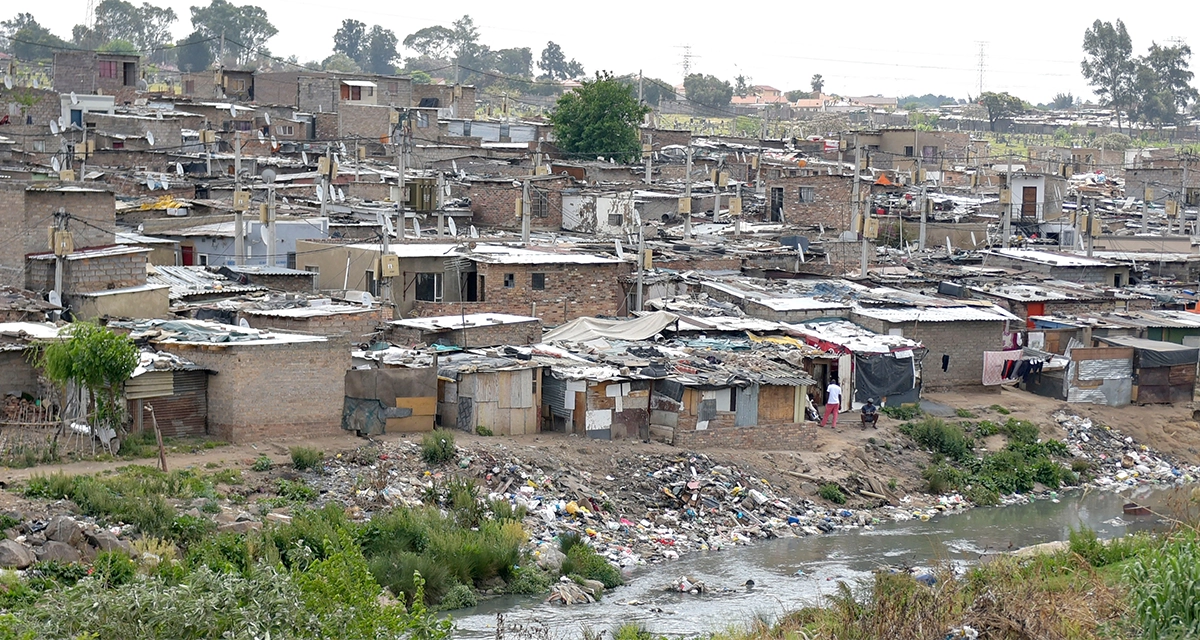
We, too, face the stripping away of basic rights, the collapse of ethics, and the plundering of cultures. Hunger, deprivation, crime, drugs and gangsterism, profiteering, and theft are now normal. From our religious platforms, manipulation of the hearts and minds masquerades as guidance. Preachers who should be speaking truth to power instead justify what the powerful do. They tell the poor to be patient while the rich feast. They promise the oppressed Paradise while the oppressors build their kingdoms on earth. Ethno-racism and Zionism infect our communities and institutions, controlling what we hear and see. Our minds are colonised long before our bodies are. We are taught to hate the wrong enemies. We are taught to fear the wrong threats. We are taught to divide ourselves.
Through our colonised minds, we witness the exploitation of our cultures, our traditions, our histories, our identities – all commodified, all packaged and sold back to us at a profit.
What will we do?
Our understanding of Islam does not align with that of palace scholars, privileged entrepreneurs, influential politicians, austerity technocrats, market idolaters, or those who advocate patience to the poor while serving the interests of the wealthy. Our Islam is that of Abu Dharr, the companion who spoke truth to power when the powerful were his own people occupying the green palace.
And of Hujr ibn Adi, who was martyred for his witness, who refused to abandon the truth even when his life was on the line. And of Husayn and Zaynab, who stood in the face of tyranny and overwhelming violence – and did not blink. It is the Islam of tawhid in opposition to idolatry (including the association of capitalism with Islam), justice against oppression, zakat against hoarding, shura against authoritarianism, and bearing witness against silence.
Allah commands: ‘Stand firmly for justice as witnesses for Allah, even if it is against yourselves, your parents, or close relatives.’ (Sura An-Nisa, 4:135)
We live in an age of war, class war. The economic logic of the past 50 years has been one of imposed sacrifice. The poor are told to sacrifice wages, homes, food, electricity, water, dignity, land, time, and life so banks may be rescued, and landlords paid. So that anonymous corporate shareholders may be protected? So that ruling parties may be praised for their ‘realism’? So that the rich can accumulate more and hoard more, and the poor can be told to be grateful for not being eviscerated?
We reject this false sacrifice. Our deep problems are not because we transformed from apartheid. On the contrary, they stem from the non-transformation of racial capitalism under apartheid, where only 14 per cent owned 80 per cent of the wealth at Codesa. A few black faces in high places were not meant to change this.
We name the system plainly: neoliberal capitalism is shirk (idolatry) in social form when the market is sovereign, when humans are sacrificed to profit, when public goods (state-owned enterprises) are commodified, financialised, privatised, and captured, and when the poor are told there is no alternative. The same people who say there is no alternative have looted the state. We reject the ‘extreme centre’, capitalists who capture the state to protect the market and call themselves moderate while enforcing hunger, debt, eviction, unemployment, ecological destruction, and imperial war. The largest voter bloc is those who do not vote because major parties have no economic difference. They wear different hats and T-shirts, but all worship the god of the market. The interests of a small elite in banking, mining, agriculture, and technology have become the national interest.
Professor Ali Mabruk used to say that ‘betrayal is from within, not without. So, look for the source of your discomfort amongst your own historical blindfolds. Once you see the manifestations of the betrayal, it can never be turned back as the hands under the table outnumber those on top.’
If we claim to follow Imam Husayn and Sayyedah Zaynab, we must speak truth to power.
We also speak truth to the powerless. Because we, the powerless , keep these elites in power. We elect them. We enable them. We make excuses for them. We tell ourselves they are the best we have. We tell ourselves there is no alternative.
We do not accuse or excuse. We are truth-tellers.
Imam Husayn could not remain silent. He was compelled to act. Although he could have claimed inability – and how easy that would have been! He could have stayed in Makkah. He could have said, ‘I am too old. I am too weak. I am outnumbered. It is not my time.’ He could have made a thousand excuses, and we would have understood.
But he did not. He recognised his duty. He recognised his responsibility. He recognised that obligation is not optional.
And we, too, are confronted with this choice.
Will we choose silence or struggle?
If Lady Zaynab (AS) and Imam Husayn (AS) stood here today, they would declare water, electricity, housing, land, healthcare, education, food, and safety are not only for the rich. They are trusts. They are rights. They are the shared provisions of Allah.
The Prophet (SAW) said: ‘The Muslims are partners in three things: water, pasture (land and farming) and fire (energy and energy production).’ There are certain things that should never be privatised, commodified, or monetised for profit. They must be held in public ownership as waqf.
Allah says: ‘Do not let the hatred of a people lead you to injustice. Be just! That is closer to righteousness.’ (Sura Al-Ma’idah, 5:8)
The Prophet (SAW) said: ‘Whoever among you sees an evil, let him change it with his hand; if he cannot, then with his tongue; if he cannot, then with his heart – and that is the weakest of faith.’ (Sahih Muslim)
This is our roadmap. This is our instruction. This is our obligation.
Allah says: ‘Never say that those martyred in the cause of Allah are dead – in fact, they are alive! But you do not perceive it.’ (Sura Al-Baqarah, 2:154)
This month, we honour the martyrs – Imam Husayn, his family, his companions, and all those who have fallen in the struggle for justice. We honour them not by transforming their deaths into spectacle, not by only mourning them and forgetting their mission. We honour them by advancing their unfinished work.
True sacrifice is not allowing the poor to die in silence to sustain an unjust system. True sacrifice is the disciplined offering of self, resources, time, courage, and struggle to secure a more productive life for all.
We remind ourselves that we need to mobilise a new broad front: rooted in tawhid, accountable to the oppressed, disciplined by justice, hostile to capitalism, free of colonised minds, opposed to imperialism, and committed to building a common world beyond one dominated by profits for their own sake.
Allah asks: ‘What is it with you that you do not fight in the cause of Allah and for oppressed men, women, and children who cry out, “Our Lord! Deliver us from this land of oppressors! Appoint for us a saviour; appoint for us a helper – all by Your grace.”’ (Sura An-Nisa, 4:75)
The Prophet (SAW) said: ‘Whoever among you sees an evil, let him change it with his hand; if he cannot, then with his tongue; if he cannot, then with his heart – and that is the weakest of faith.’ (Sahih Muslim)
Allah is sufficient for us, and He is the best Protector.
Issued by Qibla.
Contacts: Aziz Kader (+27 82 453 2716); Yusuf Patel (+27 60 190 7439); Khalid Khan (+27 84 900 6655); Reederwaan Craayenstein (+44 7380 903464).