






















![The market-builder who restrained the market [Part 2]](https://muslimviews.co.za/wp-content/uploads/2026/08/PHOTO-2026-08-25-17-16-32-360x180.jpg)
![The merchant preceding the Prophetic mission [Part 1]](https://muslimviews.co.za/wp-content/uploads/2026/08/01-360x180.jpg)










As states fail and corporations extract, grassroots cooperation and mutual aid offer a powerful path beyond dependency towards people-driven development.
By Dr MPHUTLANE WA BOFELO
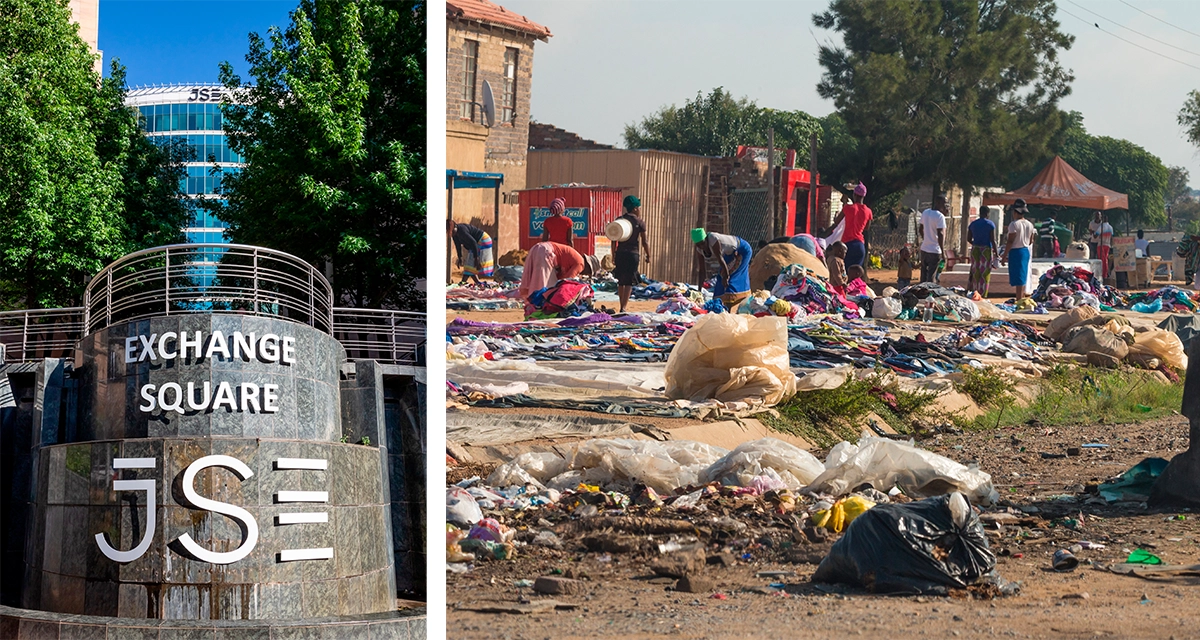
The promise of socio-economic development has been betrayed. Across the world, states captured by private and partisan interests have hollowed out public institutions, leaving corruption and maladministration in their wake. Corporations, meanwhile, extract value without reinvesting meaningfully in the communities that sustain them. Citizens are left pleading for accountability from leaders who rarely deliver, and seeking inclusion in markets that exploit rather than empower.
This cycle of dependency must be broken. While society cannot abandon its responsibility to demand transparency from the state and fairness from the private sector, it cannot afford to wait passively for justice. The alternative lies in grassroots-driven development rooted in cooperation, mutual aid, and solidarity.
Communities already hold the seeds of transformation. Across neighbourhoods, villages, and townships, collective support systems have long existed: burial societies, informal savings clubs, and community gardens. These are not relics of the past, but blueprints for the future. By rebuilding and consolidating these networks, communities can create economies that serve people rather than exploit them.
Cooperative enterprises, whether farms, housing projects, or renewable energy initiatives, can generate wealth that remains local. Mutual aid networks can meet immediate needs without reliance on distant and unresponsive bureaucracies. Participatory politics, grounded in assemblies and councils, can foster accountability and collective ownership. This is not charity; it is power.
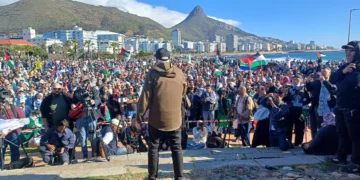
Yet grassroots initiatives alone are insufficient. They must be accompanied by strong community organising, mass mobilisation, and collective action capable of forcing concessions from both the state and corporations. Without organised pressure, cooperative projects risk being confined to the margins, tolerated but never transformative.
Mobilisation creates visibility and urgency. It reminds elites that communities are not passive subjects, but active agents of change. Sustained and strategic mass action can disrupt entrenched systems of exploitation and compel concessions that open space for deeper reform. In this way, grassroots development becomes not only a survival strategy, but a political weapon.
When communities organise around solidarity and cooperation, they shift the balance of power. Instead of begging for inclusion, they can demand partnership with the state and corporations from a position of strength.
Imagine federations of cooperatives negotiating energy policy, or grassroots credit unions shaping financial regulation. Such movements would not merely resist exploitation; they would redefine the terms of engagement. The goal cannot end with short-term concessions. It must build the capacity to push for systemic, structural, and institutional change.
This alternative path does not require abandoning the state or private sector altogether. Rather, it demands a reconstruction of relationships. Communities must revitalise existing support networks, experiment with new forms of communal politics, and insist on ecological sustainability as the foundation of economic activity.
This approach is deeply pragmatic. Societies organised around solidarity and cooperation are more resilient, more democratic, and more humane.
You may also want to read






The capture of the state and the dominance of corporations have left society vulnerable. But vulnerability is not destiny. By investing in grassroots-based socio-economic development anchored in cooperation, mutual aid, organising, and mass action, a politics and economy that serve people rather than exploit them can be built.
The future will not be handed down by corrupt officials or profit-driven corporations. It will be constructed patiently and collectively, from the ground up.
Dr Mphutlane wa Bofelo is a political theorist and social commentator. He was recently conferred with a PhD for his doctoral research which advanced a systems theory of presidential leadership, introducing the strategic collegiality model—a framework emphasising collaboration, shared responsibility, and collective wisdom in leadership practice.