





Muslim Views
No Result
View All Result
  • News
    • All
    • Local
    • National
    • World
    Gaza ER screening panel calls for action to support healthcare workers

    Gaza ER screening panel calls for action to support healthcare workers

    Five-year plan set in motion to tackle crime in Manenberg

    Five-year plan set in motion to tackle crime in Manenberg

    Cape Town musicians rally behind displaced Palestinian composer

    Cape Town musicians rally behind displaced Palestinian composer

    Rally for solidarity with migrants ahead of planned march

    Rally for solidarity with migrants ahead of planned march

    The scholar who refused to turn Islam into an enemy: The legacy of John Esposito

    The scholar who refused to turn Islam into an enemy: The legacy of John Esposito

    The greatest monuments are not in stone, but in lives transformed

    The greatest monuments are not in stone, but in lives transformed

    Mass march to Parliament planned to combat xenophobia and Afrophobia

    Mass march to Parliament planned to combat xenophobia and Afrophobia

    How Sanef is helping journalists build mental resilience

    How Sanef is helping journalists build mental resilience

    Awqaf SA strengthens water security at Rahima Moosa Hospital

    Awqaf SA strengthens water security at Rahima Moosa Hospital

    Bo-Kaap forum reveals first steps to tackle gentrification

    Bo-Kaap forum reveals first steps to tackle gentrification

    • National
    • World
    • Local
  • Opinion
    • All
    • Columnists
    • Discussions with Dangor
    • Editorial
    • Guest Writer
    Beyond the factory gates: Organised labour in South Africa’s class struggle

    Beyond the factory gates: Organised labour in South Africa’s class struggle

    South Asia’s implosion: Gen Z cockroaches and the end of political obedience

    South Asia’s implosion: Gen Z cockroaches and the end of political obedience

    When Sipho asked me to make duʿa

    When Sipho asked me to make duʿa

    The nuclear leash: Washington’s deal to put Saudi back in its place

    The nuclear leash: Washington’s deal to put Saudi back in its place

    Spain’s World Cup triumph, Messi and the politics of Palestine

    Spain’s World Cup triumph, Messi and the politics of Palestine

    The myth of apolitical law

    The myth of apolitical law

    Grappling with Apartheid labels

    Grappling with Apartheid labels

    The scholar who refused to turn Islam into an enemy: The legacy of John Esposito

    The scholar who refused to turn Islam into an enemy: The legacy of John Esposito

    More than a game, or the Clash of Titans

    More than a game, or the Clash of Titans

    An empire battered, bluffing and buying time

    An empire battered, bluffing and buying time

  • Features
    • All
    • 1500 Years of Prophetic Legacy
    • AWQAF SA
    • General Features
    • Imam Haron
    • Tributes
    Grappling with Apartheid labels

    Grappling with Apartheid labels

    The scholar who refused to turn Islam into an enemy: The legacy of John Esposito

    The scholar who refused to turn Islam into an enemy: The legacy of John Esposito

    The greatest monuments are not in stone, but in lives transformed

    The greatest monuments are not in stone, but in lives transformed

    Legacy of educator Haji Mogamat Rashad Jedaar lives on

    Legacy of educator Haji Mogamat Rashad Jedaar lives on

    Reclaiming agency: From ritual to action Part 3

    Reclaiming agency: From ritual to action Part 3

    June 16, the Call of Islam, and the many rivers of liberation

    June 16, the Call of Islam, and the many rivers of liberation

    Reclaiming agency: From ritual to action Part 2

    Reclaiming agency: From ritual to action Part 2

    Reclaiming agency: From ritual to action Part 1

    Reclaiming agency: From ritual to action Part 1

    Goolam Hoosain Abed: The last of the famous sporting family departs

    Goolam Hoosain Abed: The last of the famous sporting family departs

    Abdullah Ibrahim crafted a magnificent new culture for South Africa

    Abdullah Ibrahim crafted a magnificent new culture for South Africa

    The hidden heritage of racial ‘passing’

    The hidden heritage of racial ‘passing’

    The Commonwealth war graves at the Mowbray Muslim Cemetery

    The Commonwealth war graves at the Mowbray Muslim Cemetery

    Honouring a chess giant: The legacy of Dr Shabier Bhawoodien

    Honouring a chess giant: The legacy of Dr Shabier Bhawoodien

    Mapping national and provincial heritage at the Mowbray Muslim Cemetery

    Mapping national and provincial heritage at the Mowbray Muslim Cemetery

    Reclaiming Nordic solidarity in South Africa’s liberation

    Reclaiming Nordic solidarity in South Africa’s liberation

  • Lifestyle
    • All
    • Arts
    • Books
    • Education
    • Food
    • Health
    • Motoring
    • Sport
    • Technology
    Languages of Care: Extending worship through art

    Languages of Care: Extending worship through art

    Cape Town musicians rally behind displaced Palestinian composer

    Cape Town musicians rally behind displaced Palestinian composer

    More than a game, or the Clash of Titans

    More than a game, or the Clash of Titans

    Help Ruqaya Ismail represent SA at the Commonwealth Fencing Championship

    Help Ruqaya Ismail represent SA at the Commonwealth Fencing Championship

    Goolam Hoosain Abed: The last of the famous sporting family departs

    Goolam Hoosain Abed: The last of the famous sporting family departs

    Abdeyah da Costa and the dihlīz of Dorp Street

    Abdeyah da Costa and the dihlīz of Dorp Street

    A mother’s taweez and the Cape’s interfaith traditions [+ video]

    A mother’s taweez and the Cape’s interfaith traditions [+ video]

    Inaugural Islamic Expo to be hosted in Cape Town

    Inaugural Islamic Expo to be hosted in Cape Town

    Imraan Buccus on faith, activism and SA’s political crisis

    Imraan Buccus on faith, activism and SA’s political crisis

    The Book of Mercy: A powerful Ramadan read on compassion in Islam

    The Book of Mercy: A powerful Ramadan read on compassion in Islam

  • Finance
    • All
    • Islamic Finance
    First Abu Dhabi Bank’s African opportunity could reshape Islamic finance

    First Abu Dhabi Bank’s African opportunity could reshape Islamic finance

    Family takaful’s research boom exposes an industry failing the underserved

    Family takaful’s research boom exposes an industry failing the underserved

    Can AI and blockchain save takaful from exclusion and a crisis of trust?

    Can AI and blockchain save takaful from exclusion and a crisis of trust?

    The sacred journey is now a marketplace that prices out the poor

    The sacred journey is now a marketplace that prices out the poor

    Why Shariah compliance alone cannot guarantee sound investment returns

    Why Shariah compliance alone cannot guarantee sound investment returns

    Why serious Muslim investors must look beyond basic Shariah screens today

    Why serious Muslim investors must look beyond basic Shariah screens today

    Why Mufti Taqi Usmani says cryptocurrency is not Shariah compliant today

    Why Mufti Taqi Usmani says cryptocurrency is not Shariah compliant today

    Today’s two-pot withdrawal could threaten tomorrow’s retirement security

    Today’s two-pot withdrawal could threaten tomorrow’s retirement security

    War clouds gather over the Islamic finance boom

    War clouds gather over the Islamic finance boom

    Israel and the perfect storm of global economic isolation

    Israel and the perfect storm of global economic isolation

  • Islam
    • All
    • Eid
    • Faith and Practice
    • Family
    • Hajj and Umrah
    • Moulood
    • Quran
    • Ramadaan
    When Sipho asked me to make duʿa

    When Sipho asked me to make duʿa

    A sound heart in a world of strangers

    A sound heart in a world of strangers

    Can our mosques become the heart of the Ummah?

    Can our mosques become the heart of the Ummah?

    Karbala – between obligation and inability

    Karbala – between obligation and inability

    16 June 1976: Qibla’s call to conscience

    Reclaiming our future – drawing lessons from Karbala and Soweto 1976

    Karbala, Gaza and xenophobia: Why history still matters today

    Karbala, Gaza and xenophobia: Why history still matters today

    Adnaan Adams (right) addressing the congregation at Masjidut Taqwa in Newfields Estate, Cape Town, on Friday, June 12. (Photo: Supplied)

    Reflecting on a khutbah and the community it seeks to serve

    The panellists at the Muslim Personal Law symposium at the University of Cape Town on June 8, clockwise from top right: Professor Fatima Seedat, Ayesha Royker, Rehema Namukose and Khensani Motlhante. (Photos: Anwar Omar)

    Advancing gender justice in Muslim Personal Law

    What do we owe the Earth?

    What do we owe the Earth?

    Hajj, human frailty and the compassion of Allah

    Hajj, human frailty and the compassion of Allah

  • Archives
  • Donate
Muslim Views
  • News
    • All
    • Local
    • National
    • World
    Gaza ER screening panel calls for action to support healthcare workers

    Gaza ER screening panel calls for action to support healthcare workers

    Five-year plan set in motion to tackle crime in Manenberg

    Five-year plan set in motion to tackle crime in Manenberg

    Cape Town musicians rally behind displaced Palestinian composer

    Cape Town musicians rally behind displaced Palestinian composer

    Rally for solidarity with migrants ahead of planned march

    Rally for solidarity with migrants ahead of planned march

    The scholar who refused to turn Islam into an enemy: The legacy of John Esposito

    The scholar who refused to turn Islam into an enemy: The legacy of John Esposito

    The greatest monuments are not in stone, but in lives transformed

    The greatest monuments are not in stone, but in lives transformed

    Mass march to Parliament planned to combat xenophobia and Afrophobia

    Mass march to Parliament planned to combat xenophobia and Afrophobia

    How Sanef is helping journalists build mental resilience

    How Sanef is helping journalists build mental resilience

    Awqaf SA strengthens water security at Rahima Moosa Hospital

    Awqaf SA strengthens water security at Rahima Moosa Hospital

    Bo-Kaap forum reveals first steps to tackle gentrification

    Bo-Kaap forum reveals first steps to tackle gentrification

    • National
    • World
    • Local
  • Opinion
    • All
    • Columnists
    • Discussions with Dangor
    • Editorial
    • Guest Writer
    Beyond the factory gates: Organised labour in South Africa’s class struggle

    Beyond the factory gates: Organised labour in South Africa’s class struggle

    South Asia’s implosion: Gen Z cockroaches and the end of political obedience

    South Asia’s implosion: Gen Z cockroaches and the end of political obedience

    When Sipho asked me to make duʿa

    When Sipho asked me to make duʿa

    The nuclear leash: Washington’s deal to put Saudi back in its place

    The nuclear leash: Washington’s deal to put Saudi back in its place

    Spain’s World Cup triumph, Messi and the politics of Palestine

    Spain’s World Cup triumph, Messi and the politics of Palestine

    The myth of apolitical law

    The myth of apolitical law

    Grappling with Apartheid labels

    Grappling with Apartheid labels

    The scholar who refused to turn Islam into an enemy: The legacy of John Esposito

    The scholar who refused to turn Islam into an enemy: The legacy of John Esposito

    More than a game, or the Clash of Titans

    More than a game, or the Clash of Titans

    An empire battered, bluffing and buying time

    An empire battered, bluffing and buying time

  • Features
    • All
    • 1500 Years of Prophetic Legacy
    • AWQAF SA
    • General Features
    • Imam Haron
    • Tributes
    Grappling with Apartheid labels

    Grappling with Apartheid labels

    The scholar who refused to turn Islam into an enemy: The legacy of John Esposito

    The scholar who refused to turn Islam into an enemy: The legacy of John Esposito

    The greatest monuments are not in stone, but in lives transformed

    The greatest monuments are not in stone, but in lives transformed

    Legacy of educator Haji Mogamat Rashad Jedaar lives on

    Legacy of educator Haji Mogamat Rashad Jedaar lives on

    Reclaiming agency: From ritual to action Part 3

    Reclaiming agency: From ritual to action Part 3

    June 16, the Call of Islam, and the many rivers of liberation

    June 16, the Call of Islam, and the many rivers of liberation

    Reclaiming agency: From ritual to action Part 2

    Reclaiming agency: From ritual to action Part 2

    Reclaiming agency: From ritual to action Part 1

    Reclaiming agency: From ritual to action Part 1

    Goolam Hoosain Abed: The last of the famous sporting family departs

    Goolam Hoosain Abed: The last of the famous sporting family departs

    Abdullah Ibrahim crafted a magnificent new culture for South Africa

    Abdullah Ibrahim crafted a magnificent new culture for South Africa

    The hidden heritage of racial ‘passing’

    The hidden heritage of racial ‘passing’

    The Commonwealth war graves at the Mowbray Muslim Cemetery

    The Commonwealth war graves at the Mowbray Muslim Cemetery

    Honouring a chess giant: The legacy of Dr Shabier Bhawoodien

    Honouring a chess giant: The legacy of Dr Shabier Bhawoodien

    Mapping national and provincial heritage at the Mowbray Muslim Cemetery

    Mapping national and provincial heritage at the Mowbray Muslim Cemetery

    Reclaiming Nordic solidarity in South Africa’s liberation

    Reclaiming Nordic solidarity in South Africa’s liberation

  • Lifestyle
    • All
    • Arts
    • Books
    • Education
    • Food
    • Health
    • Motoring
    • Sport
    • Technology
    Languages of Care: Extending worship through art

    Languages of Care: Extending worship through art

    Cape Town musicians rally behind displaced Palestinian composer

    Cape Town musicians rally behind displaced Palestinian composer

    More than a game, or the Clash of Titans

    More than a game, or the Clash of Titans

    Help Ruqaya Ismail represent SA at the Commonwealth Fencing Championship

    Help Ruqaya Ismail represent SA at the Commonwealth Fencing Championship

    Goolam Hoosain Abed: The last of the famous sporting family departs

    Goolam Hoosain Abed: The last of the famous sporting family departs

    Abdeyah da Costa and the dihlīz of Dorp Street

    Abdeyah da Costa and the dihlīz of Dorp Street

    A mother’s taweez and the Cape’s interfaith traditions [+ video]

    A mother’s taweez and the Cape’s interfaith traditions [+ video]

    Inaugural Islamic Expo to be hosted in Cape Town

    Inaugural Islamic Expo to be hosted in Cape Town

    Imraan Buccus on faith, activism and SA’s political crisis

    Imraan Buccus on faith, activism and SA’s political crisis

    The Book of Mercy: A powerful Ramadan read on compassion in Islam

    The Book of Mercy: A powerful Ramadan read on compassion in Islam

  • Finance
    • All
    • Islamic Finance
    First Abu Dhabi Bank’s African opportunity could reshape Islamic finance

    First Abu Dhabi Bank’s African opportunity could reshape Islamic finance

    Family takaful’s research boom exposes an industry failing the underserved

    Family takaful’s research boom exposes an industry failing the underserved

    Can AI and blockchain save takaful from exclusion and a crisis of trust?

    Can AI and blockchain save takaful from exclusion and a crisis of trust?

    The sacred journey is now a marketplace that prices out the poor

    The sacred journey is now a marketplace that prices out the poor

    Why Shariah compliance alone cannot guarantee sound investment returns

    Why Shariah compliance alone cannot guarantee sound investment returns

    Why serious Muslim investors must look beyond basic Shariah screens today

    Why serious Muslim investors must look beyond basic Shariah screens today

    Why Mufti Taqi Usmani says cryptocurrency is not Shariah compliant today

    Why Mufti Taqi Usmani says cryptocurrency is not Shariah compliant today

    Today’s two-pot withdrawal could threaten tomorrow’s retirement security

    Today’s two-pot withdrawal could threaten tomorrow’s retirement security

    War clouds gather over the Islamic finance boom

    War clouds gather over the Islamic finance boom

    Israel and the perfect storm of global economic isolation

    Israel and the perfect storm of global economic isolation

  • Islam
    • All
    • Eid
    • Faith and Practice
    • Family
    • Hajj and Umrah
    • Moulood
    • Quran
    • Ramadaan
    When Sipho asked me to make duʿa

    When Sipho asked me to make duʿa

    A sound heart in a world of strangers

    A sound heart in a world of strangers

    Can our mosques become the heart of the Ummah?

    Can our mosques become the heart of the Ummah?

    Karbala – between obligation and inability

    Karbala – between obligation and inability

    16 June 1976: Qibla’s call to conscience

    Reclaiming our future – drawing lessons from Karbala and Soweto 1976

    Karbala, Gaza and xenophobia: Why history still matters today

    Karbala, Gaza and xenophobia: Why history still matters today

    Adnaan Adams (right) addressing the congregation at Masjidut Taqwa in Newfields Estate, Cape Town, on Friday, June 12. (Photo: Supplied)

    Reflecting on a khutbah and the community it seeks to serve

    The panellists at the Muslim Personal Law symposium at the University of Cape Town on June 8, clockwise from top right: Professor Fatima Seedat, Ayesha Royker, Rehema Namukose and Khensani Motlhante. (Photos: Anwar Omar)

    Advancing gender justice in Muslim Personal Law

    What do we owe the Earth?

    What do we owe the Earth?

    Hajj, human frailty and the compassion of Allah

    Hajj, human frailty and the compassion of Allah

  • Archives
  • Donate
Muslim Views
Advertisement

Remembering Cuito Cuanavale in freedom month

22 April 2026 - Updated on 24 April 2026
in FEATURES, OPINION
Reading Time: 7 mins read
A A
Remembering Cuito Cuanavale in freedom month

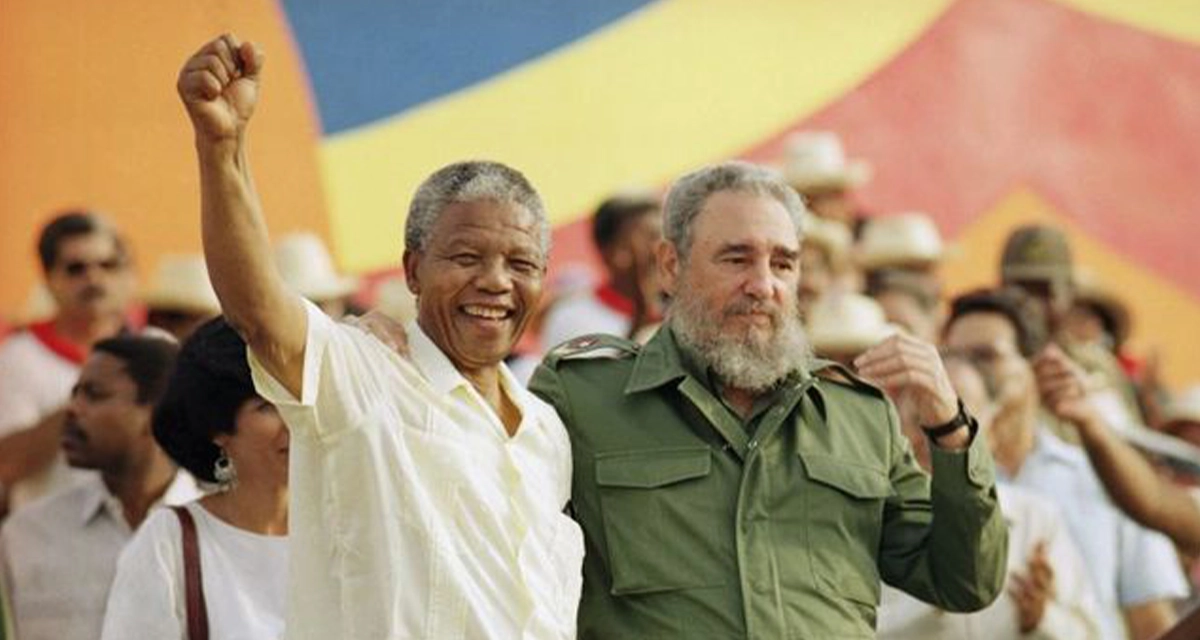
Nelson Mandela and Fidel Castro. Mandela was unequivocal about Cuba's role in Southern Africa's liberation declaring in Havana in 1991: ‘Cuito Cuanavale marks the divide in the struggle for the liberation of southern Africa.’ Castro attended Mandela's inauguration on May 10, 1994, as guest of honour, present at the culmination of a struggle he had committed Cuba to, years before, on the battlefields of Angola. (Photo: Cuba Solidarity Campaign)

Share on TwitterShare on FacebookShare on Whatsapp

Cuito Cuanavale was a turning point in southern Africa’s liberation struggle, yet remains under-recognised in South Africa’s heritage narrative.

By SAALIEGAH ZARDAD

APRIL in South Africa (SA) carries a particular weight. Freedom Month is the annual moment of collective remembrance that anchors our democratic identity around 1994: the unbanning of liberation organisations, the release of political prisoners and the long walk to the ballot box. As a heritage practitioner, I am compelled each year by what our official commemorative narrative omits: the external geographies where apartheid’s military power was confronted, contained and ultimately defeated. Chief among these is a small town in the south-eastern interior of Angola, whose name every South African should know, but does not.

It is called Cuito Cuanavale.
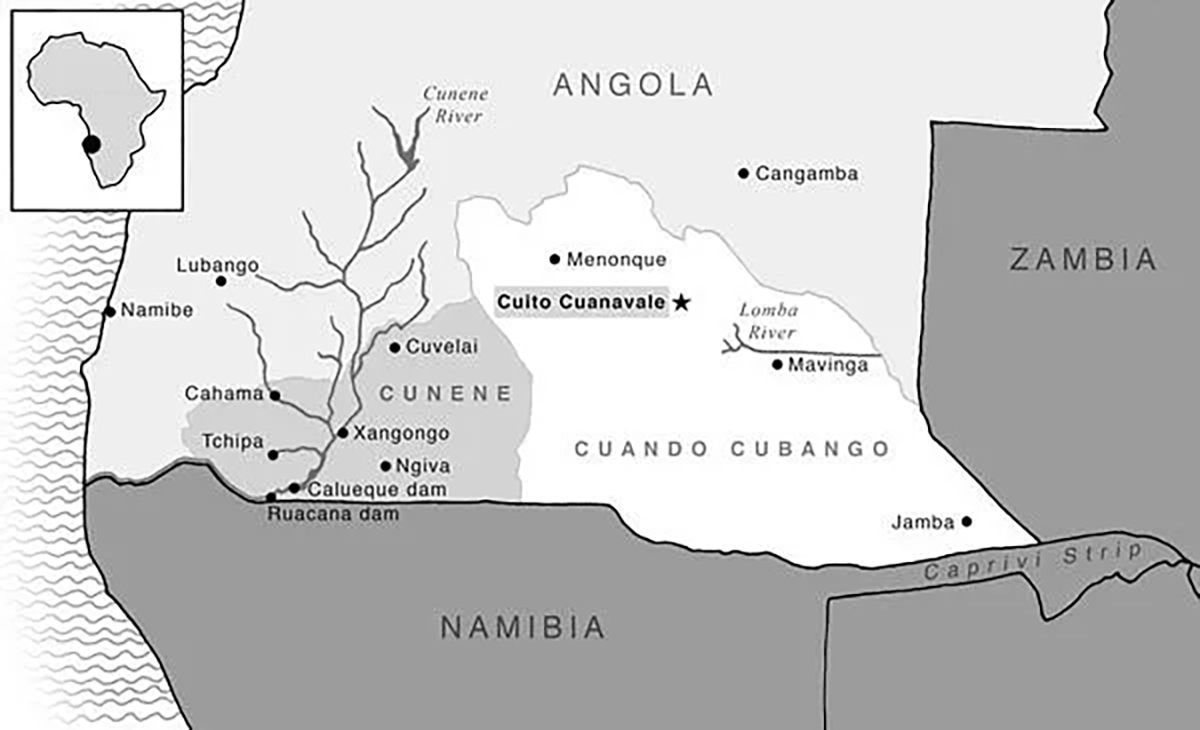
Cuito Cuanavale, situated at the confluence of the Cuito and Cuanavale rivers in south-eastern Angola, was the site of the largest conventional military engagement on the African continent since World War II. The battle fought here between 1987 and 1988 by Angolan, Namibian and Cuban forces against the apartheid South African Defence Force and UNITA precipitated the New York Accords of December 1988, setting in motion Namibian independence and, ultimately, South Africa’s democratic transition of 1994. (Photo: SA History Online)

What happened at Cuito Cuanavale

From August 14, 1987, to March 23, 1988, the largest conventional military engagement on the African continent since WWII was fought in this Angolan town. Angolan and Namibian forces, supported by Cubans and the Soviet Union, faced the apartheid South African Defence Force (SADF) and its ally Unita within a wider Angolan Civil War. It shaped the fate of an entire subcontinent.

The strategic consequences of the battle precipitated the New York Accords of December 1988, requiring the full withdrawal of South African forces from Angola and Namibia, and setting in motion Namibian independence on March 21, 1990. The ultimate defeat of apartheid’s military machine in Angola fundamentally altered the regional balance of power. The path to the negotiating table, and to the democratic elections of April 1994, was shaped in part by developments in Angola, alongside intensifying internal and shifting global Cold War dynamics.

While widely regarded in liberation historiography as a strategic turning point, the battle remains contested in military scholarship. Some former SADF analysts and historians characterise the outcome as a stalemate, even as its consequences reshaped the broader regional dynamics.

For Ronnie Kasrils, former intelligence minister and anti-apartheid veteran, the ‘acid test’ was always what came next: the withdrawal of SADF troops from Angola and Namibia, Namibian independence and ultimately SA’s own democratic transition. By that test, Cuito Cuanavale broke apartheid’s regional hegemony as surely as a decisive victory would have. In other words, a stalemate on the battlefield can still be a strategic defeat at the negotiating table.

These differing interpretations underscore the complexity of translating battlefield outcomes into historical meaning.

Three interdependent fronts of resistance

The negotiations that produced SA’s democratic transition were made possible by the convergence of three interdependent fronts: internal resistance; international solidarity; and the defeat of apartheid’s military in Angola. Remove any one and the transition to 1994 becomes difficult to imagine. The African Frontline States, recognised by the Organisation of African Unity (OAU) in 1975, absorbed extraordinary costs, including raids that killed civilians and destabilised economies. Their sacrifice is as absent from our commemorative landscape as it is essential to our liberation story. Cuito Cuanavale was where the third front reached its decisive moment.

The legislative case: section 3 of the NHRA and UNESCO 2003

SA’s National Heritage Resources Act (NHRA, Act 25 of 1999) provides the legislative basis to formally recognise Cuito Cuanavale, not as jurisdiction over Angolan soil, but as a profound assertion of shared heritage. Section 3(3) assesses heritage significance through criteria untethered from territorial borders: historical importance, associative value, social significance and symbolic meaning. Cuito Cuanavale satisfies all four. NHRA Regulation 43(1) defines a Grade 1 resource as one whose loss would significantly diminish national heritage. By that standard, the absence of March 23 from our public holiday calendar already constitutes precisely that diminishment — not only for South Africans, but for the Frontline States whose solidarity and sacrifices made our own liberation possible.

The UNESCO 2003 Convention for the Safeguarding of the Intangible Cultural Heritage (Article 2) offers a parallel framework, as does the NHRA’s own definition of ‘living heritage’ (Section 2). Both recognise oral traditions, commemorative practices and solidarity transmitted across generations. Cuito Cuanavale is exactly this: sustained in the testimonies of veterans, the rituals of liberation movements and the memory of African frontline solidarity with SA’s anti-apartheid struggle. Angola has already accorded formal public holiday recognition. SA, a principal beneficiary of that battle’s outcome, has not.

Establishing March 23 as Cuito Cuanavale Day or Southern African Liberation Day would remedy that gap. It would anchor in law what memory already knows: that our freedom was won not within our borders alone, but on battlefields shared with Namibia, Angola, Zambia, Tanzania, Zimbabwe, Botswana and Mozambique. Under the NHRA, such a day becomes a Grade 1 commemorative act. Under UNESCO 2003, it becomes the safeguarding of living heritage. Both frameworks affirm that to remember Cuito Cuanavale is to honour the African Frontline States and Cuba, who carried our struggle as their own.
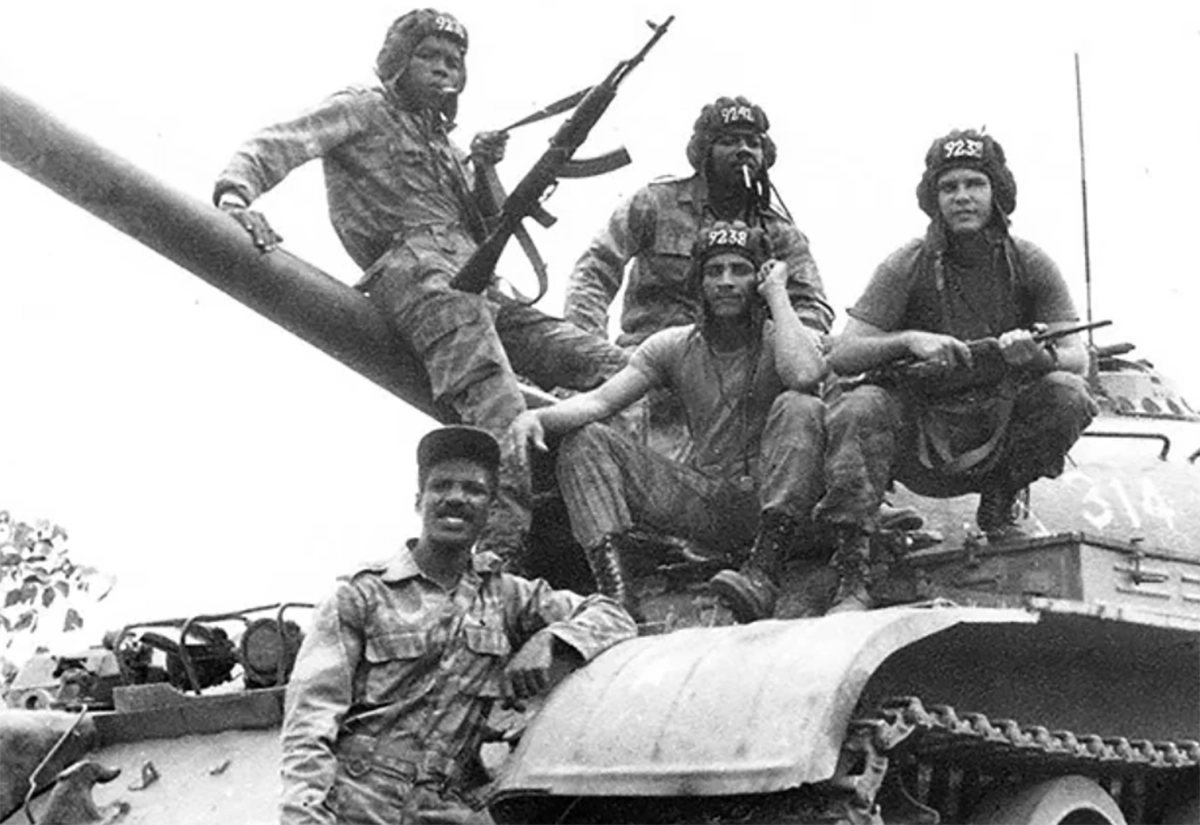
Cuban tank crew in Angola: Some 55 000 Cuban soldiers served in Angola, not as occupiers but as comrades in the struggle against apartheid and colonialism. Fidel Castro understood Cuba’s solidarity with Africa as a debt rooted in their shared history of slavery. The Cuban role at Cuito Cuanavale contributed to shifting the regional balance of power, precipitating the New York Accords of 1988 and setting Southern Africa on the path to liberation. (Photo: Wikimedia Commons)

Decolonial heritage, Castro’s centenary and the partial archive

Decolonial heritage scholarship asks us to interrogate which stories are told, which landscapes are protected and which sacrifices are remembered. SA’s official heritage landscape is rich in sites of internal resistance such as Robben Island. However, it narrates freedom as a domestic achievement when, in truth, it was a regional and transnational one.

You may also want to read

The ‘unintended’ consequences of the COVID-19 pandemic

The ‘unintended’ consequences of the COVID-19 pandemic

31 August 2020 - Updated on 2 June 2021
Passing of a mentor of two generations of activists

Passing of a mentor of two generations of activists

21 August 2020 - Updated on 1 February 2022
Fear turns journalists into cowards while Palestinians die brutal deaths

Fear turns journalists into cowards while Palestinians die brutal deaths

6 February 2026
IMAM HARON – Commemorating a lifetime of resistance and activism

IMAM HARON – Commemorating a lifetime of resistance and activism

25 October 2023 - Updated on 5 September 2024
Teacher retrenchments: My psychological disposition and the South African politics of colour

Teacher retrenchments: My psychological disposition and the South African politics of colour

5 September 2024
From Pakistan to Gaza: Why Senator Mushtaq Ahmad Khan terrifies power and Zionism

From Pakistan to Gaza: Why Senator Mushtaq Ahmad Khan terrifies power and Zionism

9 January 2026

This year’s centenary of Fidel Castro (born August 13, 1926) offers a sharp reminder. Some 55 000 Cuban soldiers served in Angola alone, not as occupiers but as comrades, driven by the conviction that Cuba owed Africa a debt rooted in their shared history of slavery. Castro understood that the liberation of one people is the unfinished business of all.

People-centred heritage, as articulated in both the NHRA and the UNESCO 2003 Convention, serves communities by giving an accurate account of the struggles that shaped their world. For the liberation veterans of Angola, Cuba, Namibia, South Africa and Russia who carry the memory of Cuito Cuanavale, formal recognition would be an act of justice. For the younger generations who inherited the democracy those veterans made possible, it would be an act of education.

A regional foundation: SADC liberation day and the case for a public holiday

Education: Formal recognition of Cuito Cuanavale within SA’s heritage framework need not be constituted as a domestic heritage declaration over foreign soil. The NHRA does not require this. What it does permit and encourage is the recognition of associative, symbolic and social significance. In 2018, the Southern African Development Community (SADC) approved the integration of Southern African Liberation History into the school curriculum across its 16-member states. It is worth noting that SA’s National Curriculum (CAPS) already includes the Battle of Cuito Cuanavale as a named case study in the Grade 12 History curriculum, within the topic of Africa in the Cold War. This is a meaningful foundation. The task now is to extend that educational acknowledgement into a broader commemorative and heritage landscape.

Public holiday: A public holiday is the most direct mechanism available to the state for embedding memory in the rhythms of daily life. The most immediate and visible step would be the formal designation of March 23 as a public holiday, anchored within Freedom Month or on March 23, and aligned with the SADC Liberation Day framework endorsed at the 2018 Windhoek Summit.

March 23 is already formally designated as a Day of Reflection in SA, and a government department marks it annually. But a Day of Reflection, by its very nature, is a quiet and official observance. It does not close schools, stop commerce or give communities a shared reason to remember. It has not entered the national consciousness precisely because it has not been given the institutional weight that a public holiday carries. However, consideration would need to be given to an already dense public holiday calendar and to ensuring broad societal resonance across diverse historical constituencies. A regionally framed liberation day carries a different weight than a purely domestic commemoration: it is shared with Angola, Namibia, the broader SADC community and Cuba.

The recommendation here is to elevate what already exists, i.e. a Day of Reflection, into a form that can reach every South African.

Cuito Cuanavale matters. It is long past time that our calendar reflected this.

Support for Angola’s UNESCO World Heritage List

In 2024, the National Heritage Council of SA, Freedom Park Museum and the Dr Agostinho Neto Foundation signed a tripartite agreement formalising collaboration on liberation heritage between SA and Angola. SA should co-endorse or support Angola’s existing nomination of Cuito Cuanavale to UNESCO’s World Heritage List, submitted in 2017 under the 1972 Convention.

This should be accompanied by a parallel joint nomination with Angola, SADC and Cuba under the 2003 Convention to recognise the living oral histories and commemorative traditions the 1972 Convention cannot capture. Together, these two pathways would give Cuito Cuanavale full heritage recognition: as landscape and as living tradition.

Annual Cuito Cuanavale memorial lecture

Alongside these formal recognition pathways, the establishment of an annual Cuito Cuanavale Commemoration Lecture, hosted on a rotational basis by South African universities, would translate institutional acknowledgement into living intellectual culture. Held on or around March 23 each year, and drawing on scholars, veterans, diplomats and community memory-holders from across the region and the Global South, such a series would give sustained academic and public depth to what the CAPS curriculum has begun.
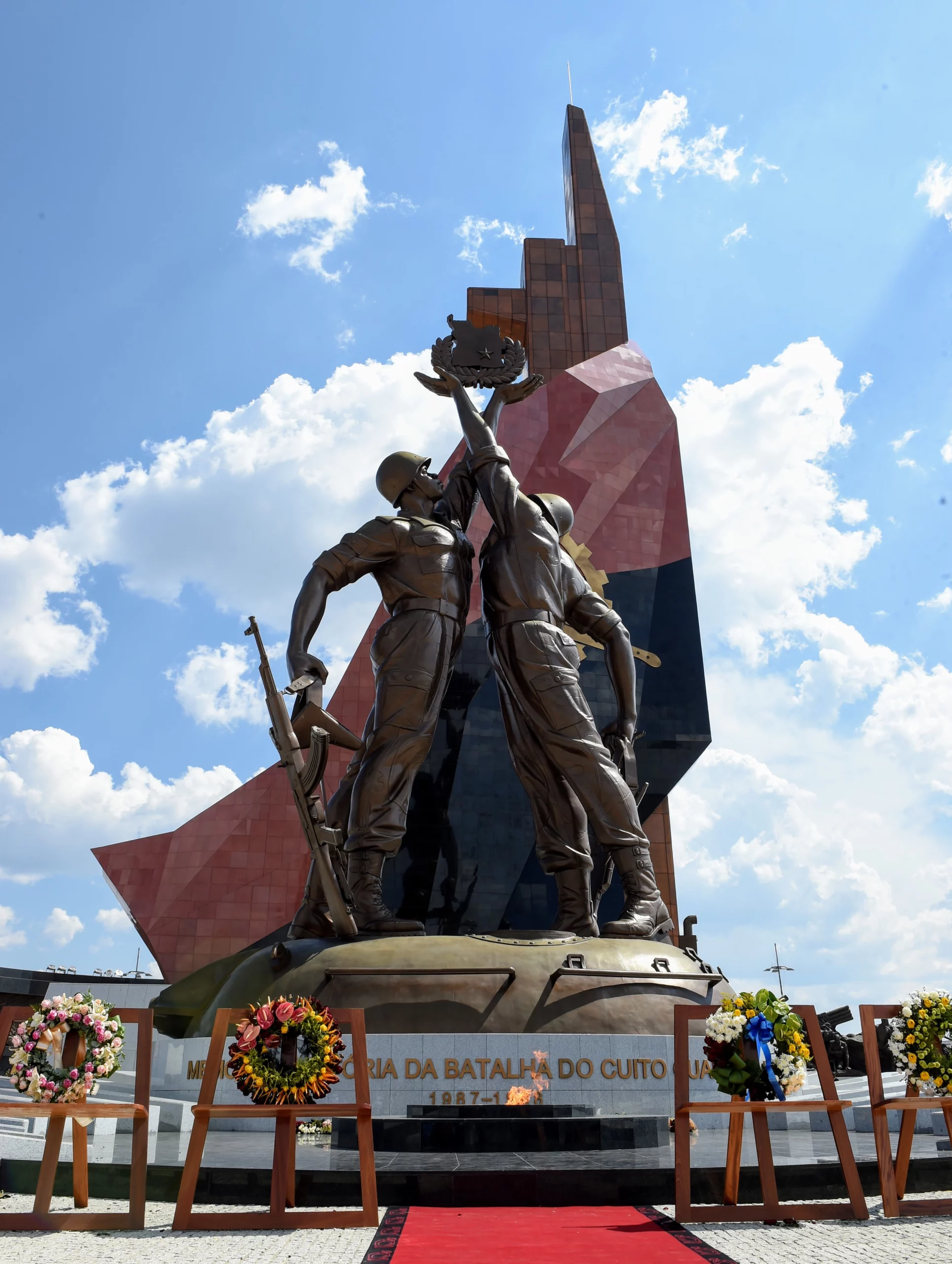
The Memorial of the Battle of Cuito Cuanavale, Angola. It is a historical landmark, located in the town of Cuito Cuanavale. It is a solemn tribute to the soldiers whose solidarity and sacrifices on March 23, 1988 helped dismantle apartheid and secure Southern African liberation. (Photo: Wikimedia Commons)

Conclusion: completing the archive

Nelson Mandela was unambiguous. Speaking in Cuba in 1991, he declared: ‘Cuito Cuanavale marks the divide in the struggle for the liberation of southern Africa.’ He was speaking as a historian of his own freedom, naming a geography that had made his presence on that platform possible. Without the outcome of Cuito Cuanavale, the ANC and PAC would not have been unbanned. Without the unbanning, there would have been no negotiated settlement. Without the settlement, no 1994.

The SA government officially commemorates March 23. President Ramaphosa issues statements. SADC has declared it Southern African Liberation Day. And yet, despite this formal recognition, Cuito Cuanavale has not entered our national consciousness. It does not resonate in the way Sharpeville or Freedom Day does. Our Freedom Month commemorations will remain incomplete until this changes.

The NHRA gives us legislative tools. The UNESCO conventions give us the international frameworks. The SADC endorsement gives us the regional mandate. What remains is the political and institutional will to complete the archive of our liberation. To acknowledge that SA’s freedom was won not only in Sharpeville and Bonteheuwel, but also on the banks of the Cuito River, by people who owed us nothing and gave us everything. The memory of the Border War remains uneven within SA, with differing interpretations persisting across communities and former combatant constituencies. Any effort to elevate Cuito Cuanavale within the national consciousness must therefore engage these layered and sometimes contested memories.

The four recommendations in this article are not grand gestures. The story of our freedom is bigger than our borders. Cuito Cuanavale deserves its place in our national account. Freedom Month 2026 is the moment to begin giving it one.

SAALIEGAH ZARDAD is a heritage practitioner based in Cape Town, South Africa. She is an executive committee member of the Friends of Cuba Society – Western Cape.

* indicates required
Choose the newsletters you'd like to receive
Advertisement

You may also want to read

Beyond the factory gates: Organised labour in South Africa’s class struggle
OPINION

Beyond the factory gates: Organised labour in South Africa’s class struggle

29 July 2026
South Asia’s implosion: Gen Z cockroaches and the end of political obedience
OPINION

South Asia’s implosion: Gen Z cockroaches and the end of political obedience

28 July 2026
When Sipho asked me to make duʿa
ISLAM

When Sipho asked me to make duʿa

28 July 2026
The nuclear leash: Washington’s deal to put Saudi back in its place
OPINION

The nuclear leash: Washington’s deal to put Saudi back in its place

25 July 2026
Spain’s World Cup triumph, Messi and the politics of Palestine
OPINION

Spain’s World Cup triumph, Messi and the politics of Palestine

24 July 2026
The myth of apolitical law
OPINION

The myth of apolitical law

23 July 2026
July 2026

July 2026

FILE SIZE : 9 MB
Download
Advertisement

Latest News

Beyond the factory gates: Organised labour in South Africa’s class struggle

29 July 2026

Languages of Care: Extending worship through art

29 July 2026

South Asia’s implosion: Gen Z cockroaches and the end of political obedience

28 July 2026

Gaza ER screening panel calls for action to support healthcare workers

28 July 2026

When Sipho asked me to make duʿa

28 July 2026

First Abu Dhabi Bank’s African opportunity could reshape Islamic finance

27 July 2026
Advertisement
Advertisement
Next Post
New flotilla continues global stand with Palestinians

New flotilla continues global stand with Palestinians

Cape Town to host global Sufi conference

Cape Town to host global Sufi conference

Why do US marines drill with Cape Metro Police?

Why do US marines drill with Cape Metro Police?

Iran’s legacy under threat amid US war

Iran’s legacy under threat amid US war

ABOUT MUSLIM VIEWS
About Us
Archives
Terms & Conditions
Privacy Policy
Contact Us
Donate to Muslim Views
NEWS
Local
National
World
OPINION
Columnists
Discussion with Dangor
Editorial
Guest Writers
FEATURES
AWQAF SA
Imam Haroon
Tributes
FINANCE
Islamic Finance
ISLAM
Eid
Faith and Practice
Family
Hajj and Umrah
Moulood
Quraan
Ramadaan
FEATURES
Arts
Books
Education
Food
Health
Motoring
Sport
Technology

© Muslim Views 2026. All Rights Reserved

Design by: Rashaad Sallie

Loading...
No Result
View All Result
  • NEWS
    • Local
    • National
    • World
  • OPINION
    • Columnists
    • Discussions with Dangor
    • Editorial
    • Guest Writer
  • FEATURES
    • AWQAF SA
    • Imam Haron
    • Tributes
    • 1500 Years of Prophetic Legacy
  • LIFESTYLE
    • Arts
    • Books
    • Education
    • Food
    • Health
    • Motoring
    • Sport
    • Technology
  • FINANCE
    • Islamic Finance
  • ISLAM
    • Eid
    • Faith and Practice
    • Family
    • Hajj and Umrah
    • Moulood
    • Quran
    • Ramadaan
  • ARCHIVES
  • DONATE