
























![The market-builder who restrained the market [Part 2]](https://muslimviews.co.za/wp-content/uploads/2026/08/PHOTO-2026-08-25-17-16-32-360x180.jpg)
![The merchant preceding the Prophetic mission [Part 1]](https://muslimviews.co.za/wp-content/uploads/2026/08/01-360x180.jpg)








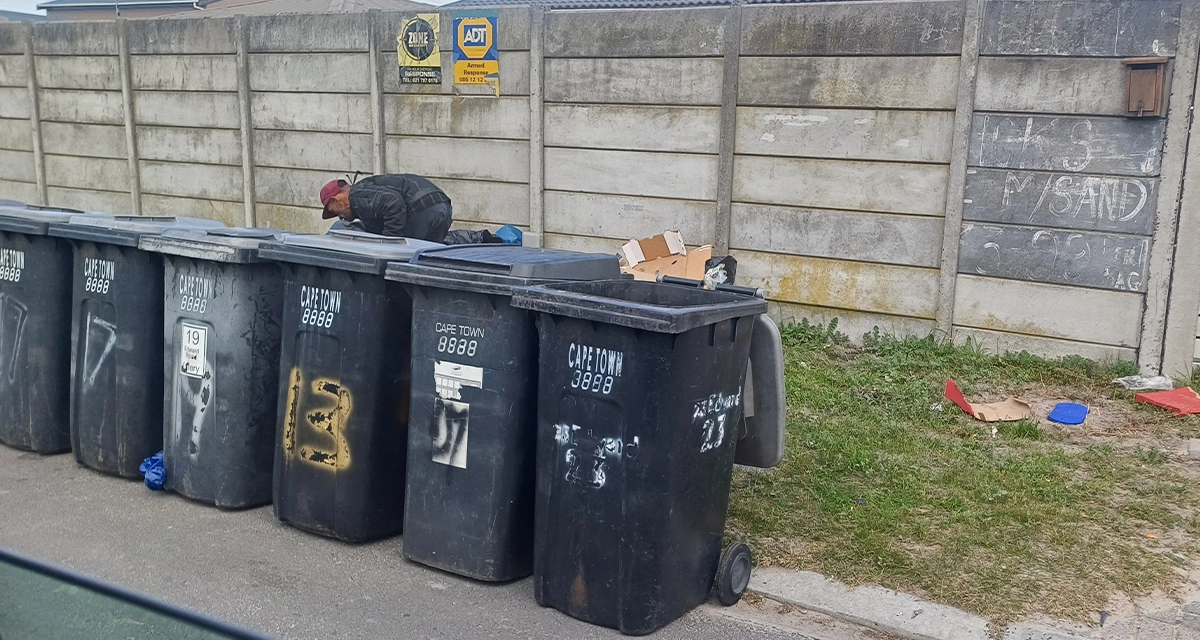

When Sipho asks to be remembered in duʿa, a brief exchange outside a gate becomes a lesson in dignity, trust and neighbourliness. His story challenges us to see poverty without romanticising it and to turn strangers into neighbours.
By ADNAAN ADAMS
Professor Aslam Fataar’s reflection on the qalb salim, the sound heart, and its call to turn strangers into neighbours found an unexpected expression outside my gate.
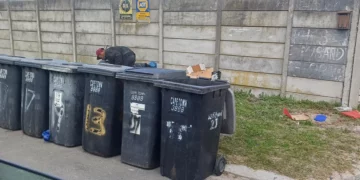
Sipho, not his real name, “operates”, as he calls it, in the road where I live. On refuse-collection days, he moves residents’ bins to a central point for the municipal truck. First, he removes recyclable plastic and cardboard, taking them to a nearby facility in exchange for a small amount of money. From our conversations, I have learnt that, on a good morning, Sipho might make between R60 and R70. He spends the rest of the week seeking small jobs and doing whatever work he can to survive.
Sipho has gradually shared parts of his life with me. His marriage ended during a difficult period when he was convicted of possessing an illegal firearm and imprisoned. After his release in the early 2000s, he rebuilt his life through gardening and other work in Diep River, Plumstead and Wynberg. He speaks fondly of an elderly Muslim couple in Wynberg for whom he worked for several years. They trusted him inside their home and in their garden. That trust enabled him to see himself as more than his past. Sipho is not merely an ex-prisoner, a homeless man or someone who searches through refuse. He is a person with a history, dignity and hope.
For more than a year, I have occasionally asked him to work in my garden, wash my car or sweep outside. On Friday, he was still working when the athaan for Maghrib sounded.
I called to him: “Sipho, I am closing the gate. I am going to make Maghrib ṣalaah.”
His reply was immediate: “Make duʿa for me too.” Of course, in Afrikaans.
His words caught me by surprise. Brief as they were, they revealed a longing to be remembered and held in prayer. He was not asking for money or work. He was asking to be remembered before Allah, perhaps not to remain outside the gate of another person’s concern. That exchange helped me understand what Professor Fataar means by turning strangers into neighbours. Through conversation, recognition and trust, Sipho no longer remains an unknown figure moving between our bins. He has a name and a story. He has made mistakes, endured their consequences and tried to rebuild his life.
This brings us to the Quranic meaning of taʿarruf in Sura Al Hujurat: “O humankind, We created you from a male and a female, and made you into peoples and tribes so that you may come to know one another.” (Sura Al Hujurat, 49:13)
To know one another requires more than recognising faces. It asks us to make our encounters meaningful. Through them, community is formed, trust restored and hope made possible. We care about another person because that person is no longer invisible. These encounters can also become classrooms. Sometimes they teach us differently, and perhaps more deeply, than formal lectures, books and even khutbahs. In certain moments, Sipho has become my teacher.
He has taught me about living with one’s past without remaining imprisoned by it. He speaks about his offence as an error of judgement and a moment of weakness. There is regret, but also the acceptance of someone who has begun to forgive himself. He does not deny what happened and refuses to allow one chapter to become his whole story.



Sipho has no permanent address or home in the conventional sense. Through his encounters with others, he finds brief experiences of belonging. At times, he has said: “Don’t give me money. Give me something to eat. I haven’t eaten for two days.”
No person should have to live this way. Sipho’s resilience must never become an excuse to romanticise poverty or accept the inequality that makes hunger and homelessness ordinary. As Professor Fataar reminds us, neighbourliness matters, but kindness alone cannot correct the injustices that deny people dignified work, decent housing and public institutions that protect their wellbeing. Of course, we should challenge unjust systems while still learning someone’s name, listening to his story, offering food without humiliation and remembering him in our prayers.
The lesson Sipho offered me outside my gate is that we must learn to live better through the quality of our encounters. The sound heart is revealed not only in what we believe, but in whom we notice, whom we welcome and whom we remember before Allah.
Yesterday, Sipho asked me to make duʿa for him. I did. But perhaps the deeper truth is that, through that request, he also made me examine my own heart.
Sometimes the stranger standing outside our gate is not merely someone waiting to be helped. Sometimes he is also a teacher, inviting us to become more human.
Adnaan Adams is the founder and director of The Muslim Thinker (www.themuslimthinker.co.org) and can be reached on 083 687 0559.


