










![Does ta’wīl mean interpretation or fulfilment? A Quranic reassessment [+video]](https://muslimviews.co.za/wp-content/uploads/2026/10/Tawil-Kaskas-360x180.webp)

















![Why becoming a wealthy Muslim is commendable in Islam [+videos]](https://muslimviews.co.za/wp-content/uploads/2026/09/Muslim-Trade-Business-1-360x180.webp)







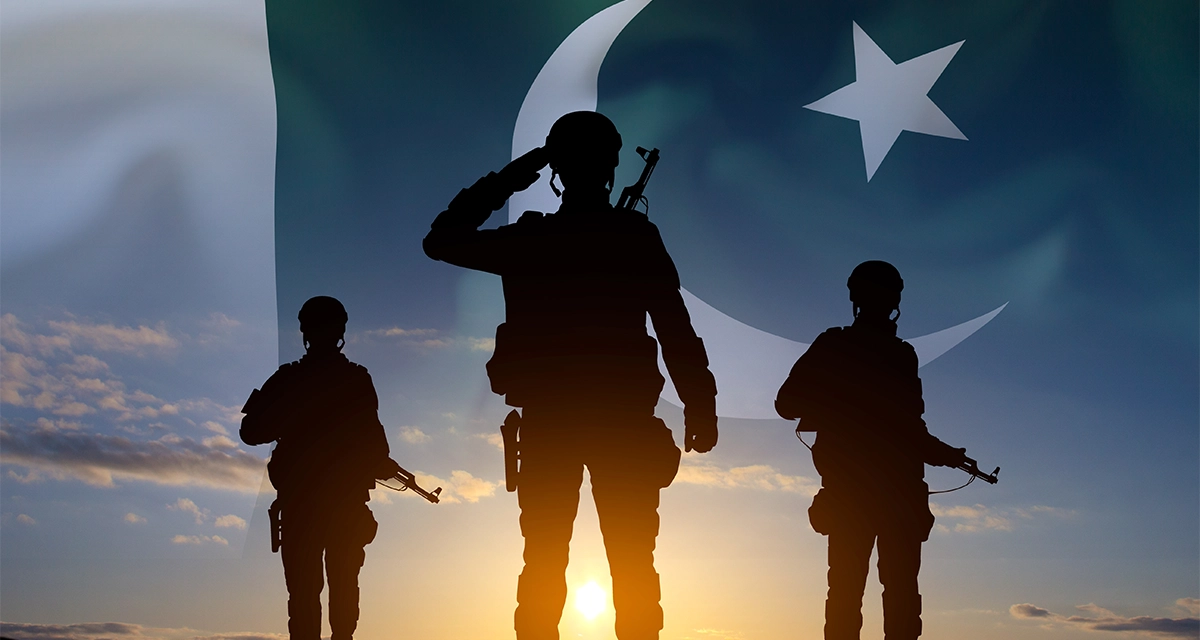

‘Rulers who forge legitimacy through foreign conflict eventually perish by the fires they ignite. Islamabad’s generals, Washington’s strategists, Modi’s fascists, and Tel Aviv’s mass murderers all draw from the same manual…’
By JUNAID S. AHMAD
As the Pakistan–Afghanistan border burns again, history plays its cruellest trick — Pakistan’s own creation has become its nemesis, and Washington watches from the wings, script in hand.
What unfolds is not new geopolitics but the resurrection of an imperial formula: rent, repression, and recycled chaos.
The frontier between Pakistan and Afghanistan has once again erupted into fire. Over recent weeks, Pakistani airstrikes deep into Afghan territory and retaliatory Taliban assaults on border outposts have pushed the two erstwhile allies to the brink of sustained conflict. Civilians flee the bombardment; funerals follow every ‘precision strike’. Kabul accuses Islamabad of aggression; Pakistan claims self-defence against ‘terror sanctuaries’.
The irony is complete. The Taliban — once nurtured, funded, and shielded by Pakistan’s military establishment — now stand declared as ‘enemy number one’. The same generals who armed these militants to project power across the Durand Line now accuse their former protégés of harbouring terrorists. The very charge once levelled by Washington against Pakistan — that it sheltered extremists who bled NATO in Afghanistan — has become Islamabad’s refrain. The hunter is now the hunted; the pupil, the adversary.
The reborn Cold War
What unfolds between Washington and Islamabad is not a new chapter but a grotesque rerun of an old Cold War film — the same scriptwriters, the same machinery of patronage, and a fresh cast of casualties. The tragedy lies not in the repetition, but in the delusion that the ending might change.
The roots are familiar. In the 1980s, Washington, Islamabad, and Riyadh midwifed a militant ecosystem to bleed the Soviet Union. The infrastructure — training camps, smuggling routes, ideological pipelines — did not dissolve with victory; it metastasised. Pakistan’s generals, drunk on ‘strategic depth’, mistook control for containment. Washington, for its part, saw a compliant subcontractor for empire. But ideologies, once weaponised, outlive and remake their patrons.
Regime change: The manufactured coup
That same imperial script resurfaced in April 2022: a regime-change operation dressed as parliamentary procedure. The choreography was Washington’s; the execution, Pakistan’s generals’.
Imran Khan’s offense was not misgovernance but defiance. He refused to cede foreign policy to embassy diktats, rejected US basing rights, and spoke of sovereignty as substance, not slogan. In the client-state lexicon, such independence is heresy.
For Washington, his autonomy required correction. For Rawalpindi, it demanded elimination. The result was a coup in constitutional costume — orchestrated defections, prearranged votes, and the swift resurrection of Pakistan’s old comprador class: rulers fluent in obedience, loyal to generals, deferential to Washington, and contemptuous of the public will.
But the coup-makers misjudged the people. Far from fading, Khan’s popularity swelled into mass revolt. Two years of imprisonment, show trials, and censorship only sanctified him as a symbol of resistance. Across Pakistan, from Karachi’s alleys to Khyber’s hills, the sentiment is unmistakable: the state is occupied, its sovereignty auctioned, its rulers bought.
The generals may have silenced Khan’s voice, but not his echo. It reverberates across a nation denied dignity — a roar that grows louder with every crackdown.
The escalation machine
Cornered at home, Pakistan’s generals have reached for their oldest sedative: war. The clashes with Afghanistan are not accidents of geography but instruments of political survival. Conflict rallies the flag, distracts from repression, and cloaks tyranny in patriotism.
Yet this gambit is suicidal. In Khyber Pakhtunkhwa and the tribal belt, ‘precision strikes’ translate into funerals. Entire Pashtun neighbourhoods are pulverised under the pretence of counterterrorism. Each operation exacerbates existing alienation and indignation.
In Rawalpindi’s war rooms, the old distinction between ‘good’ and ‘bad’ Taliban — the linchpin of Pakistan’s generals — has dissolved into farce. The ‘good’ ones served Pakistan’s ruling elite abroad; the ‘bad’ ones rebelled at home. Now the lines blur entirely, and every strike feeds the cycle of revenge.
You may also want to read



As the state revives tired, racist tropes about Pashtuns and Afghan refugees as ‘closet terrorists’, it manufactures the illusion of unity while tightening its grip on power. There will be no consent — but the establishment will carry on regardless.
Enter India: The fractured ally
And then there is India — Washington’s supposed ‘democratic pillar’ in its Indo-Pacific strategy. The Pentagon’s unease with New Delhi is unmistakable. Modi’s meeting with Xi Jinping at the SCO summit and India’s refusal to halt Russian oil imports signalled a truth the empire resents: India may be a partner, but not a pawn.
Trump’s revived tariffs on Indian goods and the Pentagon’s renewed courtship of Pakistan’s generals are Washington’s retaliation — a reminder that pliancy remains the true currency of alliance.Yet geopolitics, like morality, thrives on contradiction. While the Pentagon re-embraces Pakistan, Washington’s Zionist establishment clings to Modi’s India. Netanyahu and Modi are ideological twins — ethno-nationalists who have normalised state terror into policy. The ‘Israel–India axis’ feeds on fanatical Islamophobia and the mythology of civilisational supremacy.
Washington, ever the moral contortionist, arms both sides and calls it balance: financing genocide and occupation in Palestine, condoning repression in Kashmir, and labelling the wreckage ‘stability’.
China, leverage, and the balancing game
Pakistan’s renewed intimacy with Washington also reflects unease with Beijing. The China–Pakistan Economic Corridor (CPEC), once hailed as salvation, has become a source of anxiety. China’s fiscal discipline constrains the generals’ graft; US patronage restores their comfort.
Now Islamabad plays its favourite game — auctioning sovereignty to the highest bidder. For Washington, it’s a cost-effective move: pressure on Beijing, leverage over India, and volatility to justify presence. For Pakistan’s elite, it’s another rent stream — national dignity traded for foreign dollars.
The result is a hollowed republic of 240 million citizens, ruled by a praetorian caste that confuses survival with subservience.
The logic of blowback
If Pakistan’s generals imagine they can wage war abroad and enjoy peace at home, they are deluding themselves. Every counter-terror campaign breeds its counter-history. Each time the state paints Pashtuns as complicit in militancy, it forges another rebellion. The ‘graveyard of empires’ next door may soon become a mirror. The establishment that once brokered imperial wars now risks becoming their collateral.
Curtain call
History’s verdict is unsparing to those who mistake domination for durability. Rulers who forge legitimacy through foreign conflict eventually perish by the fires they ignite. Islamabad’s generals, Washington’s strategists, Modi’s fascists, and Tel Aviv’s mass murderers all draw from the same manual — manufacture enemies, monetise fear, and call it governance.
But the script is exhausted. The actors are over-rehearsed. The audience — bloodied, displaced, and wiser — no longer confuses spectacle for statecraft. The repetition of tragedy is not destiny but complicity. And if the same patrons keep bankrolling this performance, the curtain will rise once more — on a conflagration that consumes both the puppets and their patrons alike.
Professor Junaid S Ahmad teaches Law, Religion, and Global Politics and is the Director of the Centre for the Study of Islam and Decolonization (CSID), Islamabad, Pakistan. He is a member of the International Movement for a Just World (JUST), Movement for Liberation from Nakba (MLN), and Saving Humanity and Planet Earth (SHAPE).