










![Does ta’wīl mean interpretation or fulfilment? A Quranic reassessment [+video]](https://muslimviews.co.za/wp-content/uploads/2026/10/Tawil-Kaskas-360x180.webp)

















![Why becoming a wealthy Muslim is commendable in Islam [+videos]](https://muslimviews.co.za/wp-content/uploads/2026/09/Muslim-Trade-Business-1-360x180.webp)




There are some people whose passing leaves an legacy that endures due to the profound impact they had on others. MAHMOOD SANGLAY reflects on multiple tributes received in honour of Mohamed Abbas Rumaney.
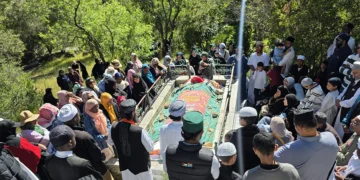
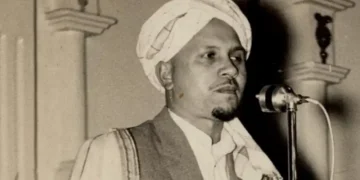
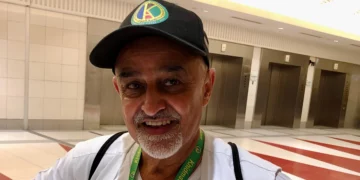
Many of his peers simply knew him as Abbas bhai. Since his passing on June 4, 2026 at the age of 76, many of his children, grandchildren, relatives, friends and colleagues contributed tributes a man who touched their lives deeply. Their sentiments reveal a devoted husband, father, grandfather, uncle and friend. They also speak of a man whose greatest achievement lay in the lives he shaped, the opportunities he created and the institutions he helped build.

His eldest daughter, Kariema Khalifey, remembers her father as her hero, mentor and greatest source of strength. Throughout her career in education, she turned instinctively to him for advice, recalling one lesson that remained with her for life. Early in her teaching career he encouraged her to volunteer her services without expecting payment, assuring her that sincere service is never wasted. Years later, when a permanent post became available, that very gesture helped earn the confidence of the school community.
She also reflects on the final years of his life, when the family rallied around him following his diagnosis of lung cancer in 2021. Caring for him became a privilege and on the morning of his passing, she promised to preserve the unity of the family he had spent a lifetime nurturing. Surrounded by his loved ones, with his son joining from Makkah during Hajj to recite the Kalimah into his father’s ear, Abbas bhai departed this world embraced by his loved ones.
Her reflections find a natural echo in those of her brother, Basharat, who describes a father whose greatest lessons were taught through example rather than words. As the eldest and only son among six siblings, Abbas bhai devoted decades to caring for his own parents, remaining by his father’s side for fifty years and his mother’s for seventy-one. Basharat regards that devotion as the defining lesson of his father’s life.

Within his home, Abbas bhai believed that every problem could be solved through careful thought and planning. “Failing to plan is planning to fail” became a principle that guided his children long before they encountered it in the workplace. He also taught them that while the people they met might become friends, those welcomed into their home became family. Basharat treasures their final conversations before and during his Hajj. His father first told him simply, “I am proud of you,” and their final exchange ended with the heartfelt prayer, “Hajj Maqbool.”
These values of service, humility and unwavering love would find their fullest expression in the memories of Abbas bhai’s grandchildren, who was also their teacher, mentor and trusted companion.
They recall the gift of every encounter as a lesson. Uthmaan Sayed says he never left his grandfather’s company without learning something new, whether about faith, life or sport. His love for Surah Ar-Rahman ensured it would forever hold a special place in his grandson’s heart, while his passion for cricket inspired a lifelong love of the game. Although not a hafidh himself, Abbas bhai possessed a deep love for the Qur’an and devoted many years conveying its values.
For Hawabi Khalifey, he was her superhero, role model and safe place. She remembers his warmth, humour and remarkable ability to make every grandchild feel they were his favourite. The ordinary moments—sharing conversations, sitting beside him after a long day, or caring for him during the final years of his illness—became extraordinary in hindsight. She also remembers a man whose generosity was instinctive and discreet. He believed deeply that good deeds required no audience, a principle reflected in the many quiet acts of kindness that only came to light after his passing.
You may also want to read





Another grandson, Umar Sayed, recalls advice that revealed its wisdom only years later. When worried about an examination, he was told: “Once you master your languages, every other subject will click into place.” It was a lesson not merely about education but about understanding before memorising. Umar also speaks with pride of his grandfather’s role in co-founding the Colour-Coded Qur’an, a work that has enabled countless Muslims around the world to improve their recitation of the Holy Qur’an.

That achievement assumes even greater significance in the tribute of Hafidh Reedwaan Ismail, Abbas bhai’s fellow trustee at the Hafiz Academy & Quran Literacy Trust. He traces the Academy’s origins to a single telephone call in 1998, when Abbas bhai proposed establishing a free hifdh school. Faced with concerns about funding, his response was characteristically simple: “The money will come.” Those four words reflected an unwavering trust in Allah that became the foundation of the Academy.
Hafidh Reedwaan credits Abbas bhai’s vision and leadership with helping transform an idea into an institution that has benefited generations of students while giving rise to the internationally recognised Colour-Coded Qur’an. Equally important was his conviction that Islamic institutions should preserve their dignity through excellence, innovation and responsible stewardship rather than dependence on continual appeals for support.
The same qualities that inspired his family—wisdom, humility, generosity and steadfast faith—would leave an equally profound impression on colleagues, friends and the wider community, many of whom came to rely on his counsel long before they realised how deeply it had shaped their own lives.
Abbas bhai’s influence extended well beyond his family and the institutions he helped establish. Former Cravenby Secondary School principal Solly Khan remembers him as one of the most perceptive and emotionally intelligent people he had ever known. Although he had had no formal tertiary qualifications, Abbas bhai possessed an instinctive understanding of people and situations that made him a trusted adviser during Solly’s early years as principal. His adage that “the vulture is a patient bird” taught the value of patience, sound judgement and waiting for the right moment to act. Solly also recalls his extraordinary generosity and hospitality, his deep commitment to education, and his remarkable ability to connect people with opportunities. Long before networking became fashionable, Abbas bhai quietly opened doors for others.
Yousuf Atcha, a trustee of Husami Masjid, remembers working alongside Abbas bhai at Husami Madressah. As an executive committee member of the Cravenby Muslim Educational and Cultural Society and a member of the madressah subcommittee, Abbas bhai played an instrumental role in the institution’s growth. He applied his business acumen to fundraising, strengthened its finances and worked cooperatively to appoint qualified, well-trained teachers, thereby improving teaching and learning standards.
Atcha recalls that Abbas bhai’s love for children and commitment to education were matched by deep compassion for the poor and underprivileged. Although he could appear fiery and strongly assertive, beneath that exterior was a warm-hearted, charismatic man with a keen sense of humour. For Atcha, this combination of firm conviction, generosity and goodwill defined Abbas bhai’s service to Husami and the wider community.
Waheed Badroedien’s friendship with Abbas bhai stretched across more than five decades. First his madrasah teacher, then his colleague, travelling companion and finally one of his closest friends, Waheed remembers a man who taught lessons that reached far beyond the classroom. Whether managing a workplace, travelling together through India or confronting illness with quiet dignity, Abbas bhai consistently led through personal example. Cancer, heart disease and diabetes never diminished either his gratitude or his concern for others. To Waheed, he remained until the end a teacher, an older brother and a steadfast friend.
Several contributors describe Abbas bhai as someone who instinctively created opportunities for others. Omar Razzak reflects that he seemed to spend his life opening doors, introducing people who could help one another, creating business opportunities and helping build institutions that would outlive him. Razack Abbas similarly remembers a principled man whose advice often revealed its wisdom only years later, and whose greatest satisfaction came from guiding others towards employment, education and purposeful lives.
His niece, Zeenat Abbas, recalls an uncle whose home revolved around family, conversation and belonging. As she grew older, childhood visits matured into discussions about faith, parenting and responsibility. She admired the respect with which he treated young and old alike, encouraging meaningful conversation while reminding parents that their greatest investment was time spent with their children. Like so many others, she only fully appreciated the extent of his quiet generosity after his passing.
These tributes converge on a single truth: Abbas bhai measured success not by wealth, status or recognition, but by people nurtured, families strengthened and opportunities created. His legacy lives in children taught to honour their parents, grandchildren inspired to serve others, students whose lives were transformed through Qur’anic education, and countless individuals whose paths changed because of his wisdom, generosity and unwavering faith.
They also converged on values he upheld in the years he worked as marketing director of Muslim Views. As our colleague he prioritised loyalty, honesty and an extraordinary open-mindedness. We recognised that beneath the “rough diamond” exterior he always offered compassion, wisdom and a sharp sense of discretion.
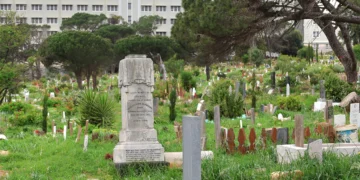
We all join in praying for Allah’s forgiveness for his shortcomings, acceptance of every act of sincere service rendered in the path of Islam, illumination and expansion of his grave. May the Qur’an a perpetual source of light for him, and may he attain the highest ranks of Jannatul Firdaus. Ameen.