




![Does ta’wīl mean interpretation or fulfilment? A Quranic reassessment [+video]](https://muslimviews.co.za/wp-content/uploads/2026/10/Tawil-Kaskas-360x180.webp)






![Why becoming a wealthy Muslim is commendable in Islam [+videos]](https://muslimviews.co.za/wp-content/uploads/2026/09/Muslim-Trade-Business-1-360x180.webp)




In the concluding part of Reclaiming Agency, DR ISMAIL ADAM PATEL argues that Muslims must recover an authentically Islamic public vocabulary, revive the classical concept of ribat, and build institutions, scholarship, technology and civic leadership that transform devotion into sustained collective action.
Part Three
The marginalisation of Muslim agency — and the answer of al-Aqsa
Let me show you practically how this works. When we stand for Palestine, for Masjid al-Aqsa, we have gravitated to couching the whole matter in the language of international law, human rights, humanitarianism, decolonial theory. Now hear me clearly: those vocabularies are not our enemies. International law gave South Africa its doorway into The Hague, and we need to use every one of them.
But they cannot be the only language we speak. These are not neutral, empty containers into which any cause may be poured. They are a particular tradition’s vocabulary, and they carry that tradition’s judgements smuggled inside them. They will receive our grievance only after it has been translated out of the terms in which we actually live it, stripped of Allah, stripped of the sacred, until it is safe. The moment that borrowed language becomes the only one we are permitted, our cause has already been quietly disarmed.
When Muslim activism is told it may only speak in someone else’s vocabulary, our own agency is quietly marginalised — relocated from the centre of the struggle to its suspect margins.
I call this a double move: erasure and relocation. First, a century of Muslim mobilisation for Palestine, long before the Western left adopted the cause, is erased from the record. Then, when our faith-driven activism grows too large to ignore, it is relocated into a suspect category, that is branded as the ‘Islamisation’.
Do you see the trap? We are first told our solidarity does not exist, and then told it is dangerous. We are erased, and then we are feared. This is how Muslims are taught to be embarrassed by the very faith that makes them strong.
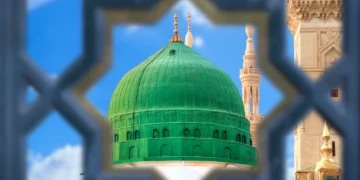
And it is precisely Muslimness in this context that Masjid al-Aqsa has for fourteen centuries, done something no human rights treaty can do: it has bound a Malay fisherman, a Nigerian scholar, a Bosnian soldier, and a Cape Town imam into a single body that feels one wound. It is the anchor of an ummatic solidarity that crosses every border the modern nation-state has tried to impose on us. This is exactly what I mean when I say Islam is the name around which a political subject can assemble. Al-Aqsa is not a sentiment we add to the cause. It is the very thing that makes an Ummah. To surrender it is not to be moderate. It is to consent to our own dismemberment.
They ask us to drop the one language in which two billion people are already fluent. Why would we surrender our strongest weapon to sound more polite to people who were never going to be persuaded anyway?
So, the recovery here is not complicated, it is simply to stop being ashamed. To centre al-Aqsa [and all issues with Muslimness] is not narrowness and it is not bigotry; it is the recovery of a solidarity that was global before ‘global’ was fashionable. And it costs us nothing to speak the language of law and rights alongside it. We can carry both. The strong do not have to choose; they refuse the false choice. The moment we stop apologising for our own frame of reference, we have already begun to win back the agency they tried to take.
From ritual to action — Reclaiming ribat
So how do we move from feeling to force? I want to give you one word from our own tradition that does the whole job. Not a borrowed word. Ours. The word is ribat.
Classically, ribat meant standing guard at the frontier, the murabit and the murabita, the man and the woman who held the line. The Prophet ﷺ said that a single day of ribat is better than the world and all that is upon it; and that while every other person’s deeds are sealed at death, the deeds of the one in ribat keep multiplying until the Day of Resurrection.
And here is the point that should change how each of us works on Monday morning. One can be engaged in ribat from near and from far.
Those at a distance are not exempt from ribat. The one who funds the guard, who carries the narrative, who refuses the lie, who protects the heritage — they too are murabitun. Ribat reaches Gaza from Cape Town.
This is the bridge from ritual to action, and it is the call of the hour. Ribat is worship that is also work. It is ʿibada you cannot perform sitting down. It fuses the thing we are good at, devotion with the thing we keep failing at, sustained, organised, collective defence. It tells the financier, the journalist, the teacher, the coder, and the imam that each of them holds a section of the wall, and each must put faith into practice.
Notice, too, that ribat is itself an act of de-privatisation. It takes the most private thing, the niyyah in the heart and binds it to the most public thing, the defence of a frontier. The privatised Muslim believes worship ends at the prayer mat. Ribat declares that worship continues into the marketplace, the ballot box, the newsroom, the codebase and beyond. It is the precise word, ribat, our tradition gives us for refusing the bargain that said faith must stay indoors.
Feel how this single word dissolves the whole problem we opened with. The helplessness vanishes the instant a person learns that their donation, their vote, their boycott, their truth-telling online is ribat. Part of our faith that is rewarded as guarding the sacred frontier. Suddenly there is no such thing as a Muslim who can do nothing. Every single one of us is handed a post on the wall. Ribat turns two billion spectators into two billion guards.
Revival — What this room can actually do
I promised you practical steps, not just diagnosis. Real change does not begin with seizing the state. It begins with an oasis of small, independent, networked bodies of committed people who start building the new reality without waiting for any government’s permission. You, in this room, are exactly such an oasis.
So here is the work and notice that every item is already being done, successfully, by Muslims somewhere. None of this is theory. Notice, too, that every single item is a way of taking the faith back out of the private heart and into the public world and reclaiming the empowering nature of Islam. The programme below is de-privatisation and inspiration made concrete.
- End the sedative khutbah.
Whether the sermon is on Gaza, on Islamophobia, or on a social ill at home, a sermon that ends in tears and nothing else has done its job badly. It is a sedative. Every khutbah of grief must end in one specific, nameable action the congregation will take before the next Jumuʿah: a boycott target, a fund, a letter, a meeting. Turn feeling into a task while they are still standing in the rows.
- Reframe ribat from the mimbar.
Teach our community that the boycott, the donation, the vote, the protest, the countering of a lie online, these are ribat, they are ʿibada, they carry the reward of guarding the frontier. Give the everyday act its sacred weight back.
- Refuse to secularise the pulpit.
Never drop al-Aqsa or a Muslim centric issue anywhere from the khutbah. The masjids where al-Aqsa is named every Friday are the ones keeping the cause alive. Be one of them and refuse the pressure to make your own minbar safe for the oppressor and silent for the victims.
- Build institutions, not just moments.
A protest is an event; an institution is a force. South Africa’s own Muslim anti-apartheid legacy, the tradition that produced people willing to fight injustice as a matter of faith, from Imam Abdullah Haron to the activists of the Call of Islam and Qibla, is living proof that durable structures outlast any single campaign. Build the think-tank, the media house, the legal fund, the school, the revived waqf.
- Master the new tools or be mastered by them.
The danger is letting the model define us while we never define it. Do not let our entire relationship with AI be that of the consumer and the surveilled. Fund Muslim technologists. Demand transparency on algorithmic bias. Treat data and code as the new frontier of ribat because that is exactly what they are.
- Use the economic weapon, because it works.
Boycotts are not gestures. Sustained, disciplined pressure has measurably hurt complicit companies, global brands have openly told their shareholders that the Middle East and ‘misperceptions of our brand’ dented their sales. This is action available to every Muslim, every day, with no permission required.
- Convert numbers into political weight.
In the 2024 British election, organised Muslim voters elected independent MPs on Gaza and shook a governing party in its heartlands; across the Atlantic, an ‘uncommitted’ movement gathered over seven hundred thousand votes. Demography is only power when it is organised. Register, bloc, negotiate, and hold representatives to account — wherever you live.
- Win the narrative.
Counter the erasure with our own scholarship, our own media, our own archive of a century of Muslim solidarity. But go further than rebuttal: do not only answer their story in their words, author our own categories. If we only ever defend ourselves in the vocabulary of those who accuse us, we have lost the argument before it begins. If we do not tell our story, in our own terms, the algorithm will tell it for us, and we have already heard what it says.
- Build the knowledge, not only the campaign.
The most durable answer to coloniality has never been a slogan; it has been an institution through a journal, a network, a school of thought that studies Muslims as thinking subjects rather than as objects of security or anthropology. That is the most durable ribat of all: fund the chairs, the journals, the research, the curricula that let a Muslim child grow up able to think about her own world in her own words, owing no apology to anyone. Coloniality lives first in the mind; the deepest decolonisation is epistemic.
And one piece of inner work for all of us. None of this outer work holds without inner transformation. What the Qur’an states plainly: Allah does not change the condition of a people until they change what is within themselves.
إِنَّ اللَّهَ لَا يُغَيِّرُ مَا بِقَوْمٍ حَتَّىٰ يُغَيِّرُوا مَا بِأَنْفُسِهِمْ
Hear it correctly. Allah is announcing the agency within each and every one of us. We have within us to change. Further, this verse is telling us that no power on earth can keep a people down once they have changed what they understand themselves to be. Once they stop accepting the world’s description of them and recover the knowledge that they are a people Allah addresses, and therefore a people who can act. The inner change is not only to repent for the hereafter. It is the engine that will construct a Muslim worldview dare I say, a Muslim world.
You may also want to read




Close — The wall is long enough for all of us
I began with two prayers: the one we raise on Friday, and the silence that follows it. Let me end by asking us to close the gap between them.
I have argued that our faith was not weakened, it was privatised, walled out of history by an order that could live with Islam as a religion but never as a people that acts. I have argued that we ourselves completed that work by turning a revolutionary faith into a sedative, when it was always meant to be a stimulant and a catalyst. And I have tried to say plainly how that double injury is undone: by naming the bargain aloud, by speaking our own words in public, by building our own institutions, by accepting real cost for public goods, by raising households that expect their Islam to be consequential and, above all, by recovering ribat as the name for worship that refuses to stay indoors.
I have argued that we are not too small to matter, but too whole to be absorbed, which is why we are feared. And ribat tells us that the guarding of what is sacred is not the duty of the few, but of every one of us, from near and from far.
Gaza did not only reveal the cruelty of our enemies. It exposed our slumber. The question Gaza puts to this room is not ‘who did this to us?’ It is ‘what are we doing about it?’
The challenges are many, but so are we and each one of us can find a place along the wall of resistance: the imam and the coder, the donor and the teacher, the lawyer and the mother raising children who will not be embarrassed by their deen. If each of us takes our post, wherever our gift and our emotion already pull us, then the feeling we began with stops being wasted. It is converted, at last, into force.
Wa’l-ḥamdu lillāhi rabbi’l-ʿālamīn. Was-salāmu ʿalaykum.
Dr Ismail Adam Patel is the founder of the UK-based NGO, Friends of Al-Aqsa, and former visiting research fellow at the University of Leeds. He is a leading voice on Palestinian liberation and pivotal in mobilising civil society. His works include A Brief History of Palestine (Al-Aqsa Publishers, 2023), Madīna to Jerusalem: Encounters with the Byzantine Empire (Kube Publications, 2005), The Muslim Problem: From British Empire to Islamophobia (Palgrave Macmillan, 2024), and Treasures of the Holy Sanctuary (Turath Publications, 2026). He is committed to exploring decolonial thought and advancing Critical Muslim Studies.
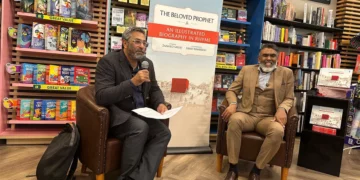
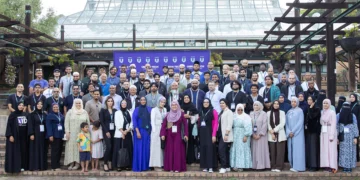
This is a transcript of a speech given Dr Ismail Adam Patel to Muslim scholars and activists at Monarch Hotel in Rosebank, Johannesburg on June 17, 2026. The event was hosted by Jamiat Ulama South Africa
Click here to read Part 1 and here to read Part 2.