




![Does ta’wīl mean interpretation or fulfilment? A Quranic reassessment [+video]](https://muslimviews.co.za/wp-content/uploads/2026/10/Tawil-Kaskas-360x180.webp)








![Why becoming a wealthy Muslim is commendable in Islam [+videos]](https://muslimviews.co.za/wp-content/uploads/2026/09/Muslim-Trade-Business-1-360x180.webp)




As xenophobic rhetoric increasingly targets Muslim institutions, events and education, this commentary warns that Islamophobia is being smuggled into South African public discourse under the guise of civic concern and national security.
By SAYED RIDHWAAN MOHAMED
South Africa is currently navigating a fragile socio-economic climate, and public discourse is increasingly dominated by debates over immigration, border control, and national security.
While these are legitimate topics for a democratic society to grapple with, a deeply concerning trend is emerging from the loudest voices in the room. Under the pretence of “sending foreigners out of the country” and protecting domestic interests, a toxic and entirely different prejudice is taking root. We are no longer just dealing with xenophobia; we are witnessing the normalisation of pure Islamophobia.
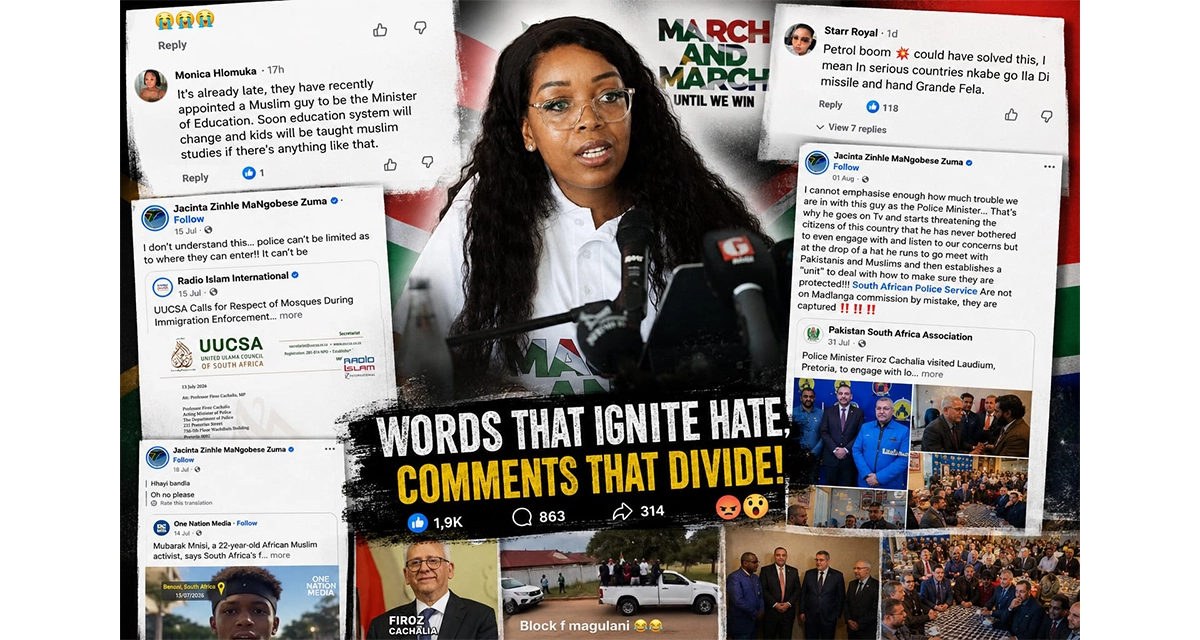
Look no further than the recent social media activities of commentators like Jacinta Zinhle MaNgobese-Zuma. When an individual with a platform and the privilege of education uses their reach to consistently spotlight, mock, and vilify a specific religious group, we must call it exactly what it is. It is reckless, it is dangerous, and it is a blatant attack on the constitutional freedoms that anchor our democracy.
The pattern of behaviour is impossible to ignore.
You may also want to read


Last year, Zinhle MaNgobese-Zuma took aim at the Palestine curriculum rolled out by the United Ulama Council of South Africa (UUCSA). This educational initiative, designed to provide historical context and teach humanitarian values, was inexplicably framed as a threat. Why should an independently developed, human-rights-focused curriculum within Islamic schools become a target for national outrage? The backlash had little to do with the content of the curriculum and everything to do with who was teaching it. It was a clear signal that Muslim institutions and their initiatives are being subjected to bad-faith scrutiny.
If the attack on the UUCSA curriculum was the warning sign, Zinhle MaNgobese-Zuma’s latest post is the blaring alarm.
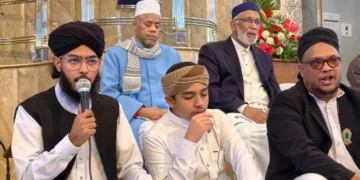
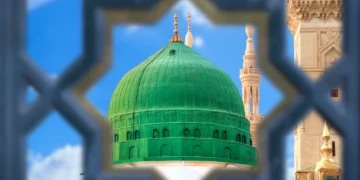
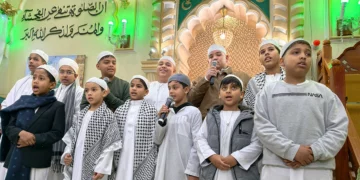
She recently uploaded a video of a local Moulood procession, a peaceful, joyous community event celebrating the birth of the Prophet Muhammad (ﷺ). In any healthy, diverse society, a religious community singing, waving green flags, and riding peacefully through their neighbourhood is a hallmark of cultural richness. Yet, this standard expression of faith was spotlighted and framed in a way that invited suspicion and ridicule.
The most horrifying aspect of this incident is not just the post itself, but the vile echo chamber it has cultivated. Zinhle MaNgobese-Zuma has allowed her comments section to degenerate into a terrifying flurry of hate speech against the Muslim community. Emboldened followers are openly calling for petrol bombings, inciting murder, and questioning why Muslims are even allowed to practise their religion in South Africa.
This is where the line between ignorance and incitement is crossed. When a platform allows threats of mass violence and arson against a religious group to fester unchecked, the account holder is complicit.
If Zinhle MaNgobese-Zuma is as educated as her public persona suggests, she should know better than to be so breathtakingly reckless. Education demands a baseline of critical thinking and civic responsibility; it is not a shield behind which one can casually stoke sectarian violence.
We must critically examine this pretence of “putting South Africa first”. How does targeting a local Moulood procession address undocumented immigration? How does attacking a syllabus about Palestine solve unemployment or crime? It doesn’t.
Every Muslim event, every community gathering, and every Islamic educational initiative cannot be spotlighted and treated as a national security threat. The Muslim community has deep, historical roots in South Africa and remains an integral, contributing part of our society. To suddenly frame this community as a foreign, invading entity that needs to be feared or violently eradicated is a gross distortion of reality.
We are facing a dangerous intersection where xenophobic rhetoric is being used as a Trojan horse to smuggle Islamophobia into mainstream conversation. South Africans must firmly reject this. Our Constitution guarantees the freedom of religion, belief, and opinion. It protects the right to peaceful assembly.
What we are seeing in these comment sections is not patriotism; it is pure Islamophobia. It is a manufactured panic designed to stoke unnecessary tension in a country that already has enough to deal with.
We cannot allow reckless instigators to tear at the seams of our social cohesion. It is time to hold these voices accountable and remind them that South Africa belongs to all who live in it, and our diversity is a right to be protected, not a weapon to be used against us.
Sayed Ridhwaan Mohamed is a South African community journalist, researcher and Honours graduate in Islamic Studies. A steadfast advocate for humanitarian rights and global justice, he lends his expertise to numerous committees specialising in interfaith advocacy and the advocacy of human rights in Palestine and beyond. He currently serves on the executive committee of the Cape Town Ulama Board, is an executive member of the Sunni Ulama Council (Cape), and is a co-founder of the Ahlus Sunnah Media Network.