













![Does ta’wīl mean interpretation or fulfilment? A Quranic reassessment [+video]](https://muslimviews.co.za/wp-content/uploads/2026/10/Tawil-Kaskas-360x180.webp)


















![Why becoming a wealthy Muslim is commendable in Islam [+videos]](https://muslimviews.co.za/wp-content/uploads/2026/09/Muslim-Trade-Business-1-360x180.webp)





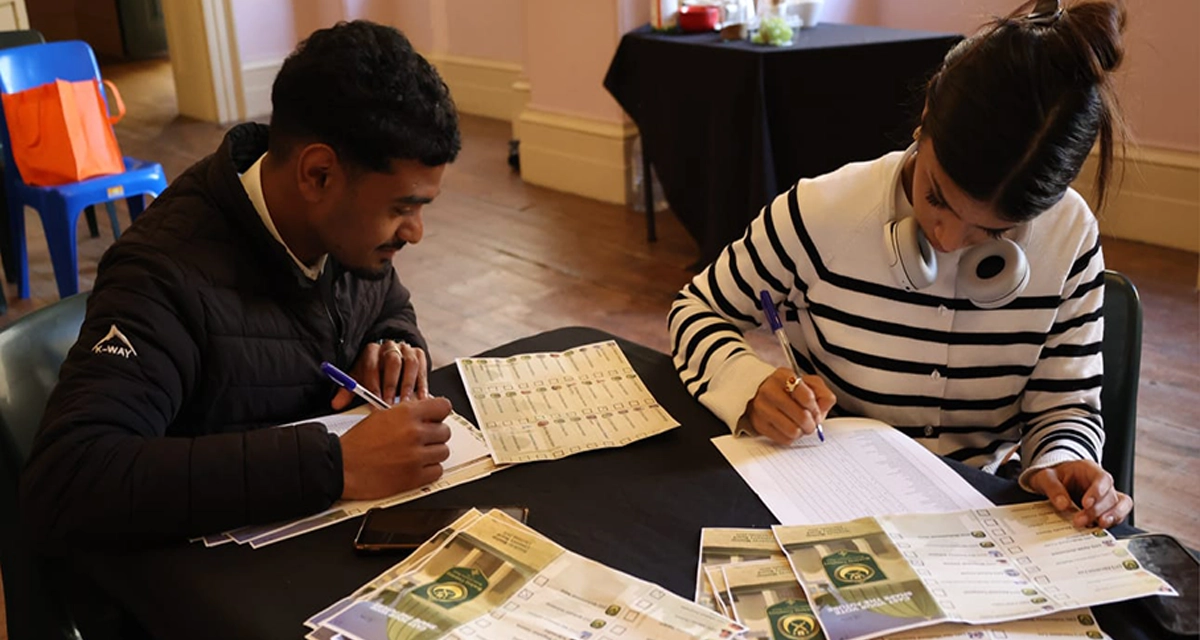

Mowbray Muslim Cemetery Board election results are in after 968 of 1 610 members voted. Muslim Views judges the poll relatively free and fair, while flagging unresolved concerns over online voting, double votes, costs and conflicts.
By ANWAR OMAR
The Independent Panel, chaired by Mr Igshaan Higgins, has now announced the outcome of the Mowbray Muslim Cemetery Board elections.
The 11 successful candidates elected to serve the Mowbray Moslem Cemetery Board are:
Seat 1 – Faizal Sayed
Seat 2 – Shameemah Salie
Seat 3 – Moegamat Ameen Schroeder
Seat 4 – Riad Fataar
Seat 5 – Yusuf Khan Dalwai
Seat 6 – Muhammed West
Seat 7 – Ayub Mohamed
Seat 8 – Yaseen George
Seat 9 – Mohamed Majedi Bassier
Seat 10 – Faizel Bassier
Seat 11 – Muhammad Aadil Bassier
The Panel congratulated the newly elected Board members and prayed that Allah grants them wisdom, integrity, unity and strength as they undertake this important responsibility of serving the community and caring for the affairs of the Muslim cemetery.
They also extended their sincere appreciation to all the candidates, voters, the Election Committee, election officials, judges of the Western Cape High Court, volunteers and everyone who contributed towards making the election a successful process.
Before that result settles into the record as simply “the outcome”, Muslim Views assesses it against a definition of what “free and fair” requires. Our assessment: glitches and all, this election clears that bar, with real caveats the Panel still needs to close out.
Defining “free and fair”
For an institution such as the Muslim Cemetery Board, the concept of “free and fair” is grounded in a few established principles:
· an equal, secure franchise (one vote per member, no duplication);
You may also want to read


· secrecy and integrity of the ballot;
· equal treatment of candidates;
· transparent, pre-published rules on voting, campaigning and extensions;
· independent, unconflicted administration; accountable use of funds;
· and a verifiable audit trail.
What has been disclosed by the Panel to date
Of 1 610 registered members, 968 voted, a turnout of 60.12% (39.88% did not vote). Of the total membership, 679 voted online (42.17%) and 289 voted physically (17.95%). Sunday accounted for 618 votes (289 physical, 329 online), 64% of all votes cast. A further 350 votes (36% of turnout) came during the extensions: 106 on Monday, 244 on Tuesday. On the results now announced, the extension and online voting plainly had a major impact on the outcome.
It is evident that a procedural convenience materially affected who was elected, and therefore there is now a higher burden to demonstrate that the online voting and the extensions were administered impartially and rigorously, and to show that the process was run fairly.
Double voting
The Panel confirmed 18 double votes – 1.86% of the 968 votes cast – caused by members who voted on Sunday and were later issued a second key during the extension. All 18 were removed from the count. An audit has since been completed, witnessed independently by Muslim Views. While that is reassuring, the underlying logs (key issuance, timestamps, IP data) have not been made public, so members can trust the outcome but not yet verify it for themselves.
Costs
On costs, the online platform ran to roughly R40 000, and panellist remuneration (R35 000 × 5) to R175 000, totalling R215 000, or 86% of the R250 000 ring-fenced budget before other costs. Higgins has confirmed the final cost will exceed that budget. A full reconciliation has not yet been published.
The judge’s daughter part of election team
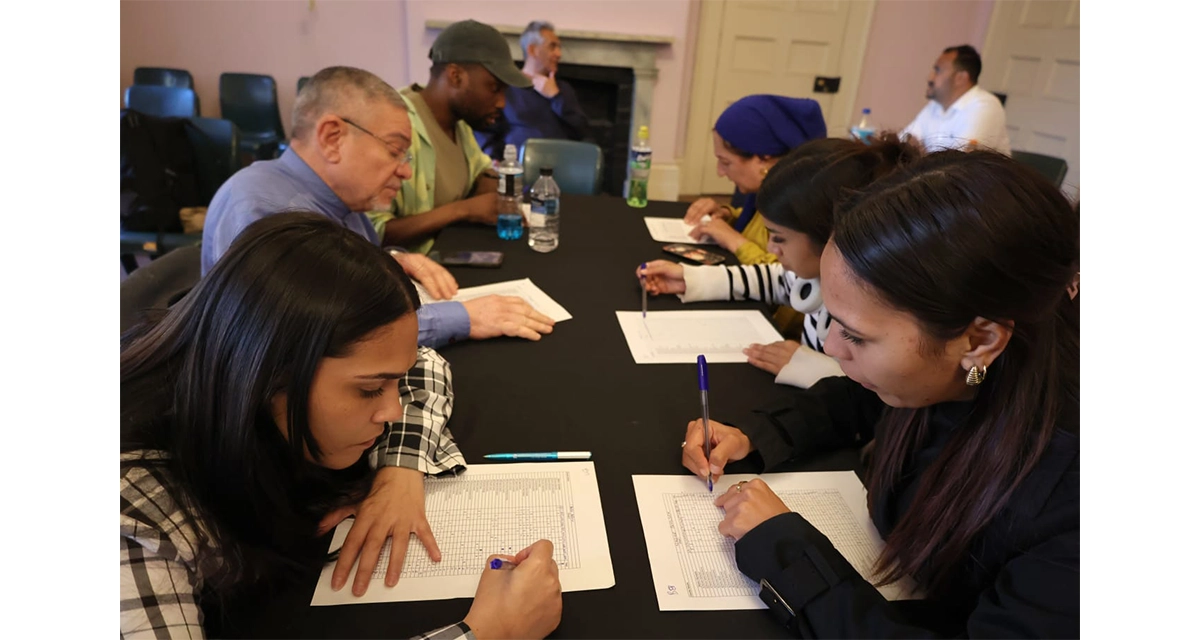
Most significantly, Higgins confirmed that the daughter of Judge Gayaat Salie da Silva – the judge who provided the initial judgement and several key directives – assisted the election process on Sunday, but took no part in counting. According to him, she assisted with the folding of ballot papers and was a volunteer and is not being remunerated for her service. That safeguards the count, but not the underlying conflict of interest in principle. The Panel was appointed by a judge whose child participated in the election team and whose spouse (the daughter’s stepfather) stood as a nominee.
Since clarified and still open
Higgins confirmed that the truncated list of 24 “endorsed” candidates (out of 53 nominees) was corrected promptly once raised, a fair remedial step, though it doesn’t resolve how many votes were cast while the flawed version was live, or whether all 24 had consented to being named.
On campaigning in the courtyard at the Castle, Higgins says the Panel was unaware this was happening, so could not respond to it at the time. This, although plausible, leaves unresolved whether any campaigning protocol existed and was followed.
Still outstanding is the gender breakdown of registration and turnout; publication of the underlying audit data (not just confirmation an audit occurred); and confirmation of whether a campaigning protocol was published in advance.
Muslim Views’ assessment
It is Muslim Views’ opinion that, despite the glitches, delays and irregularities, this election can be declared relatively “free and fair”, measured against the definition above.
That is not the same as calling the process clean. Turnout was reasonable. The double-vote problem was caught, corrected, and independently audited rather than concealed. The endorsement list was fixed once flagged rather than defended. The Panel answered pointed questions candidly, including on the judge’s family connection and the budget overrun. Nothing that has come to light points to an engineered result; rather, to an election run under real strain, with mistakes largely owned and corrected as they surfaced.
But “relatively free and fair” is a qualified verdict. The extension and online voting clearly swayed the outcome, so the open questions are not academic. The underlying audit data hasn’t been published. Whether a campaigning protocol existed remains unconfirmed. And the judge’s family conflict is disclosed but not visibly managed beyond excluding one individual from the counting process.
None of this, in Muslim Views’ assessment, is enough to displace the overall finding, but it is sufficient to warrant the Panel closing these gaps publicly: publish the audit data, confirm whether a campaigning protocol existed, explain how the Panel’s independence was safeguarded given the judge’s family ties, and confirm how many of the 24 endorsed candidates on the truncated list were eventually elected. On the numbers as we have them, the newly elected Board can be accepted as the legitimate outcome of a flawed but fundamentally sound process, provided these questions aren’t left to linger.
Muslim Views intends to publish an analysis of the results soon.