




![Does ta’wīl mean interpretation or fulfilment? A Quranic reassessment [+video]](https://muslimviews.co.za/wp-content/uploads/2026/10/Tawil-Kaskas-360x180.webp)







![Why becoming a wealthy Muslim is commendable in Islam [+videos]](https://muslimviews.co.za/wp-content/uploads/2026/09/Muslim-Trade-Business-1-360x180.webp)




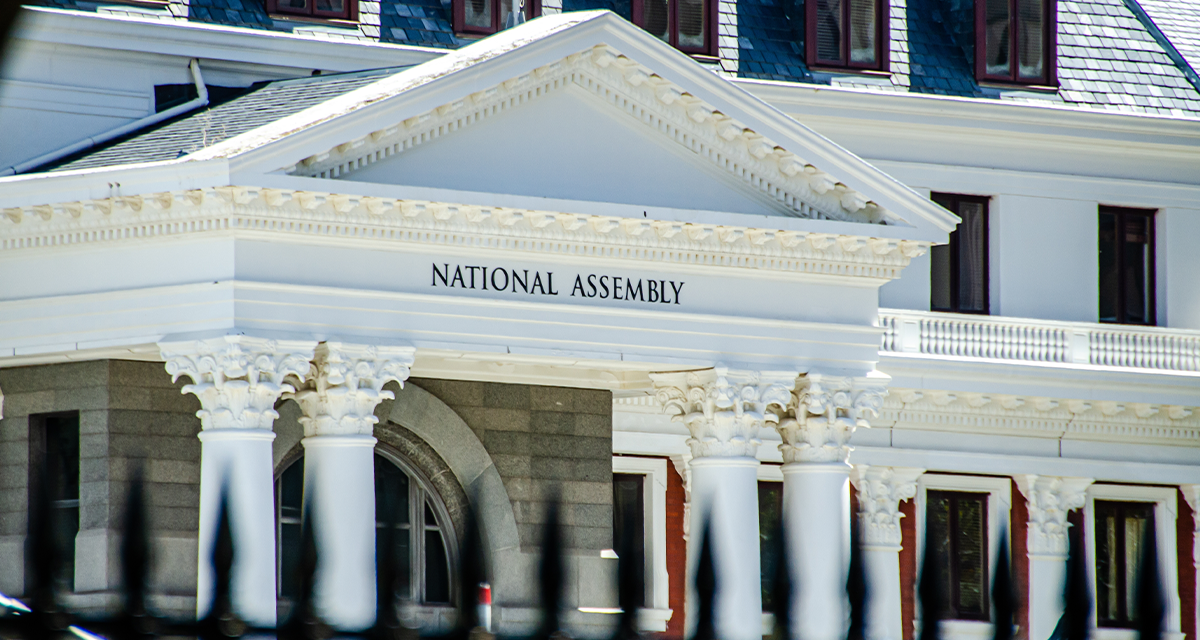

Politics needs more than office-bearers. Genuine political work requires organising, education, mobilisation and active citizenship that build community power, deepen participation and turn people from spectators into agents of change.
By DR MPHUTLANE WA BOFELO
As citizens from all walks of life, we often complain about the state of our societies. We lament unemployment, poverty, inequality, corruption, failing public services, social fragmentation, and political instability. Yet many of us do so from the sidelines, without actively participating in the work required to transform these conditions. In doing so, we become, to varying degrees, complicit in the perpetuation of the status quo.
One of the defining crises of our time is that there are many politicians but very few political activists. Even more concerning is that political parties are heavily invested in doing politics while increasingly absent from the deeper and more demanding task of political work.
This distinction is important. Being in politics and doing political work are not necessarily the same thing. Likewise, politics as a career or profession differs fundamentally from politics as a vocation or form of activism, even though it is possible, and indeed desirable, for the two to be combined.
A career is a chosen occupation through which individuals earn a living, pursue success, and advance within a particular field. There is nothing inherently wrong with this. Politics, like any other sphere of human activity, requires skilled professionals. However, a vocation is something different. It is a calling, a deep sense of commitment to a cause greater than oneself. It is driven not primarily by personal advancement but by the desire to serve, transform society, and contribute to the common good.
The problem facing contemporary politics is not a shortage of people occupying political positions. There is no shortage of elected officials, party leaders, spokespersons, strategists, consultants, and aspirant office-bearers. What is in short supply are people genuinely committed to political work. Even scarcer are those who participate in politics while simultaneously embracing political work as a vocation, a calling, and a form of activism directed towards a higher social purpose.
This should concern all of us.
Over the years, political work has become narrowly defined and increasingly technocratic. It is often reduced to policy formulation, legislative drafting, data analysis, lobbying, managing the implementation of laws, attending endless meetings, negotiating compromises, writing reports, consulting experts, and resolving administrative and technical issues. These tasks are undoubtedly important. Societies require effective governance, informed policymaking, and competent public administration.
You may also want to read


Yet political work cannot be reduced to these functions alone.
At its most transformative, political work is about people rather than procedures. It involves leadership development, community organising, grassroots socioeconomic initiatives, political conscientisation, mass education, mobilisation, and collective action. It requires building organisations, nurturing local leadership, facilitating democratic participation, and creating spaces where ordinary people can become active agents in shaping their own futures.
Political work is also educational. It involves helping people understand the structural causes of their challenges and empowering them with the knowledge and organisational capacity to address them. It is developmental because it seeks to strengthen communities rather than merely manage their grievances. It is mobilisational because it aims to transform passive constituencies into active citizens. Above all, it is emancipatory because it seeks to expand human agency and democratic participation.
Historically, many of the most significant social and political advances were not achieved solely through parliamentary debates, cabinet meetings, or policy documents. They emerged from organised communities, social movements, civic formations, labour organisations, youth movements, women’s movements, and countless activists who dedicated themselves to political work at the grassroots level. Legislative and policy victories were often the culmination of sustained political education, organising, and mobilisation.
Unfortunately, contemporary political culture increasingly rewards visibility over substance, electoral competition over social organisation, and public relations over political education. The result is a politics that is perpetually occupied with managing crises but often incapable of cultivating the social consciousness and collective power necessary to overcome them.
The challenge, therefore, is not merely to produce better politicians. It is to rebuild a culture of political work. Political parties must rediscover their educational and organisational functions. Civil society organisations must strengthen their capacities for community engagement and mobilisation. Intellectuals and scholars must become more publicly engaged. Citizens themselves must move beyond complaint and become active participants in shaping the societies they wish to inhabit.
Democracy cannot be sustained by politicians alone. It requires politically conscious and organised citizens. It requires activists, educators, organisers, community leaders, scholars, cultural workers, and ordinary people willing to dedicate themselves to the often invisible labour of social transformation.
The real question is not whether we have enough politicians. The question is whether we have enough people willing to do the political work necessary to build a more just, democratic, and humane society. Judging by the state of our politics today, the answer appears to be no. And until that changes, our political institutions will continue to struggle under the weight of problems that cannot be solved by politics alone, but only through the revival of genuine political work.
Dr Mphutlane wa Bofelo is a scholar and researcher in Governance and Political Transformation, with a focus on political development, public leadership, popular politics, and worker education.