



Muslim Views
No Result
View All Result
  • News
    • All
    • Local
    • National
    • World
    Mowbray Cemetery elections: Competing narratives and an unverified candidate list

    Mowbray Cemetery elections: Competing narratives and an unverified candidate list

    New judge takes Mowbray Cemetery case as 53 nominees cleared for ballot

    New judge takes Mowbray Cemetery case as 53 nominees cleared for ballot

    Beyond charity: Rethinking the economic potential of waqf in South Africa

    Beyond charity: Rethinking the economic potential of waqf in South Africa

    Read our Moulood-un-Nabi edition online

    Read our Moulood-un-Nabi edition online

    Primary school nasheed competition rewards dedication

    Primary school nasheed competition rewards dedication

    Cape Town art exhibition explores untold histories through art and archives

    Cape Town art exhibition explores untold histories through art and archives

    Operation Ubuntu march calls for arrests and action against xenophobia

    Operation Ubuntu march calls for arrests and action against xenophobia

    Honouring our Huffadh as Cape Town celebrates guardians of the Qur’an

    Honouring our Huffadh as Cape Town celebrates guardians of the Qur’an

    Moslem Cemetery Board ordered to pay R250 000 after confidential bank review

    Moslem Cemetery Board ordered to pay R250 000 after confidential bank review

    Radio 786 launches inaugural Cape Town High School Quiz

    Radio 786 launches inaugural Cape Town High School Quiz

    • National
    • World
    • Local
  • Opinion
    • All
    • Columnists
    • Discussions with Dangor
    • Editorial
    • Guest Writer
    Another hatchet job on Choritz — but is this fair and balanced journalism?

    Another hatchet job on Choritz — but is this fair and balanced journalism?

    Reading the Prophet: knowing the sīrah, reading ourselves

    Reading the Prophet: knowing the sīrah, reading ourselves

    The immigration debate: class, race and South Africa’s unresolved crisis

    The immigration debate: class, race and South Africa’s unresolved crisis

    Moulood – When love stands

    Moulood – When love stands

    SADC’s “old wine in new bottles” model unlikely to transform political economy

    SADC’s “old wine in new bottles” model unlikely to transform political economy

    Independence interrupted: Pakistan’s unfinished passage from colony to country

    Independence interrupted: Pakistan’s unfinished passage from colony to country

    Keep your eyes on the victims of genocide, Mr President

    Keep your eyes on the victims of genocide, Mr President

    President Ramaphosa meeting IDF soldier’s family raises crucial questions

    President Ramaphosa meeting IDF soldier’s family raises crucial questions

    Mecca pact signals move against fading US security order

    Mecca pact signals move against fading US security order

    Dr Mofokeng goes out on top – despite attempts to distract her

    Dr Mofokeng goes out on top – despite attempts to distract her

  • Features
    • All
    • 1500 Years of Prophetic Legacy
    • AWQAF SA
    • General Features
    • Imam Haron
    • Tributes
    Reading the Prophet: knowing the sīrah, reading ourselves

    Reading the Prophet: knowing the sīrah, reading ourselves

    The living heritage of Moulood traditions at Zandvliet

    The living heritage of Moulood traditions at Zandvliet

    Ummah bids farewell to global luminary Pir Sayed Hasin ud Deen Shah (RA)

    Ummah bids farewell to global luminary Pir Sayed Hasin ud Deen Shah (RA)

    Marking 140 years since the closure of the Tana Baru

    Marking 140 years since the closure of the Tana Baru

    Abbas Rumaney remembered for his faith, wisdom, humour and generosity

    Abbas Rumaney remembered for his faith, wisdom, humour and generosity

    Grappling with Apartheid labels

    Grappling with Apartheid labels

    The scholar who refused to turn Islam into an enemy: The legacy of John Esposito

    The scholar who refused to turn Islam into an enemy: The legacy of John Esposito

    The greatest monuments are not in stone, but in lives transformed

    The greatest monuments are not in stone, but in lives transformed

    Legacy of educator Haji Mogamat Rashad Jedaar lives on

    Legacy of educator Haji Mogamat Rashad Jedaar lives on

    Reclaiming agency: From ritual to action Part 3

    Reclaiming agency: From ritual to action Part 3

    June 16, the Call of Islam, and the many rivers of liberation

    June 16, the Call of Islam, and the many rivers of liberation

    Reclaiming agency: From ritual to action Part 2

    Reclaiming agency: From ritual to action Part 2

    Reclaiming agency: From ritual to action Part 1

    Reclaiming agency: From ritual to action Part 1

    Goolam Hoosain Abed: The last of the famous sporting family departs

    Goolam Hoosain Abed: The last of the famous sporting family departs

    Abdullah Ibrahim crafted a magnificent new culture for South Africa

    Abdullah Ibrahim crafted a magnificent new culture for South Africa

  • Lifestyle
    • All
    • Arts
    • Books
    • Education
    • Food
    • Health
    • Motoring
    • Sport
    • Technology
    Reading the Prophet: knowing the sīrah, reading ourselves

    Reading the Prophet: knowing the sīrah, reading ourselves

    Cape Town art exhibition explores untold histories through art and archives

    Cape Town art exhibition explores untold histories through art and archives

    Choritz captures a fierce new dystopia in The Sound of Ice

    Choritz captures a fierce new dystopia in The Sound of Ice

    Languages of Care: Extending worship through art

    Languages of Care: Extending worship through art

    Cape Town musicians rally behind displaced Palestinian composer

    Cape Town musicians rally behind displaced Palestinian composer

    More than a game, or the Clash of Titans

    More than a game, or the Clash of Titans

    Help Ruqaya Ismail represent SA at the Commonwealth Fencing Championship

    Help Ruqaya Ismail represent SA at the Commonwealth Fencing Championship

    Goolam Hoosain Abed: The last of the famous sporting family departs

    Goolam Hoosain Abed: The last of the famous sporting family departs

    Abdeyah da Costa and the dihlīz of Dorp Street

    Abdeyah da Costa and the dihlīz of Dorp Street

    A mother’s taweez and the Cape’s interfaith traditions [+ video]

    A mother’s taweez and the Cape’s interfaith traditions [+ video]

  • Finance
    • All
    • Islamic Finance
    Beyond charity: Rethinking the economic potential of waqf in South Africa

    Beyond charity: Rethinking the economic potential of waqf in South Africa

    Islamic banking in South Africa: why interest-free finance matters

    Islamic banking in South Africa: why interest-free finance matters

    When AI becomes your financial adviser, who protects the vulnerable?

    When AI becomes your financial adviser, who protects the vulnerable?

    Why a professionally drafted will can better protect your family and legacy

    Why a professionally drafted will can better protect your family and legacy

    When the halal investment label becomes a weapon for financial deception

    When the halal investment label becomes a weapon for financial deception

    Don’t leave your family with your janazah and a legacy of problems

    Don’t leave your family with your janazah and a legacy of problems

    When Shariah-compliant investments finance oppression and injustice today

    When Shariah-compliant investments finance oppression and injustice today

    How Islamic finance is rebuilding Africa’s economic grid

    How Islamic finance is rebuilding Africa’s economic grid

    Islamic finance’s green promise for a sustainable future

    Islamic finance’s green promise for a sustainable future

    First Abu Dhabi Bank’s African opportunity could reshape Islamic finance

    First Abu Dhabi Bank’s African opportunity could reshape Islamic finance

  • Islam
    • All
    • Eid
    • Faith and Practice
    • Family
    • Hajj and Umrah
    • Moulood
    • Quran
    • Ramadaan
    Reading the Prophet: knowing the sīrah, reading ourselves

    Reading the Prophet: knowing the sīrah, reading ourselves

    The living heritage of Moulood traditions at Zandvliet

    The living heritage of Moulood traditions at Zandvliet

    Moulood – When love stands

    Moulood – When love stands

    Moulood-un-Nabi: A beacon of mercy, love and unyielding courage

    Moulood-un-Nabi: A beacon of mercy, love and unyielding courage

    When Sipho asked me to make duʿa

    When Sipho asked me to make duʿa

    A sound heart in a world of strangers

    A sound heart in a world of strangers

    Can our mosques become the heart of the Ummah?

    Can our mosques become the heart of the Ummah?

    Karbala – between obligation and inability

    Karbala – between obligation and inability

    16 June 1976: Qibla’s call to conscience

    Reclaiming our future – drawing lessons from Karbala and Soweto 1976

    Karbala, Gaza and xenophobia: Why history still matters today

    Karbala, Gaza and xenophobia: Why history still matters today

  • Archives
  • Donate
Muslim Views
  • News
    • All
    • Local
    • National
    • World
    Mowbray Cemetery elections: Competing narratives and an unverified candidate list

    Mowbray Cemetery elections: Competing narratives and an unverified candidate list

    New judge takes Mowbray Cemetery case as 53 nominees cleared for ballot

    New judge takes Mowbray Cemetery case as 53 nominees cleared for ballot

    Beyond charity: Rethinking the economic potential of waqf in South Africa

    Beyond charity: Rethinking the economic potential of waqf in South Africa

    Read our Moulood-un-Nabi edition online

    Read our Moulood-un-Nabi edition online

    Primary school nasheed competition rewards dedication

    Primary school nasheed competition rewards dedication

    Cape Town art exhibition explores untold histories through art and archives

    Cape Town art exhibition explores untold histories through art and archives

    Operation Ubuntu march calls for arrests and action against xenophobia

    Operation Ubuntu march calls for arrests and action against xenophobia

    Honouring our Huffadh as Cape Town celebrates guardians of the Qur’an

    Honouring our Huffadh as Cape Town celebrates guardians of the Qur’an

    Moslem Cemetery Board ordered to pay R250 000 after confidential bank review

    Moslem Cemetery Board ordered to pay R250 000 after confidential bank review

    Radio 786 launches inaugural Cape Town High School Quiz

    Radio 786 launches inaugural Cape Town High School Quiz

    • National
    • World
    • Local
  • Opinion
    • All
    • Columnists
    • Discussions with Dangor
    • Editorial
    • Guest Writer
    Another hatchet job on Choritz — but is this fair and balanced journalism?

    Another hatchet job on Choritz — but is this fair and balanced journalism?

    Reading the Prophet: knowing the sīrah, reading ourselves

    Reading the Prophet: knowing the sīrah, reading ourselves

    The immigration debate: class, race and South Africa’s unresolved crisis

    The immigration debate: class, race and South Africa’s unresolved crisis

    Moulood – When love stands

    Moulood – When love stands

    SADC’s “old wine in new bottles” model unlikely to transform political economy

    SADC’s “old wine in new bottles” model unlikely to transform political economy

    Independence interrupted: Pakistan’s unfinished passage from colony to country

    Independence interrupted: Pakistan’s unfinished passage from colony to country

    Keep your eyes on the victims of genocide, Mr President

    Keep your eyes on the victims of genocide, Mr President

    President Ramaphosa meeting IDF soldier’s family raises crucial questions

    President Ramaphosa meeting IDF soldier’s family raises crucial questions

    Mecca pact signals move against fading US security order

    Mecca pact signals move against fading US security order

    Dr Mofokeng goes out on top – despite attempts to distract her

    Dr Mofokeng goes out on top – despite attempts to distract her

  • Features
    • All
    • 1500 Years of Prophetic Legacy
    • AWQAF SA
    • General Features
    • Imam Haron
    • Tributes
    Reading the Prophet: knowing the sīrah, reading ourselves

    Reading the Prophet: knowing the sīrah, reading ourselves

    The living heritage of Moulood traditions at Zandvliet

    The living heritage of Moulood traditions at Zandvliet

    Ummah bids farewell to global luminary Pir Sayed Hasin ud Deen Shah (RA)

    Ummah bids farewell to global luminary Pir Sayed Hasin ud Deen Shah (RA)

    Marking 140 years since the closure of the Tana Baru

    Marking 140 years since the closure of the Tana Baru

    Abbas Rumaney remembered for his faith, wisdom, humour and generosity

    Abbas Rumaney remembered for his faith, wisdom, humour and generosity

    Grappling with Apartheid labels

    Grappling with Apartheid labels

    The scholar who refused to turn Islam into an enemy: The legacy of John Esposito

    The scholar who refused to turn Islam into an enemy: The legacy of John Esposito

    The greatest monuments are not in stone, but in lives transformed

    The greatest monuments are not in stone, but in lives transformed

    Legacy of educator Haji Mogamat Rashad Jedaar lives on

    Legacy of educator Haji Mogamat Rashad Jedaar lives on

    Reclaiming agency: From ritual to action Part 3

    Reclaiming agency: From ritual to action Part 3

    June 16, the Call of Islam, and the many rivers of liberation

    June 16, the Call of Islam, and the many rivers of liberation

    Reclaiming agency: From ritual to action Part 2

    Reclaiming agency: From ritual to action Part 2

    Reclaiming agency: From ritual to action Part 1

    Reclaiming agency: From ritual to action Part 1

    Goolam Hoosain Abed: The last of the famous sporting family departs

    Goolam Hoosain Abed: The last of the famous sporting family departs

    Abdullah Ibrahim crafted a magnificent new culture for South Africa

    Abdullah Ibrahim crafted a magnificent new culture for South Africa

  • Lifestyle
    • All
    • Arts
    • Books
    • Education
    • Food
    • Health
    • Motoring
    • Sport
    • Technology
    Reading the Prophet: knowing the sīrah, reading ourselves

    Reading the Prophet: knowing the sīrah, reading ourselves

    Cape Town art exhibition explores untold histories through art and archives

    Cape Town art exhibition explores untold histories through art and archives

    Choritz captures a fierce new dystopia in The Sound of Ice

    Choritz captures a fierce new dystopia in The Sound of Ice

    Languages of Care: Extending worship through art

    Languages of Care: Extending worship through art

    Cape Town musicians rally behind displaced Palestinian composer

    Cape Town musicians rally behind displaced Palestinian composer

    More than a game, or the Clash of Titans

    More than a game, or the Clash of Titans

    Help Ruqaya Ismail represent SA at the Commonwealth Fencing Championship

    Help Ruqaya Ismail represent SA at the Commonwealth Fencing Championship

    Goolam Hoosain Abed: The last of the famous sporting family departs

    Goolam Hoosain Abed: The last of the famous sporting family departs

    Abdeyah da Costa and the dihlīz of Dorp Street

    Abdeyah da Costa and the dihlīz of Dorp Street

    A mother’s taweez and the Cape’s interfaith traditions [+ video]

    A mother’s taweez and the Cape’s interfaith traditions [+ video]

  • Finance
    • All
    • Islamic Finance
    Beyond charity: Rethinking the economic potential of waqf in South Africa

    Beyond charity: Rethinking the economic potential of waqf in South Africa

    Islamic banking in South Africa: why interest-free finance matters

    Islamic banking in South Africa: why interest-free finance matters

    When AI becomes your financial adviser, who protects the vulnerable?

    When AI becomes your financial adviser, who protects the vulnerable?

    Why a professionally drafted will can better protect your family and legacy

    Why a professionally drafted will can better protect your family and legacy

    When the halal investment label becomes a weapon for financial deception

    When the halal investment label becomes a weapon for financial deception

    Don’t leave your family with your janazah and a legacy of problems

    Don’t leave your family with your janazah and a legacy of problems

    When Shariah-compliant investments finance oppression and injustice today

    When Shariah-compliant investments finance oppression and injustice today

    How Islamic finance is rebuilding Africa’s economic grid

    How Islamic finance is rebuilding Africa’s economic grid

    Islamic finance’s green promise for a sustainable future

    Islamic finance’s green promise for a sustainable future

    First Abu Dhabi Bank’s African opportunity could reshape Islamic finance

    First Abu Dhabi Bank’s African opportunity could reshape Islamic finance

  • Islam
    • All
    • Eid
    • Faith and Practice
    • Family
    • Hajj and Umrah
    • Moulood
    • Quran
    • Ramadaan
    Reading the Prophet: knowing the sīrah, reading ourselves

    Reading the Prophet: knowing the sīrah, reading ourselves

    The living heritage of Moulood traditions at Zandvliet

    The living heritage of Moulood traditions at Zandvliet

    Moulood – When love stands

    Moulood – When love stands

    Moulood-un-Nabi: A beacon of mercy, love and unyielding courage

    Moulood-un-Nabi: A beacon of mercy, love and unyielding courage

    When Sipho asked me to make duʿa

    When Sipho asked me to make duʿa

    A sound heart in a world of strangers

    A sound heart in a world of strangers

    Can our mosques become the heart of the Ummah?

    Can our mosques become the heart of the Ummah?

    Karbala – between obligation and inability

    Karbala – between obligation and inability

    16 June 1976: Qibla’s call to conscience

    Reclaiming our future – drawing lessons from Karbala and Soweto 1976

    Karbala, Gaza and xenophobia: Why history still matters today

    Karbala, Gaza and xenophobia: Why history still matters today

  • Archives
  • Donate
Muslim Views
Advertisement

Grappling with Apartheid labels

23 July 2026
in FEATURES, Guest Writer
Reading Time: 7 mins read
A A
Grappling with Apartheid labels

The writer with her parents on graduation day, 1984. (Photo: Rapport / Supplied)

Share on TwitterShare on FacebookShare on Whatsapp

Drawing on her family’s Cape Town history, the writer examines how Apartheid classifications such as ‘Cape Malay’ and ‘coloured’ continue to shape identity and belonging. She argues that recognising shared humanity can help South Africans move beyond inherited racial labels.

By DR NADIA KAMIES

Like many people in Cape Town, I grew up in a family diverse in religion, language and traditions. My birth certificate said, ‘Father Cape Malay, Mother Cape Coloured’.

In one of the very few photographs of my parents as a young couple, they confidently stroll through the centre of a segregated city in the days when you still dressed up to go into town. Many families have a photograph like this, taken in the late 1950s by the Movie Snaps Studio in Darling Street. In a time when many people did not own cameras, this became a way to capture themselves as they wished to be seen – well-dressed and respectable – a challenge to the negative stereotypes the Apartheid regime had assigned to them.

The writer’s parents walking down Darling Street, Cape Town, circa 1959. (Photo: Movie Snaps / Supplied)

As much as I tried, I could not see any reason for their different racial classifications. What did that make me, I wondered, growing up? Then, at age 16, the identity document I was issued with by the Apartheid regime labelled me as a ‘coloured female’. That classification governed my life: where I could live, play and study, who I could marry and what I could be.

Population Registration and institutionalised discrimination

The first step towards institutionalising discrimination was the introduction of the Population Registration Act 30 of 1950, which required every citizen to be registered according to his or her race group. The Act divided the population into white, native and coloured. The latter was a residual category in which smaller groups that did not fit into either white or native were placed. The Act was amended in 1959 to divide the coloured group into seven subgroups: Cape Coloured, Cape Malay, Griqua, Chinese, Indian, Other Asian, and Other Coloured.

A person’s race could be determined by a special Race Classification Board; testimony could be taken from family and friends, and a person’s hair, eyeballs and cuticles could be examined if there was any doubt. While the implementation of the Act seemed innocuous (since registration of citizens was accepted practice in many countries), the register was used as a basis for further legislation, namely the Group Areas, Separate Amenities, Immorality, and Prohibition of Mixed Marriages Acts.

The elusiveness of fixing coloured identity is reflected in the different definitions offered up by the government over the years, even before the 1950 Act. According to these definitions, the descendants of enslaved people were positioned to occupy an in-between identity that at once made them superior to blacks and inferior to the same because of their supposed lack of culture.

Coloured people occupied ambiguous spaces, were diverse in language and religion, and were of different hues, which facilitated moving through spaces and led to people being able to pass from one classification to another. This fluidity led to people seeking to reclassify themselves from one racial category to another. Passing and reclassification offered different privileges such as living in a better area, going to a better school, or being able to play sport or dance in a competition that would have been forbidden to you.

The South African population in general is ignorant of the extent of ethnic and genetic mixing and the mixing of cultures, languages and religions that occurred between enslaved people, indigenous groups and white immigrants. The Afrikaners tried to banish all evidence of their past indiscretions by stripping coloured people of a shared history, treating them with contempt and implementing strictly policed legislation to distance themselves from the proof of their sexual liaisons. Articles about race and colour mixing were dismissed as political propaganda or banned, while many researchers tried to prove that there had been no significant mixing and that the Afrikaners were ‘pure’ Europeans with a slave component of less than one per cent.

Family photo taken on Eid, circa 1973, on the steps of the writer’s grandparents’ home in Park Road, Walmer Estate. (Photo: Abdullah Kamies / Supplied)

The fallacy of the Cape Malay label

The term Cape Malay as a category of people is also embedded in colonial and Apartheid history. Under Dutch rule, the term Malay was linked variously to being Muslim or to a linguistic group, but under Apartheid it became a racial category. This construction of Malay as an ethnicity characterised by practices such as choral singing was influenced by the Afrikaans writer ID du Plessis, who served as Commissioner of Coloured Affairs and later secretary in the 1950s and 1960s. He helped to secure the Bo-Kaap as the Malay Quarter, and it was on his appointment in 1952 that Cape Malay entered the Apartheid dictionary as a sub-category of coloured.

Divisions of Malay, coloured and African identities were reinforced and ‘coloured’ Muslims were encouraged to think of themselves as distinct. These official Apartheid discourses rejected creolisation, ethnic interaction and cultural exchange between descendants of the enslaved. Malay became synonymous with Muslim while coloured became associated with being Christian.
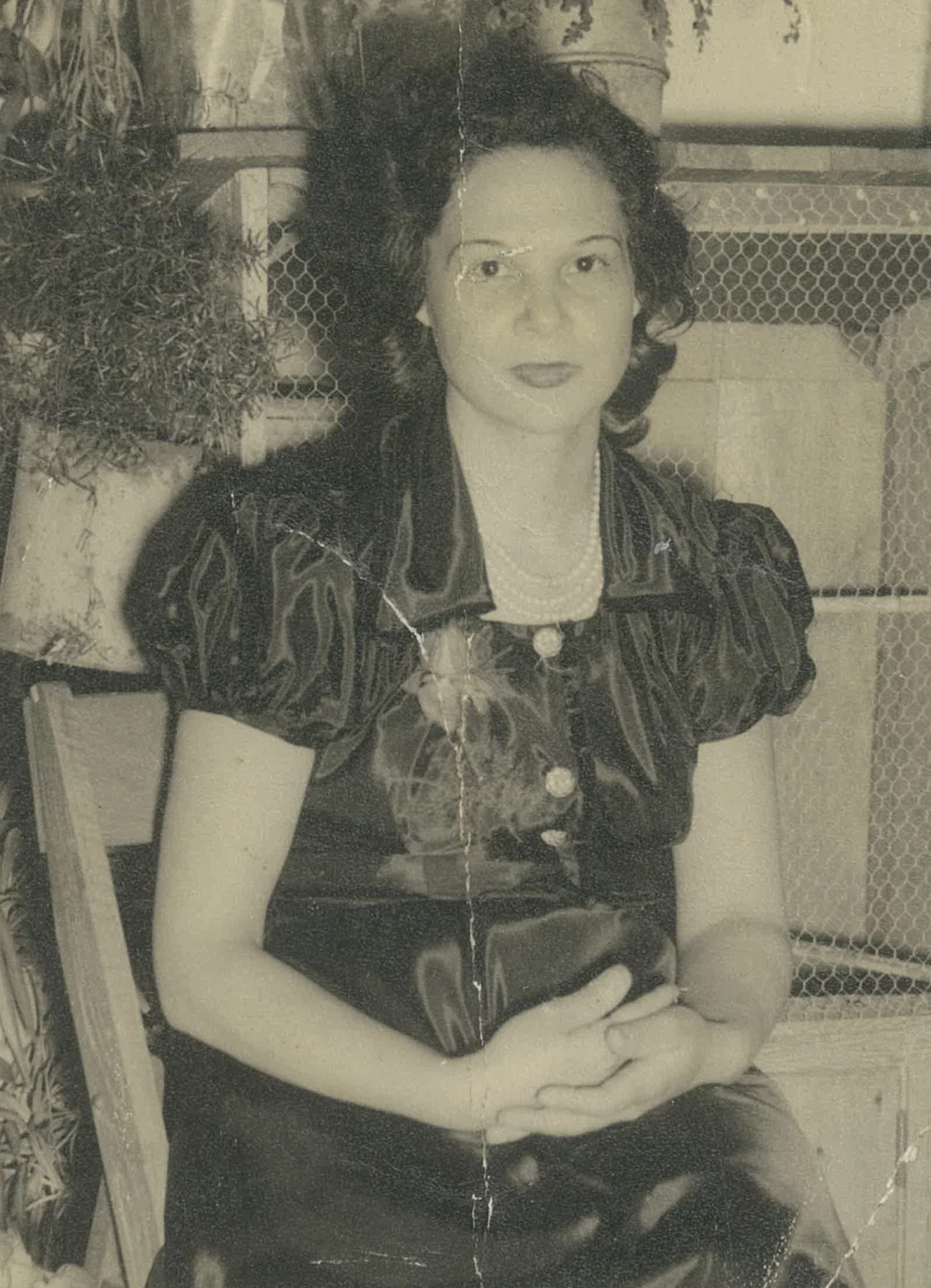
The writer’s maternal grandmother at home in Woodstock. The date and photographer are unknown. (Photo: Supplied)

Rejection of a ‘Coloured’ identity

During Apartheid, many of us rejected the label ‘coloured’ for being socially engineered by a racist regime, choosing instead to identify as black in line with the definitions offered by Steve Biko, the Black Consciousness leader murdered in detention by the Apartheid government in 1977. The term has persisted post-1994, continuing to shape identity and belonging in a still deeply segregated country.

The intermingling of diverse backgrounds and cultures of slaves, Europeans, KhoiSan and Nguni people means that their history is intimately linked to Africa and South Africa. The creole language, culture, identity and traditions evolved along with South Africa, making a mockery of segregation and alienation from the struggles of others. This diversity was palpable in places like District Six, which is not only symbolic of the forced removals that occurred across the country but is also a site of integration. These grey spaces existed throughout the city, where people could be together even if only briefly.

I see the heterogeneity of my own family as a privilege. Traversing spaces between grandparents who spoke English, Afrikaans and Kaaps, who practised Christianity and Islam, has made me who I am and has given me a deep respect for different religions and cultures. Growing up, there was the Christian aunty who only bought meat from a halaal butchery, and there were the young Muslims who belonged to St Bartholomew’s Youth Group. My Muslim father praying at the bedside of my mother’s dying uncle is one of my most endearing memories of him. My father’s mother crocheted an onner-kuffiyatjie for one of my mother’s cousins who regularly attended functions with my father. When my grandmother died, five of the six pallbearers who carried her into the church and from the hearse to the graveside were Muslim.

The way we lived in community with each other defies the legacy of Apartheid and testifies to a will to freedom and humanity. Somehow, ordinary people found ways to survive and hold on to that which made them human.

You may also want to read

Will OSSA disinvite Israeli participant in recognition of the demands of medical ethics?

Will OSSA disinvite Israeli participant in recognition of the demands of medical ethics?

5 February 2025
Someone needs to call the LGBTQIA+ community to order

Someone needs to call the LGBTQIA+ community to order

24 August 2022
Armien Jabaar and a lifetime of cricketing excellence

Armien Jabaar and a lifetime of cricketing excellence

2 February 2026
Iran’s legacy under threat amid US war

Iran’s legacy under threat amid US war

24 April 2026
The alarming silence over Fadiel Adams’s detention

The alarming silence over Fadiel Adams’s detention

14 May 2026
Shining the spotlight on community service centres for older persons

Shining the spotlight on community service centres for older persons

31 August 2022

Academic and author Dr Gabeba Baderoon reminds us that to remember slavery is also to remember the vibrant and diverse cultures, new language, food, music and beliefs that arose, and to honour the spirit of survival and resistance that was engendered. I find it difficult to comprehend why, if we could forge communities like these during Apartheid, we still grapple with Apartheid labels.

I was reluctant to write an article about contestations of ‘colouredness’ when blatant acts of racism and isolationism are an everyday occurrence, and the world seems to be poised on the brink of a nuclear war as a direct result of colonialism, racism and Apartheid. The systematic, institutionalised policy of discrimination, which includes land expropriation, forced evictions, demolitions and restriction of movement in Palestine, has stark parallels with the system of Apartheid in South Africa.

The writer’s paternal grandmother on her return from Haj, circa 1966. (Photo: Abdullah Kamies / Supplied)

The Interfaith Vigil at St George’s Cathedral

Since October 2023, I have been participating in a weekly vigil for the ongoing genocide of the Palestinian people on the steps of St George’s Cathedral (dubbed the Freedom Steps for the role it played as a space of resistance during Apartheid). The gathering is attended by Muslims, Christians, Jews, and people of no faith, by young and old activists, by ordinary human beings still hoping for a more just world. The strong sense of community that has developed among the regulars is what keeps me coming back week after week. The interfaith nature of our gathering is a reminder of the way I grew up and what is possible when we start to see each other as human beings.

Nadia Kamies (middle row, second from left) participating in the Interfaith Vigil at St George’s Cathedral, which has occurred for 140 consecutive weeks since the start of the Genocide in Gaza on October 7, 2023. (Photo: Anwar Omar)

In the communities we grew up in, we lived side by side with people – neighbours who were there for each other, whether it was to celebrate a wedding, mourn a loved one or borrow a cup of sugar. It was only when we ventured out of that community that we were confronted with being ‘coloured’ or ‘other’, like I was when I had to apply for a permit to attend the white University of Cape Town.

That designation limited the areas of the hospital I had access to as a student and the patients I could treat in state hospitals once I had qualified. Both my children have had the privilege of studying overseas and of living abroad, and I am envious of the ease with which they move through the world in a way that would have been incomprehensible to their grandparents and great-grandparents.

Recognising our common humanity

The idea of different races persists globally, even in a post-Apartheid democratic South Africa, where non-racialism is enshrined in the constitution. Clearly, more than simply the dismantling of Apartheid legislation is needed before we can consider how we may live together in a post-Apartheid society. Only through recognising our common humanity will we be able to live in a way that honours the sacrifices of those who fought and died for our freedom. This resonates for me especially now, as we commemorate the 50th anniversary of the Soweto Uprising amidst rampant poverty and youth unemployment.

Nadia Kamies was born and raised in Cape Town. She graduated from the University of Cape Town with a BSc in Occupational Therapy in 1984 and worked extensively with children in hospital, school and private practice settings. She holds a master’s degree in Creative Writing from the University of Cape Town and a PhD in History from the University of Pretoria. Her writing focuses on the afterlives of slavery and Apartheid.

  • This article was first published in the June 19, 2026 print edition of Muslim Views.

Subscribe to our Newsletters

* indicates required
Choose the newsletters you'd like to receive
Advertisement

You may also want to read

Another hatchet job on Choritz — but is this fair and balanced journalism?
OPINION

Another hatchet job on Choritz — but is this fair and balanced journalism?

21 August 2026
Reading the Prophet: knowing the sīrah, reading ourselves
Books

Reading the Prophet: knowing the sīrah, reading ourselves

21 August 2026
The living heritage of Moulood traditions at Zandvliet
Moulood

The living heritage of Moulood traditions at Zandvliet

20 August 2026
The immigration debate: class, race and South Africa’s unresolved crisis
OPINION

The immigration debate: class, race and South Africa’s unresolved crisis

20 August 2026
Moulood – When love stands
OPINION

Moulood – When love stands

19 August 2026
SADC’s “old wine in new bottles” model unlikely to transform political economy
OPINION

SADC’s “old wine in new bottles” model unlikely to transform political economy

17 August 2026
August 2026

August 2026

FILE SIZE : 15 MB
Download
Advertisement

Latest News

Another hatchet job on Choritz — but is this fair and balanced journalism?

21 August 2026

Mowbray Cemetery elections: Competing narratives and an unverified candidate list

21 August 2026

Reading the Prophet: knowing the sīrah, reading ourselves

21 August 2026

The living heritage of Moulood traditions at Zandvliet

20 August 2026

The immigration debate: class, race and South Africa’s unresolved crisis

20 August 2026

Moulood – When love stands

19 August 2026
Advertisement
Advertisement
Next Post
The myth of apolitical law

The myth of apolitical law

Rally for solidarity with migrants ahead of planned march

Rally for solidarity with migrants ahead of planned march

Cape Town musicians rally behind displaced Palestinian composer

Cape Town musicians rally behind displaced Palestinian composer

Spain’s World Cup triumph, Messi and the politics of Palestine

Spain’s World Cup triumph, Messi and the politics of Palestine

ABOUT MUSLIM VIEWS
About Us
Archives
Terms & Conditions
Privacy Policy
Contact Us
Donate to Muslim Views
NEWS
Local
National
World
OPINION
Columnists
Discussion with Dangor
Editorial
Guest Writers
FEATURES
AWQAF SA
Imam Haroon
Tributes
FINANCE
Islamic Finance
ISLAM
Eid
Faith and Practice
Family
Hajj and Umrah
Moulood
Quraan
Ramadaan
FEATURES
Arts
Books
Education
Food
Health
Motoring
Sport
Technology

© Muslim Views 2026. All Rights Reserved

Design by: theimagehouse

Loading...
No Result
View All Result
  • NEWS
    • Local
    • National
    • World
  • OPINION
    • Columnists
    • Discussions with Dangor
    • Editorial
    • Guest Writer
  • FEATURES
    • AWQAF SA
    • Imam Haron
    • Tributes
    • 1500 Years of Prophetic Legacy
  • LIFESTYLE
    • Arts
    • Books
    • Education
    • Food
    • Health
    • Motoring
    • Sport
    • Technology
  • FINANCE
    • Islamic Finance
  • ISLAM
    • Eid
    • Faith and Practice
    • Family
    • Hajj and Umrah
    • Moulood
    • Quran
    • Ramadaan
  • ARCHIVES
  • DONATE