



![Does ta’wīl mean interpretation or fulfilment? A Quranic reassessment [+video]](https://muslimviews.co.za/wp-content/uploads/2026/10/Tawil-Kaskas-360x180.webp)








![Why becoming a wealthy Muslim is commendable in Islam [+videos]](https://muslimviews.co.za/wp-content/uploads/2026/09/Muslim-Trade-Business-1-360x180.webp)



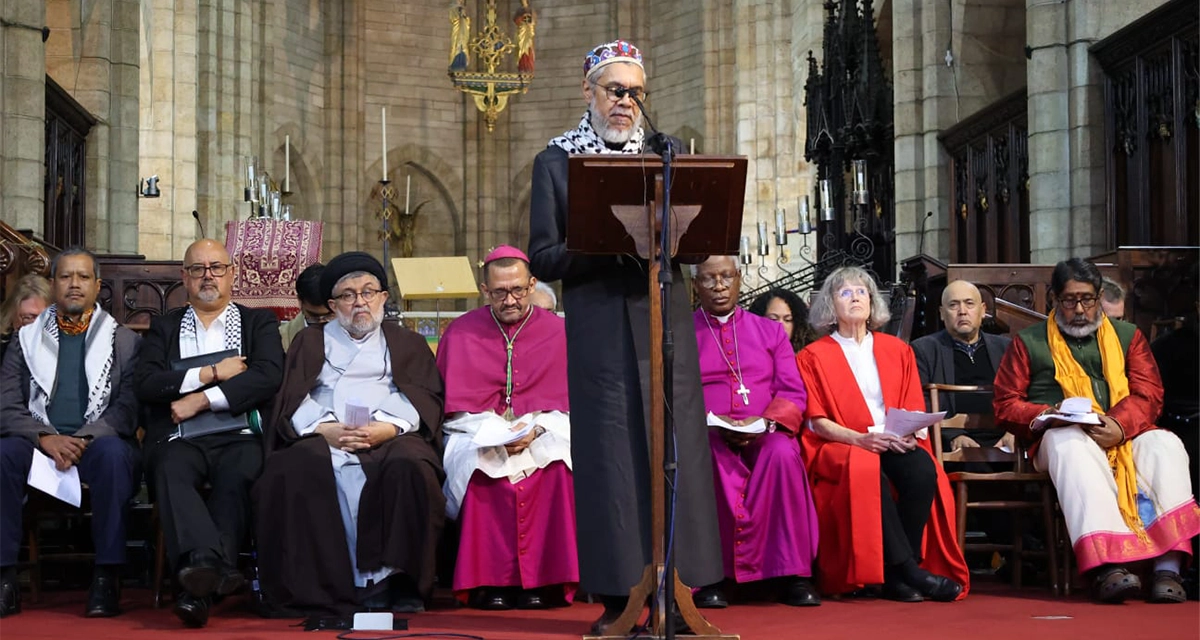

Christian, Muslim, Jewish, Hindu and Baha’i faith leaders gathered at St George’s Cathedral with ECCOC and IEC representatives to pray, reflect and call for peaceful, credible participation in Cape Town’s 2026 local government elections.
By ANWAR OMAR
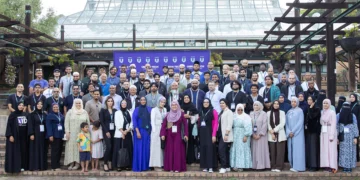
Faith leaders from across Cape Town gathered at St George’s Cathedral on Saturday, August 22, for “An Interfaith Gathering of Prayer for a Peaceful and Credible Local Government Election”, convened by the Electoral Code of Conduct Observer Commission (ECCOC) in partnership with faith communities across the city.
With Local Government Elections due before November 2026, the service brought together clergy and faith leaders from Christian, Muslim, Jewish, Hindu and Baha’i traditions, alongside representatives of ECCOC, the Independent Electoral Commission (IEC), and Cape Town’s indigenous communities, for prayer, readings, song and reflection.
What is ECCOC?
Formed in 1999 on the initiative of the late Archbishop Njongonkulu Ndungane, ECCOC is a voluntary, self-funded interfaith commission that has worked alongside the IEC since its inception. Most recently, ECCOC deployed more than a dozen observer teams to more than 100 polling stations across Cape Town during the 2024 National and Provincial Elections.
The gathering
The Very Reverend Terry Lester, Dean of St George’s Cathedral, welcomed the congregation, followed by short opening verses praying “that this election may be conducted in peace, and its outcome received with honesty and trust”.
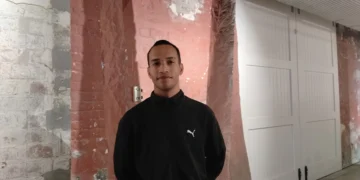
One of the motivational speeches addressing the congregation on the importance of voting included that of Mr Tauriq Jenkins, speaking on behalf of Cape Town’s indigenous communities. His participation reminded the congregants that the city’s democratic future belongs to its oldest, as well as its newest, communities.
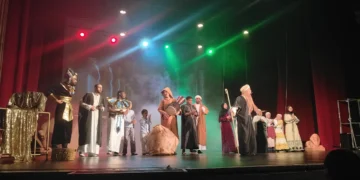
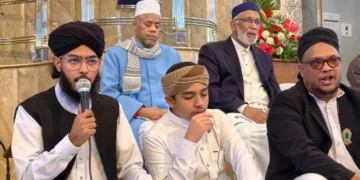
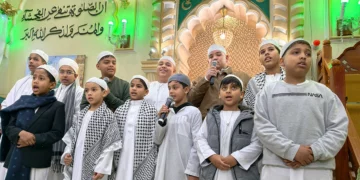
The service was interspersed with various songs and prayers by the abaNtu chorUS and the Annur Nasheed Group.
Readings from sacred texts
Ms Dominique Von read from the Holy Bible, Moulana Sayed Aftab Haider from the Holy Quran, and Shree Gurukrishna from Hindu scripture; three traditions, each text read in turn as an act of shared witness.
Moulana Haider drew the congregation’s attention to four verses from the Holy Quran that he highlighted as particularly relevant to the gathering, one of which was: “Indeed Allah does not change the condition of a people until they change what is within themselves.” (Sura Ar-Ra’d, 13:11)
Shree Gurukrishna outlined a code of conduct relevant to the elections reflected in Hindu scripture, consisting of three fundamental principles. He urged voters to elect leaders who are God-fearing, truthful and serve the well-being of all.
He urged that “there be absolute peace and harmony through thought, word and action”.
Keynote address
Archbishop Thabo Makgoba, Anglican Archbishop of Cape Town, delivered the keynote address.
He said: “However strong our emotional attachments to particular parties may be, we should ask ourselves whether we are going to vote for a party or for people who teach us, remind us and exemplify the truth that competent governance matters.”
Interfaith prayers
Archbishop Sithembele Sipuka, Catholic Archbishop of Cape Town, led the service’s central act of prayer, opening: “We come now to pray, each in the language and form of our own tradition… that this city may go to the polls in calm, and rise from them in trust, whatever the outcome.”
Prayers followed from Bishop Joshua Louw (Christian), Shaykh Ighsan Taliep (Islamic), Mr Siphesihle Khumalo (Baha’i) and Dr Azila Reisenberger (Jewish).
Archbishop Sipuka closed by beseeching that the prayers would “take root in our city: in patience at the polling station, in honesty at the count, and in peace whatever the outcome”.
You may also want to read




Shaykh Ighsan prayed for God to bless the elections and to “let every vote be free, let every count be honest, every result be accepted with dignity”.
Message from the IEC
Mr Michael Hendrickse, IEC Provincial Officer, whose team worked closely with ECCOC’s observers in 2024, addressed the congregation directly.
He reminded congregants that “the responsibility for safety is not only the responsibility for ourselves, but also for people around us, and the decisions that we make will have positive or negative consequences for us, for our families, our suburbs, our towns and our country”.
Words of thanks
Reverend Pippa Jones, ECCOC Coordinator, gave the closing words of thanks, after which the congregation stood to sing the National Anthem, led by the abaNtu chorUS.
Benediction
Archbishop Makgoba closed the service, praying that God would “grant to this city calm in the days ahead, wisdom to those who lead it, and courage to all who will play their part in shaping it”, sending the congregation out “as makers of peace, and not merely as those who wish for it”.
A civic duty and a calling
ECCOC describes its work as “fully and unreservedly committed to our peace-building role” — not only a civic duty, but a religious calling. Saturday’s gathering was the latest expression of Cape Town’s faith communities standing together, ahead of a critical election year, to pray and work for a democracy that holds, whatever the outcome.