





![Does ta’wīl mean interpretation or fulfilment? A Quranic reassessment [+video]](https://muslimviews.co.za/wp-content/uploads/2026/10/Tawil-Kaskas-360x180.webp)









![Why becoming a wealthy Muslim is commendable in Islam [+videos]](https://muslimviews.co.za/wp-content/uploads/2026/09/Muslim-Trade-Business-1-360x180.webp)



‘May we, as Muslims and Christians together, honour Pope Francis’s legacy not merely with words, but through courageous and renewed action. Let us embrace otherness as a divine gift, a path that leads us closer to God’s mercy, compassion, and justice.’
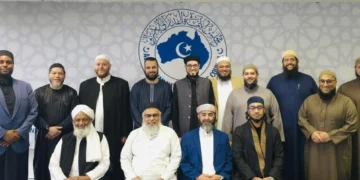
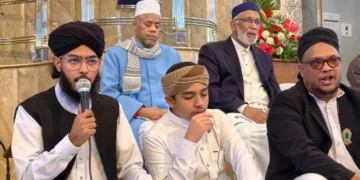
The Ahlul Bait Mosque Complex in Ottery, Cape Town hosted the sixth interfaith meeting on Friday October 10, 2025, convened under ‘The Platform for Theological Dialogue and Practical Ethics’. The meeting was a joint venture between the Ahlul Bait Mosque and the Archdiocese of Cape Town.
IMAM DR A RASHIED OMAR, one of the presenters, delivered the following paper:
Introduction: Honouring a legacy of compassion
Esteemed Colleagues in Faith, Beloved Brothers and Sisters,
It is both an honour and a privilege to reflect with you this evening on the theme ‘Embracing Otherness’. We do so in the light of Pope Francis’s profound legacy in Muslim–Christian relations and in solidarity with the suffering people of Gaza.
It is fitting to begin with a pertinent passage from the Muslim sacred scripture, the Qur’an, in which God, the Lord of Guidance, proclaims in Surah al-Maʾidah, chapter 5, verse 82:
وَلَتَجِدَنَّ أَقْرَبَهُم مَّوَدَّةٗ لِّلَّذِينَ ءَامَنُواْ ٱلَّذِينَ قَالُوٓاْ إِنَّا نَصَٰرَىٰۚ
ذَٰلِكَ بِأَنَّ مِنْهُمْ قِسِّيسِينَ وَرُهْبَانٗا وَأَنَّهُمْ لَا يَسْتَكْبِرُونَ
You will find that those who are nearest in love and affection to the believers
are those who say, ‘We are Christians,’
because among them are priests devoted to learning
and monks dedicated to asceticism,
and they are not arrogant.
This Qur’anic verse highlights the virtues of humility, devotion to learning, and freedom from arrogance amongst Christians. It is my considered view that, in our own time, these qualities were embodied in the leadership of Pope Francis, whose legacy as head of the Roman Catholic Church continues to inspire.
Pope Francis’s interfaith engagements
Since the beginning of his papacy on March 13, 2013, Pope Francis exemplified this spirit by reaching out to Muslims in diverse ways, welcoming numerous Muslim peace delegations to the Vatican and visiting over a dozen Muslim-majority countries.
One of the most significant of these journeys was his visit to Iraq from March 5–8, 2021, where he met with one of the world’s most renowned Shi’a leaders, Grand Ayatullah ‘Ali Sistani. This historic encounter was lauded by both the Vatican and Shi’a Muslims as a major step forward in promoting interfaith dialogue and peacebuilding between Muslims and Christians. From this meeting emerged the inspiration for the establishment in Cape Town of ‘The Platform for Theological Dialogue and Practical Ethics’, envisioned as a global continuation of the spirit of fraternity and mutual respect embodied in Najaf.
Fratelli Tutti and Qur’anic resonances
Resonating with these initiatives, another milestone that speaks directly to Pope Francis’s legacy in Christian–Muslim relations came on October 3, 2020, with the release of his encyclical Fratelli Tutti (meaning ‘we are all brothers and sisters’).
Pope Francis acknowledges that the subtitle of Fratelli Tutti, ‘On Fraternity and Social Friendship, was inspired in part by his February 2019 meeting in Abu Dhabi with Shaykh Dr Ahmad Al-Tayyeb, Grand Imam of al-Azhar University.
This subtitle echoes deeply with Qur’anic teachings that celebrate human diversity and call us to know one another, as in Surat al-Ḥujurat, chapter 49, verse 13:
يَا أَيُّهَا النَّاسُ إِنَّا خَلَقْنَاكُمْ مِنْ ذَكَرٍ وَأُنثَىٰ وَجَعَلْنَاكُمْ شُعُوبًا وَقَبَائِلَ لِتَعَارَفُوا۟
ۚ إِنَّ أَكْرَمَكُمْ عِندَ ٱللَّهِ أَتْقَىٰكُمْ ۚ إِنَّ ٱللَّهَ عَلِيمٌ خَبِيرٌ
O Humankind! We have created you from a single male and a female, and fashioned you into nations and tribes so that you may recognise and know one another (not despise each other). Surely, the most honoured of you in the sight of God is the one the best conduct. Indeed, God is All-Knowing, All-Aware. (Q 49:13)
In my considered view, this Qur’anic verse is emblematic of Islam’s celebration of human diversity, its embrace of plurality, and its call to move beyond tolerance toward genuine recognition and intimate knowledge of one another. It summons us to cultivate fraternal relations rooted in justice, compassion, and mutual respect. For this reason, I have elsewhere described it as a ‘Fratelli Tutti Qur’anic verse’.
Laudato Si’ and interfaith solidarity for creation
Alongside Fratelli Tutti, Pope Francis’s environmental encyclical, Laudato Si’ (2015), provides another striking example of enhancing Christian–Muslim relations.


In the sixth chapter of his nearly 200-page encyclical Laudato Si’, Pope Francis writes that humanity can ‘discover God in all things’, adding that ‘there is a mystical meaning to be found in a leaf, in a mountain trail, in a dewdrop, in a poor person’s face.’
To substantiate this point, Pope Francis makes the highly unusual move, for a papal text, of citing in footnote 159 the ninth-century Muslim Sufi mystic, Amir al-Khawwas, who articulated the idea of nature’s ‘mystical meaning’. According to Argentinian priest Father Augusto Zampini, this unusual reference reflects Pope Francis’s personal touch: by drawing on a Muslim mystic, he was inviting all people to transcend self-centeredness and to deepen their relationships with others, with the Earth, and with God.
By crediting a Muslim mystic within a papal encyclical, Francis not only affirms Islam’s spiritual contribution to environmental ethics but also extends an invitation to interfaith dialogue on the sacredness of creation.
Taken together, Fratelli Tutti and Laudato Si’ open new avenues for Muslim–Christian solidarity, situating both social fraternity and ecological responsibility within a shared moral and spiritual horizon.
From the care of creation to the cry of the oppressed
From the care of creation to the cry of the oppressed, embracing otherness lies at the heart of Pope Francis’s legacy. The same spirit of fraternity and openness that guided his interfaith engagement also shaped his unwavering solidarity with Gaza.
Francis spoke often of the immense suffering of the Palestinian people, continuing even while hospitalised, until hours before his passing. In his final plea for a ceasefire in Gaza, he lamented the ‘indiscriminate suffering of civilians’ and asked: ‘Can we say we are civilised when children die under the rubble and the world watches in silence?’
Here, embracing otherness moves from principle to practice. It demands concrete solidarity with those whose humanity is denied, Palestinian men, women, and children enduring dispossession and profound suffering in Gaza.

Conclusion: Carrying forward the legacy
May we, as Muslims and Christians together, honour Pope Francis’s legacy not merely with words, but through courageous and renewed action. Let us embrace otherness as a divine gift, a path that leads us closer to God’s mercy, compassion, and justice.
And let us stand shoulder to shoulder in unwavering solidarity with the people of Gaza, affirming their humanity, amplifying their cries for justice, and labouring together until peace rooted in dignity and justice for all prevails.
This, I submit, is the truest way to carry forward the legacy of Pope Francis: to transform fraternity from aspiration into lived reality, and to make human solidarity the heartbeat of our shared future. As the Qur’an in Surah al-Ma’idah, chapter 5, verse 2 exhorts us:
وَتَعَاوَنُوا عَلَى الْبِرِّ وَالتَّقْوَىٰ وَلَا تَعَاوَنُوا عَلَى الْإِثْمِ وَالْعُدْوَانِ ۚ
And cooperate with one another in righteousness and piety, and do not cooperate in sin and aggression. (Q 5:2)
Thank you and may God guide us all in this noble endeavour.
Dr A Rashied Omar is Imam at the Claremont Main Road Masjid and associate teaching professor of Islamic studies and peacebuilding in the Keough School’s Kroc Institute for International Peace Studies at the University of Notre Dame. He also is a fellow of the Keough School’s Pulte Institute for Global Development.
- This article was updated on October 14 at 18:25 to amend the caption.