





![Does ta’wīl mean interpretation or fulfilment? A Quranic reassessment [+video]](https://muslimviews.co.za/wp-content/uploads/2026/10/Tawil-Kaskas-360x180.webp)

















![Why becoming a wealthy Muslim is commendable in Islam [+videos]](https://muslimviews.co.za/wp-content/uploads/2026/09/Muslim-Trade-Business-1-360x180.webp)








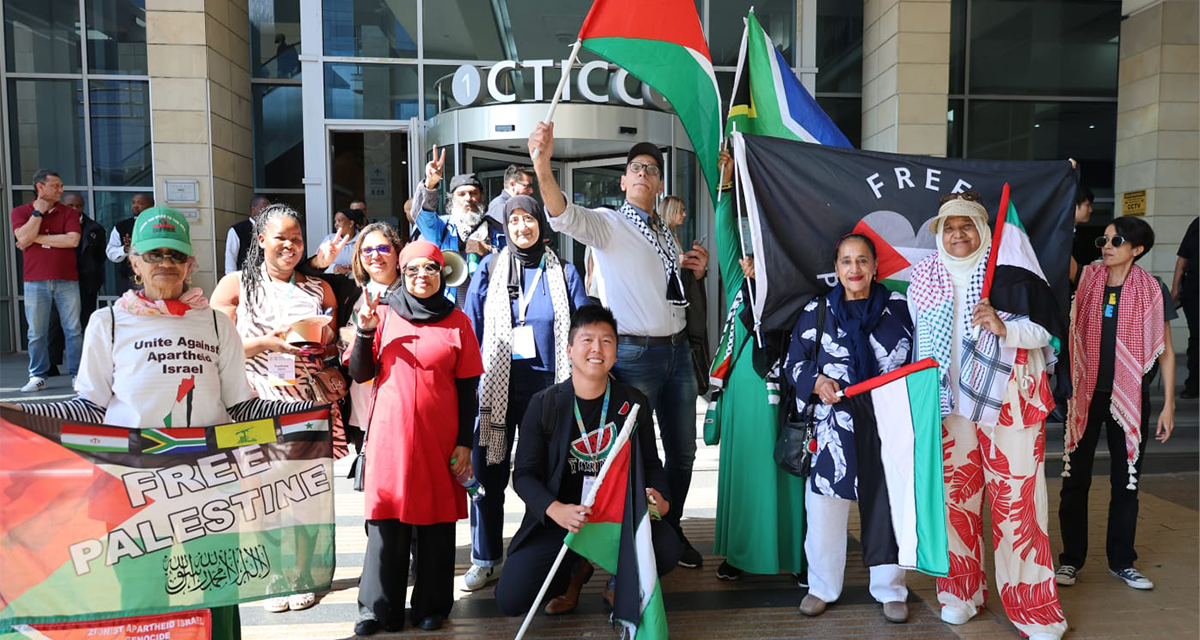

PHASA members protested outside the Cape Town International Convention Centre as the World Congress on Public Health opened, demanding that the association speak out on Gaza and xenophobia after months of internal engagement and delay.
By ANWAR OMAR
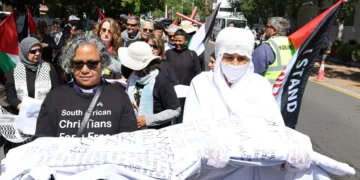
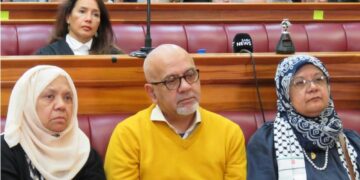
Members of the Public Health Association of South Africa (PHASA) gathered outside the Cape Town International Convention Centre (CTICC) on Sunday, September 6, 2026, to protest the PHASA Board’s decision not to issue a statement on the war in Palestine, a reversal members say came after two years of engagement, drafting and delay, and that sidelined both ordinary members and former PHASA presidents who had called for action.
The protest was timed to coincide with the opening of the 18th World Congress on Public Health (WCPH), the first time the Congress has been held in Southern Africa, and its first return to African soil in nearly three decades, under the theme “Health Without Borders: Equity, Inclusion, and Sustainability.” Organisers say that timing raised the stakes as this was precisely the moment for PHASA to demonstrate African public health leadership in practice, not the moment for the Board to go silent on Gaza while hosting the world’s public health community.
About 100 protesters gathered on the steps outside CTICC at 12:00, joined by numerous Congress delegates, both South African and international. The protest was peaceful throughout and monitored by a large police contingent.
A two-year timeline of engagement
According to members who organised the protest, the process began in October 2024, when the PHASA President invited members to compile an article on the war in Palestine and the collapse of Gaza’s health system. That article appeared in PHASA’s first 2025 newsletter. By April 2025, a PHASA conference workshop on the public health crisis in Gaza led members to formally call on the Board to issue a statement.
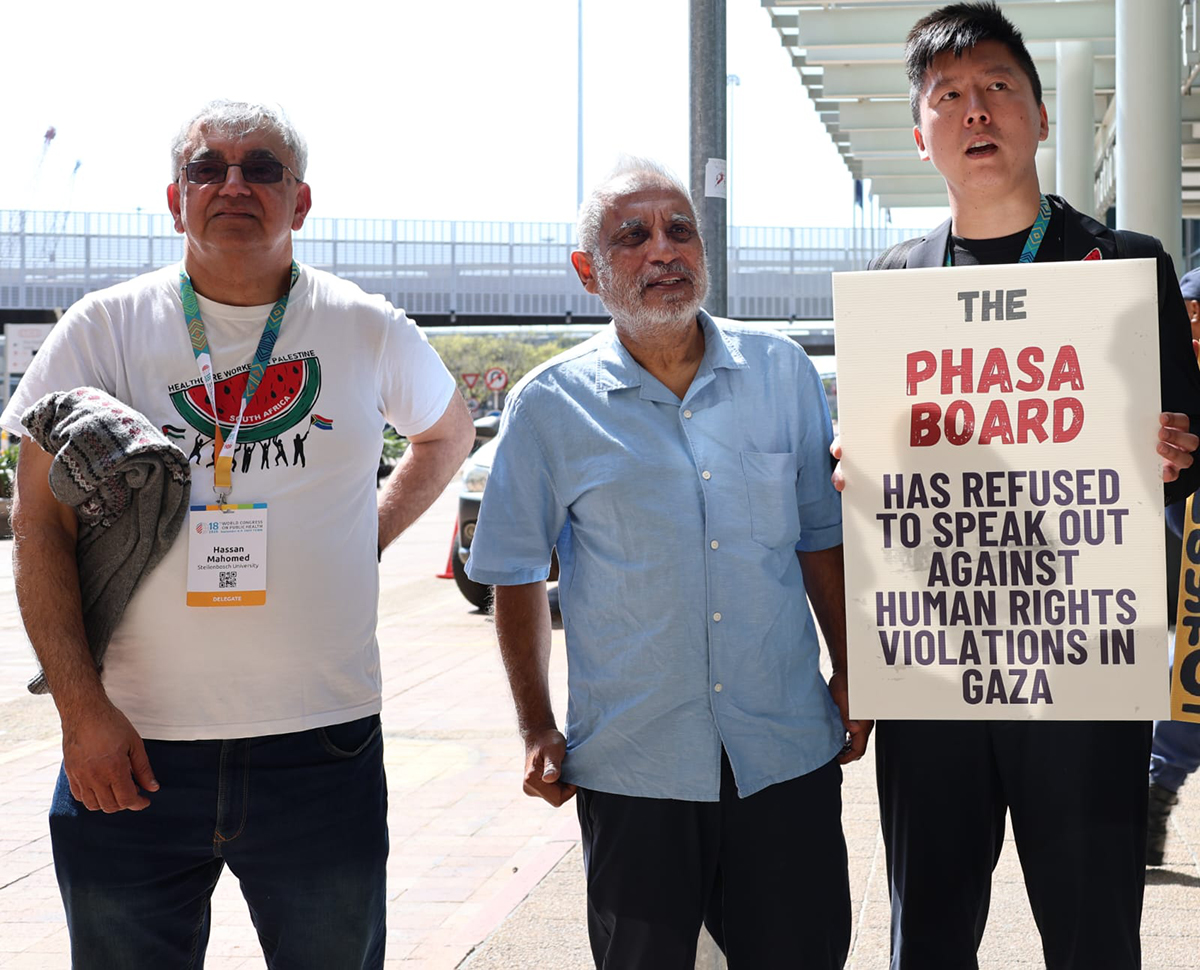
Healthcare Workers for Palestine member, Professor Hassan Mahomed of Stellenbosch University, described how that process unravelled: after 18 months of members pressing the Board, which had initially agreed to issue a Gaza statement, it announced in early 2026 that it would instead issue a general statement covering “all conflicts”, diluting the specific, World Federation of Public Health Associations (WFPHA)-aligned statement members had spent over a year drafting.
In June 2025, the Board asked for revisions to the members’ draft; members turned it around within three days, resubmitting on June 27, 2025. Eight months of silence followed, with no indication of when the statement would be released.
Professor Leslie London, a long-time PHASA member and recipient of the association’s lifetime award for public health, told the crowd that the WFPHA had itself declared genocide was occurring in Gaza and called on national associations to speak out in September 2025, yet PHASA members had been waiting since June 2025, only for the Board to announce in February 2026 that no statement would come at all. He said the Board had failed to follow the precepts of the very federation it belonged to.
That February 2026 reversal came after eight former PHASA presidents wrote to the President on February 17 asking the Board to reconsider and engage members; their concerns were dismissed as the Board called its decision “final” and refused a meeting.
In March 2026, twelve members invoked their rights under PHASA’s Memorandum of Incorporation to call a Special General Meeting. Confirmation was delayed two months, and when a meeting was finally scheduled in June 2026, it was cancelled at the last minute with no plausible explanation. Five follow-up emails between June and August went unanswered.
Dr Samah El-Boraei, a paediatrician and Vice Chair of Healthcare Workers for Palestine and Healthcare Workers Against Xenophobia, described months of engagement met with silence from the Board, contrasting it with the WFPHA’s firm stance, while PHASA, she said, “has done nothing.”
In August 2026, eighteen PHASA members submitted a motion calling on the entire Board to resign.
The board’s explanation and why members rejected it
You may also want to read
![There are “no free people without a free press” [+ video]](https://muslimviews.co.za/wp-content/uploads/2026/05/Al-Jazeera-Emmy-Award-1-120x86.webp)


The PHASA President had said the Association did not want to “leave Africa behind” by focusing on Gaza. Members rejected this framing, noting it rang hollow given the Congress’s own framing of this moment as a milestone for African leadership. They also pointed to June 2026, when xenophobic attacks targeted African migrants in South Africa and the Board again stayed silent, even as organisations like the South African Medical Association and South African Healthcare Workers 4 Palestine organised protection for migrants under threat, work in which PHASA members active on Palestine were also involved.
Professor London called this a broader double standard: PHASA had honoured his activism with its lifetime award, yet the Board now treated that same instinct to speak out as a personal or ideological interest, a way, he argued, of rendering Palestinians and the atrocities in Gaza invisible.
Several PHASA members concluded that speaking out on Gaza did not come at Africa’s expense. Public health solidarity, they argued, means standing with everyone targeted by war, violence, and injustice, not choosing between crises.
Grounds for protest
Organisers grounded the protest in PHASA’s stated mission of health equity and its history of speaking truth to power; the WFPHA’s September 2025 call for national associations to act on Gaza as a public health crisis; extensive documentation of attacks on Gaza’s healthcare infrastructure and health workers; and the Board’s conduct, which members maintain breached their rights under PHASA’s Memorandum of Incorporation and the Companies Act. Their broader message is that neutrality on mass civilian harm is not a neutral act, and silence functions as complicity, a message delivered at the doorstep of a Congress staged, for the first time, in Africa.
Dr Yipeng Ge, a Canadian medical practitioner who had worked in Gaza, brought the argument to life with his own experience, describing Palestinian colleagues still working under impossible conditions and a Rafah clinic he had worked at that no longer exists. He called Gaza “the litmus test for all public health issues of our time” and warned that associations unwilling to name genocide leave everyone less safe.
Members’ demands
Organisers are calling on PHASA and other national public health associations to comply with the WFPHA’s September 2025 call, engage their members, and issue a member-developed statement on Gaza and xenophobia; to support all populations affected by war and violence without suppressing discussion of Gaza specifically; and for PHASA to re-engage its members and restore the governance processes it has bypassed.
- The headline was amended on September 8, 2026 at 15:23 to clear an ambiguity that the previous headline could have created. It was the board of PHASA that the protestors targeted and not the World Congress on Public Health.