


![Does ta’wīl mean interpretation or fulfilment? A Quranic reassessment [+video]](https://muslimviews.co.za/wp-content/uploads/2026/10/Tawil-Kaskas-360x180.webp)









![Why becoming a wealthy Muslim is commendable in Islam [+videos]](https://muslimviews.co.za/wp-content/uploads/2026/09/Muslim-Trade-Business-1-360x180.webp)



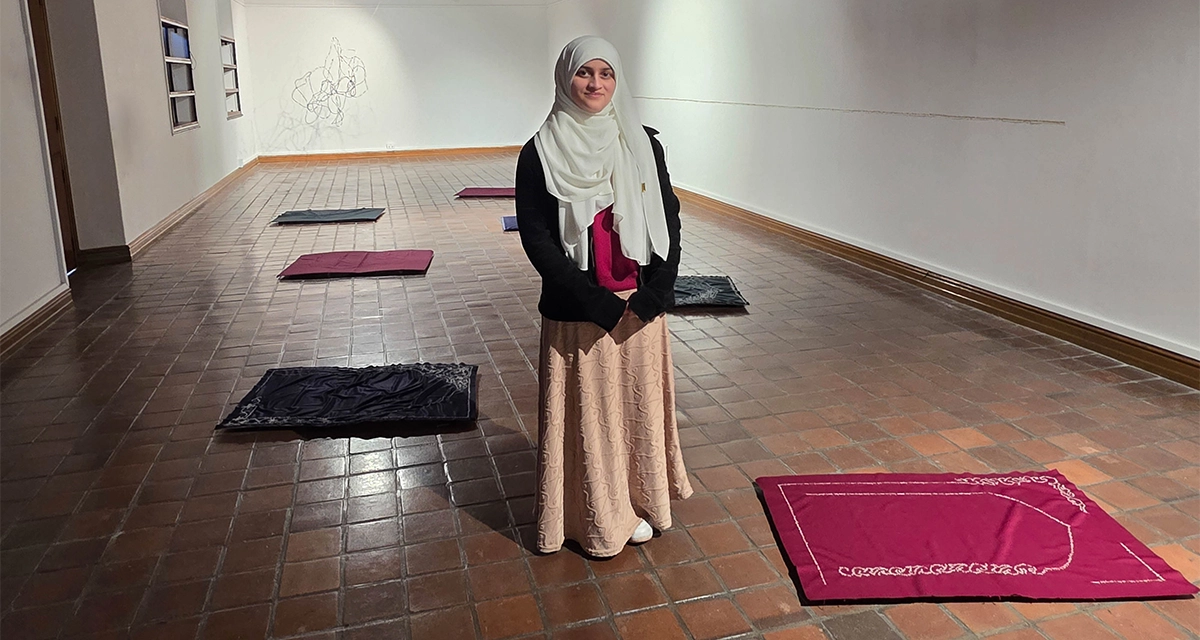

In Languages of Care, artist Vikisha Ranchod uses stitched prayer mats, date-pit pigments and hand-rolled beads to explore how worship, remembrance and compassion extend through Muslim life, art and solidarity with Palestine.
By WIDAD SIRKHOTTE
When Zimbabwean student Vikisha Ranchod began studying Visual Art at Stellenbosch University in 2021, she thought she was simply pursuing tertiary education. However, Allah had written something far greater for her. At the end of her first year, Vikisha embraced Islam, a journey that would transform not only her life but also the way she creates art.
Since becoming Muslim, Vikisha’s artistic practice has evolved into a thoughtful exploration of faith and identity. From creating ink using Quranic fruits such as pomegranates to reflecting on the meaning of the hijab, her work increasingly draws from her lived experience as a Muslim woman.
Her recent Master’s exhibition, Languages of Care, explores the idea of extendedness, showing how worship, remembrance and care continue beyond prescribed acts into our relationships, our bodies and our everyday lives.
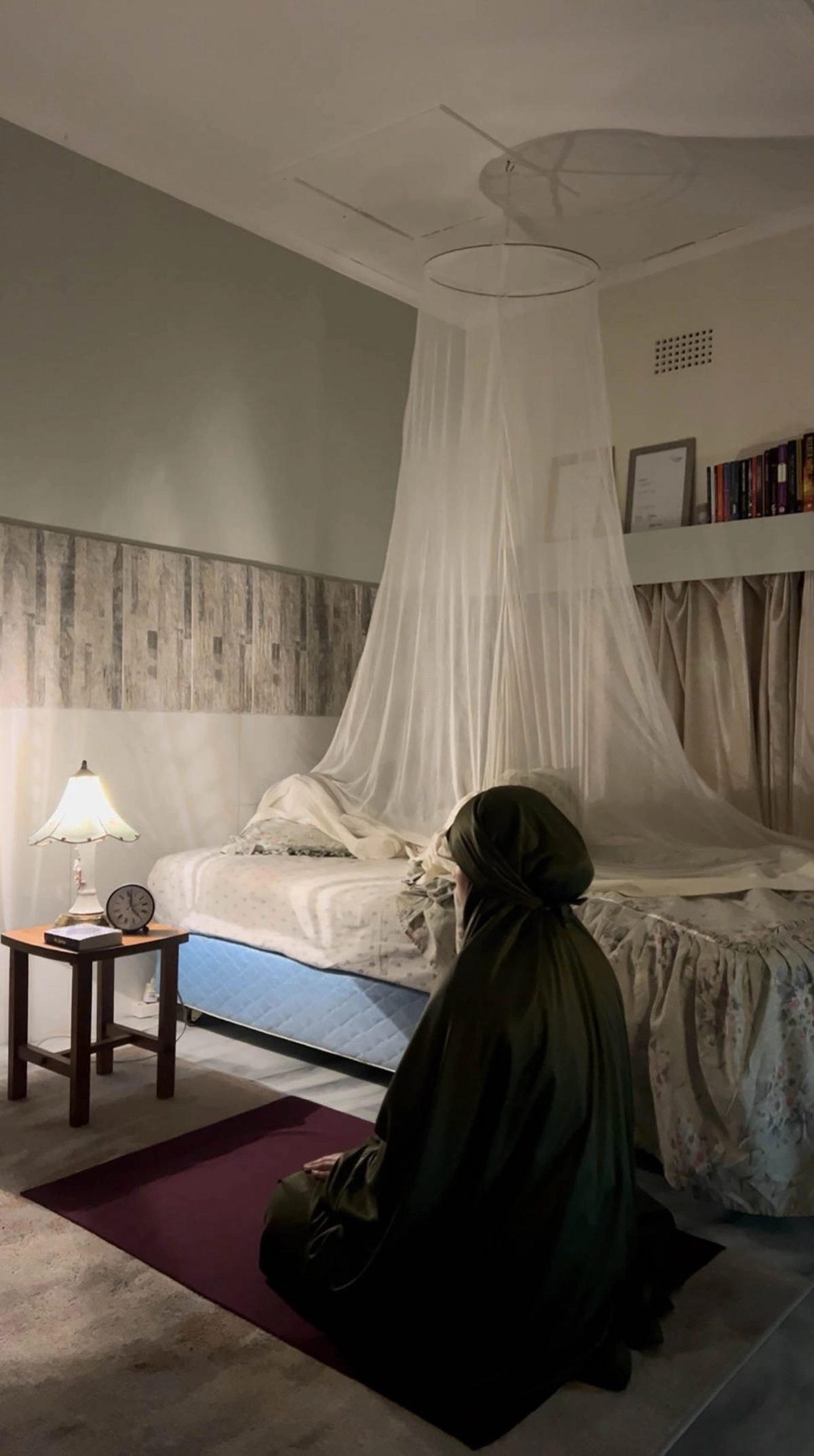
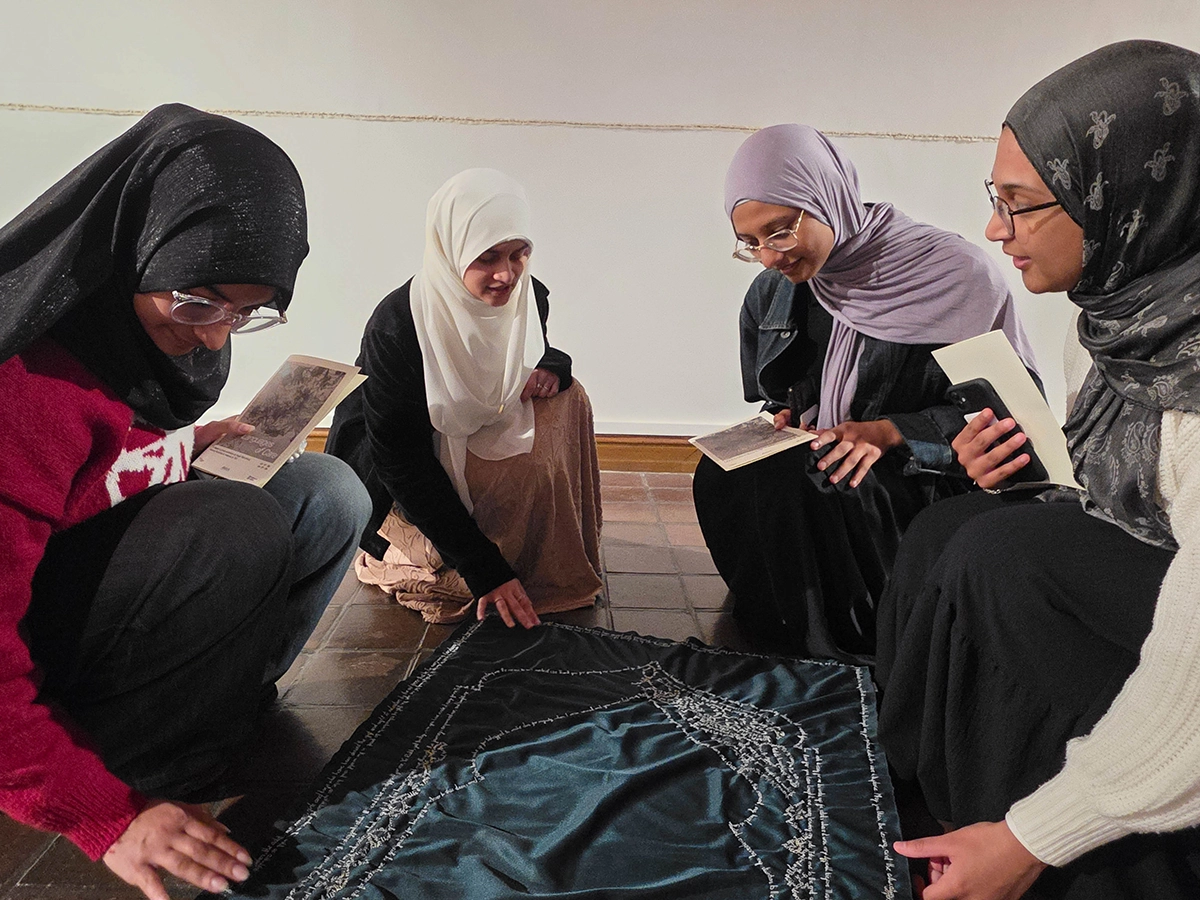
Entering the exhibition room at the Gallery of the University of Stellenbosch, visitors are met with a quiet video of Tahajjud prayer alongside seven hand-stitched musallah (prayer) mats, carefully positioned towards the qiblah. Yet these are unlike any prayer mats one would expect. Instead of geometric motifs or floral designs, the stitching consists of Vikisha’s personal duʿās written in English. Rather than striving for perfect symmetry, the mats deliberately embrace irregularity.
“Conceptually, I stitched this imperfectly to represent how we are as humans, and Allah as the only One who is perfect,” Vikisha explained. “These mats are harmonious and also not harmonious; not complete lines and out of balance.”
The embroidered lines twist, spiral and wander across the fabric rather than following neat, straight rows. They reflect the nature of supplication itself, as our hearts often move from one thought to another while we pour ourselves out before Allah. One embroidered supplication reads: “Let me use this gift of education to do good in the world and be an upholder of justice in this world as khalifah.”
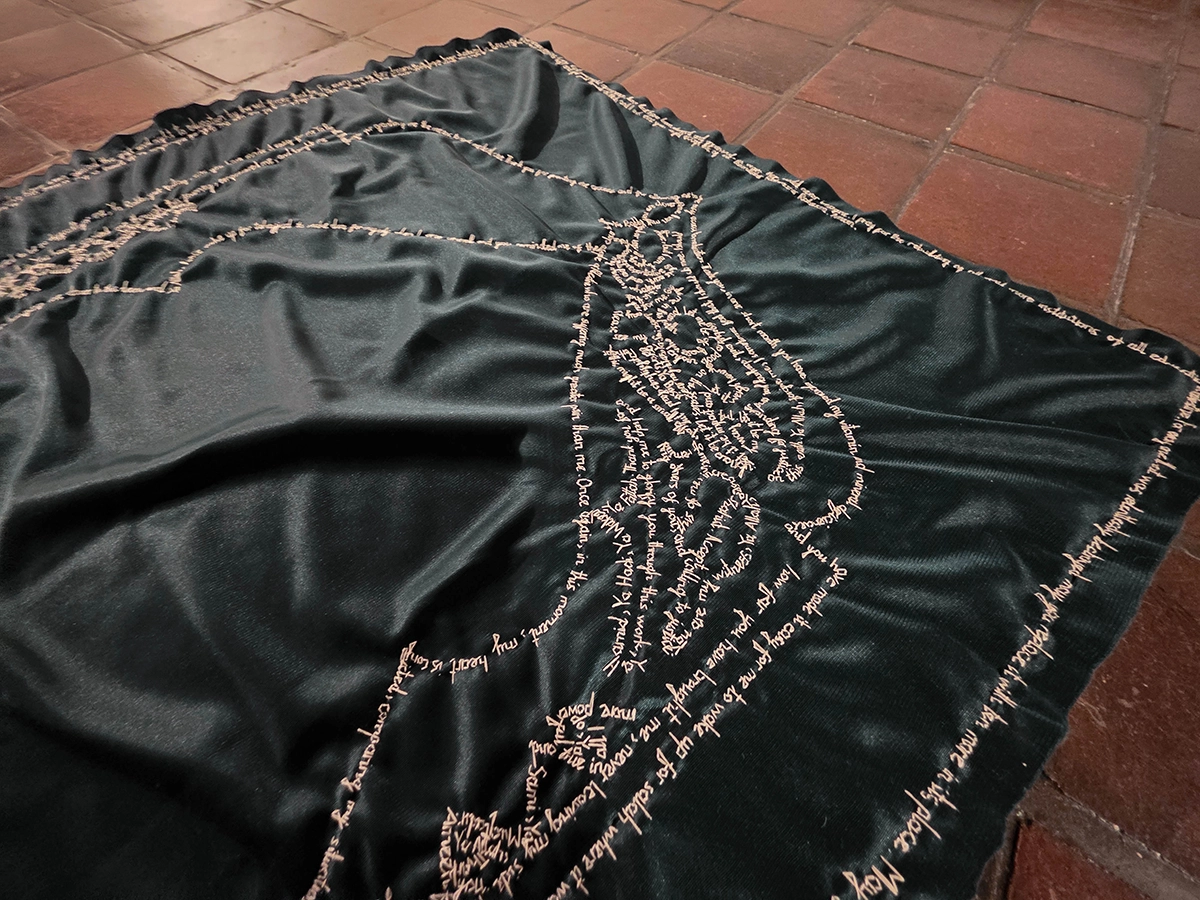
To read these duʿās, viewers must physically bend over, drawing their bodies into the artwork. This, Vikisha explained, was intentional. She wanted people not merely to look, but to move in ways that echo the bodily acts of worship performed in ṣalāh.
This embodied act of viewing continues throughout the exhibition.
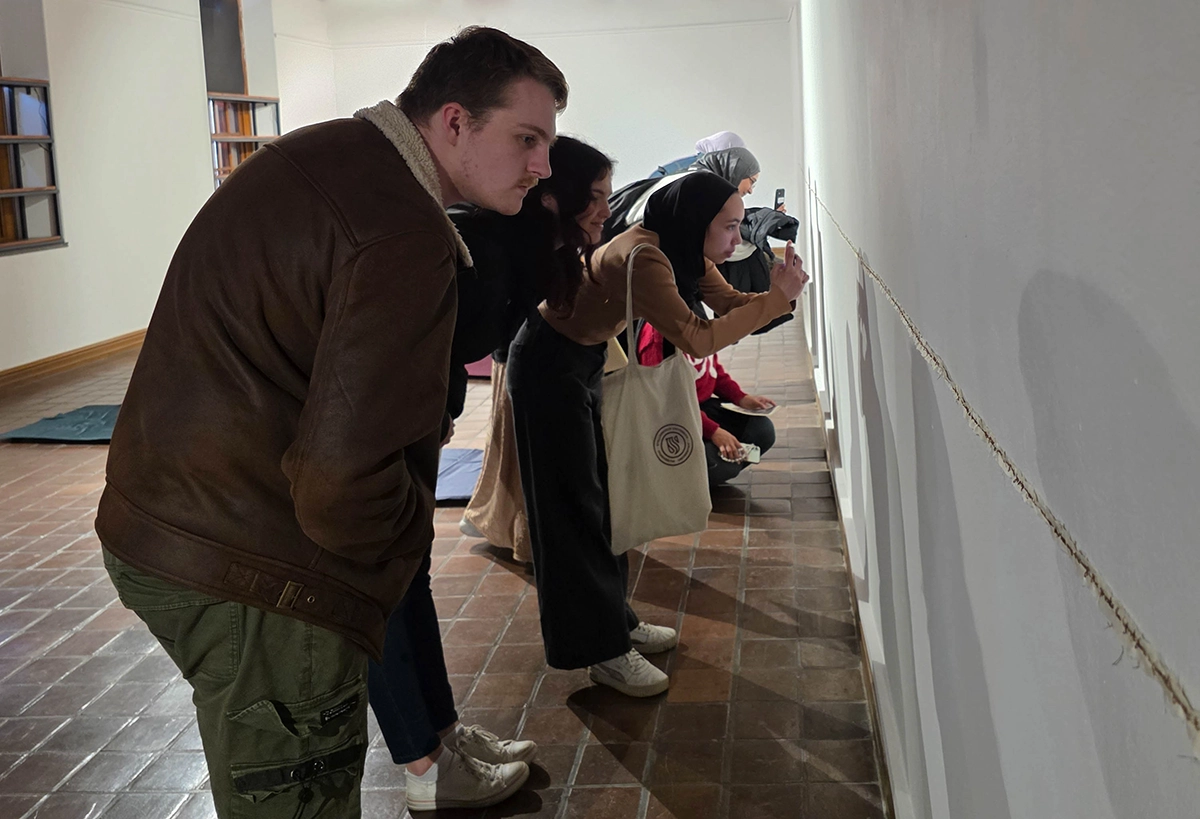
One work consists of an almost ten-metre-long strip of fabric embroidered with a Ramadan duʿāʾ. The cotton thread was dyed using a pigment Vikisha extracted from the date pits she carefully collected throughout Ramadan.
“Each date that I broke my fast with, I made a duʿāʾ for Palestine,” she explained. “I then kept the date seeds, roasted them and extracted a pigment to dye the thread used for the hand stitching.” Installed deliberately below eye level, or as she describes it, “at heart level,” the work invites viewers to bow slightly, echoing the posture of rukūʿ.
As the duʿāʾ unfolds along the length of the cloth, it becomes evident that it is not only a prayer for herself. The duʿāʾ itself extends beyond the self to Palestine and the wider ummah, reminding viewers that worship also embraces concern for others.

Another striking installation hangs from the ceiling, where more than 1 600 delicate hand-rolled paper beads are suspended in looping strands. Each bead represents a Palestinian baby younger than one-year-old. Each name was carefully handwritten onto paper, which was then rolled, wrapped to resemble a burial kafan, and dusted with earth-like particles made from the date pits Vikisha collected during Ramadan. The work quietly invites viewers to reflect on the fragility and transience of life in this world, while also considering their responsibility towards those who suffer in Palestine and across the wider Muslim world. In remembering these children, the artwork extends care beyond the self, transforming remembrance into an act of witness, compassion and duʿāʾ.
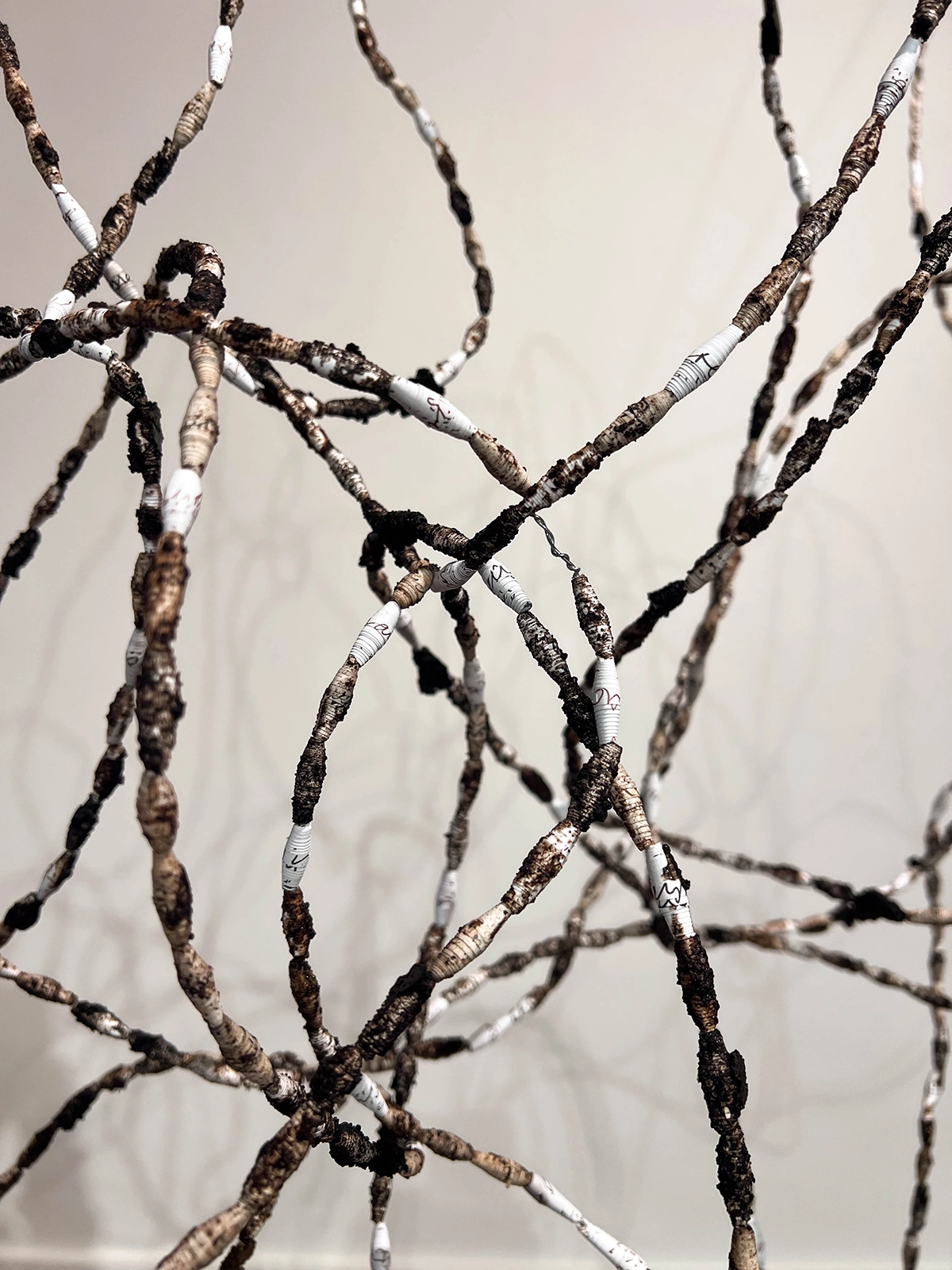
Reflecting on the work, Vikisha said: “With all these injustices going on in the world, sometimes we feel that we don’t have this huge agency to make a change. But we still have the power to make duʿāʾ and to remember… our intentions and actions will be judged, not by what injustices we changed, but by what we tried to do. This is my attempt.”
Throughout the exhibition, extendedness becomes both concept and practice. Worship extends beyond obligation through voluntary prayers, extra remembrance and duʿāʾ for others. It is embodied both in the making of the artworks and in the experience of viewing them. As Vikisha’s fingers moved rhythmically through hours of stitching, the repetitive act of embroidery became a form of remembrance reminiscent of making dhikr upon a tasbīḥ. Likewise, viewers are invited to extend their own bodies through movement, drawing them into postures of humility.
You may also want to read



Among those attending the exhibition were Muslim students from Stellenbosch University, many of whom admitted it was their first visit to an art exhibition. Aasiyah Suliman reflected that she had never imagined art could be used so intentionally to explore one’s Muslim identity.
“It moved me from seeing art as something cute or merely informative,” she shared, “to something deeply moving. I realised it isn’t just about skill, but about process, decisions and ultimately, niyyah.”
Vikisha’s work also raises a familiar question: Is this Islamic art or Muslim art?
The debate has occupied scholars for decades. Is Islamic art defined by its visual forms—Arabic script, geometric patterns, traditional materials and approaches? Is it defined by the faith of the artist? Or does it lie in the intention, process and spiritual practice behind its creation?
Yet standing in the gallery, these categories felt less important than the experience the work invited. Rather than attempting to define Islamic art, Vikisha’s exhibition seemed more interested in exploring what art can do.
Vikisha’s work quietly resists such neat categories. It is contemporary in form yet deeply rooted in Islamic devotion and shaped by sincere intention. Rather than seeking labels, her practice points towards something more important: that art can become a means of drawing closer to Allah.
There is another remarkable dimension to Vikisha’s story. At Stellenbosch University, where there are no formal offerings in Arabic, Islamic Studies or Islamic art, it was within the Visual Art department that Vikisha found both Islam and her purpose.
Vikisha hopes that one day South African universities will offer opportunities to study Islamic art, making it accessible not only to art students but to anyone wishing to engage with its rich artistic and intellectual traditions. Until then, her own journey stands as a reminder that education can offer far more than technical knowledge. In the sincere pursuit of learning, it can also become a path to faith, purpose and service.
Perhaps that is the quiet invitation at the heart of Languages of Care. Vikisha’s work suggests that worship is not confined to prescribed moments, nor care to those closest to us. Both can be extended through our hands, our bodies, our prayers and our intentions, reaching into the ordinary moments of everyday life.
Widad Sirkhotte is a PhD candidate researching Islamic arts education in South Africa.