


![Does ta’wīl mean interpretation or fulfilment? A Quranic reassessment [+video]](https://muslimviews.co.za/wp-content/uploads/2026/10/Tawil-Kaskas-360x180.webp)








![Why becoming a wealthy Muslim is commendable in Islam [+videos]](https://muslimviews.co.za/wp-content/uploads/2026/09/Muslim-Trade-Business-1-360x180.webp)



MOHAMED ABBAS RUMANEY (1950 – 2026)
In two heartfelt tributes, Abbas Rumaney is remembered as a devoted father, trusted mentor and generous community figure whose faith, wisdom, humour and encouragement shaped lives, strengthened family bonds and left an enduring legacy.
A daughter’s eulogy to her father: hero, mentor and guiding light
Abbas Rumaney was a father, mentor and steadfast source of strength whose life centred on faith, service and family. In this heartfelt tribute, his eldest daughter, KARIEMA KHALIFEY, recalls his wisdom, courage and enduring legacy of love.
My dad was my hero, my rock and my greatest source of strength. While he was always there for me, our real journey together began when I was about 15 years old.
I started accompanying him to his cricket matches, spending countless hours by his side. Later, those outings turned into attending qawwalis together, sharing meals and treats and accompanying him to weddings, where I proudly carried his camera bags while he captured precious memories through his photography. These simple moments became some of my most treasured memories.
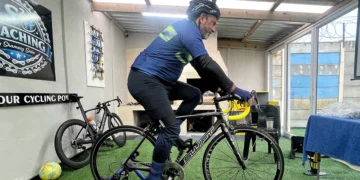
In 1998, my granny insisted that I take him for a medical check-up. The cardiologist was fascinated that a lifelong chain-smoker could be in such good health. My dad ran ten kilometres every week and played cricket every Sunday. Eventually, my husband joined him on the cricket field, which meant I no longer had to go along!
Throughout my 27 years in education, my dad remained my greatest adviser and mentor. When I first started teaching, he encouraged me to offer my services to a school without expecting payment. For three months, I taught voluntarily. At the time, I did not fully understand his wisdom, but two years later, when a permanent post became available, the school governing body remembered that selfless act. Alhamdulillah, despite going through the formal application and interview process, its respect for and trust in me played a significant role in my appointment. It was one of the many lessons my dad taught me – that sincere service is never wasted.
In 1999, I was blessed with another opportunity – to work alongside my dad at Muslim Views for almost a year. During that time, I learnt invaluable skills: networking, reception duties, editing and marketing. I also had the privilege of working with remarkable people, including Uncle Mahmood [Sanglay], Uncle Farid [Sayed], Uncle Elias [Parker] and Gairoonisa Paleker, among many others, during the first Foodworld Big Walk. They were consummate professionals, and yet there was my dad – the so-called layman – helping to run the show. It was an incredible experience and one I will always cherish.
I later joined Cravenby High School, where I taught for nearly 22 years. My dad served on the school governing body and worked tirelessly on fundraisers alongside Dr Parkar, Mr Hamdulay and the principals at the time, Mr Matthew and Mr Khan. Over the years, these colleagues became family. Even in his final days, they continued to visit him, support him and make time for both him and us. That was one of his greatest legacies – everyone who entered our home became family. He loved people deeply and treated everyone with the same respect, regardless of age or status.
Whenever I faced challenges at school or became upset by someone’s words or actions, my dad would gently remind me: ‘How can an intelligent person like you be offended by that? Will what they say or think really matter? What impact does it have on your life?’ Then he would smile and say: ‘Carry on. Leave them. Allah will show you the way.’ Today, I live by those words, and they continue to guide me through life’s challenges.
When I accepted a position at a new school in 2021, I was nervous about leaving a place I had called home for over two decades. My dad needed only one phone call to reassure me. He helped me pack, hugged me and said: ‘Go, my dear daughter. I’m so proud of you.’ Even after I left, he continued to call regularly – offering advice, encouragement or simply checking whether I was okay.

Sadly, 2021 was also one of the most difficult years of his life. He lost his beloved mother, and that loss deeply affected him. Then, in July of the same year, he was diagnosed with lung cancer. It was a devastating time for our family. Losing his mother and then receiving such a diagnosis were two immense blows. Yet, with faith in Allah and the support of family, we persevered. Alhamdulillah, we managed.
This marked the beginning of a new chapter in our relationship. My dad would allow only me to take him to his appointments and chemotherapy sessions. Over time, each of his grandchildren also played a role in caring for him. For six years, they willingly accompanied him to treatments, spent time with him and took care of him whenever they could. They never complained. They missed weddings, social events and other occasions because they understood that family came first. Their grandparents and great-grandmother were at the core of who they are, and I am so proud of the love and dedication they showed.
Alhamdulillah, my dad lived with cancer for six years. After Ramadan this year, however, he became seriously ill and developed a blood clot. Despite his courage and determination, and after almost three months of battling this illness, he peacefully returned to his Creator.
I was my Papa’s shadow. I never left his side until the very end.
On the morning he departed, I reassured him that I would take care of the family as the eldest child and continue the legacy he built. I reminded him of the lessons he taught us and promised that we would stay united, just as he had always taught us.
My dad was an exceptional son, a loving husband, a caring brother, a devoted father and undoubtedly the best grandfather anyone could ask for. He lived for his grandchildren. I even had to promise him that I would continue spoiling them every now and then, just as he did with his regular Shein orders every Eid.
You may also want to read


We were blessed to serve him and care for him, just as he had spent his entire life serving and caring for us.
When he passed away, he was surrounded by almost 25 people. He was not alone. His children, grandchildren, siblings, nieces, nephews and dear friends were all there with him. Alhamdulillah, it was one of the most beautiful departures I have ever witnessed. Although a part of me left with him that day, I take comfort in knowing that he was surrounded by love.
My brother was on Hajj in Makkah at the time, yet, through a video call, he was still able to recite the Kalimah into my father’s ear one last time. In one way or another, all of us were present at that sacred moment of departure. For that blessing, we will forever be grateful.
I will miss my dad dearly every day of my life. But I have been entrusted with an amanah – the responsibility of keeping this family together and carrying forward his legacy. I know I may never accomplish all that he did, but I will do my very best to honour him through my actions and the values he instilled in all of us.
May Allah forgive him, shower him with His infinite mercy and grant him the highest abode in Jannatul Firdaus. May every dua made on his behalf be accepted, and may every letter he recited from the Qur’an be a source of endless blessings and light in his grave.
Ameen.
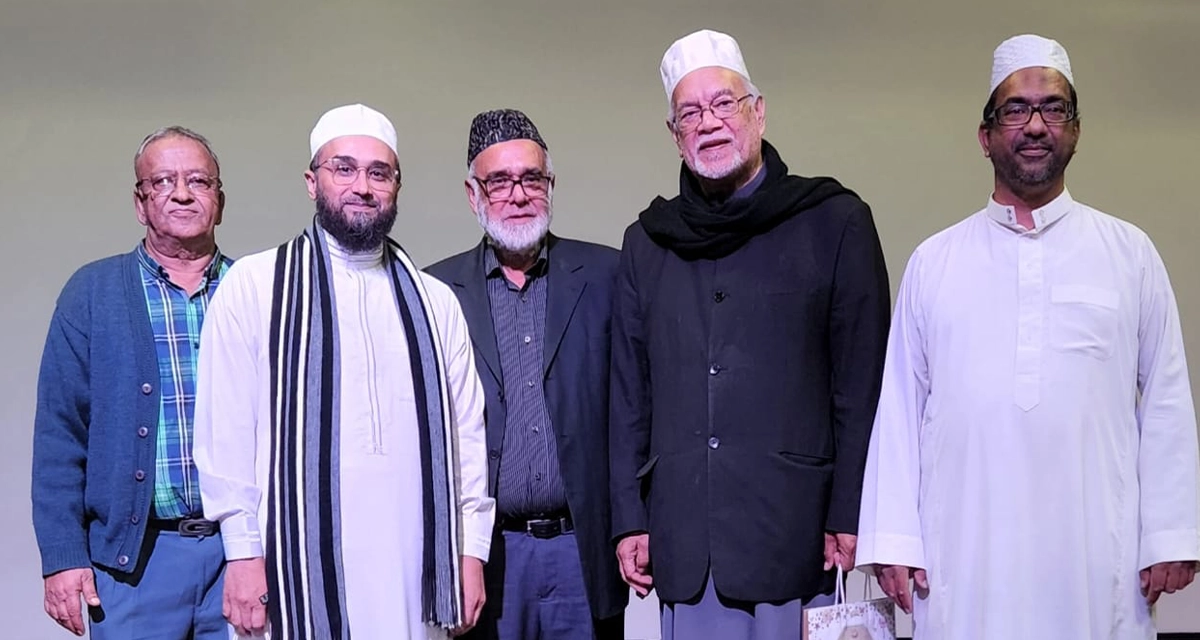
Roo, Rumi and his memorable Rumaneyisms
Abbas Rumaney was known by many names, but his integrity, intellect and generosity remained constant. PROFESSOR GAIROONISA PALEKER remembers the self-described ‘layman’ whose wisdom, humour and encouragement shaped a community and changed lives.
Mr Roo, Roo, Rumi, Mr Rumaney. These were the various names by which I knew Abbas Rumaney. Mr Roo, Roo or simply Rumi were conferred on him by Riedwaan of International Book Services (IBS), and that is what he became for us all. Muslim Views and IBS have been two formative institutions in my life, largely because of the people I met, including Mr Roo.
I first met Mr Roo on the day that Shamsu Parker died, first at the hospital and later at Shamsu-da’s house. This first meeting has become significant because, in many ways, I have felt over the years that the baton of older brother and friend passed from Mr Parker to Mr Roo. This may have been wishful thinking woven out of the loss of Shamsu-da, but it is how I viewed Roo. I suspect this may have been the case for us ‘youngsters’ who knew both men, particularly Riedwaan and me.
Later, working closely on the first Muslim Views/Foodworld Big Walk, as it was known then, I came to know Abbas Rumaney. And I came to know him even better after the Big Walk, on Saturdays at IBS, when he and several other friends, mentors and interlocutors gathered. One would buy a packet of Tennis biscuits, another a loaf of bread and cheese or smoked snoek, to be shared as communal tea and snacks while whiling away the Saturday afternoons.
This curated space at IBS – the collaborative vision of Naziem, Ilhaam and Riedwaan, and possibly others I am not aware of – created a Saturday community of regulars and itinerants: jazz musicians, aspiring poets, the intellectually curious and those in search of answers to questions about life after death, the meanings of dreams and so much more.
An institutional and intellectual history of IBS is waiting to be written, as is one of Muslim Views – but that is an aside. Here, Roo, and all of us regulars, found a small community in which dissenting views were robustly discussed, with conversations ranging from the latest mundane community news to contested ideas and reviews of the latest publications by Said, Chomsky or Sardar. In the background was a changing soundtrack that went from Khurshid Ahmed’s naats to Nusrat Fateh Ali Khan’s ghazals and qawwalis, and to Fairuz and Anouar Brahem.
This summarised backstory is a way of signalling that I came to know Mr Roo over an extended period, in different contexts and changing circumstances. Throughout this time and these changing contexts, the man remained consistent and constant – not static – in his ideas, his causes, his loyalties and, most importantly, his principles. His sense of himself was firmly tied to his integrity and humanity.
The upshot was that the respect, affection and admiration I had, and still have, for him were built over years. His opinion mattered, so much so that, until his hospitalisation, I sought him out to ask for his opinion, knowledge and wisdom.
This extended indirectly to my graduate students. A recently completed PhD on the historical role of South African media in the construction of sporting masculinities was, in no small measure, guided by Mr Roo, whose sporting experience and knowledge I had shamelessly mined to guide my student. He loved the fact that he could contribute. In fact, he got a kick out of the fact that a ‘layman’, as he called himself, was teaching a university lecturer. He would jokingly ask whether he would get a credit as an external supervisor.
There was a seeming incongruity between the IBS space and Mr Roo – it lay in the fact that reading was not a favoured pastime of his, as he frankly acknowledged. This seeming incongruity speaks more to the general prejudice towards non-readers than it does to the sophisticated intellect of someone like Roo.
His general knowledge was incredibly wide-ranging. He was informed and made thought-provoking, astute observations and contributions about current affairs, philosophy, poetry and music. More incredible was his ability to connect ideas swiftly and draw insightful conclusions. I say incredible because of the ‘layman’, self-deprecating manner in which he described himself. He processed information and ideas at a rapid pace.
His assessment of sticky situations, in particular, was more often than not accurate and sharp, and he had formulated not one but multiple response scenarios. The rest of us needed time to catch up with him.
As someone whose education was cut short by the necessities of life, he often voiced his regret that he did not have the opportunity to go beyond his rudimentary learning. Despite this, education was incredibly important to him. His children, many other children of friends and family, and I are beneficiaries of his love of and dedication to knowledge and learning. His public service roles were predominantly in education.
Elsewhere, I have written about my father’s fight for my education. Here, I need to acknowledge Abbas Rumaney’s supportive role in my continuing education and the combined mentorship of Roo, Uncle Dawood, Doc and others. Mr Roo, in particular, was a constant source of encouragement, always telling me that I could do anything I wanted and that I was blessed – this in the context of the constant, gnawing anxiety about tuition fees for graduate studies.
I had promised myself that I would pursue graduate studies on my own steam, without financial help from anyone. But, of course, help came in many guises. His calm response to my anxiety was that I should forge ahead and that it would all fall into place. And it did. The scholarships came and made my further graduate studies possible. He would always say: ‘I can see you where – in places – you cannot see yourself.’ It was a firm faith that I would indeed get ‘there’.
This encouragement continued until my last visit, just before Eid-ul-Fitr 2026, mere days before his hospitalisation. Every out-of-town or international conference and visiting fellowship was greeted first with the teasing comment in Konkani, ‘Oondak bai, oondak’ (‘Gallivant, my dear, gallivant’), followed by enthusiastic support and a self-satisfied smirk, as if to say: ‘See, I told you, you would get there.’
There was a generosity of spirit that was a deeply ingrained character trait of Roo’s. This generosity manifested itself in a myriad of ways and benefited many people.

He was far from infallible. He embodied the flaws and foibles of the human condition. But a rare quality that set him apart was that he owned both his flaws and virtues. He did not feel diminished by acknowledging his mistakes and never hesitated to apologise.
His pet peeve was wilful stupidity – the kind of self-induced stupidity that stems from a willed, deliberate shrinking of intellectual horizons, from ghaflah and from a delusion of the self. He was deeply wounded by the ease with which people misunderstood his intentions, and misinterpreted and misrepresented his words and actions.
An oft-repeated Rumaneyism, one among many, was: ‘When Buchinsky advertises, people pay attention; when Rumaney speaks, no one listens’ – or something similar. With this, he was signalling his disappointment and hurt that most people typecast him as abrasive and as having little to contribute in terms of ideas or original thought.
He was, in fact, the opposite. In the face of sincerity, he gave generously of his time and energy. His was an expansive horizon, eager to give and take, to grow and learn. He had a deep, nuanced appreciation for Urdu poetry; his was a refined spirit.
But he drew his learning and wisdom broadly from a range of sources. I am sure there are many people who received words of wisdom, whether from Rumi’s quatrains or Buddhist proverbs and aphorisms. He was an inveterate sharer of words and ideas that resonated with him. His wisdom was also nurtured by the hardships of life. His tolerance of others’ flaws was generous. His kindness was unparalleled. He was a mensch in the truest sense of that word.
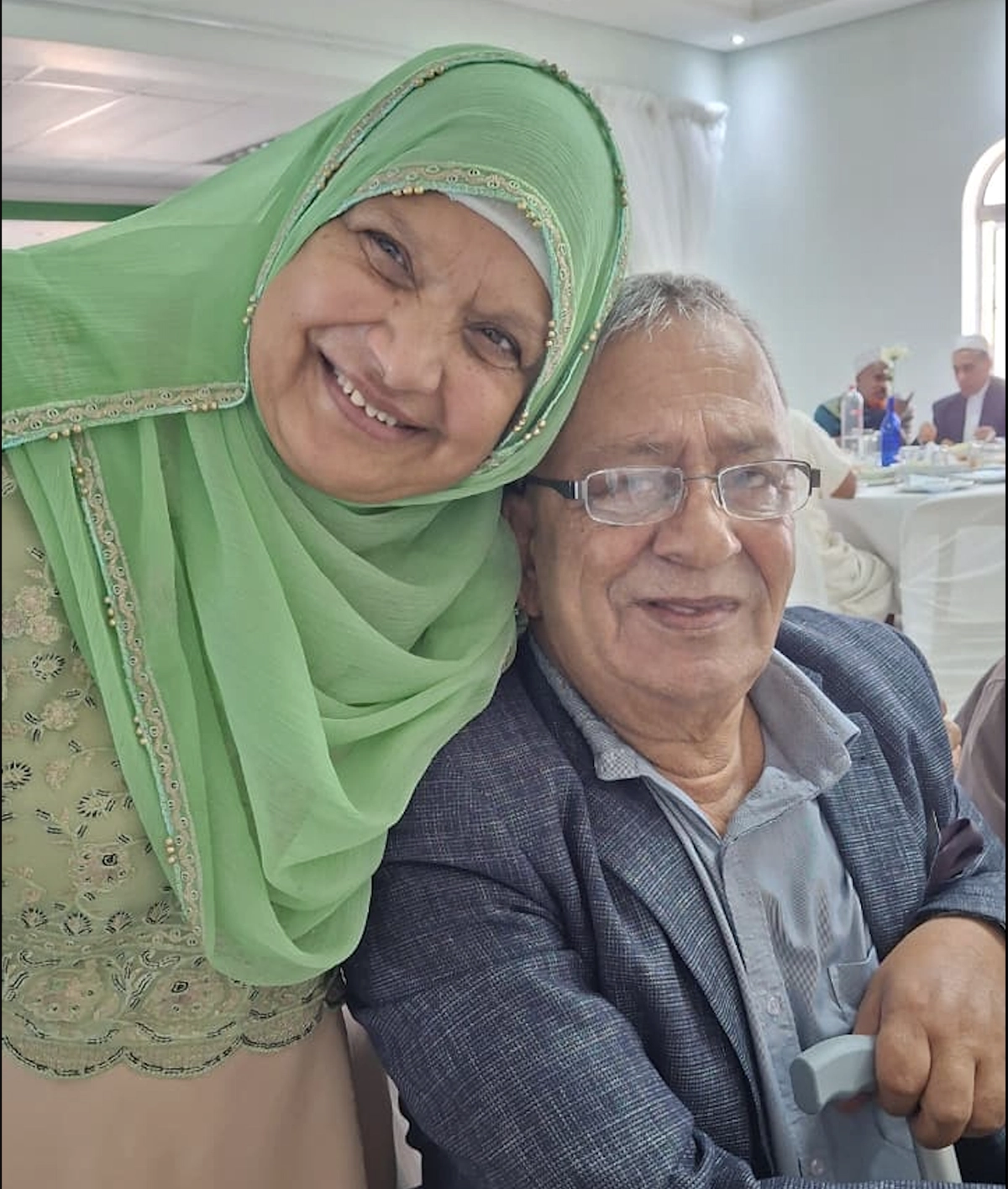
He was deeply rooted in his family. His children, nephews, nieces and especially his grandchildren were his pride and joy. To use a quintessentially English phrase, he, Rashida bhana and his family kept a warm, inviting hearth and home, where the welcome was generous, the food delicious and one became an honorary family member. I was, and continue to be, privileged to be welcomed to this hearth and home.
Professor Gairoonisa Paleker teaches World History and Film and African Experiences of Genocide at the University of Pretoria.