













![Does ta’wīl mean interpretation or fulfilment? A Quranic reassessment [+video]](https://muslimviews.co.za/wp-content/uploads/2026/10/Tawil-Kaskas-360x180.webp)





















![Why becoming a wealthy Muslim is commendable in Islam [+videos]](https://muslimviews.co.za/wp-content/uploads/2026/09/Muslim-Trade-Business-1-360x180.webp)








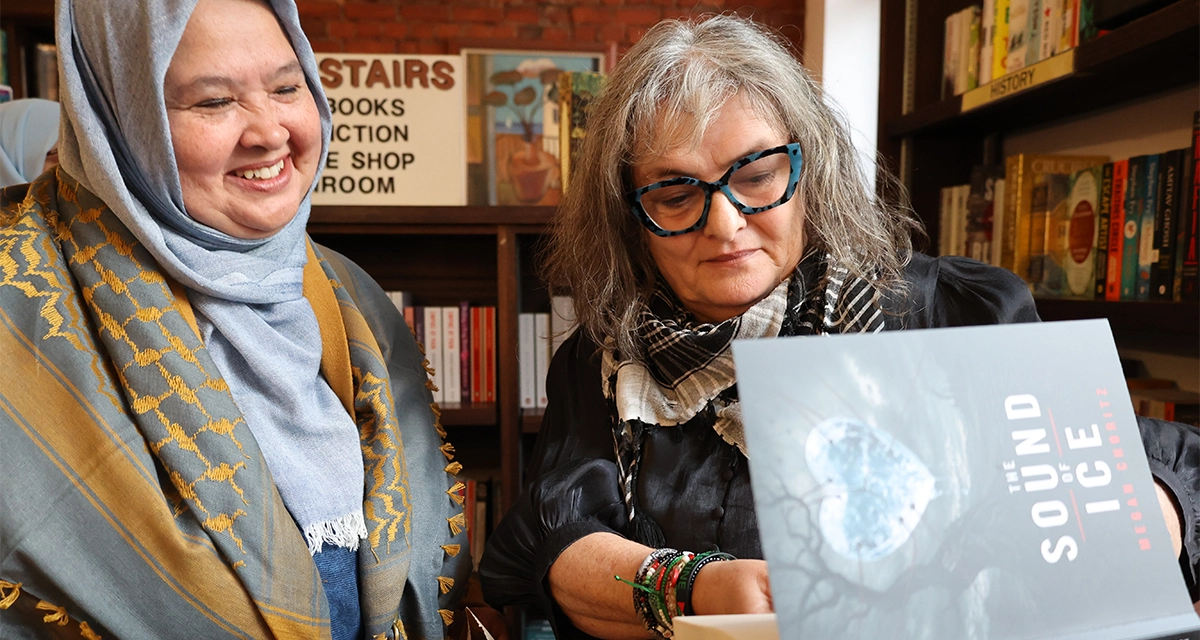

Megan Choritz’s second novel, The Sound of Ice, imagines a future shaped by water wars, trafficking and collapsing systems. At its Cape Town launch, she discusses activism, speculative fiction, women’s resistance and fragile hope.
By ANWAR OMAR
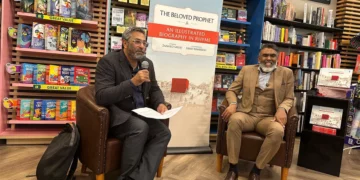
On August 4, 2026, more than 100 people packed into The Book Lounge in Cape Town for the launch of Megan Choritz’s second novel, The Sound of Ice. Friends, fellow activists, longtime readers and just the people who love her attended the event.
The warmth in the space was impossible to miss. Choritz was in conversation with Kelly-Eve Koopman, a South African actor, director and writer whose own debut collection, Because I Couldn’t Kill You, has been praised for its unflinching excavation of family, trauma and inheritance – a pairing that set the tone for a conversation as personal as it was political. This wasn’t just a book launch; it was a gathering of a community that has rallied around Choritz through some turbulent years.
The book
The Sound of Ice, published by Melinda Ferguson Books, is being pitched as a dystopian thriller. Ferguson, who is a longtime friend and associate of Choritz, is herself an award-winning South African journalist and author, best known for her bestselling memoirs Smacked (2005) and Hooked (2010).
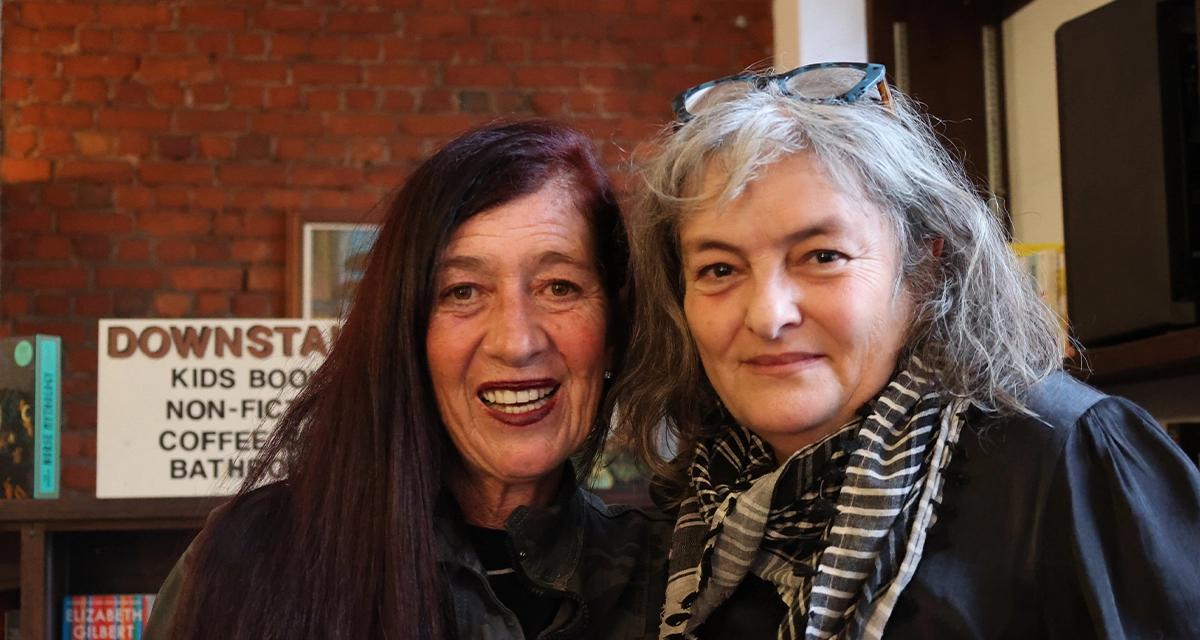
At the centre of Choritz’s novel of speculative fiction is Charlotte, a healer who shelters women fleeing men who have brutalised them. When the iceberg is attacked, the Water Wars erupt.
The novel’s foreword lays the groundwork for its world with a relentless and repeated list of events that reads almost like prophecy rather than fiction. Parks go dry; AI data centres burn through millions of litres of potable water while nearby towns experience drought; government and business become indistinguishable; human trafficking spikes; and countries secretly arm for the Water Wars of the future.
It’s a bracing opening, and it sets the tone for what the book calls “a fierce act of imagination about trafficked bodies and stolen futures, female fury, tenderness, exile, and the cost of trying to stay human when everything has turned monstrous.”
Asked whether a book that reads so much like prophecy and dystopia leaves any room for hope, Choritz didn’t hesitate:
“There has to be room for hope, but I think the Disney vision we have to abandon. We have to abandon the notion of Cinderella and embrace the possibility that hope is tiny, and it is fragile. And that life is tiny and fragile.”
About Megan Choritz
Megan Choritz is a South African-born writer, actor, theatre-maker, director, improviser and activist based in Cape Town. Before she turned to fiction, she built a career in theatre as a playwright, director and performer.
She made her debut as a novelist in 2023 with Lost Property, which tells the story of a woman who discovers her marriage of 15 years was built on a devastating secret, and who is forced to confront her own childhood in apartheid-era Johannesburg in order to heal. The novel was widely praised for its lyrical prose and its unflinching handling of abuse, race and inheritance.
Asked how she holds something so personal in her characters and shares it with a room full of strangers, Choritz said:
“These characters who are quite radical in a lot of ways, are versions of me, so this is a really great way of getting to know me. These women in the book are versions of me and presenting them means that we can hope.”
In the years since Lost Property, Choritz has become known for more than her fiction. A South African Jew, she is an outspoken anti-Zionist and a member of South African Jews for a Free Palestine. That activism has come at a real personal and professional cost. In April 2025, she wrote publicly about being excluded from a Jewish literary festival after her publisher’s submission was met first with silence, then with the admission that her politics were considered “too extreme” for the event’s “neutral, literary” framing.
She has also faced a Strategic Lawsuit Against Public Participation (SLAPP) suit, brought against her in response to her activism, a tactic designed to exhaust and silence critics through litigation costs alone. She has continued to speak at solidarity events, including interfaith forums on speaking truth to power. This has made her a figure who has moved from being embraced within parts of her own Jewish community to becoming one of South Africa’s most visible anti-Zionist voices.
Asked directly about being Jewish in South Africa, her involvement with South African Jews for a Free Palestine (SAJFP), and what she sees ahead for Jewish politics and practice in the country, Choritz’s answer was simple:
“Doykayt is a Yiddish expression of hereness, where we do our work where we are, and it’s the exact opposite of the Zionist obsession with an exclusive Jewish homeland. Doykayt means working where we are with who is here.”
That trajectory is part of why The Sound of Ice feels less like a departure from her earlier work than a continuation of it in a different way. Where Lost Property excavated the personal legacies of apartheid-era cruelty, The Sound of Ice projects forward, imagining a future built on the same exploitation, trafficking, the collapse of any real boundary between government and capital, and women left to protect each other because no one else will.
Koopman pressed on the relationship between Choritz’s activism and her speculative writing, asking which comes first and whether the two can be separated at all.
Our current times are almost inexplicable. We can’t explain them,” Choritz said, “and I think that speculative fiction helps us try to come to terms with our current reality which seems utterly far-fetched and completely unreasonable and unexpected. So in a weird kind of way, the writing that creates the world and the world is reflected back at us because of where we are. And it’s very difficult to separate. I don’t know which one comes first. That’s the beautiful circle of activism and creativity.”
The conversation also turned to positionality, to the fact that the book’s vision of survival and resistance is drawn largely from outside Western and white frameworks, while its author is a white South African writing about crises that fall hardest on the Global South. Choritz didn’t deflect the tension:
“That for me is an awkward space and I don’t get away from my whiteness, but I really wanted to write speculative fiction where the people were not necessarily white. And I don’t want that to sound like an excuse, because obviously I have to own who I am, and I do! But that is where I have gratitude for this space that I have been invited into as an activist, which is not a white space.”
On the night
You may also want to read


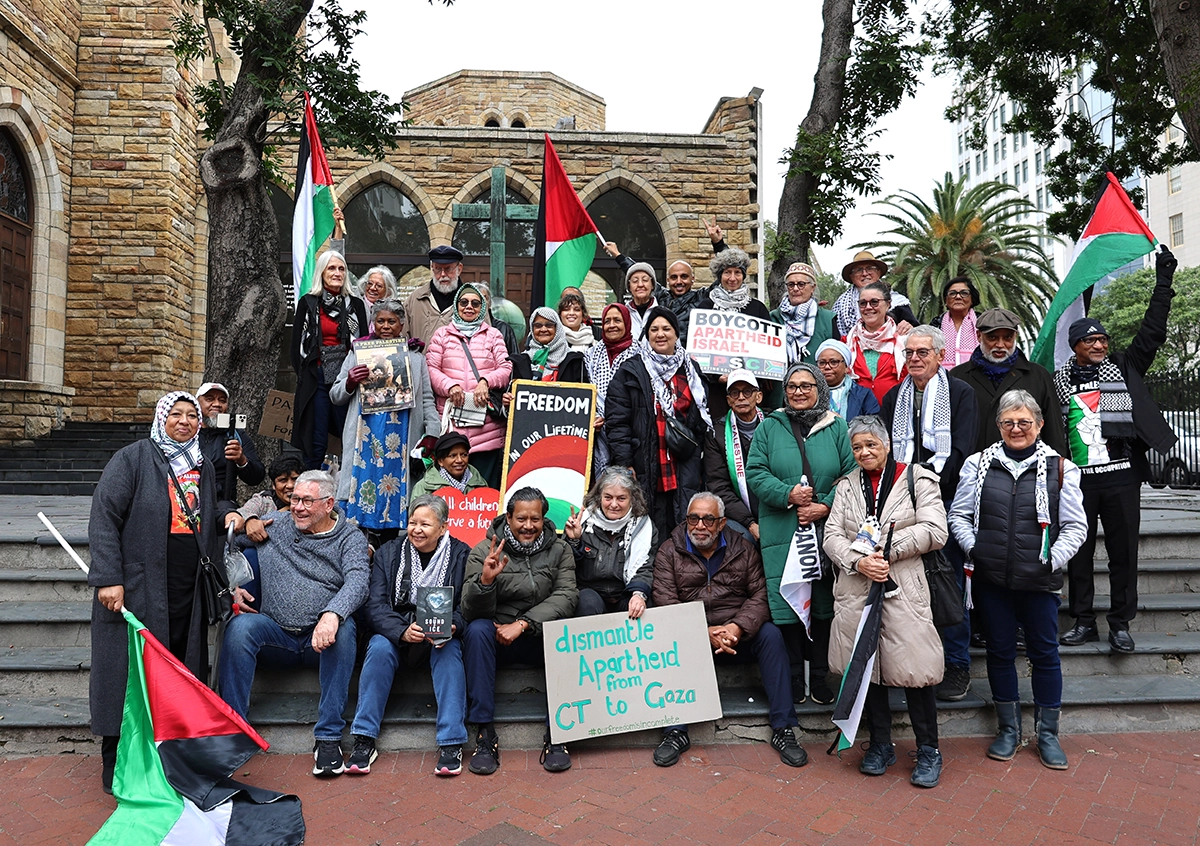
With over 100 people crowded into The Book Lounge, well beyond the venue’s usual turnout, the question-and-answer session, led by Kelly-Eve Koopman, was riveting, moving quickly from the mechanics of the novel to the world it mirrors, including water scarcity, the trafficking of women and girls, and the machinery of collapse the book imagines just slightly ahead of where we currently stand.
The Book Lounge sold out all 50 copies it had brought in for the night. For a room full of people who know Choritz as both a novelist and an activist, the line between the two was, fittingly, hard to find.
One question from the floor asked whether Choritz uses AI in her writing process at all. Her answer drew a laugh, but it landed close to the spine of the novel itself. She said she’s too much of a cheapskate to pay for it and too lazy to learn how, but underneath the joke was something sharper, directly tied to the same anxieties that animate The Sound of Ice. She described being suspicious even of asking Google a simple question, unsettled by how much water is consumed just to generate an unscripted moment – one that folded the book’s fictional world, where AI data centres burn through millions of litres of potable water while nearby towns run dry, straight back into the room.
Choritz explained that she is extremely suspicious of AI and troubled on ethical grounds by who owns the technology, half-joking that she imagines the AI companies as part of the same system she’s already boycotting. Her closing line, only half in jest, drew one of the biggest reactions of the night: she hoped she’d die before all writing became AI-generated.