



















![The market-builder who restrained the market [Part 2]](https://muslimviews.co.za/wp-content/uploads/2026/08/PHOTO-2026-08-25-17-16-32-360x180.jpg)
![The merchant preceding the Prophetic mission [Part 1]](https://muslimviews.co.za/wp-content/uploads/2026/08/01-360x180.jpg)







![The market-builder who restrained the market [Part 2]](https://muslimviews.co.za/wp-content/uploads/2026/08/PHOTO-2026-08-25-17-16-32.jpg)

By MAHMOOD SANGLAY
PART TWO
In this concluding part of the series we follow Prophet Muhammad ﷺ as he migrated to Madinah in 622. He was not simply relocating a private enterprise. He was leading a vulnerable community of migrants who had lost homes, assets and trading positions. The response joined spiritual, social and economic institution-building: a mosque, bonds of mutual support and a market.
This is where Benedikt Koehler’s argument becomes most arresting. He says the Prophet ﷺ established a market free of taxes and permanent private claims, declined a request to fix prices and promoted risk-sharing finance. Koehler reads these decisions through the lens of Austrian economist and philosopher Friedrich Hayek and calls early Islam a birthplace of capitalism. This thesis is particularly noteworthy and should be subjected to closer scrutiny.
An open market, not a moral vacuum
Madinah already had markets at the time of the Hijra. The arrival of the Prophet ﷺ and the new Muslims widened economic space for a community that needed livelihoods and greater autonomy. Koehler highlights the reported declaration that no tax would be levied on it. He also cites the practice, maintained by later leaders, of preventing traders from turning stalls into permanent private enclosures. Access was to remain open rather than being captured by incumbents.
That resembles pro-competition policy: lower barriers to entry, no privileged gatekeepers and room for newcomers. It is especially relevant where today’s markets are dominated by cartels, platform monopolies and politically connected firms. But a low-tax market was not an unregulated free-for-all. Islamic teaching regulated conduct intensely even where it did not nationalise trade.
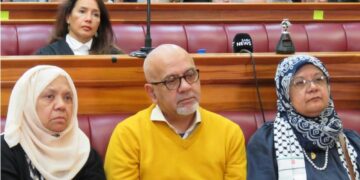
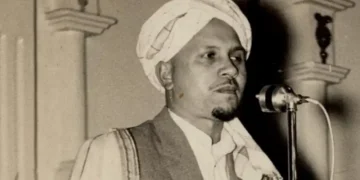
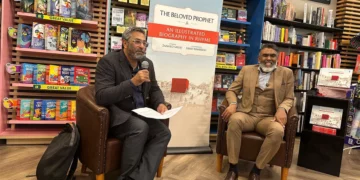
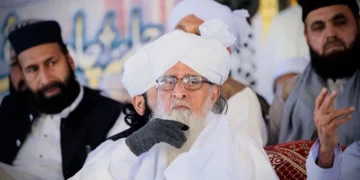
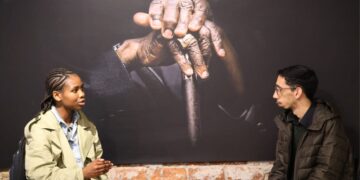
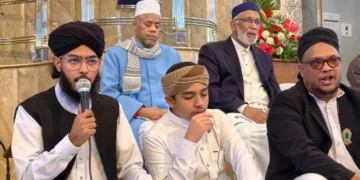
In 2015 the South African-born Mufti Abdur-Rahman ibn Yusuf, participated in a panel discussion organised by the Islamic Finance and Ethics Society (IFES) with Koehler at King College in London. The mufti sharply illustrates the merits of regulation. A seller must disclose a material defect. A trader may not disguise wet grain beneath dry grain, manipulate weight, swear false or reckless oaths, or hoard staple foods until scarcity permits an exploitative price. Buyers and sellers who tell the truth and make matters clear receive blessing in their transaction; concealment destroys it.
Clip focus: Mufti Abdur-Rahman contrasts the spiritual rank of the truthful trader with the danger of transgression, then explains the Prophet’s ﷺ exposure of wet produce concealed beneath dry produce to manipulate weight.
In contemporary language, this is consumer protection built into conscience and law. The prohibition is not only against an outright lie. It reaches information asymmetry — the seller’s exploitation of facts the customer cannot reasonably discover. The used-car owner who warms a faulty engine before the buyer arrives may comply with “sold as seen” wording and still commit deception.
Clip focus: Mufti Abdur-Rahman applies the duty of disclosure to a vivid modern example: a seller warms up a faulty used car so that the buyer cannot hear the engine problem, despite relying on “sold as seen”.
The commercial ethic extends beyond customers. The supplied academic studies identify prompt payment for work, fulfilment of promises, lawful products, accurate records, fair dealing, quality, moderation and concern for society. Fathima Nasreen et al, in Exploring the Entrepreneurship of Prophet Muhammad (PBUH), call this stakeholder-centred entrepreneurship. The language is modern; the underlying proposition is older and tougher: profit does not cancel duties to workers, debtors, partners, neighbours or the poor.
Prices, power and public welfare
Koehler places great weight on a report that, during rising prices, the Prophet ﷺ declined to impose a price cap, saying that Allah determines prices. He treats this as a historic break with state price-setting and compares it to the “invisible hand”. The episode certainly warns rulers that a politically attractive price decree can wrong traders and worsen supply. It does not establish that every intervention, in every crisis, is forbidden.
Clip focus: Koehler links the tax-free Madinah market to fiscal competition, then recounts the famine, the appeal for price controls and the Prophet’s ﷺ refusal to fix prices: “Prices are in the hand of God.”
The wider Prophetic framework attacks market abuse. Hoarding necessities is prohibited; fraud and short measure are condemned; interest is forbidden; wealth carries an enforceable claim for eligible recipients through zakat. Markets operate, but their outcomes are neither sacred nor sufficient. Freedom to exchange is paired with duties of redistribution and protection.
This is the central corrective to the familiar binary between laissez-faire capitalism and state command. The Prophetic economy recognised ownership, enterprise, profit and price signals while refusing to let wealth become absolute power. The Qur’anic statement (Sura 2:275) that Allah has permitted trade and forbidden riba distinguishes productive exchange and shared commercial risk from extraction through guaranteed increase on debt.
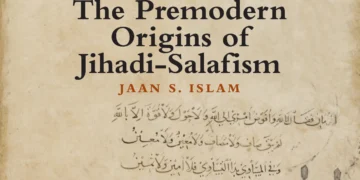
Khadijah’s financing of trade, and the wider use of qirad-type partnerships, illustrate the alternative. Investor and entrepreneur divide profits according to agreement while capital is genuinely exposed to business risk. Jairus Banaji’s academic article Islam, the Mediterranean and the Rise of Capitalism places Islamic partnership forms at the centre of a much wider Mediterranean commercial history. He argues that Islam preserved a monetary economy and developed partnership structures that helped shape early capitalism, complicating histories that begin and end in Europe.
Koehler goes further. He argues that Islamic qirad influenced the commenda used in Italian maritime trade, that the waqf anticipated features of the English trust, and that commercial knowledge moved into Europe through figures such as Fibonacci. These connections make the Muslim world central rather than peripheral to economic history. Yet transmission across centuries is difficult to prove in a straight line; resemblance does not by itself demonstrate borrowing.
You may also want to read


![The merchant preceding the Prophetic mission [Part 1]](https://muslimviews.co.za/wp-content/uploads/2026/08/01-120x86.jpg)

Was he the “first capitalist”?
The phrase works as a provocation, not a settled verdict. Muhammad Irwan Ariffin’s review of Early Islam and the Birth of Capitalism calls the hypothesis powerful but faults the book for not defining capitalism clearly, for sometimes treating strategic historical decisions as timeless religious prescriptions and for relying on translated or disputed historical sources when stronger hadith material required attention. Ariffin also notes that compulsory zakat under Abu Bakr complicates a purely libertarian reading.
Salman Ahmed Shaikh’s review of Early Islam & the Birth of Capitalism adds an equally important warning: similarities between Islam and markets do not make Islam a pioneer of unfettered capitalism. Markets are instruments, not objects of worship. Islam permits voluntary exchange but rules out “ethical bads”, interest-based extraction and exploitation, and may supplement or constrain markets for the public good.
Even Banaji’s account is more measured than a heroic “birth” story. Capitalism developed through connected Mediterranean networks, merchant elites, monetary systems and changing forms of labour control. It cannot credibly be attributed to one person or civilisation alone.
The title “businessman” also needs care. It can illuminate the Prophet’s ﷺ practical experience, but it cannot contain his vocation. His later economic decisions were those of a prophet, lawgiver and community leader, not merely a profit-seeking entrepreneur. Material success was disciplined by worship, redistribution, mercy and the final accountability of the Hereafter.
A model for an age of distrust
The strongest conclusion does not depend on winning the argument over capitalism’s birthplace. The Prophet ﷺ offers a model of enterprise in which trust is productive capital, disclosure is a duty, risk should not be dumped onto the weaker party and markets must remain open without becoming morally empty.
That standard is acutely newsworthy. Corporate scandals routinely reveal businesses that were legally engineered yet socially destructive. Digital platforms exploit information gaps at unprecedented scale. Food, housing and finance markets can reward scarcity while vulnerable households carry the cost. Invoking the Prophet ﷺ in business therefore demands more than halal branding or a ban on interest. It demands scrutiny of ownership, contracts, product truth, labour conditions, market power and social consequence.
Rabi’ al-Awwal invites love of the Prophet ﷺ expressed through serious imitation. In commerce, that means competence without cunning, profit without predation and enterprise that enlarges human dignity. The market he built was open, but it was never without a conscience.
Click here for Part One of this series.