






























![The market-builder who restrained the market [Part 2]](https://muslimviews.co.za/wp-content/uploads/2026/08/PHOTO-2026-08-25-17-16-32-360x180.jpg)
![The merchant preceding the Prophetic mission [Part 1]](https://muslimviews.co.za/wp-content/uploads/2026/08/01-360x180.jpg)











Islamic banking gives South African Muslims access to Shariah-compliant financial services without interest. Through structures such as murābaḥah, mushārakah and ijārah, finance is based on trade, partnership, leasing and shared risk.
By ASSOCIATE PROFESSOR ASHRAF BOOLEY
The Quran lays out the injunction for interest-free finance for the Muslim community in Sura Al-Baqarah: “Allah has permitted trade and forbidden ribā (interest).” (Qurʾān 2:275)
For the majority of Muslims, financial decisions are inseparable from their religious commitment.
Islam puts high demands on ethics in everything, from trade relations to finance. One of the widely known principles of Islamic economic theory is the ban on ribā, or interest. That is why, for many Muslims, the financial services which are not based on the usage of interest become a preferable choice.
Many Muslims living in South Africa lacked banking services complying with Shariah and avoiding the interest-based mechanisms for a long time. Conventional banks work by means of providing loans and earning deposits through interest charges. However, nowadays the situation has changed, and Islamic banking products are becoming popular among Muslims.
What is Islamic banking?
As its name suggests, Islamic banking implies the provision of financial services following the principles of Islamic commercial laws.
The most significant peculiarity of the Islamic economic system is the ban on ribā. Instead of receiving the profit in the form of interest on the loan, the Islamic financial institution creates specific schemes aimed at profit from trading, partnership, or leasing. For example, the murābaḥah scheme implies the purchase of an asset, such as a property or a car, and selling it at the agreed price plus profit. Then the cost is paid by instalments.
This type of transaction does not imply any kind of interest rate since it is structured as a sales deal.
Another mechanism used by Islamic banks is mushārakah. It is a partnership between the bank and customer, where their money is pooled together to invest in a business, a project or property. In case the business makes a profit, the share is distributed according to a ratio based on what was agreed at the outset. However, if the business results in a loss, this is distributed according to the investment each party – that is, the bank and the client – contributed.
Another instrument that Islamic banking uses is ijārah, which is similar to leasing. In the context of ijārah, the bank purchases an asset and transfers it for rent at a certain price. In some cases, the asset can even belong to the client. All these mechanisms reveal the core principle of Islamic finance – profit should be generated out of legitimate business with risks included.
Islamic banking in South Africa
You may also want to read



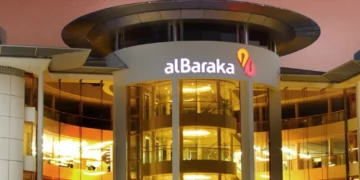
The history of South Africa’s Islamic financial sector dates back to several decades. Today there are many more financial services, which comply with the laws of Islamic finance and are available for the members of the Muslim community in South Africa. Companies like Al Baraka Bank South Africa are making a great contribution in providing the Muslim society with Islamic banking.
In addition, some conventional banks have created “Islamic windows”, which are meant to sell financial products which do not violate the laws of the Islamic financial system. Such products usually include finance for home and car, investments and savings accounts, and all of which avoid charging interest.
An important feature of Islamic banks is that they have Shariah advisory boards. These are made up of experts in Islamic finance who review the financial instruments and transactions, making sure they comply with Islamic laws.
Why Islamic banking is important for the community
Today Islamic banking allows many Muslims to become part of the global economic process while preserving their religious traditions. The opportunity to get access to the financial services which are Shariah compliant allows people to buy properties and cars or invest their savings into various economic projects.
Over and above that, the ethics of financial transactions play an important role in Islamic banking. These are based on the Islamic law banning excesses, speculative actions, and injustice in the financial sphere. Every financial action should be beneficial and contribute to the improvement of economic conditions and be based on mutual respect between the parties. This idea finds its resonance across the globe today, since more people try to find ways of organising finances responsibly and sustainably.
Challenges and opportunities
However, Islamic finance still constitutes a small segment of South Africa’s financial sector. The public awareness of Islamic banking is far from sufficient, and not everyone is aware of how the financial deals made by Islamic banks take place.
Another aspect that plays its role here is the necessity to have professional specialists to deal with complicated transactions. Nevertheless, the future perspectives of the Islamic banking in South Africa are quite positive, especially due to the already existing experience in the field of banking.
Looking ahead
Islamic banking has beome one of the interesting trends in South Africa today. It shows that religion and financial innovations can co-exist and complement each other. The careful management of financial transactions and observance of the principles of ethics become the key features of Islamic finance. Islamic banking provides a possibility for South Africa’s Muslims to engage themselves in business activities, while staying loyal to the moral values of Islam.
Ashraf Booley is an Associate Professor in the Faculty of Law at the University of the Western Cape. He can be contacted at abooley@uwc.ac.za