













![The market-builder who restrained the market [Part 2]](https://muslimviews.co.za/wp-content/uploads/2026/08/PHOTO-2026-08-25-17-16-32-360x180.jpg)
![The merchant preceding the Prophetic mission [Part 1]](https://muslimviews.co.za/wp-content/uploads/2026/08/01-360x180.jpg)






In Cape Town’s townships, Ramadan is shaped by resilience, community and faith — culminating in an Eid celebration marked by dignity and shared joy.
By SALIH DAVIDS
Ramadan is often imagined in gentle scenes — quiet masajid, long prayers, and tables prepared with abundance.
But in places like Manenberg, Hanover Park, Lotus River, and Mitchell’s Plain, Ramadan lives differently. It unfolds inside working homes, tight budgets, and communities shaped by history and pressure.
These are not spaces of spiritual absence. If anything, they are spaces where faith is carried with a certain stubbornness — held onto through difficulty, shared quietly between neighbours, and practised with a dignity that does not always announce itself.
Ramadan amid economic constraints
In many homes, the challenge of Ramadan begins at the cupboard.
Food must stretch. Meals are planned carefully. Children and elders are prioritised. What is available is made to be enough.
Fasting, in this context, is not only spiritual discipline — it is also lived restraint. It sharpens awareness of hunger, but also of responsibility. Families learn to balance what is needed with what is possible.
And yet, even within limitation, giving does not disappear.
Sadaqah takes on an intimate form — a plate sent next door, a small contribution to a neighbour, a quiet act of care within extended family. These gestures may seem small, but they carry weight. They reflect a Prophetic teaching: that what is given sincerely matters more than how much is given.
Work, too, shapes the rhythm of Ramadan. Many move between informal jobs, shift work, or multiple responsibilities. Fasting is carried through long hours, physical strain, and limited rest. Time for tarawih or community programmes is not always easily available — it is negotiated, sometimes sacrificed, sometimes held onto with effort.
For students, the day stretches between school and fasting, testing both concentration and endurance.
Community as support
Where hardship exists, so too does a certain kind of solidarity.
Local masajid are more than places of prayer. They become centres of coordination — for food, for support, for connection. They hold communities together in ways that are not always visible.
During Ramadan, this becomes more pronounced. Food is shared. Parcels are distributed. Communal iftārs are organised. Volunteers step forward.
These are not simply charitable acts. They are expressions of responsibility — an understanding that faith is not only personal, but social.
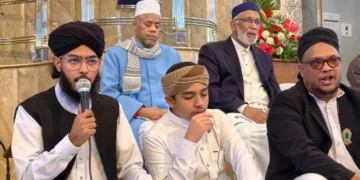
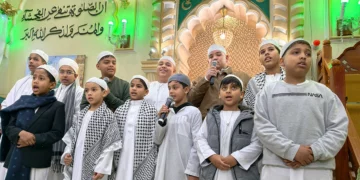
In many Cape communities, this is also woven into culture: choirs, youth groups, dhikr circles, and study gatherings create a rhythm where spirituality and companionship meet. Worship is not isolated. It is felt together.

Adaptation and resilience
Life in these spaces requires adjustment.
Meals are improvised. Transport is arranged through informal networks. People rely on each other — for food, for movement, for presence.
This is not only survival. It is a kind of resourcefulness shaped over time.
Beyond the material, there are deeper challenges — unemployment, violence, and the weight of generational struggle. Ramadan, with its structure and rhythm, offers something steady. Fasting, prayer, and reflection create a frame through which people make sense of their lives.
For many, it becomes an anchor — something that holds, even when other things feel uncertain.
Eid: Light after constraint
When Eid arrives, something shifts.
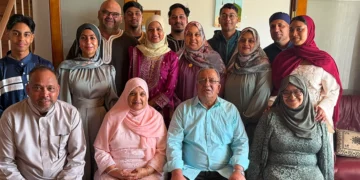
Homes that carried restraint now open into celebration. New clothes are worn with care. Children move through the streets with excitement. Families gather. Food is shared.
It is not excess that defines Eid in these spaces, but dignity.
Even where means are limited, attention is given to detail — to appearance, to hospitality, to the joy of the day. It is a way of saying: we are still here, and we celebrate with honour.
Zakat al-fitr ensures that no one is left outside the moment. Community initiatives extend this further — sweets for children, meals for families, small acts that allow everyone to participate.
Eid, in this sense, is not only a religious marking. It is a public expression of belonging.
Why this matters
Ramadan in township spaces reminds us of something important:
Faith is not separate from lived reality. It moves within it.
Spiritual depth is not always found in ease. Often, it is formed through pressure — through patience, through giving, through staying connected to others when it would be easier to withdraw.
There are lessons here — not only for Muslims, but for anyone concerned with community life. Supporting local masajid, youth initiatives, and food programmes is not simply charity. It strengthens the fabric that holds people together.
To understand Ramadan in these contexts is to understand how belief lives — not in abstraction, but in practice.
Conclusion
Ramadan in the margins is not a story of lack. It is a story of endurance, faith, and quiet generosity.
And Eid is not simply a celebration. It is a moment of renewal — a collective affirmation that dignity, care, and belief have carried people through.
As the month closes, what remains is not only what was given up, but what was strengthened: patience, connection, and a shared sense of responsibility.
You may also want to read


Eid Mubarak. Slamat vir Labarang.
May Allah accept what was carried — the fasting, the prayers, the small acts of kindness — and continue to place barakah in our communities.

Salih Davids grew up in Manenberg, now resides in District Six, Cape Town. His perspective is shaped by a working-class upbringing, and as an anti-Apartheid activist with an Islamist background. He served for some years in a government department and his is an ongoing journey as a student of religion.