





![Does ta’wīl mean interpretation or fulfilment? A Quranic reassessment [+video]](https://muslimviews.co.za/wp-content/uploads/2026/10/Tawil-Kaskas-360x180.webp)








![Why becoming a wealthy Muslim is commendable in Islam [+videos]](https://muslimviews.co.za/wp-content/uploads/2026/09/Muslim-Trade-Business-1-360x180.webp)



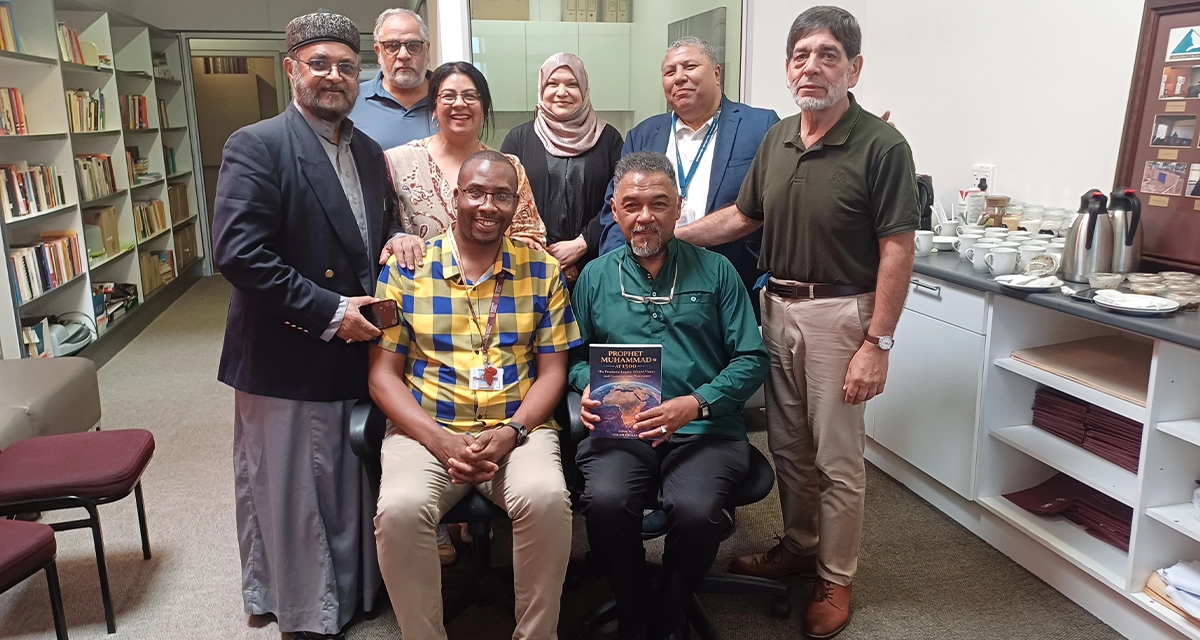

ADNAAN ADAMS reflects on the discussion held around the landmark volume of essays, Prophet Muhammad ﷺ at 1500: His Prophetic Legacy, Ethical Vision and Contemporary Resonance, which was hosted by the Beyers Naudé Centre for Public Theology at Stellenbosch University.
By ADNAAN ADAMS
‘O mankind, We created you from a male and a female, and made you into nations and tribes so that you may know one another (li-taʿārafū)’ (Sura Al-Ḥujurāt, 49:13)
This Qur’anic ethic, ‘so that you may know one another’ (li-taʿārafū), set the tone for an engagement held on March 24, 2026 and convened by Dr Sipho Mahokoto, director of the Beyers Naudé Centre for Public Theology at Stellenbosch University.
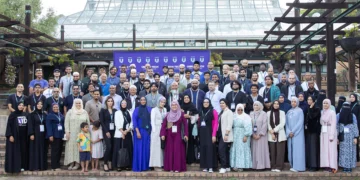
The discussion around the collection of essays edited by Research and Development Professor in Higher Education Transformation at Stellenbosch University, Professor Aslam Fataar, Prophet Muhammad ﷺ at 1500: His Prophetic Legacy, Ethical Vision and Contemporary Resonance, brought together a number of distinguished scholars from the Centre of Public Theology, whose presence lent both depth and intellectual weight to the discussion. It was an invitation I had the privilege of accepting, not merely as an attendee, but as a participant in a conversation that asked something more demanding: what does Prophetic ethics look like in our current, complex times?
There are moments in intellectual life that do not simply inform; they call one to think more carefully and reflectively. This was one such moment, an encounter shaped not only by the themes of the book but by the calibre of those gathered, drawing me into reflection on the kind of ethical and intellectual work our present moment requires.
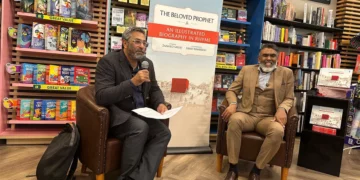
With the collection of essays in the volume, Prophet Muhammad ﷺ at 1500 being the focus of discussion, the gathering moved beyond a conventional book launch. The objective was clear and purposeful: to introduce key ideas from the volume, and to open a wider conversation on how the Prophetic legacy speaks across traditions, and what this means for interfaith engagement, solidarity, and socially just living. From the outset, the engagement carried a sense of intellectual seriousness. It was not a space for easy agreement, but for careful listening. Differences were neither ignored nor allowed to divide; they were engaged with care, and with a shared commitment to understanding.
Dr Elias Parker, representing the Legacy 1500 Commission, framed the Prophetic Legacy Project as a living ethical resource. His emphasis was clear: this was not about commemoration alone, but about renewal. The legacy of the Prophet ﷺ calls for interpretation, for responsibility, and for direction. The question is not only what it means, but where it leads us.
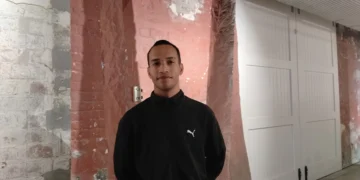
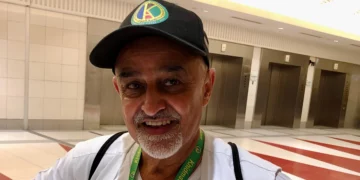
Prof. Bernard Lategan is a prominent academic at Stellenbosch University, known as the founder and former Director of the Stellenbosch Institute for Advanced Study (STIAS)
This orientation was deepened through the contributions that followed.
Professor Bernard Lategan, founder and former Director of the Stellenbosch Institute for Advanced Study (STIAS), extended the notion of inter-religious living further, gesturing beyond tolerance towards a shared mode of ethical coexistence.
Islamia College CEO Shaykh Sa’dullah Khan’s reflections, drawn from his latest work on the Prophet ﷺ as a figure of mercy, social justice and environmental awareness, grounded the conversation in a deeply textured Prophetic tradition.
The presence of Dr Omar Esau, Senior Lecturer in the Department of Curriculum Studies at Stellenbosch University, engaging from his specialised perspective, further deepened the pedagogical dimensions of the discussion.
Professor of Philosophy of Education and the Chair of the Department of Education Policy Studies in the Faculty of Education at Stellenbosch University, Professor Nuraan Davids, in both as moderator of the discussion and in her reflections, returned us to the significance of education. She cautioned against insular approaches that close learners off from the diversity of society. Instead, she pointed towards an education that prepares individuals to encounter difference meaningfully, one that aligns closely with the Qur’anic call to know one another, not superficially, but with depth and responsibility.
Across the engagement, a consistent thread emerged: that living together cannot be reduced to tolerance. It requires a more demanding ethical posture, one that is open, attentive, and willing to engage complexity. The idea of ‘friction’ surfaced as an important condition for this. It is often in moments of tension, where assumptions are unsettled, that genuine understanding begins. Equally important was the recognition that ethics must be lived.
Reflections drawing on anthropology and education reminded us that Prophetic ethics is not merely a set of values, but a way of being, formed in everyday life, shaped through practice, and sustained within community.
You may also want to read


Introducing the Prophetic Legacy Project, through Prophet Muhammad ﷺ at 1500, in such a space was both humbling and affirming. It reinforced a central insight: that the Prophetic tradition, when engaged with intellectual integrity, speaks meaningfully beyond the Muslim community. It offers a language (a grammar) of justice, dignity, and coexistence that resonates across contexts.
Perhaps the most significant insight lies in returning to where the engagement began: taʿāruf. What does it mean to know one another? The discussion suggested that this is not a passive act, but an ethical commitment. It requires attentiveness, humility, and a willingness to listen without rushing or even demanding closure. It asks us to remain open, to be shaped, even unsettled, by the encounter.
In this sense, the engagement was not only about Prophetic ethics; it was an example of it. It showed that meaningful dialogue is possible when approached with sincerity, and that intellectual spaces, when held with care, can contribute to a deeper sense of shared humanity. The conversation did not end with the event. It pointed forward, towards continued engagement, sustained dialogue, and the ongoing work of living together with purpose.
And perhaps that is the lasting value of the latest publication of Prophet Muhammad ﷺ at 1500: not only that it invites reflection on a profound legacy, but that it calls us, quite simply, to know one another more deeply, more responsibly, and with greater care.
Upon reflection, one is left with a further question. In a conversation so richly attentive to taʿāruf, to knowing one another, might there have been space to draw more deliberately on the ethical resources of the African context itself? The notion of Ubuntu gestures towards a shared human becoming — ‘I am because we are’ — an idea that resonates, perhaps more closely than we sometimes acknowledge, with the Prophetic ethic of relational dignity and mutual recognition.
It is not that such a perspective was absent, but that its explicit presence might have deepened the conversation even further, offering a more grounded and inclusive vantage point for thinking about coexistence on this continent. In this light, the Prophetic legacy does not stand apart from these traditions, but may well find in them a point of convergence, an ethical companionship that invites us to reimagine more expansive ways of living together.
Perhaps this remains part of the work still to be done.
- This article was updated at 16:07 on April 7 to reflect that Dr Sipho Mahokoto convened the discussion.