














![The market-builder who restrained the market [Part 2]](https://muslimviews.co.za/wp-content/uploads/2026/08/PHOTO-2026-08-25-17-16-32-360x180.jpg)
![The merchant preceding the Prophetic mission [Part 1]](https://muslimviews.co.za/wp-content/uploads/2026/08/01-360x180.jpg)






‘This is not just another emotional response to crisis. We’ve seen the cycle — violence spikes, we respond, and then it fades. This plan is about long-term, sustainable, community-based action.’
By SHAKIR ACHMAT
With crime and gang violence holding the residents on the Cape Flats in fear and terror, faith leaders and community activists gathered on Thursday morning (August 7) at the historic Calvin Protestant Church in Kewtown, Athlone for a report back meeting to assess progress on The Imam Haron Road Call to Action and Declaration of Intent.
The key focus was on a framework developed by a special Action Committee established after the July 16 interfaith meeting.
Hosted by the Muslim Judicial Council (MJC) in partnership with the Western Cape Provincial Council of Churches (WCPCC), the meeting is part of a broader interfaith effort to tackle systemic violence plaguing vulnerable communities.
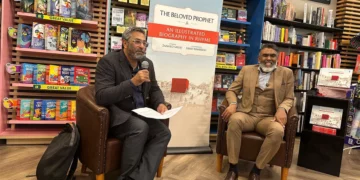
The gathering — chaired by activist and Claremont Main Road Mosque Imam, Dr Abdul Rashied Omar — builds on a momentum initiated by the Cape Crime Crisis Coalition (C4) and the interfaith Imam Haron Road Declaration, adopted on July 16 in Imam Haron Road, Lansdowne.
Dr Omar opened by acknowledging the significance of the venue, noting that they were gathered in a church with a proud history of activism and resistance. He remarked that it was both appropriate and fortunate to be able to discuss such a pressing issue within a space long associated with the struggle for justice.
A historic church of resistance
Reverend Stephen Snyman, pastor of Calvin Protestant Church, warmly welcomed the interfaith delegation. He offered both a spiritual and historical reflection, emphasising the church’s legacy as a beacon of anti-apartheid resistance.
‘This building was built by the people, for the people — with no debt — and it stands firmly against the lie of apartheid,’ Rev Snyman said. ‘We welcome you in the spirit of unity, with the shared vision to restore peace, dignity, and hope to our communities.’
Quoting from the Book of Isaiah, Rev Snyman cautioned against the moral confusion of calling ‘evil good, and good evil’, urging attendees to stand firm for justice and truth.
A growing faith-based movement
Thule Mbete, representing the WCPCC, and a steering committee member of the Cape Crime Crisis Coalition, reaffirmed the significance of interfaith collaboration in addressing violence.
‘This marks a significant step forward,’ she said. ‘We’ve formally entered a memorandum of understanding with the Coalition, and we reaffirm our deep partnership with the MJC. This is a faith-driven, justice-rooted response to the crisis.’
Mbete called on faith leaders to be both prophetic and practical in their approach, urging unity in advocacy and service to the most affected — the youth, the grieving, and the displaced.

Organised crime, political apathy and moral breakdown
Reverend Dr Llewellyn MacMaster, one of the founding members of the Cape Crime Crisis Coalition, provided an impassioned background on the coalition’s formation — tracing its roots to a WhatsApp group of veteran activists responding to the 2023 taxi strike and growing incidents of gang violence.
‘Organised crime is real,’ Rev MacMaster warned. ‘We are not just dealing with street gangs. This is systemic. Guns are now being manufactured locally — it’s a whole economy.’
In a powerful reflection, Rev MacMaster described the crisis as more than just a policing issue.
‘We are living through a moral crisis. Violence has become normalised — not just on the streets, but in governance, in institutions, in everyday life.’
You may also want to read


![There are “no free people without a free press” [+ video]](https://muslimviews.co.za/wp-content/uploads/2026/05/Al-Jazeera-Emmy-Award-1-120x86.webp)


![Why becoming a wealthy Muslim is commendable in Islam [+videos]](https://muslimviews.co.za/wp-content/uploads/2026/09/Muslim-Trade-Business-1-120x86.webp)
He highlighted chilling statistics collected over just one weekend: over 40 shootings and 30 deaths in areas spread across Bishop Lavis and Philippi to Parklands and Muizenberg.
‘We cannot leave moral regeneration in the hands of government anymore,’ he said. ‘The people suffering and dying are our people — whether Christian, Muslim, atheist, young or old. We must stand together.’

Toward a strategic plan of action
The key focus of the gathering was the presentation of a Strategic Plan of Action — a framework developed by a special Action Committee established after the July interfaith meeting.
Fatima Shabodien, who facilitated the committee’s work, presented the plan.
‘This is not just another emotional response to crisis,’ Shabodien said. ‘We’ve seen the cycle — violence spikes, we respond, and then it fades. This plan is about long-term, sustainable, community-based action.’
She explained that the root causes of the crisis are deep and systemic — dating back to colonialism, apartheid, and forced removals. These traumas have shaped a culture of violence, further aggravated by socio-economic exclusion and the growth of a parallel criminal economy.
The plan proposes coordinated interventions in the areas of:
- Youth engagement and mentorship
- Victim support and trauma healing
- Faith-based advocacy
- Oversight of police and prisons
- Gang rehabilitation
- Engagement with government
Shabodien emphasised that while political parties are welcome to support the initiative, the movement must remain community-owned and non-partisan.
‘This is not a political party project. It is a moral and community-driven initiative that invites all to walk with us — slowly, but together.’

The Imam Haron Road Call to Action
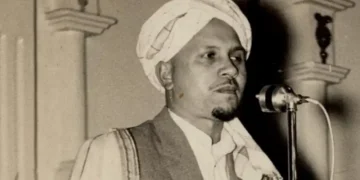
The gathering concluded with a reaffirmation of The Imam Haron Road Call to Action, which was circulated among attendees. The declaration — which honours the martyred anti-apartheid cleric — is seen as a unifying moral compass for communities committed to justice and peace.
Dr Omar called on those present to reflect deeply on the strategic plan, offer amendments, and commit to action.
As discussions continue, the Action Committee will finalise the plan based on feedback received at the meeting, with the goal of launching community rollouts across Cape Town’s most affected areas.