


















![The market-builder who restrained the market [Part 2]](https://muslimviews.co.za/wp-content/uploads/2026/08/PHOTO-2026-08-25-17-16-32-360x180.jpg)
![The merchant preceding the Prophetic mission [Part 1]](https://muslimviews.co.za/wp-content/uploads/2026/08/01-360x180.jpg)


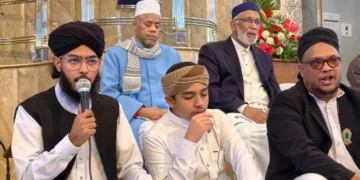





The struggle of the Palestinian people is framed as a continuation of the fight against tyranny that Imam Hussain championed, urging communities to draw strength from his example in their advocacy for Palestinian rights.
By SAYED RIDHWAAN
THIS year’s Muharram observances took on a poignant resonance as communities across the globe, particularly in South Africa, drew parallels between the historic tragedy of Karbala and the ongoing struggles in Gaza.
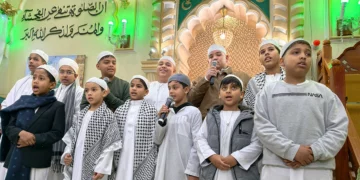
Numerous masjids, madrasahs, and organisations hosted events to honour Imam Hussain, the revered grandson of the Prophet Muhammad, whose martyrdom has become a symbol of resistance against tyranny and injustice. As participants reflected on the sacrifice of Imam Hussain, they were reminded of the current injustices faced by the Palestinian people, drawing striking parallels between the two struggles.
The events of Karbala, where Imam Hussain and his followers stood against the oppressive regime of Yazid, have long been a source of inspiration for those fighting against tyranny. This year, speakers at various Muharram events emphasised the similarities between the oppression faced by Imam Hussain and the ongoing struggle of the Palestinian people. Both are seen as battles for rightful sovereignty and justice, with the oppressed standing firm against overwhelming odds.
The Cape Town Ulama Board (CTUB) commended the efforts of those across South Africa who hosted and participated in events that not only honour the Prophet’s blessed family but also focus on how the lessons of Karbala can be applied to the current situation in Gaza. The CTUB highlighted the importance of these events in reminding the community of the enduring relevance of Imam Hussain’s sacrifice and the need to stand in solidarity with those facing oppression today.
You may also want to read
![The Prophet’s legacy beyond nostalgia and ritual [+ videos]](https://muslimviews.co.za/wp-content/uploads/2026/05/awqaf-photo-120x86.webp)


Speakers at these events drew on historical examples to illustrate the impact of Karbala’s legacy on contemporary struggles for justice. Nelson Mandela, the iconic leader of South Africa’s anti-apartheid movement, is often cited as having drawn strength from the Karbala movement. Mandela’s fight for freedom and liberation was inspired by the principles of justice and resistance embodied by Imam Hussain. This connection serves as a powerful reminder of the universal appeal of Karbala’s message and its ability to inspire leaders across different contexts and eras.
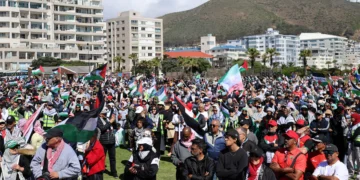
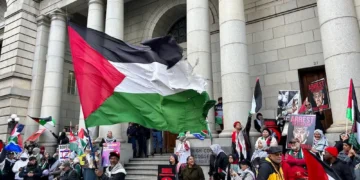
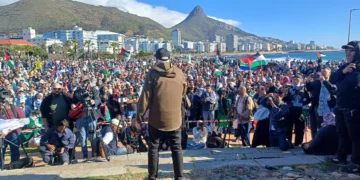
The events also provided a platform for discussing the ongoing genocide in Gaza, with many speakers emphasising the need for global solidarity with the Palestinian people. The parallels between Karbala and Gaza are not just historical or symbolic; they are seen as a call to action for those who believe in justice and human rights. The struggle of the Palestinian people is framed as a continuation of the fight against tyranny that Imam Hussain championed, urging communities to draw strength from his example in their advocacy for Palestinian rights.
The tragic events of Karbala, where the family of Imam Hussain faced unimaginable cruelty, find a haunting echo in the current situation in Gaza. Just as the oppressors in Karbala mercilessly killed babies, today we witness similar atrocities against innocent children in Gaza. The siege of Karbala saw the deliberate cutting off of water supplies to the Ahlul Bayt, a tactic mirrored in the blockade of water resources in Gaza. Furthermore, the starvation faced by Imam Hussain’s family, as their access to basic food was cruelly denied, is paralleled by the ongoing restrictions on essential supplies entering Gaza. These actions reflect a tyranny that resonates with the suffering endured by the beloved family of Prophet Muhammad, reminding us of the persistent struggle against oppression and the urgent need for justice and compassion in our world today.
In addition to speeches and discussions, many events included prayers and recitations of poetry highlighting the themes of sacrifice, resistance, and hope. These artistic expressions serve to deepen the emotional connection to the events of Karbala and the current plight of the Palestinians, fostering a sense of empathy and urgency among participants.

The observance of Muharram this year has thus become a powerful reminder of the enduring relevance of Imam Hussain’s sacrifice. It underscores the importance of standing up against oppression and drawing strength from historical examples to confront contemporary injustices. As communities continue to reflect on the lessons of Karbala, they are reminded of their responsibility to advocate for justice and support those who are fighting for their rights, whether in Gaza or elsewhere.
As the world witnesses ongoing conflicts and injustices, the legacy of Imam Hussain serves as a beacon of hope and a call to action for all who seek a just and equitable world.